C Hribal - The Company Car
Здесь есть возможность читать онлайн «C Hribal - The Company Car» весь текст электронной книги совершенно бесплатно (целиком полную версию без сокращений). В некоторых случаях можно слушать аудио, скачать через торрент в формате fb2 и присутствует краткое содержание. Город: New York, Год выпуска: 2005, ISBN: 2005, Издательство: Random House, Жанр: Современная проза, на английском языке. Описание произведения, (предисловие) а так же отзывы посетителей доступны на портале библиотеки ЛибКат.
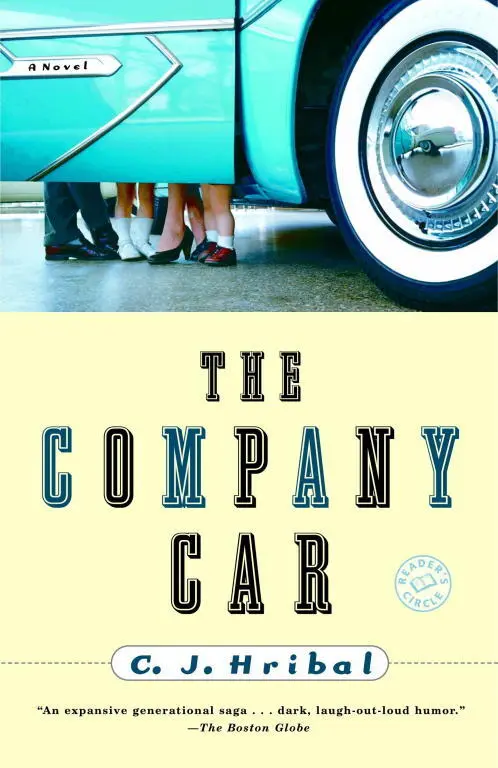
- Название:The Company Car
- Автор:
- Издательство:Random House
- Жанр:
- Год:2005
- Город:New York
- ISBN:1-58836-468-2
- Рейтинг книги:3 / 5. Голосов: 1
-
Избранное:Добавить в избранное
- Отзывы:
-
Ваша оценка:
The Company Car: краткое содержание, описание и аннотация
Предлагаем к чтению аннотацию, описание, краткое содержание или предисловие (зависит от того, что написал сам автор книги «The Company Car»). Если вы не нашли необходимую информацию о книге — напишите в комментариях, мы постараемся отыскать её.
“Are we there yet?” It’s the time-honored question of kids on a long family car trip—and Emil Czabek’s children are no exception. Yet Em asks himself the same thing as the family travels to celebrate his parents’ fiftieth wedding anniversary, and he wonders if he has escaped their wonderfully bad example.
The midwestern drive is Em’s occasion to recall the Czabek clan’s amazing odyssey, one that sprawls through the second half of the twentieth century. It begins with his parents’ wedding on the TV show It’s Your Marriage, and careens from a suburban house built sideways by a drunken contractor to a farm meant to shelter the Czabeks from a country coming apart. It is the story of Em’s father, Wally—diligent, distant, hard-drinking—and his attempts to please, protect, or simply placate his nervous, restless, and sensual wife, Susan, all in plain sight of the children they can’t seem to stop having.
As the tumultuous decades merge in his mind like the cars on the highway, Em must decide whether he should take away his parents’ autonomy and place them in the Heartland Home for the Elders. Beside him, his wife, Dorie, a woman who has run both a triathlon and for public office, makes him question what he’s inherited and whether he himself has become the responsible spouse of a drifting partner—especially since she’s packing a diaphragm and he’s had a vasectomy.
Wildly comic and wrenchingly poignant, The Company Car is a special achievement, a book that drives through territory John Irving and Jonathan Franzen have made popular to arrive at a stunning destination all its own.
The Company Car — читать онлайн бесплатно полную книгу (весь текст) целиком
Ниже представлен текст книги, разбитый по страницам. Система сохранения места последней прочитанной страницы, позволяет с удобством читать онлайн бесплатно книгу «The Company Car», без необходимости каждый раз заново искать на чём Вы остановились. Поставьте закладку, и сможете в любой момент перейти на страницу, на которой закончили чтение.
Интервал:
Закладка:
“You did a good thing,” our mother told me once we were on the sidewalk. I did not believe her. We were standing outside a house where we would be greeted by our relatives and told how much we had grown, how good we were, and what a fine, happy family we were, and where people would take one look at our mother, her face so puffy it looked like she was trapped inside some horrible genetic experiment gone awry, and tell her, “Country life agrees with you, Susan Marie,” and I did not believe any of that, either.
Just as our parents had done, just as our relatives were about to do, I had told my younger siblings a convenient lie because it was easier than dealing with the unhappiness of the truth. I had even managed, for a little while, to convince myself. Though I knew I was lying, I had looked up in the cold night sky, my face craned to take in the distant bright stars and the flight patterns of passing planes, my breath fogging the window, and for the briefest of moments, I had believed. There was a Santa Claus. He was out there, making his appointed rounds, and the behavior of little boys and girls all over the globe was duly noted and gifts were given accordingly.
But Robert Aaron was right. The truth was plainer than that. This did not stop me from believing, but it made me angry at myself for so willfully participating in the lie. And what I saw clearly was that it was best if I continued doing it. Pretending was expected of me. It would reflect well on my merit review. And what made me so angry right then, I think, looking up into the kindly, sad, bloated face of my mother, whom I loved, was the sudden knowledge that adults did this all of their lives, and that I truly had signed on for the duration.

14. No Guts, No Glory
“Great,” Ernie says. “Now what?”
“Don’t you feel like a perfect shit or what?” It’s been several minutes since our mother shuffled back into the house. We’re still on the deck. The temperature’s dropping. We can see our breath. Clouds are moving briskly across the stars and half a moon, and down the field we can see a straggly line of kids, and kids carrying kids, making its way back to the house. “Just as well,” Robert Aaron says, going down the field to help Audrey. “I was starting to freeze my tush up there.”
I call after him, “But we haven’t talked about a goddamn thing yet!” Dorie is holding hands with Henry, our middle child, and walking alongside Woolie, who’s carrying Sophie on his back. Woolie is seventeen, about to start his senior year in high school. He is, I’m guessing, starting to resemble his father. Curly dark hair, a serious, handsome face, eyes that light up when he infrequently smiles, though he smiles more now that his braces are off and the fits and starts of adolescence are nearly over. It probably doesn’t hurt that he’s got his first girlfriend, either, a lithe young woman who swims and plays midfield on the soccer team. I remember when she was awkward and gangly, a manager for the boys’ swim team, and it heartens me a little that she takes an interest in Woolie, who is just now emerging from his own awkward, gangly phase.
It also makes me feel jealous.
“Tepee’ll be free soon. Nice and warm in there.” Ike’s got his arms around his wife, Sam. He’s standing behind her, and they’re slowly swaying back and forth. He’s so content right now, so filled with equanimity I want to hit him.
“Good,” I say. I want things to be decided, over. I want—as our father always wanted—for there to be a plan. A master plan just waiting to be executed. Funny choice of words—to execute a plan. When you execute people, they’re dead. Given what happened with most of our father’s plans, perhaps the wording was appropriate.
We agree we’ll meet in the tepee—just the sibs—once the kids are put down. There are good nights to those not staying, then Dorie takes our kids inside, Sam takes hers and Ike’s back to their house, Audrey takes hers and Robert Aaron’s to her parents’, just a few miles away, et cetera.
I’m the last to leave the house. Woolie has settled in on the living room sofa with his Discman and a Rusted Root CD; his head bounces as he clicks on the TV and picks up a large-print Reader’s Digest. How does he manage to concentrate? I wonder, but maybe that’s the point—awash in stimuli, you coast over the surface of it. Is this what concentration will be like for the new millennium—the ability to juggle multiple sources of information simultaneously, paying just enough heed to each to say you “got it”?
“Turn that thing off,” I say, and I sound just like our father when he used to complain about whatever I had playing on the stereo. I want to laugh, it’s too ridiculous—what does it matter to me if he’s watching Sports Center, glossing over another installment of “My Most Unforgettable Character,” and listening to the tribal drumming of a neo–Grateful Dead band all at the same time? And yet I’m furious.
He lifts up one end of his earphones. “Eh?”
“Off, turn it off!” I’m nearly shouting.
“Turn what off?” he asks innocently.
“One of them. It doesn’t matter which.”
“Why does it matter at all?” He’s right, and I’m angry because he’s right.
“Honey, could you give me a hand with Henry and Sophie?”
Henry is already asleep—Henry could fall asleep on a roller coaster if he wanted to—and Sophie is already tucked in, her Winnie-the-Pooh and Eeyore dolls nestled under her chin.
“What is wrong with you?” Dorie hisses at me. “You sounded like an idiot out there.”
“Is Daddy in trouble?” Sophie, turning the pages of a Berenstain Bears “I Can Read Book,” looks as serious as her mother does when she is disassembling her derailleurs and chain.
“He will be if he doesn’t start acting like a human being.”
“Good night, honey.” I kiss Sophie on the cheek.
“Read me a story, Daddy?”
“Mommy will. Daddy has to talk to his brothers and sisters.”
“It would go better if you talked with them, not at them. That would be true with other people around the house as well.”
“Present company excepted?”
Dorie holds her thumb and index finger half an inch apart. “You are about this close, Ace, to becoming a male soprano.”
“Read Sophie her story, why don’t you?”
“Yes, Mommy, read me a story.”
Dorie sits on the trundle bed. “Ah, the Berenstain Bears,” she says. “A good one. The daddy is an idiot in these stories, too.”
I do not get away cleanly. Woolie barely notices me—I half-wave going past, and he lifts his head in acknowledgment—but in the kitchen our mother is minding a kettle that’s just starting to whistle. I get a beer from the refrigerator, and she puts a hand on my shoulder.
“Is something the matter with you and Dorie?”
“No, Mom, nothing’s the matter.” I open the beer, take a swig.
Our mother turns me around. The look on her face is kindly, concerned. “You were always an atrocious liar, Emmie. You and Ike, you had no facility for deception, ever.”
“I’d rather not talk about it, Mom.”
“Honey, I’m not the one you have to talk about it with.”
Even as our mother was sinking into her personal quagmire of ill health and depression, our father embarked on an ambitious series of schemes to get rich, make his mark, and become what he’d always dreamed of being: a gentleman farmer, a man who tilts his chair back on the veranda and, cigar in hand, watches as the industry of his land brings forth new fruit. Our mother, desperate to break out of her funk, signed on to almost all his harebrained ideas. Their beauty was in not looking harebrained until they had foundered, sunk, crashed, or burned.
Читать дальшеИнтервал:
Закладка:
Похожие книги на «The Company Car»
Представляем Вашему вниманию похожие книги на «The Company Car» списком для выбора. Мы отобрали схожую по названию и смыслу литературу в надежде предоставить читателям больше вариантов отыскать новые, интересные, ещё непрочитанные произведения.







Обсуждение, отзывы о книге «The Company Car» и просто собственные мнения читателей. Оставьте ваши комментарии, напишите, что Вы думаете о произведении, его смысле или главных героях. Укажите что конкретно понравилось, а что нет, и почему Вы так считаете.