C Hribal - The Company Car
Здесь есть возможность читать онлайн «C Hribal - The Company Car» весь текст электронной книги совершенно бесплатно (целиком полную версию без сокращений). В некоторых случаях можно слушать аудио, скачать через торрент в формате fb2 и присутствует краткое содержание. Город: New York, Год выпуска: 2005, ISBN: 2005, Издательство: Random House, Жанр: Современная проза, на английском языке. Описание произведения, (предисловие) а так же отзывы посетителей доступны на портале библиотеки ЛибКат.
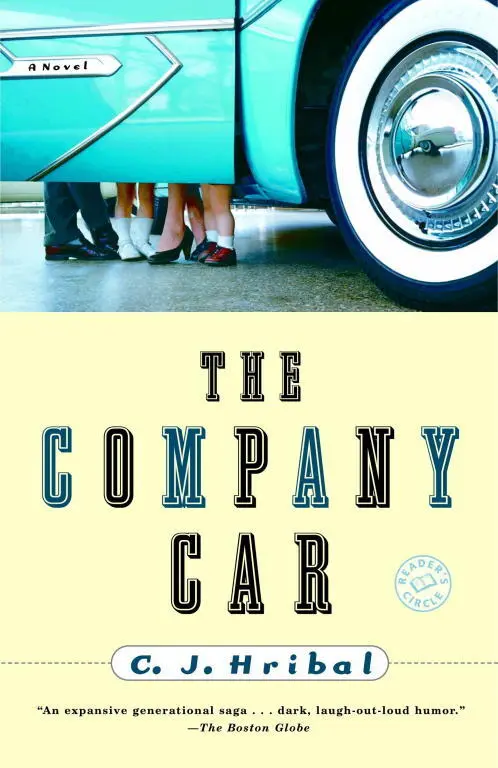
- Название:The Company Car
- Автор:
- Издательство:Random House
- Жанр:
- Год:2005
- Город:New York
- ISBN:1-58836-468-2
- Рейтинг книги:3 / 5. Голосов: 1
-
Избранное:Добавить в избранное
- Отзывы:
-
Ваша оценка:
The Company Car: краткое содержание, описание и аннотация
Предлагаем к чтению аннотацию, описание, краткое содержание или предисловие (зависит от того, что написал сам автор книги «The Company Car»). Если вы не нашли необходимую информацию о книге — напишите в комментариях, мы постараемся отыскать её.
“Are we there yet?” It’s the time-honored question of kids on a long family car trip—and Emil Czabek’s children are no exception. Yet Em asks himself the same thing as the family travels to celebrate his parents’ fiftieth wedding anniversary, and he wonders if he has escaped their wonderfully bad example.
The midwestern drive is Em’s occasion to recall the Czabek clan’s amazing odyssey, one that sprawls through the second half of the twentieth century. It begins with his parents’ wedding on the TV show It’s Your Marriage, and careens from a suburban house built sideways by a drunken contractor to a farm meant to shelter the Czabeks from a country coming apart. It is the story of Em’s father, Wally—diligent, distant, hard-drinking—and his attempts to please, protect, or simply placate his nervous, restless, and sensual wife, Susan, all in plain sight of the children they can’t seem to stop having.
As the tumultuous decades merge in his mind like the cars on the highway, Em must decide whether he should take away his parents’ autonomy and place them in the Heartland Home for the Elders. Beside him, his wife, Dorie, a woman who has run both a triathlon and for public office, makes him question what he’s inherited and whether he himself has become the responsible spouse of a drifting partner—especially since she’s packing a diaphragm and he’s had a vasectomy.
Wildly comic and wrenchingly poignant, The Company Car is a special achievement, a book that drives through territory John Irving and Jonathan Franzen have made popular to arrive at a stunning destination all its own.
The Company Car — читать онлайн бесплатно полную книгу (весь текст) целиком
Ниже представлен текст книги, разбитый по страницам. Система сохранения места последней прочитанной страницы, позволяет с удобством читать онлайн бесплатно книгу «The Company Car», без необходимости каждый раз заново искать на чём Вы остановились. Поставьте закладку, и сможете в любой момент перейти на страницу, на которой закончили чтение.
Интервал:
Закладка:
“Dorie,” the woman said, “either help or get out of the way.”
“I’m not in the way.”
“You will be soon enough unless you help. Here, rinse these.”
“It’s got his blood on it.”
“Everything’s got his blood on it.” She hadn’t taken her eyes off me. Her face bore a look of calm efficiency, slightly puckered. She was impatient in the same way our mother was when one of us was hurt. In the face of that you did what you were told. The girl took the washcloths to the sink.
“We’re going to get you to a hospital,” the woman said, the heel of her hand pressing down on a washcloth located near my temple. “Whose boy are you?”
“He’s mine,” said my mother. She was at the screen door, all out of breath, then the door was banging shut behind her.
“You’re those new people took over the Hoveling place, aren’t you?” said the woman. “I’ve been meaning to get down there.” She and my mother switched places.
“Have you got ice?” asked my mother. The woman was already getting it. I could hear the refrigerator door open behind me, and the next thing I knew another washcloth, cold, with a lump inside, was pressed against my lip. My tongue felt the nubbins of the washcloth, the torn flesh of my lip. I was trying not to whimper. My mother’s face had that same look on it: panged efficiency, wounded concern.
“He’s banged up pretty good,” said the woman. “You’ve got your car here?”
“I don’t drive,” said our mother.
“We’ll take him to St. E’s, it’s closest,” said the woman. “You get him outside, I’ll turn the car around. Dorie, you can stay or go. Your mother won’t be home till dinnertime anyway.”
“I’ll go,” said the girl and went out with the woman.
The woman had an old brown-and-white Rambler idling outside her kitchen when my mother got me on the stoop. The woman held the door open for us, then jumped into the driver’s seat and roared off as fast as the gravel in the drive would allow. We fishtailed out the drive, and in the sweep of the back end I could see my bike, its front wheel missing, the frame askew.
“When I saw that bike—” started my mother.
“You thought he was dead.”
“I could hear his screams clear on the other side of the house, where I was painting.”
“I heard them in the garden. He’s got a healthy set of lungs.”
“I thought somebody was pulling his toenails out,” said the girl. She was blond. The woman driving was no taller than she was. Across the back of the Rambler’s bench seat, their heads were even. The woman’s hair, though, was the color of straw, with orange and gray woven in. She looked like a banty rooster, small and feisty. She drove with mean efficiency. We were going very fast, I could tell, but she kept up a calm patter with my mother.
“It’s nice you’re painting that house. The Hovelings didn’t put much stock in niceties.”
“I have to thank you for driving us like this.”
“I was going to let your son bleed all over my kitchen while we waited for an ambulance? It’d take too long.”
“I’m Susan Marie Czabek.”
“Matty Keillor. This is my granddaughter, Dorie Braun.”
“My son Emmie.”
Dorie turned around. She had a sharply oval face and green eyes that were both flat and piercing. She was wearing a T-shirt, like me, and her hair was cut bluntly at her shoulders. “Emmie, that’s a girl’s name. Where’d you get a name like Emmie?”
“Dorie—”
“Have you ever heard of Emil Zatopek?” I knew she hadn’t. Nobody had.
“Should I have?” I wanted to think she was doing a pretty good job of talking to a kid with a torn-up face without showing the slightest distaste or squeamishness, but really she was just doing a fantastic job of sounding bored beyond belief.
“Emil Zatopek,” I said through swollen lips, “was a Czech runner who won four gold medals, three of them, an unprecedented triple”—I was quoting my father here—“in the 1952 Olympics.” That was pretty much exactly what my father had told me when I said that kids at school were teasing me about my name. I wasn’t named for Emil Zatopek, and really, nobody cared about a Czech running to glory in his underwear. Still, it was the sort of thing that made possessing such a name easier to bear, and when anybody asked, this was what I told them.
“I know an Emil,” said Dorie Braun, who was cute in a tough way and was already wiping away my memory of and pangs for the worldly and forlorn Patty Duckwa. “Emil Brauneiger. But Emil—that’s an old name. Like Oscar. Or Irene. Or Matilda.”
“Don’t go there, Dorie Braun. Or I might tell somebody what your real name is, too.”
“What is it?” I asked the ceiling, thickly. My mother had me leaning my head against the seat back, which was covered with an old army blanket. My blood was seeping into that.
“Dorothy,” Dorie answered before her grandmother could say it. “Like in The Wizard of Oz. As in ‘I’ll get you, my pretty. And your little dog, too.’ ”
She did a pretty good job imitating the Wicked Witch of the West’s speaking voice. Her regular voice had a roughness to it as well, which I liked.
Her grandmother observed, “Nobody’s naming their daughters Dorothy anymore, either.”
“My dad says that’s because I broke the mold.”
“Given a chance, you’d break anything.”
The conversation changed then when Matty Keillor asked our mother what it was our father did. The cautious exploration of each other’s family history and background was something that connected the two women, and left Dorie and me out of their conversation. All this talk had distracted me from the fact that my face was broken, but now as we neared the hospital I realized how I hurt all over. They got me inside, stitched me up while I writhed and screamed, told my mother I’d need to see a dentist about yanking that shattered front tooth, filled me full of painkillers, and sent us on our way.
Our mother was downright fluttery by the time Matty Keillor pulled into our drive and let us out. She thought she’d made her first real friend. Granted, she had met a number of other women from church, but at least so far they were taking a wait-and-see approach to friendship. It was as though friendship with these women was a kind of exclusive club, with a limit on the number of members, and though they were cordial to our mother, they had all the friends they currently needed, thank you, but do keep in touch, and should one of our members move away (unlikely) or die (only slightly more likely), we’ll certainly keep you in mind.
It didn’t help that the women gathered in groups—the Women’s Guild, the Craft Union, the Women’s Auxiliary of this or that—in which our mother didn’t feel comfortable. She preferred intimate gatherings—another housewife over for coffee, a shared trip to the fabric store. The one informal place for meeting women was the mothers’ room at church, but being bonded by the fact that you had a crying infant or unruly toddler and therefore had been relegated to the back of the church in a separate room with a sliding glass window that was usually closed was not conducive to real friendship. A few pained looks, shared exasperations, yes, but friendship?
Not even Matty, who was friendly and open and the most accepting of the women our mother met, could offer her that, though our mother entertained hopes. Matty had seven kids, too, and a husband (and a daughter) who drank too much, but Matty was also a decade older, had been a grandma for a decade. That may have been why our mother liked her so much. She’d already been where our mother was heading. But Matty had her hands full, and being some unhappy city woman’s mentor was not her idea of an occupation. She felt sorry for our mother, that her husband had dumped her in the middle of a cornfield, but it wasn’t her fault things had shaken out as they had, and it wasn’t her job to make everything all better, either.
Читать дальшеИнтервал:
Закладка:
Похожие книги на «The Company Car»
Представляем Вашему вниманию похожие книги на «The Company Car» списком для выбора. Мы отобрали схожую по названию и смыслу литературу в надежде предоставить читателям больше вариантов отыскать новые, интересные, ещё непрочитанные произведения.








Обсуждение, отзывы о книге «The Company Car» и просто собственные мнения читателей. Оставьте ваши комментарии, напишите, что Вы думаете о произведении, его смысле или главных героях. Укажите что конкретно понравилось, а что нет, и почему Вы так считаете.