C Hribal - The Company Car
Здесь есть возможность читать онлайн «C Hribal - The Company Car» весь текст электронной книги совершенно бесплатно (целиком полную версию без сокращений). В некоторых случаях можно слушать аудио, скачать через торрент в формате fb2 и присутствует краткое содержание. Город: New York, Год выпуска: 2005, ISBN: 2005, Издательство: Random House, Жанр: Современная проза, на английском языке. Описание произведения, (предисловие) а так же отзывы посетителей доступны на портале библиотеки ЛибКат.
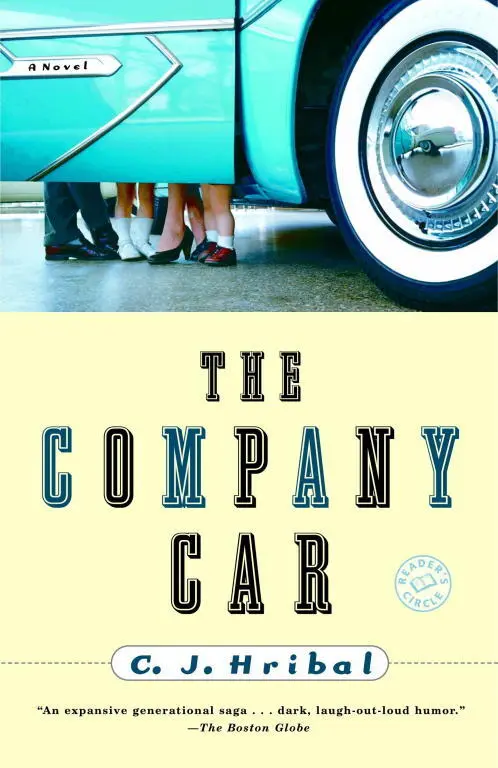
- Название:The Company Car
- Автор:
- Издательство:Random House
- Жанр:
- Год:2005
- Город:New York
- ISBN:1-58836-468-2
- Рейтинг книги:3 / 5. Голосов: 1
-
Избранное:Добавить в избранное
- Отзывы:
-
Ваша оценка:
The Company Car: краткое содержание, описание и аннотация
Предлагаем к чтению аннотацию, описание, краткое содержание или предисловие (зависит от того, что написал сам автор книги «The Company Car»). Если вы не нашли необходимую информацию о книге — напишите в комментариях, мы постараемся отыскать её.
“Are we there yet?” It’s the time-honored question of kids on a long family car trip—and Emil Czabek’s children are no exception. Yet Em asks himself the same thing as the family travels to celebrate his parents’ fiftieth wedding anniversary, and he wonders if he has escaped their wonderfully bad example.
The midwestern drive is Em’s occasion to recall the Czabek clan’s amazing odyssey, one that sprawls through the second half of the twentieth century. It begins with his parents’ wedding on the TV show It’s Your Marriage, and careens from a suburban house built sideways by a drunken contractor to a farm meant to shelter the Czabeks from a country coming apart. It is the story of Em’s father, Wally—diligent, distant, hard-drinking—and his attempts to please, protect, or simply placate his nervous, restless, and sensual wife, Susan, all in plain sight of the children they can’t seem to stop having.
As the tumultuous decades merge in his mind like the cars on the highway, Em must decide whether he should take away his parents’ autonomy and place them in the Heartland Home for the Elders. Beside him, his wife, Dorie, a woman who has run both a triathlon and for public office, makes him question what he’s inherited and whether he himself has become the responsible spouse of a drifting partner—especially since she’s packing a diaphragm and he’s had a vasectomy.
Wildly comic and wrenchingly poignant, The Company Car is a special achievement, a book that drives through territory John Irving and Jonathan Franzen have made popular to arrive at a stunning destination all its own.
The Company Car — читать онлайн бесплатно полную книгу (весь текст) целиком
Ниже представлен текст книги, разбитый по страницам. Система сохранения места последней прочитанной страницы, позволяет с удобством читать онлайн бесплатно книгу «The Company Car», без необходимости каждый раз заново искать на чём Вы остановились. Поставьте закладку, и сможете в любой момент перейти на страницу, на которой закончили чтение.
Интервал:
Закладка:
Reluctantly, we filed into the living room, where her crying escalated from muffled sobs to outright keening. The albino sea snakes were still wriggling in the vomit at her feet, and our mother was screaming, “I can’t take this, Wally, I can’t take this, I can’t, I can’t, I simply can’t take this,” just prior to running into their bedroom, where she threw herself on the naked box spring and cried for hours.
“Let’s clean this up,” said our father. He supervised for a little while, then he went back to our mother. The door closed and there was screaming from our mother, things we couldn’t make out, and then our father reappeared, a look of anger and purpose on his face. He didn’t say anything, but when he left we had a pretty good idea where he was going. We knew he wouldn’t be back for hours, and we hoped to be in bed by the time he was.

12. This Will Reflect on Your Merit Review
Was it really like this, our mother crying all the time? Pandemonium and sorrow, shrieking and recriminations, slammed doors, loud silences, our lives constantly in the balance? No. Our mother was a trouper. But when you are a child, it is not the moments of motherly strength you recall much, for they are expected. What you remember are the lapses, the moments when things break down—when she breaks down—and the world as you know it grinds to a halt. Your mother, crying her eyes out.
Oh, she cried for joy, too, plenty of times. When we sold the old house, when our father got a larger-than-expected sale just before Christmas, when we gave her handmade Mother’s Day cards, when Nomi announced she was again coming to live with us. But it is when she is sobbing, keening, and then afterward, when she is wrung out like the proverbial dishrag, her emotional insides displayed like a skinned rabbit—that’s the image engraved in our eyes. Our mother clutching her stomach, bent over, trying to keep her grief inside and failing, and Ernie or Peg Leg Meg saying, Momma, no cry, Momma, no cry.
Tugs at your heart, doesn’t it? Pitiful, a mother so bereft she breaks down in front of her kids, has no one else with whom she can find solace—an audience of two- and four- and six- and eight-year-olds.
But what of those moments of strength, the default mode of our mother’s existence? She had us all week, twenty-four hours a day in the summer, seven of us, rambunctious and high-strung, hellions each to each. All of us pulling for our moment of attention, all of us screeching out our hurts, our needs, our laments, the injustices done us by our brothers and sisters, our denials about the injustices and hurts and lambastings we visited upon them. Our mother acting as referee until she got tired of it and screamed, “Enough! Settle it yourselves. I don’t care who did what to who. Whoever tattles is getting the same spanking as he who hits. And he who hits is getting spanked twice—once by me and once when your father gets home.”
When our father gets home—the great empty threat in our household. At one time—when our father came home at night—it might have carried some weight. But now, when our father was gone all week? When he called from Ishpeming or Thief River Falls or Duluth-Superior? Fat chance. By the time he came home on Friday, he’d already visited Banana’s Never Inn in Holton or the Dog Out on Highway 45 and JJ—his new Offices—and he was in no mood to settle petty disputes that had been accruing since Monday. What did he care that Robert Aaron used Ike’s plastic tank as a target for his pellet gun? Or that Wally Jr. crayoned inside my Silver Surfer comic books? And what of my own malfeasance, squashing Wally Jr.’s Play-Doh elephant to a squishy turd under the heel of my foot?
“You’re driving me to drink!” our father yelled, hands up in the air.
“No, Wally, you already drove yourself to a drink. Then you came home.” Which as likely as not sent our father out again, “just so I can hear myself think, goddammit!”
So how about our mother’s default mode? How about the time she drove into Augsbury on a tractor to get a prescription filled because there was no car and she couldn’t drive one anyway? Or all the times she dealt with our mashed or sliced fingers, broken arms, cracked skulls, poked eyes, or sprained or broken ankles all by herself because our father was in Ypsilanti, Michigan, or Cloquet, Minnesota? Or what about the time the sheep or the cows got loose, or the chickens all took sick at once and died? Or what about our school plays and music lessons and concerts, our ball games and parent-teacher conferences—nothing our father could ever make it home for? Or what about all the illnesses, the measles and chicken pox and flu and mumps, the strep throats, the asthma attacks, the pneumonia, the fevers, the diarrhea and the vomiting, sometimes both ends at once, sometimes three or four children at once, one child puking into a stewpan while diarrhea drips down his bum and another child is crying piteously for saltines and flat 7UP and another announces, “Mommy, I don’t feel so good,” just before vomiting all over his pajamas, sheets, and teddy bear, while another is fouling the sheets because the pent-up gas he thought was a fart was really the same lower intestinal bug his brother had? Oh, and did we mention our mother didn’t have any friends, not being able to drive into town or a neighboring farm to meet them, not to mention not having time for friends anyway seeing as how she had to keep the house running in our father’s absence? You think that didn’t take balls?
So she allowed herself her periodic cry to console herself, and we, blind and selfish and desperate to keep ourselves at the center of her universe, tried to understand.
What has been harder to understand is Dorie’s yes-I’m-here-no-I’m-not disappearing act. She’s been almost defiant about it. The clincher was this evening during dinner, before she asked me to take a walk with her down the field. We’ve got paper plates balanced on our laps and she tells me, “You know, hon, I’m going to be traveling a lot for this city council thing. It’s supposed to just be our district, but the way it works these days is you’ve got to have a larger presence for effective fund-raising. I’m going to be all over. Which is why this trip out East is important. I need to get away before I throw myself into all that. And,” she adds, almost as an aside, “I think we need to think about how we’re going to pay for all this.” I can feel it coming, the linkage between my books and her council, but I ask anyway. “Pay for all what?” “Oh, you know,” she says, “doing a little belt tightening, rethinking what we like but can live without, showing some—what do the Republicans say?— fiscal responsibility. ” “Are we talking about my bookstores here?” She pats my knee. “We can talk about this another time. I just wanted to put it on your radar.” I suggest that her two trips this summer—the lap around Lake Michigan and her solo trip out East, consuming six weeks between them, might fall into that category of “things we like but can live without,” but she just laughs. “Ace,” she says, “be serious.”
There is a history here. A bit of overheard conversation, Dorie to a friend on the phone: “You may as well do as you like. The consequences are going to come later whether you want them to or not, so you may as well at least have fun in the meantime.”
“Who was that?” I wonder, hoping she was just offering advice to one of her recently divorced friends, not making a statement of personal philosophy.
She gets this look on her face. “You know what the bad thing about marriage is, Em? Being married to just one person.”
Читать дальшеИнтервал:
Закладка:
Похожие книги на «The Company Car»
Представляем Вашему вниманию похожие книги на «The Company Car» списком для выбора. Мы отобрали схожую по названию и смыслу литературу в надежде предоставить читателям больше вариантов отыскать новые, интересные, ещё непрочитанные произведения.











Обсуждение, отзывы о книге «The Company Car» и просто собственные мнения читателей. Оставьте ваши комментарии, напишите, что Вы думаете о произведении, его смысле или главных героях. Укажите что конкретно понравилось, а что нет, и почему Вы так считаете.