C Hribal - The Company Car
Здесь есть возможность читать онлайн «C Hribal - The Company Car» весь текст электронной книги совершенно бесплатно (целиком полную версию без сокращений). В некоторых случаях можно слушать аудио, скачать через торрент в формате fb2 и присутствует краткое содержание. Город: New York, Год выпуска: 2005, ISBN: 2005, Издательство: Random House, Жанр: Современная проза, на английском языке. Описание произведения, (предисловие) а так же отзывы посетителей доступны на портале библиотеки ЛибКат.
- Название:The Company Car
- Автор:
- Издательство:Random House
- Жанр:
- Год:2005
- Город:New York
- ISBN:1-58836-468-2
- Рейтинг книги:3 / 5. Голосов: 1
-
Избранное:Добавить в избранное
- Отзывы:
-
Ваша оценка:
The Company Car: краткое содержание, описание и аннотация
Предлагаем к чтению аннотацию, описание, краткое содержание или предисловие (зависит от того, что написал сам автор книги «The Company Car»). Если вы не нашли необходимую информацию о книге — напишите в комментариях, мы постараемся отыскать её.
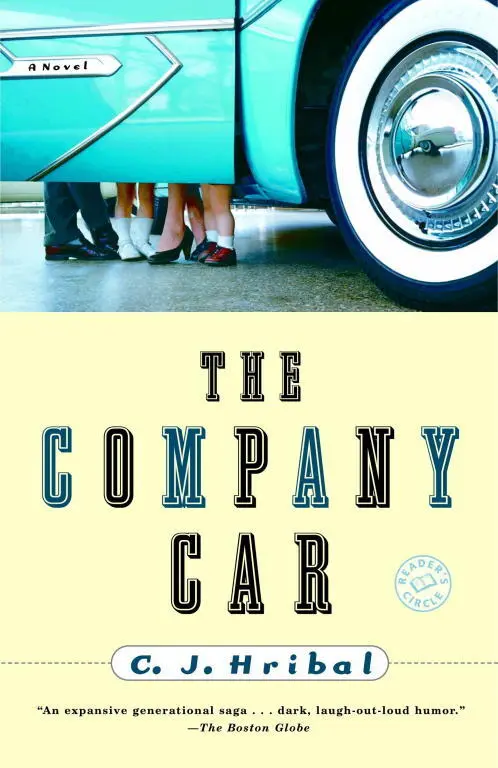
“Are we there yet?” It’s the time-honored question of kids on a long family car trip—and Emil Czabek’s children are no exception. Yet Em asks himself the same thing as the family travels to celebrate his parents’ fiftieth wedding anniversary, and he wonders if he has escaped their wonderfully bad example.
The midwestern drive is Em’s occasion to recall the Czabek clan’s amazing odyssey, one that sprawls through the second half of the twentieth century. It begins with his parents’ wedding on the TV show It’s Your Marriage, and careens from a suburban house built sideways by a drunken contractor to a farm meant to shelter the Czabeks from a country coming apart. It is the story of Em’s father, Wally—diligent, distant, hard-drinking—and his attempts to please, protect, or simply placate his nervous, restless, and sensual wife, Susan, all in plain sight of the children they can’t seem to stop having.
As the tumultuous decades merge in his mind like the cars on the highway, Em must decide whether he should take away his parents’ autonomy and place them in the Heartland Home for the Elders. Beside him, his wife, Dorie, a woman who has run both a triathlon and for public office, makes him question what he’s inherited and whether he himself has become the responsible spouse of a drifting partner—especially since she’s packing a diaphragm and he’s had a vasectomy.
Wildly comic and wrenchingly poignant, The Company Car is a special achievement, a book that drives through territory John Irving and Jonathan Franzen have made popular to arrive at a stunning destination all its own.
The Company Car — читать онлайн бесплатно полную книгу (весь текст) целиком
Ниже представлен текст книги, разбитый по страницам. Система сохранения места последней прочитанной страницы, позволяет с удобством читать онлайн бесплатно книгу «The Company Car», без необходимости каждый раз заново искать на чём Вы остановились. Поставьте закладку, и сможете в любой момент перейти на страницу, на которой закончили чтение.
Интервал:
Закладка:
Our father pointed out the cows as we passed them. “Holsteins,” he said. “Gurneys. Swiss chard, I think.”
“Wally,” said our mother, “stop making things up.” She sounded a little better. She was trying to put a good face on things. “Really,” said our mother. “We won’t be too far away. We can go back and visit on weekends.”
Our father said nothing to this.
“Really,” said our mother. “What’s three, three and a half hours?”
“We’ll be pretty busy when we first get up there,” said our father. If you weren’t listening for it, you might not have heard the sound of another thin line being drawn in the sand.
“We’ll get back,” said our mother, trying to cover up the edge in her voice. “We have to visit Nomi and Artu.” They weren’t coming with us. Artu had gotten a job managing a Thom McAn store in the Loop, and they were moving into an apartment on Fullerton Avenue. They were city people. They didn’t have that great a desire to see what ninety-nine acres looked like.
“I want green I’ll take the bus over to Grant Park,” said Nomi.
“But this is ours,” said our father.
“So’s Grant Park,” said Nomi. “I pay my taxes.”
The landscape was starting to seem familiar. Maybe it was just that we’d seen so much of it. “There certainly are a lot of signs,” said our mother. Evidently Wisconsin had decided to opt out of Lady Bird Johnson’s “Beautify America” campaign. There were billboards every twenty feet or so—Harn’s Barn Furniture, Shakey’s Pizza, Jane’s Curl Up and Dye, Hovelings’ Waste Removal, Bolar’s Pest Control, Ariens Snowblowers, Frigo Cheese, Nate’s Marina, Aid Association for Lutherans, Catholic Insurance. “Is that insurance against Catholics?” asked Cinderella, who was still feeling bitter. “Shut up,” said our father. “I don’t want a bolt of lightning hitting us twenty miles from our new home.”
“You’re not supposed to say ‘Shut up,’ ” said Ernie, who was just innocent enough to say this to our father without getting bopped.
“It’s like the old Burma-Shave signs,” said our mother. “Remember, Wally?”
“I remember.”
Our mother cast her voice into the wayback. “You kids wouldn’t remember this, but there used to be Burma-Shave signs alongside the road every few miles. They’d tell a little story, or a joke, or a jingle. You’d drive and wait for the next one to come along. Remember, Wally?”
“I remember.”
We could see our mother’s hand slide across the bench seat and our father drop his right hand from the steering wheel. They were having a moment. All was forgiven.
Tucked in among the motels and gas stations and rolling green fields was a concrete blockhouse painted the color of a grape. And up above was its sign, which Ike, who had trouble reading, read anyway: “The Night Palace. Naughty Things for Nice People.” Then he asked, “What are naughty things for nice people?”
Said our father automatically, “I don’t know, ask your mother.” So Ike repeated his question. “What are naughty things for nice people?” The rest of us wanted to know, too.
Our father waved the question away with his hand. “You know,” he said.
But we didn’t. Our imaginations were woefully inadequate for the enormity of the task at hand. What was inside there, waiting for us? Candy, treats, comic books, all the G.I. Joe paraphernalia we would need for a platoon?
Then our mother weighed in with the right intonation. “Well, honey, you… know… ” and for those of us older than Ike, everything clicked in, more or less. “You know”—the phrase meant to encompass all the answers to all our questions. It belonged, we understood, to that ungovernable and mysterious territory of marriage, to what occurred after our father kissed our mother, or pinched her butt in the kitchen, and our mother said, grinning, “Stop that, Wally,” but she didn’t mean it. What she meant was, “Later, after the kids are asleep.”
So there we were, thinking abstract thoughts about the particulars of “you know,” when we turned onto Highway 45—“It’s only twenty more miles now,” said our father—and came upon a butter yellow sign with black lettering. It was the exact same color and shape as the state license plates, and except for the painted cross and lily, it was the same general design. JESUS IS THE ANSWER, the sign proclaimed. WHAT WAS YOUR QUESTION?
“That’s quite a juxtaposition,” said our mother, and if by juxtaposition she meant that the pleasure we had been experiencing as we mentally contemplated “you know” had just turned to guilt and dust, she was certainly right about that.
Just beyond that was another twenty-four-hour sex toy emporium, advertising itself as exactly that: SEXY TOY EMPORIUM 24 HR. in bright red lettering on a white sheet that snapped in the breeze. “They must have just opened,” said our father.
“How nice,” said our mother. “Business is booming. There must be a lot of nice people with naughty needs out here.”
“Mom,” asked Ike, “what’s an emperneum?”
“Emporium,” said our mother. “That’s a fancy word for store.”
“Oh,” said Ike.
“It’s a world for head scratching,” said our father. And on we drove, slightly amazed that in between the three signs and the worlds they represented were the same green clover and cloudless blue sky.
We were even more amazed when we crested a hill twenty minutes later and our father said, “There she is. The new homestead. Our answered prayer. God’s green acres.”
We were staring at a washed-out-looking ranch house set back about two hundred feet from the road. At one time the house must have been a deep oxblood color, or a reddish mahogany. Now it looked like a dry scab, the wood where it was bare a weather-beaten silvery gray. The house was set into the side of a little hill, so part of the basement was exposed and the driveway ended in a rise. The garage was underneath an L-shaped porch on what we would come to call the second floor. The Mayflower truck was already there, unloading.
“A ranch house?” asked Cinderella. “We thought it was going to be a farmhouse.” By that she meant the kind of farmhouse in picture books: a stalwart foursquare with a large attic and root cellar and well-tended vegetable garden out back. This was a split-level ranch that hadn’t been painted since it was built in the middle of the previous decade.
“Another county heard from,” said our father. “Let’s just start unloading, shall we?”
But we didn’t. Before going into the house we had a look around. The air smelled dry. It hadn’t rained in a while, and the fields, a dusty green, showed it. You could feel sand in the wind, taste it on your teeth. Our father stood with us on the rise behind the house. The land sloped away below us toward a line of scrub trees, beyond which was an open field.
We started to run, just to experience the feeling of moving over our land, but one after another we tumbled and fell. That was how we discovered why the air was full of sand. The previous owners had hit upon a curious way of rendering their fields fallow. Or maybe they knew they were selling the place and, their hearts no longer in their work (we had heard they had moved to California), they had decided to do everything that last spring half-assed. What they had done was set the plow blades to turn up, but not over, each furrow, so that the field had the look of a baby’s curlicue, row upon row of upright waves, like Mohawk haircuts suffering osteoporosis. Every step you were liable to stumble.
Just as we were picking ourselves up, a very pale pastel green Chevy pickup pulled into our drive. A farmer got out. He was short and wiry, and wore those heavy black glasses favored by accountants, governmental officials, and orthodontists. He was wearing green chinos and a blue-and-green plaid shirt. His arms were deeply tanned, and so was his face except for his forehead, which when he took off a dusty Kafka Feed and Seed baseball cap, was lily white. He was possessed, like our father, of an easy and infectious smile. He stuck out his hand.
Читать дальшеИнтервал:
Закладка:
Похожие книги на «The Company Car»
Представляем Вашему вниманию похожие книги на «The Company Car» списком для выбора. Мы отобрали схожую по названию и смыслу литературу в надежде предоставить читателям больше вариантов отыскать новые, интересные, ещё непрочитанные произведения.





Обсуждение, отзывы о книге «The Company Car» и просто собственные мнения читателей. Оставьте ваши комментарии, напишите, что Вы думаете о произведении, его смысле или главных героях. Укажите что конкретно понравилось, а что нет, и почему Вы так считаете.