William Gibson - Spook Country
Здесь есть возможность читать онлайн «William Gibson - Spook Country» весь текст электронной книги совершенно бесплатно (целиком полную версию без сокращений). В некоторых случаях можно слушать аудио, скачать через торрент в формате fb2 и присутствует краткое содержание. Город: NEW YORK, Год выпуска: 2007, Издательство: G. P. PUTNAM’S SONS, Жанр: Современная проза, на английском языке. Описание произведения, (предисловие) а так же отзывы посетителей доступны на портале библиотеки ЛибКат.
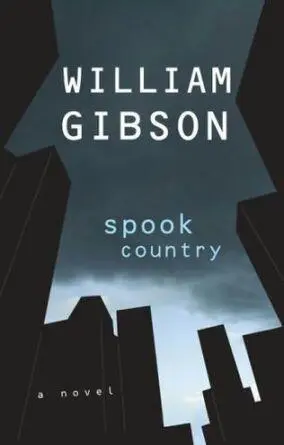
- Название:Spook Country
- Автор:
- Издательство:G. P. PUTNAM’S SONS
- Жанр:
- Год:2007
- Город:NEW YORK
- ISBN:нет данных
- Рейтинг книги:4 / 5. Голосов: 1
-
Избранное:Добавить в избранное
- Отзывы:
-
Ваша оценка:
Spook Country: краткое содержание, описание и аннотация
Предлагаем к чтению аннотацию, описание, краткое содержание или предисловие (зависит от того, что написал сам автор книги «Spook Country»). Если вы не нашли необходимую информацию о книге — напишите в комментариях, мы постараемся отыскать её.
, the challenge of writing about the present-day world drove him to create perhaps his best novel yet, and in
he remains at the top of his game. It's a stripped-down thriller that reads like the best DeLillo (or the best Gibson), with the lives of a half-dozen evocative characters connected by a tightly converging plot and by the general senses of unease and wonder in our networked, post-9/11 time.
Spook Country — читать онлайн бесплатно полную книгу (весь текст) целиком
Ниже представлен текст книги, разбитый по страницам. Система сохранения места последней прочитанной страницы, позволяет с удобством читать онлайн бесплатно книгу «Spook Country», без необходимости каждый раз заново искать на чём Вы остановились. Поставьте закладку, и сможете в любой момент перейти на страницу, на которой закончили чтение.
Интервал:
Закладка:
70. PHO
B rown took Milgrim to a dim, steamy Vietnamese restaurant, one with no English signage whatever. It felt like the anteroom of a sauna, which Milgrim found agreeable, but smelled of disinfectant, which he could have done without. It had the look of having been something else, long ago, but Milgrim found it impossible to say what that might have been. Perhaps a Scottish tearoom. Forties plywood with halfhearted Deco accents, long submerged under many coats of chipped white enamel. They ate pho, watching thin slices of pink beef graying in the shallow pool of hot, almost colorless broth, over sprouts and noodles. Milgrim had never seen Brown use chopsticks before. Brown definitely knew how to put away a bowl of pho, and tidily. When he was done, he opened his computer on their black Formica tabletop. Milgrim couldn’t see what he was doing. He supposed there might be wifi here, leaking down from the single story above, or that Brown might be looking at files he’d downloaded earlier. The old lady brought them fresh plastic tumblers of tea that might have passed for hot water, except for a peculiarly acetic aftertaste. Seven in the evening and they were the only customers.
Milgrim was feeling better. He’d asked Brown for a Rize, in the little park, and Brown, engrossed in whatever he was doing on the laptop, had unzipped a pocket on its bag and handed Milgrim an entire unopened four-pack. Now, behind Brown’s upright screen, Milgrim popped a second Rize from its bubble and washed it down with the tea-water. He’d brought his book in from the car, thinking Brown would probably work on the laptop. Now he opened it.
He found a favorite chapter: “An Elite of Amoral Supermen (2).”
“What’s that you keep reading?” asked Brown, unexpectedly, from the other side of the screen.
“‘An elite of amoral supermen,’” Milgrim replied, surprised to hear his own voice repeat the chapter title he’d just read.
“That’s what you all think,” said Brown, his attention elsewhere. “Liberals.”
Milgrim waited, but Brown said no more. Milgrim began again to read of the Beghards and the Beguines. He was well into the Quintinists, when Brown spoke again.
“Yes sir. I am.”
Milgrim froze, then realized that Brown was using his cell.
“Yes sir, I am,” Brown repeated. A pause. “It is.” Another silence. “Tomorrow.” Silence. “Yes sir.”
Milgrim heard Brown close his phone. Heard the rattle of china up the narrow stairwell of the house on N Street. The same sir? The man with the black car?
Brown called for the bill.
Milgrim closed his book.
MOISTURE IN THE air threatened to fall but didn’t. Larger drops fell from trees and wires. This had arrived while they were in the pho sauna, a different kind of moisture. The mountains had gone behind indeterminate scrims of cloud, shrinking the bowl of sky in a way Milgrim found comforting.
“Do you see it?” Brown asked. “Turquoise. Top one of three?”
Milgrim squinted through the Austrian monocular Brown had used in the surveillance van in SoHo. Superior optics, but he couldn’t find the point of focus. Fog, lights, steel boxes stacked like bricks. Angular puzzle-pieces of pipe, gantries of vast derricks, all of it jiggling, overlapping, like junk at the end of a kaleidoscope. And then it came together for him, one turquoise rectangle, topmost on its pile. “I see it,” he said.
“What are the odds,” Brown said, roughly taking the monocular, “of them stacking it where we can see it?”
Milgrim decided that the question was best treated as rhetorical, and kept silent.
“It’s off the ground,” Brown said, pressing the padded eyepiece into the orbit of his eye. “Up high. Less likelihood of tampering.” Even with that bit of apparently better news, it seemed, Brown was still rattled by the sight.
They stood facing a length of new gray twelve-foot chain-link, beside a long, plain-looking tavern, beige brick, out of which grew, surprisingly, a small, brown, four-story Edwardian hotel, called the Princeton. Milgrim had noticed how bars here seemed to possess these vestigial hotels. This one also had a large satellite dish, one of so archaic a pattern that he could imagine a younger person thinking it original to the building.
Behind them was a T-intersection, a tree-lined street running down into the street the Princeton stood on. The port, Milgrim thought, was like the long but oddly narrow train layout that had hugged a friend’s grandfather’s rec-room walls. The Princeton’s street bordered it, not far from CyndiNet’s little park.
“Visible from the street,” Brown said, the monocular like something growing out of his eye. “What are the odds against that?”
Milgrim didn’t know, and if he had, he wouldn’t necessarily have told Brown, who was obviously made very anxious and unhappy by this. But bolstered by the second Rize, he did attempt to change the subject: “The IF’s family, in New York?”
“What about them?”
“They haven’t been texting in Volapuk, have they? You haven’t needed any translation.”
“They aren’t texting in anything, that we know of. They aren’t phoning. They aren’t sending e-mails. They haven’t shown. Period.”
Milgrim thought about the signal-grabber that Brown had used, to get around the IF’s habit of constantly changing phones and numbers. He remembered his own suggestion, to Brown, to have the NSA do it, use that Echelon or something. What Brown had just said made him wonder, now, if someone might not already be doing that.
“Get in the car,” Brown said, turning back to the parked Taurus. “I don’t need you thinking, not tonight.”
71. HARD TO BE ONE
W hat do you know about money laundering, Hollis?” the old man asked, passing her a round foil dish of peas and paneer. The four of them were having an Indian meal at the far end of the second long table. They’d ordered in, which Hollis supposed was what you did if you were plotting whatever these people were plotting, and didn’t want to have to go out.
Bobby, who didn’t like Indian, and didn’t want to sit with them, was making do with a large plain cheese pizza that had required separate delivery.
“Drug dealers,” she said, using her plastic fork to shovel peas onto a white paper plate, “wind up with piles of cash. Someone told me that the big guys throw the fives and ones away, too much trouble.” Inchmale loved factoids relating to illicit behavior of all kinds. “But it’s hard to buy anything very substantial with a truckload of cash, and the banks only let you deposit a certain amount, so the guy with bags of cash has to accept a steep discount, from someone who can get it back into circulation for him.”
The old man helped himself to colorfully flecked rice and chunks of chicken in bright beige sauce. “A sufficiently large amount of cash comes to constitute a negative asset. What could you do with ten million, say, if you couldn’t account for where it had come from?”
Why was he telling her this? “How big would that be, ten million?” She thought of Jimmy’s five thousand, in her purse. “In hundreds.”
“Hundreds, always,” he said. “Smaller than you think. Two-point-four billion, in hundreds, only took up the same amount of space as seventy-four washing machines, although it was considerably heavier. A million in hundreds weighs about twenty-three pounds and fits in a small suitcase. Ten million in hundreds weighs a little over two hundred and thirty pounds.”
“Did you see that two-point-four billion yourself?” She thought it was worth asking.
“June 2004,” he said, ignoring the question, “the Federal Reserve Bank of New York opened its vault on a Sunday, to prepare that amount for shipment to Baghdad, aboard a couple of C-130 cargo planes.”
Читать дальшеИнтервал:
Закладка:
Похожие книги на «Spook Country»
Представляем Вашему вниманию похожие книги на «Spook Country» списком для выбора. Мы отобрали схожую по названию и смыслу литературу в надежде предоставить читателям больше вариантов отыскать новые, интересные, ещё непрочитанные произведения.

Обсуждение, отзывы о книге «Spook Country» и просто собственные мнения читателей. Оставьте ваши комментарии, напишите, что Вы думаете о произведении, его смысле или главных героях. Укажите что конкретно понравилось, а что нет, и почему Вы так считаете.