William Gibson - Spook Country
Здесь есть возможность читать онлайн «William Gibson - Spook Country» весь текст электронной книги совершенно бесплатно (целиком полную версию без сокращений). В некоторых случаях можно слушать аудио, скачать через торрент в формате fb2 и присутствует краткое содержание. Город: NEW YORK, Год выпуска: 2007, Издательство: G. P. PUTNAM’S SONS, Жанр: Современная проза, на английском языке. Описание произведения, (предисловие) а так же отзывы посетителей доступны на портале библиотеки ЛибКат.
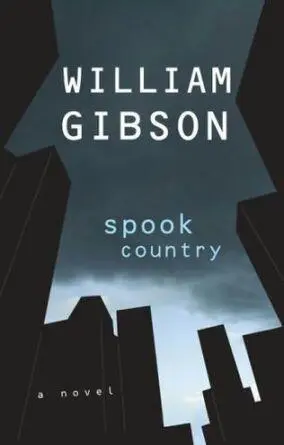
- Название:Spook Country
- Автор:
- Издательство:G. P. PUTNAM’S SONS
- Жанр:
- Год:2007
- Город:NEW YORK
- ISBN:нет данных
- Рейтинг книги:4 / 5. Голосов: 1
-
Избранное:Добавить в избранное
- Отзывы:
-
Ваша оценка:
Spook Country: краткое содержание, описание и аннотация
Предлагаем к чтению аннотацию, описание, краткое содержание или предисловие (зависит от того, что написал сам автор книги «Spook Country»). Если вы не нашли необходимую информацию о книге — напишите в комментариях, мы постараемся отыскать её.
, the challenge of writing about the present-day world drove him to create perhaps his best novel yet, and in
he remains at the top of his game. It's a stripped-down thriller that reads like the best DeLillo (or the best Gibson), with the lives of a half-dozen evocative characters connected by a tightly converging plot and by the general senses of unease and wonder in our networked, post-9/11 time.
Spook Country — читать онлайн бесплатно полную книгу (весь текст) целиком
Ниже представлен текст книги, разбитый по страницам. Система сохранения места последней прочитанной страницы, позволяет с удобством читать онлайн бесплатно книгу «Spook Country», без необходимости каждый раз заново искать на чём Вы остановились. Поставьте закладку, и сможете в любой момент перейти на страницу, на которой закончили чтение.
Интервал:
Закладка:
“And you found her, just now, in the alley?”
“Yes,” said Garreth, and suddenly smiled.
“Am I missing something, Garreth?” the old man asked.
“At least it’s not Morrissey,” Garreth said.
The old man frowned, then peered at the woman over his glasses. “And you’re here to visit Bobby?”
“I’m a journalist now,” she said. “I write for Node.”
The old man sighed. “I’m not familiar with it, I’m afraid.”
“It’s Belgian. But I can see I’ve upset Bobby. I’m sorry, Bobby. I’ll go now.”
“I don’t think that would be a good idea at all,” the old man said.
67. WARDRIVING
M ilgrim sat beside Brown on one of the two benches in a very small park, under the bare branches of a row of young maples. In front of him was fifty feet of close-cropped grass, a six-foot green-painted chain-link fence, a short steep decline covered with brambles, a wide gravel roadbed stained rust-red by its four lines of track, a paved road, and a vast stack of those metal boxes he’d seen on the ship in the harbor. He watched a streamlined metallic-blue trailer-truck drive quickly past, along the road, pulling a long, rust-streaked gray box that evidently had wheels attached.
Beyond the box-pile were mountains. Beyond those, cloud. They made Milgrim uneasy, these mountains. They didn’t look as though they could be real. Too big, too close. Snowcapped. Like the logo at the start of a film.
He looked to his right, focusing instead on a vast, almost featureless rectangular berg of concrete, windowless, probably five stories tall. On its front, in huge simple sanserif letters, reversed into the concrete between massive molded columns, he read
BC ICE & COLD STO RAGE LTD
RAGE. He glanced at Brown’s busily shifting laptop screen, where satellite images of this port area zoomed in and out; were replaced, were overlaid with yellow grids.
They had been wardriving, Brown called it, ever since requisitioning Skink’s Glock. This meant driving around with Brown’s armored laptop open on Milgrim’s lap, announcing wireless networks as they passed through them. The laptop did this in a flat, breathless, peculiarly asexual voice that Milgrim found distinctly distasteful. Milgrim had had no idea that people had these networks in their houses and apartments, the sheer number of them amazing, nor that they extended so far beyond the owner’s actual property. Some people named them after themselves, others were simply called “default,” or “network,” and some were named things like “DarkHarvester” and “Doom-smith.” Milgrim’s job was to watch a window on the screen that indicated whether or not a network was protected. If a network was unprotected, and had a strong signal, Brown could park and use his computer to get on the Internet. When he did this, color satellite images of the port would appear. Brown could zoom in on these, allowing Milgrim to see the tops of individual buildings, even the rectangles of individual boxes. Initially, Milgrim had found this mildly interesting, but now, after three hours of it, he was ready for Brown to find what he was looking for and take him back to the Best Western.
This bench had been an improvement on sitting in the car, though, and Brown seemed to have a solid connection from an apartment (“CyndiNet”) in the three-story stucco complex behind them, its brown-painted steel balconies stacked with barbecues, plastic chairs, and bicycles. But now Milgrim’s butt ached. He stood and rubbed it. Brown was engrossed in whatever he was doing. Milgrim walked forward, across the rough short grass, expecting to be stopped. No order came.
When he reached the green fencing, he looked through it, to his left, and found a rectangular orange diesel train engine, its blunt nose painted with crisp diagonals in black and white. It sat, inert, on the nearest set of tracks, beside a rectangular white sign, obviously intended to be read by trainmen, that said HEATLEY. On a yellow triangle a few feet before it, REDUCE SPEED. He read the names on individual boxes in their stacks: HANJIN, COSCO, TEX, “K” LINE, MAERSK SEALAND. Beyond them, further inside the port, were tall buildings of unknown purpose, and the arms of those same orange cranes he’d seen from the black Zodiac.
He looked back at Brown, hunched over his little screen, lost to the world. “I could run away,” Milgrim said, softly, to himself. Then he touched the green-painted steel horizontal that topped the fence, turned, and walked back to the bench.
He missed his overcoat.
68. SNAP
H ollis thought he looked a little like William Burroughs, minus the bohemian substrate (or perhaps the methadone). Like someone who’d be invited quail shooting with the vice-president, though too careful to get himself shot. Thin steel spectacle frames. His remaining hair neatly barbered. Seriously good dark overcoat.
They sat facing one another now in worn metal chairs that might once have done duty in a church hall. His legs were crossed. He wore shoes that made her think of old French priests, bicycling. Black toe-cap oxfords, polished to a dull glow, but thickly soled with black rubber.
“Miss Henry,” he began, then paused, his voice reminding her of an American consular official she’d met in Gibraltar, when she’d been seventeen and had had her passport stolen. “Pardon me. You aren’t married?”
“No.”
“Miss Henry, we find ourselves in an awkward situation.”
“Mr….?”
“I’m sorry,” he said, “but I can’t give you my name. My friend tells me that you’re a musician. Is that correct?”
“Yes.”
“And you tell me that you are also a journalist, on assignment from a British magazine.” A gray eyebrow rose, above an arc of polished steel.
“Node. Based in London.”
“And you’d approached Bobby in Los Angeles, regarding your article?”
“I did. Though I can’t say he was pleased with my having done that.” She glanced at Bobby, hunched on the dirty floor, gripping his knees, eyes hidden by his forelock. From another of these chairs, a dark-haired boy of interestingly indeterminate race watched Bobby with what she took to be a combination of fascination and unease.
The other man, the one who’d discovered her in the alley, and so politely but firmly invited her up here, had now opened the long gray case he’d been given by the man she’d surreptitiously watched him meet in the alley. Not quite surreptitiously enough. This lay with its lid up, now, on one of the long tables, but seated here she couldn’t see what it contained.
“I’m sorry for coming here,” she said. “He’s in terrible shape.”
“Bobby’s under stress,” the old man said. “His work.”
“Locative art?”
“Bobby’s been working for me, assisting with a project of mine. It’s nearing closure. The stress Bobby is experiencing has to do with that. You’ve arrived at a most inopportune time, Miss Henry.”
“Hollis.”
“We can’t let you go, Hollis, until we’ve completed what we’ve come here for.”
She opened her mouth to speak, then closed it.
“We aren’t criminals, Hollis.”
“Excuse me, but if you aren’t criminals, or the police, I don’t see why I can’t leave when I want to.”
“Exactly right. The fact is, we are intent, here, on committing a number of criminal offenses, under both Canadian and American law.”
“Then how aren’t you criminals, exactly?”
“Not in your ordinary sense,” he said. “Our motivation is decidedly nonstandard, and what we intend to do, as far as I know, has never been attempted before. I can assure you, though, that we do not anticipate killing anyone, and we hope to harm no one physically.”
Читать дальшеИнтервал:
Закладка:
Похожие книги на «Spook Country»
Представляем Вашему вниманию похожие книги на «Spook Country» списком для выбора. Мы отобрали схожую по названию и смыслу литературу в надежде предоставить читателям больше вариантов отыскать новые, интересные, ещё непрочитанные произведения.

Обсуждение, отзывы о книге «Spook Country» и просто собственные мнения читателей. Оставьте ваши комментарии, напишите, что Вы думаете о произведении, его смысле или главных героях. Укажите что конкретно понравилось, а что нет, и почему Вы так считаете.