Ninni Holmqvist - The Unit
Здесь есть возможность читать онлайн «Ninni Holmqvist - The Unit» весь текст электронной книги совершенно бесплатно (целиком полную версию без сокращений). В некоторых случаях можно слушать аудио, скачать через торрент в формате fb2 и присутствует краткое содержание. Жанр: Современная проза, на английском языке. Описание произведения, (предисловие) а так же отзывы посетителей доступны на портале библиотеки ЛибКат.
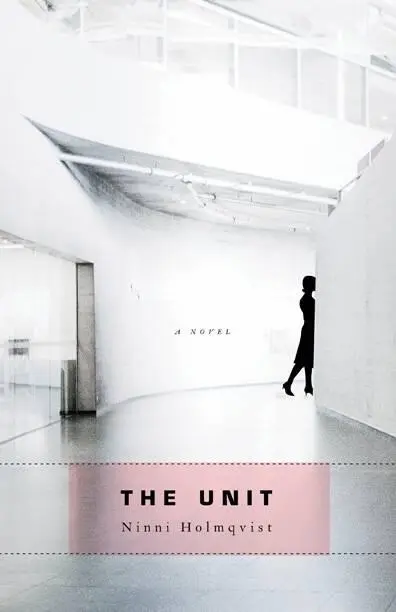
- Название:The Unit
- Автор:
- Жанр:
- Год:неизвестен
- ISBN:нет данных
- Рейтинг книги:3 / 5. Голосов: 1
-
Избранное:Добавить в избранное
- Отзывы:
-
Ваша оценка:
The Unit: краткое содержание, описание и аннотация
Предлагаем к чтению аннотацию, описание, краткое содержание или предисловие (зависит от того, что написал сам автор книги «The Unit»). Если вы не нашли необходимую информацию о книге — напишите в комментариях, мы постараемся отыскать её.
The Unit uncannily echoes its organ-donation-dystopia predecessor, Kazuo Ishiguro’s Never Let Me Go (2005); both imagine societies of extreme utilitarianism that plunder their margins for body parts, and both raise the prospect of art for art’s sake, and love for love’s, as weapons against such thinking. The Unit’s heroine, Dorrit, has chosen not to have children and thus “spill over like rising bread dough”; at the book’s opening, Dorrit’s independence has just earned her incarceration in the Unit, a death camp puzzlingly replete with art galleries and gourmet restaurants where her individualism seems to lapse into passivity.
Through flashbacks, we learn of all Dorrit has lost-her career as a novelist, her beloved dog, the small house she owned herself, the opportunities to save herself by becoming “useful” to society. These snippets of memory are interspersed with descriptions of the eponymous unit and its dying inhabitants, descriptions so matter-of-fact they lull. The novel grips toward the end when Dorrit finds love-and with it a potential escape-and makes a startling choice.
Dorrit’s play-by-play narration can be clunky in translation, but the spare, cumulative prose effectively reveals a character whose story can barely ward off the disintegration of the self it relates. Holmqvist cleverly makes that very self unreliable; The Unit is the latest in a trend of anti-heroic dystopias such as Never Let Me Go and P.D. James’s The Children of Men. In these novels of bad futures, the trustworthy memories of protagonists such as Nineteen Eighty-Four’s Winston Smith (“Airstrip One… had been called England or Britain, though London, [Winston] felt fairly certain, had always been called London”) are replaced by the self-delusions of narrators who mislead the reader and themselves lose control of the stories they are telling. In these novels, rebellion must be expressed obliquely. Like Kathy, the complacent carer of Never Let Me Go, who survives her childhood friends, nursing them as they donate all their organs, Dorrit displaces her anger onto a clearer-eyed friend who calls the Unit what it is, a “luxury slaughterhouse.”
While Holmqvist builds a powerfully imaginative scenario around the concept of killing off the childless, her message on gender roles is clumsy and unconvincing. In Dorrit’s world, flirting and other “typically male” behavior has been criminalized, and retrograde domestic fantasies have to be played out in secret, making the missionary position an act of transgression. We have come a long way from the rage of Margaret Atwood’s 1985 A Handmaid’s Tale, with its neo-Biblical America in which all women are forced either to bear children or to raise them. In today’s climate of threatened reproductive rights, a critique of compulsory motherhood would be welcome, but The Unit displays the same innate conservatism that is the pitfall of Never Let Me Go-a disturbing willingness to locate tragedy not in the horror of forced organ donation and premature death, but in Kathy and Dorrit’s lost opportunities to become mothers.
Copyright 2010 Fran Bigman
The Unit — читать онлайн бесплатно полную книгу (весь текст) целиком
Ниже представлен текст книги, разбитый по страницам. Система сохранения места последней прочитанной страницы, позволяет с удобством читать онлайн бесплатно книгу «The Unit», без необходимости каждый раз заново искать на чём Вы остановились. Поставьте закладку, и сможете в любой момент перейти на страницу, на которой закончили чтение.
Интервал:
Закладка:
But they were there afterward as well, after those first few days when I was presumably in shock. Quiet. In the background. On standby. And they were here whenever I needed them-or needed anyone at all-to talk to, or just to have around. And they did it without asking anything of me, without expecting me to be grateful or even pleasant. This had gone on for over two months.
When Vivi finally said one day that she was thinking of inviting some friends to dinner, and then, very cautiously, added: “It would be really lovely if you came too, Dorrit,” I felt that yes, perhaps I ought to try. And after a lot of dillydallying, here I was.
“You came!” said Vivi, taking my hand and pulling me in-as if she was afraid my courage would fail at the last minute, and I would run away if she didn’t grab hold of me and give me a helping hand.
She led me over to the table where the other guests were already seated and were just helping themselves to newly baked whole-grain bread and a steaming carrot soup with fresh chervil, because they had just given up on the idea that I might turn up. There was Elsa, Alice and Lena, and two people I’d never seen before. Vivi introduced them to me and we shook hands. They were called Görel and Mats.
Mats had arrived last month, Görel just a week ago, and she still had that expression newcomers always wear: horror and grief and rage-or whatever it might be. The fear of death, perhaps.
I sat down between Alice and Elsa, who hugged me from their respective sides. Alice took the opportunity to plant a noisy kiss on my cheek, and everyone laughed. When I turned and looked at her up close for the first time in ages, I noticed that she had changed. The coarseness of her facial features had been replaced by a kind of fragility, to a certain extent. She looked soft in a way I had never seen her look before. I thought perhaps the male hormones were finally beginning to leave her body. But she looked so tired as well, slightly hollow-eyed, slightly haggard. But then who isn’t haggard? I said to myself, pushing aside the stirrings of a sense of unease, and helped myself to the carrot soup.
During dinner the conversation moved through a range of topics. I didn’t take much part in it, I just sat there listening most of the time. Eventually they started talking about the outside world. The community. Things were changing out there. The number of childless fifty-year-old women and sixty-year-old men was dwindling significantly, and dispensable individuals were now being taken from professions that had previously been completely protected. It no longer mattered if you were a schoolteacher or a day care teacher or a welfare officer or a nurse or any other profession that involved caring for people; not even midwives were given a dispensation now; if you were childless, you were childless, end of story.
“And as if that weren’t enough,” said Mats, “there’s talk of reducing the age limit. People are really stressed out. Kids are getting pregnant at seventeen or eighteen, just to be on the safe side. The queues at the fertility and IVF clinics are getting longer and longer. The same with the adoption centers. Some people don’t make it to the front of the queue before it’s too late. And cases of HIV and chlamydia are increasing rapidly, because women are just going out and picking up one stranger after another and having unprotected sex.”
“And the number of small children being kidnapped has increased as well,” added Görel. “People are desperate.”
“There don’t seem to be any guarantees about anything any longer,” said Vivi. “Not for anyone. It makes everyone feel so insecure.”
“Yes, but why didn’t we think of that?” said Elsa. “Stealing a kid. The way these needed individuals spread themselves out with their strollers and carriages and little ones running around all over the place, they can’t possibly keep an eye on them all at the same time. I think it would be easy just to pick a sleeping baby out of its stroller in passing, while the parents are trying to watch the rest of the kids.”
I thought: So that’s the reason! That’s why Petra had so obstinately maintained that I was an unsuitable parent: because there was a shortage of dispensable individuals. The demand for organ donors and candidates for various experiments was no doubt as great as ever-perhaps even greater. I thought. But I didn’t say anything. Because I hadn’t yet told my friends I was pregnant. I hadn’t found the right opportunity yet.
Suddenly I realized that this was as good an opportunity as any, right here and now. So I opened my mouth to say: “Speaking of children, I’ve got something to tell you…”
But Alice beat me to it. Although she didn’t say “speaking of children,” she just came straight out and said, apropos of nothing at all:
“I’ve got something to tell you.” And she went on: “I’ve got something I have to tell you. And I have to do it as quickly as possible because I might not have much time left so I’ll do it now. I’ve got a brain tumor.”
There was silence. Not a cough, not a gasp, not even the slightest clink of glass, porcelain or cutlery. Just silence. Everyone froze, everyone turned to look at Alice as she sat there beside me, so small all of a sudden, it seemed to me, so old all at once. Just silence, just endless stillness, until she herself spoke again:
“They think it’s the radiation.” She turned to Görel, the new arrival, and explained: “You see, I’m involved in an experiment with some kind of radiation. Something radioactive.”
“But why?” asked Görel.
“Why? Because I’m a dispensable person and a lab bunny, of course!” said Alice, screwing her mouth up and chewing like a bunny rabbit.
Nobody laughed. Not even Alice.
“No, no,” said Görel. “I mean: what are they going to use the radiation for? What’s the point of the actual experiment?”
“The point?” said Alice, waving one hand dismissively. “My dear friend, I haven’t the faintest idea!”
2
The longer a person remains in the reserve bank unit, the more risky the experiments he or she is expected to participate in, while at the same time he or she moves closer to donating vital organs.
Now, knowing that there was a shortage of dispensable individuals, I could see that the situation in the unit had changed somewhat: fewer new arrivals came in each month-now it was usually two or three, whereas earlier it had been between five and ten. People were used up more quickly, and the generations grew shorter. Alice, for example, who had presumably been exposed to experiments involving chemical weapons, had only been in the unit for a year and a half. And during the time immediately following the dinner with Vivi, my closest friends had to undergo the following:
Elsa took part in a series of short but debilitating humane experiments, interspersed with donations. First it was a test involving some new super cleaning fluid, then an experiment with cigarettes and other tobacco- and nicotine-based products. Then her respiratory organs were exposed to vapor and gases from various chemical solvents. And between these experiments she donated part of her small intestine, the cornea from one eye, and the auditory bone from one ear. These operations just meant that she couldn’t see or hear as well, and that she got very tired, but the experiments gave her a horrible, itchy eczema on her hands and arms, bronchitis, and even asthma. Her general fitness and overall condition worsened. She was no longer the same athletic woman she had been just a year earlier; she got out of breath very easily and often had to rest. She stopped diving, and instead contented herself with quietly swimming the breaststroke in the shallow pool.
Читать дальшеИнтервал:
Закладка:
Похожие книги на «The Unit»
Представляем Вашему вниманию похожие книги на «The Unit» списком для выбора. Мы отобрали схожую по названию и смыслу литературу в надежде предоставить читателям больше вариантов отыскать новые, интересные, ещё непрочитанные произведения.







Обсуждение, отзывы о книге «The Unit» и просто собственные мнения читателей. Оставьте ваши комментарии, напишите, что Вы думаете о произведении, его смысле или главных героях. Укажите что конкретно понравилось, а что нет, и почему Вы так считаете.