Ninni Holmqvist - The Unit
Здесь есть возможность читать онлайн «Ninni Holmqvist - The Unit» весь текст электронной книги совершенно бесплатно (целиком полную версию без сокращений). В некоторых случаях можно слушать аудио, скачать через торрент в формате fb2 и присутствует краткое содержание. Жанр: Современная проза, на английском языке. Описание произведения, (предисловие) а так же отзывы посетителей доступны на портале библиотеки ЛибКат.
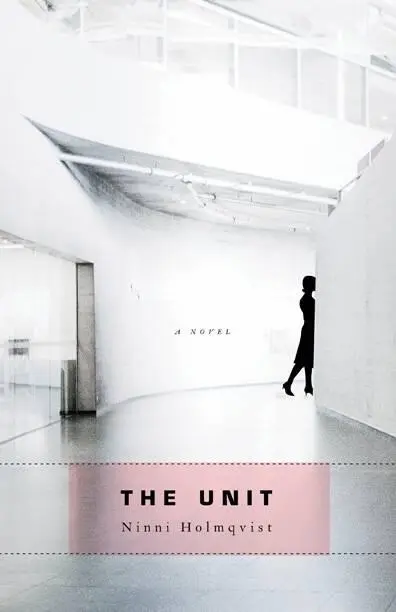
- Название:The Unit
- Автор:
- Жанр:
- Год:неизвестен
- ISBN:нет данных
- Рейтинг книги:3 / 5. Голосов: 1
-
Избранное:Добавить в избранное
- Отзывы:
-
Ваша оценка:
The Unit: краткое содержание, описание и аннотация
Предлагаем к чтению аннотацию, описание, краткое содержание или предисловие (зависит от того, что написал сам автор книги «The Unit»). Если вы не нашли необходимую информацию о книге — напишите в комментариях, мы постараемся отыскать её.
The Unit uncannily echoes its organ-donation-dystopia predecessor, Kazuo Ishiguro’s Never Let Me Go (2005); both imagine societies of extreme utilitarianism that plunder their margins for body parts, and both raise the prospect of art for art’s sake, and love for love’s, as weapons against such thinking. The Unit’s heroine, Dorrit, has chosen not to have children and thus “spill over like rising bread dough”; at the book’s opening, Dorrit’s independence has just earned her incarceration in the Unit, a death camp puzzlingly replete with art galleries and gourmet restaurants where her individualism seems to lapse into passivity.
Through flashbacks, we learn of all Dorrit has lost-her career as a novelist, her beloved dog, the small house she owned herself, the opportunities to save herself by becoming “useful” to society. These snippets of memory are interspersed with descriptions of the eponymous unit and its dying inhabitants, descriptions so matter-of-fact they lull. The novel grips toward the end when Dorrit finds love-and with it a potential escape-and makes a startling choice.
Dorrit’s play-by-play narration can be clunky in translation, but the spare, cumulative prose effectively reveals a character whose story can barely ward off the disintegration of the self it relates. Holmqvist cleverly makes that very self unreliable; The Unit is the latest in a trend of anti-heroic dystopias such as Never Let Me Go and P.D. James’s The Children of Men. In these novels of bad futures, the trustworthy memories of protagonists such as Nineteen Eighty-Four’s Winston Smith (“Airstrip One… had been called England or Britain, though London, [Winston] felt fairly certain, had always been called London”) are replaced by the self-delusions of narrators who mislead the reader and themselves lose control of the stories they are telling. In these novels, rebellion must be expressed obliquely. Like Kathy, the complacent carer of Never Let Me Go, who survives her childhood friends, nursing them as they donate all their organs, Dorrit displaces her anger onto a clearer-eyed friend who calls the Unit what it is, a “luxury slaughterhouse.”
While Holmqvist builds a powerfully imaginative scenario around the concept of killing off the childless, her message on gender roles is clumsy and unconvincing. In Dorrit’s world, flirting and other “typically male” behavior has been criminalized, and retrograde domestic fantasies have to be played out in secret, making the missionary position an act of transgression. We have come a long way from the rage of Margaret Atwood’s 1985 A Handmaid’s Tale, with its neo-Biblical America in which all women are forced either to bear children or to raise them. In today’s climate of threatened reproductive rights, a critique of compulsory motherhood would be welcome, but The Unit displays the same innate conservatism that is the pitfall of Never Let Me Go-a disturbing willingness to locate tragedy not in the horror of forced organ donation and premature death, but in Kathy and Dorrit’s lost opportunities to become mothers.
Copyright 2010 Fran Bigman
The Unit — читать онлайн бесплатно полную книгу (весь текст) целиком
Ниже представлен текст книги, разбитый по страницам. Система сохранения места последней прочитанной страницы, позволяет с удобством читать онлайн бесплатно книгу «The Unit», без необходимости каждый раз заново искать на чём Вы остановились. Поставьте закладку, и сможете в любой момент перейти на страницу, на которой закончили чтение.
Интервал:
Закладка:
We tried to spend time together as we used to do, Alice, Elsa, Vivi and I, but we didn’t have the same joy, the same healing humor between us. This was partly because Alice ’s illness increasingly overshadowed everything, and partly because the relationship between Elsa and me was chilly to say the least, which naturally affected the atmosphere too.
I hadn’t gone through with my plan to tell Vivi and Alice about my condition as well. I presumed that Elsa had passed the information on to Vivi, and I wasn’t sure whether I ought to tell Alice at all. When I noticed how quickly she was deteriorating, getting lost in time and space more and more often, and staying that way for longer and longer periods, I decided there wasn’t any point in saying anything.
But even if we couldn’t quite manage to socialize like before, we still took care of Alice. When she became bedridden we took turns sitting with her every evening and night. During the day members of staff came and went, made sure that she ate something, washed herself and got dressed-things that at quite an early stage she forgot to do, or forgot that she’d done already. Sometimes she took a shower every hour or so, sometimes she didn’t wash for several days, sometimes she ate breakfast several times a day, while on other days she would forget to eat at all. She would go around wearing several layers of clothes because, strangely enough, she didn’t notice that she was already dressed when she decided it was time to put some clothes on.
One night when it was my turn to sit with her, I was woken by the sound of her crying as I lay on the sofa in the living room. She was crying like a child, that all-absorbing, abandoned sobbing that is so heartrending you’ll do anything in your power to make things right again, and I shot up from the sofa, felt dizzy and almost lost my balance in the darkness, leaned on the wall for support, and tottered off feeling slightly nauseous. In the bedroom I switched on the light and she was lying there in bed, flat on her back with her arms down by her sides, looking up at the ceiling and sobbing so hard that her whole body was shaking.
I sat down and got hold of her shoulders.
“There now, Alice, it’s okay,” I said. “What is it? What are you sad about?”
She didn’t reply, just kept on sobbing as if she could neither see, hear, nor feel my presence. I spoke to her in a calming voice, stroked her arms, her hair and her cheeks, dried her tears with the back of my hand. I tried to reach her, tried to make her understand that she wasn’t alone.
“I’m here, Alice,” I said. “I’m here. Maybe I can help you. Don’t be scared, there’s nothing to be scared of.”
I just kept talking, as reassuringly and calmly as I could, and after a long time the sobbing slowly subsided and she said:
“I know. I know you’re there, Mom, but I can’t see you.”
For a fraction of a second I considered whether I should tell her that I wasn’t her mother, but decided not to bother; when it came down to it, it didn’t really matter who I was at that particular moment, and instead I said:
“That’s because you’re looking up at the ceiling, darling. I’m sitting beside you.”
She lowered her gaze then, her eyes flickering around the room, turned her head in my direction and eventually managed, with some difficulty, to focus on my face. She sighed deeply, closed her eyes, rolled over onto her side facing me, curled up, made a few contented smacking noises with her lips, then fell asleep. I pulled the covers up over her shoulder, stroked her hair and went back to the sofa in the living room, and I fell asleep too.
In the morning she knew exactly who I was once again. She was just tired, bone weary somehow-the sort of tiredness, I assume, that sleep doesn’t really touch; you just have to work your way through it, and either it disappears of its own accord, or it stays put and becomes a part of you. In Alice ’s case, of course, the tiredness was due to the tumor, and was definitely there to stay. I helped her to the bathroom then back to bed, an effort so taxing that she went back to sleep for a while as I got breakfast ready.
“Thank you, Dorrit,” she said, slurring her words slightly, when I carried in the breakfast tray. “You’re an angel.”
“So are you,” I said. “You’ve taken care of me plenty of times.”
She drew herself up into a sitting position and I plumped up the pillows so that she had some support for her back when she leaned against the headboard.
“Yes, but you weren’t ill,” she said. “It’s harder work with sick people, especially if they’re going to die soon.”
As I passed her a cup of coffee I said I wasn’t sure if I agreed with her. “A person who’s physically healthy but in despair can be just as difficult to deal with, surely. Looking after someone who’s ill is quite simple, really; at least you know what you have to do, in purely practical terms. But what do you do with someone you can’t do anything for?”
Alice smiled.
“You listen, I guess,” she said.
“Yes, and isn’t that the hardest thing of all?” I said.
“Is it? It doesn’t require any special knowledge or skills. Just the ability to hear. And a little calm in your body. The ability to sit still and listen. I don’t see why it should be so difficult.”
Then she turned her attention to her coffee for a while, taking tiny, tiny sips, closing her eyes for a second after each sip, looking as if she was really enjoying it. Then she suddenly stopped, looked at me and said:
“Try not to be angry with Elsa.”
“What?” I said. “So you know we…”
I didn’t know how to finish the sentence, so I let it hang there, gaping, incomplete.
“I’ve noticed,” replied Alice in that slow, tired tone of voice that had become hers. She added:
“You have told her, haven’t you?”
“Told her what?”
“That you’re having a baby, of course.”
I frowned and glanced down at my stomach.
“Oh, it’s been obvious from the start,” said Alice. “Ever since… let’s see, it must have been just before Johannes died, I think. A week or so before that.”
I must have looked as if I’d seen a ghost, because she laughed and said:
“Don’t look at me like that, there’s nothing strange about it, I’m not psychic or anything. I’ve known so many women who’ve gotten pregnant and had children that I’ve learned to recognize the signs straightaway. Something happens to a woman’s face when she becomes pregnant; it becomes a fraction broader, somehow, and so does the mouth. And there’s something subtle about the posture and the look in the eyes that changes too, but I can’t quite put my finger on it.”
She put the cup down on the bedside table, her hand shaking; it was as if she didn’t have enough strength to talk and hold a coffee cup at the same time.
“What are you going to do?” she asked. “Are you going to give birth to it?”
“Yes.”
“And then?”
I snorted. “What do you think?” I said.
“I don’t think anything,” she said. “You tell me.”
“They’re going to take it away,” I said. “They’re going to take it from me and give it to someone else.”
Alice looked at me, with absolute clarity, as if she were looking straight through me, but she didn’t say anything else; it was as if she knew, or at least suspected, that I had a choice, a possibility, a way out.
There’s something strange about people who know they’re going to die soon. It’s as if their senses are expanded to superhuman dimensions, as if they acquire X-ray vision and become mind readers and can see into the future and suddenly understand everything that’s going on inside and between other people. And either that really is the case, or else we just want to believe it is, because it makes dying more attractive and easier to reconcile ourselves with, somehow.
Читать дальшеИнтервал:
Закладка:
Похожие книги на «The Unit»
Представляем Вашему вниманию похожие книги на «The Unit» списком для выбора. Мы отобрали схожую по названию и смыслу литературу в надежде предоставить читателям больше вариантов отыскать новые, интересные, ещё непрочитанные произведения.









Обсуждение, отзывы о книге «The Unit» и просто собственные мнения читателей. Оставьте ваши комментарии, напишите, что Вы думаете о произведении, его смысле или главных героях. Укажите что конкретно понравилось, а что нет, и почему Вы так считаете.