Ninni Holmqvist - The Unit
Здесь есть возможность читать онлайн «Ninni Holmqvist - The Unit» весь текст электронной книги совершенно бесплатно (целиком полную версию без сокращений). В некоторых случаях можно слушать аудио, скачать через торрент в формате fb2 и присутствует краткое содержание. Жанр: Современная проза, на английском языке. Описание произведения, (предисловие) а так же отзывы посетителей доступны на портале библиотеки ЛибКат.
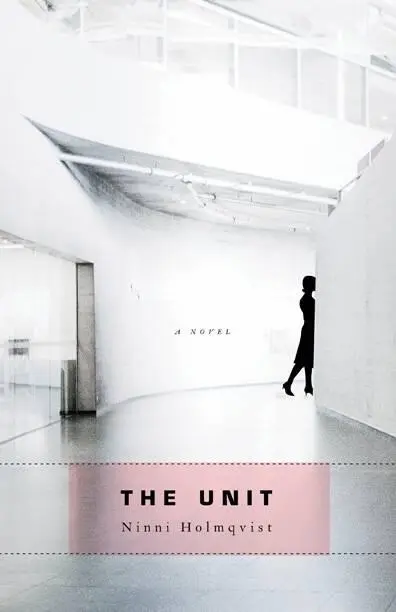
- Название:The Unit
- Автор:
- Жанр:
- Год:неизвестен
- ISBN:нет данных
- Рейтинг книги:3 / 5. Голосов: 1
-
Избранное:Добавить в избранное
- Отзывы:
-
Ваша оценка:
The Unit: краткое содержание, описание и аннотация
Предлагаем к чтению аннотацию, описание, краткое содержание или предисловие (зависит от того, что написал сам автор книги «The Unit»). Если вы не нашли необходимую информацию о книге — напишите в комментариях, мы постараемся отыскать её.
The Unit uncannily echoes its organ-donation-dystopia predecessor, Kazuo Ishiguro’s Never Let Me Go (2005); both imagine societies of extreme utilitarianism that plunder their margins for body parts, and both raise the prospect of art for art’s sake, and love for love’s, as weapons against such thinking. The Unit’s heroine, Dorrit, has chosen not to have children and thus “spill over like rising bread dough”; at the book’s opening, Dorrit’s independence has just earned her incarceration in the Unit, a death camp puzzlingly replete with art galleries and gourmet restaurants where her individualism seems to lapse into passivity.
Through flashbacks, we learn of all Dorrit has lost-her career as a novelist, her beloved dog, the small house she owned herself, the opportunities to save herself by becoming “useful” to society. These snippets of memory are interspersed with descriptions of the eponymous unit and its dying inhabitants, descriptions so matter-of-fact they lull. The novel grips toward the end when Dorrit finds love-and with it a potential escape-and makes a startling choice.
Dorrit’s play-by-play narration can be clunky in translation, but the spare, cumulative prose effectively reveals a character whose story can barely ward off the disintegration of the self it relates. Holmqvist cleverly makes that very self unreliable; The Unit is the latest in a trend of anti-heroic dystopias such as Never Let Me Go and P.D. James’s The Children of Men. In these novels of bad futures, the trustworthy memories of protagonists such as Nineteen Eighty-Four’s Winston Smith (“Airstrip One… had been called England or Britain, though London, [Winston] felt fairly certain, had always been called London”) are replaced by the self-delusions of narrators who mislead the reader and themselves lose control of the stories they are telling. In these novels, rebellion must be expressed obliquely. Like Kathy, the complacent carer of Never Let Me Go, who survives her childhood friends, nursing them as they donate all their organs, Dorrit displaces her anger onto a clearer-eyed friend who calls the Unit what it is, a “luxury slaughterhouse.”
While Holmqvist builds a powerfully imaginative scenario around the concept of killing off the childless, her message on gender roles is clumsy and unconvincing. In Dorrit’s world, flirting and other “typically male” behavior has been criminalized, and retrograde domestic fantasies have to be played out in secret, making the missionary position an act of transgression. We have come a long way from the rage of Margaret Atwood’s 1985 A Handmaid’s Tale, with its neo-Biblical America in which all women are forced either to bear children or to raise them. In today’s climate of threatened reproductive rights, a critique of compulsory motherhood would be welcome, but The Unit displays the same innate conservatism that is the pitfall of Never Let Me Go-a disturbing willingness to locate tragedy not in the horror of forced organ donation and premature death, but in Kathy and Dorrit’s lost opportunities to become mothers.
Copyright 2010 Fran Bigman
The Unit — читать онлайн бесплатно полную книгу (весь текст) целиком
Ниже представлен текст книги, разбитый по страницам. Система сохранения места последней прочитанной страницы, позволяет с удобством читать онлайн бесплатно книгу «The Unit», без необходимости каждый раз заново искать на чём Вы остановились. Поставьте закладку, и сможете в любой момент перейти на страницу, на которой закончили чтение.
Интервал:
Закладка:
In the end Alice said:
“Anyway, try not to be angry with Elsa.”
“I’m not angry with Elsa,” I said. “She’s the one who’s angry with me.”
“Try to understand her,” said Alice. “I might have reacted like her as well, if it weren’t… if it hadn’t been for this.”
She tapped herself on the head.
“Try to understand her,” she repeated, and I was afraid she was on her way into a new episode of short-term memory loss. But she went on: “You haven’t forgotten how it feels to lose a friend because of a child, I hope?”
“But she isn’t losing me,” I said. “I’m here, I’m not about to disappear. And if anyone is losing anything it’s me, losing my child.”
Alice looked at me in that same way again, clear and omniscient. I didn’t say any more, and we sat there quietly for a while. She reached for her coffee cup again. I offered her a plate with two cheese sandwiches that I’d made, but she shook her head. She looked even more tired now, and I had the impression that I was literally watching her disappear, little by little, before my eyes. I put the plate back on the bedside table, and all of a sudden I felt inexpressibly sad; it was as if a trapdoor had opened inside me, and I couldn’t stop myself from crying. In a vain attempt to hide the fact that I was crying, I turned my head away.
“Dorrit, my dear…,” said Alice, putting her cup back down on the bedside table.
“I’m sorry!” I sniveled. “I ought to be strong. Strong for you. But it’s just that I can’t stand-I hate-the thought of losing you!”
“I know that, Dorrit,” she replied calmly. “It comforts me to know that. And that’s enough for me. You don’t need to be strong.”
That was the first time in my life someone had told me I didn’t need to be strong.
“Hey,” she said next. “How about climbing in here with me for a while? I think it would do both of us good.”
I nodded, blew my nose on one of the napkins on the tray, then went around to the other side of the double bed, lifted up the covers and crawled in beside Alice. She was warm, red hot, like a stove.
That was the last real conversation I had with the Alice I had gotten to know. That was the last time she knew it was me she was talking to for more than a couple of minutes at a time. Within a week she had made her final donation. A boy with diabetes received islet cells from her pancreas, and one of the country’s most popular television personalities, a mother with two children, received her remaining kidney.
4
My new writing project had remained more or less untouched over the past few months. The only thing I had done was to read through what I had already written: thirty pages or so, a good start-though I say so myself. But a good start doesn’t go far, not if you no longer have any idea how you want the narrative to proceed, and particularly if you can no longer remember what you wanted to achieve with the story. It was as if the train had left, the train carrying the theme and my motivation.
I did, however, make one last attempt just after Alice ’s final donation. I thought perhaps I might find some solace in the project, I thought I might be able to rediscover my motivation through that solace. So I sat down on my fantastic desk chair with support for the base of my spine, my neck and my arms, switched on the computer, opened the file. Then I sat there for a good while, three or four hours or more. Wrote a few lines. Deleted them. Wrote a few more lines. Deleted them again. Took out a notepad and wrote by hand instead. Crossed out what I’d written, turned over the page and tried again, wrote, crossed out, turned the page and tried over and over again, but no, I just got angry and tired. In the end I decisively selected the document on the screen and moved it to the recycle bin, then emptied the recycle bin and shut down the computer. Leaned back in the chair against the headrest. My gaze happened to fall on Majken’s picture of the deformed fetus, either grimacing with pain or smiling scornfully. And it was then, at that very moment, that I first felt a movement in my belly. A brief, fleeting movement a bit like an air bubble, somehow, that was definitely not gas or anything else connected with the digestive process.
I looked down at my belly and it happened again: a kick or a push, perhaps even a movement of the head, how should I know, but it was the first tangible sign that something was not only growing but also living-and living it up-in there.
“Hello there,” I whispered, and pressed my hand gently against my stomach over my shirt. “Hello, little one.”
I did nothing more that day. I just called down to lab 4, where I was currently participating in a safe but irritating psychological experiment to do with living space and territory and so on, and said I needed to rest today. The team leading the experiment was very understanding about that kind of thing. It was partly because they knew I was expecting a child and was tired and slightly nauseous almost all the time, and partly because they were psychologists, so I guess it was their job to be understanding. Afterward I went and lay down on the bed, took the fossil stone out of my left pocket and lay there holding it, turning it round and round in one hand while the other hand rested on my stomach beneath my shirt.
After an hour and a half I felt another bubbling movement in my belly, and at the same time a very, very slight, almost imperceptible pressure against the palm of my hand. I pressed back, carefully. Another movement, almost like a reply. I gasped, then I laughed, then I cried, then I got up and went to the bathroom and had a pee and washed my face. Then I went and lay down again and fell asleep.
If anyone had asked me whether these early kicks or pushes made me happy or unhappy, I wouldn’t have known how to answer them. I didn’t know whether what I felt was longing or loss, togetherness or loneliness.
A few days later I went for an ultrasound. Amanda Jonstorp herself was doing it. She squeezed out a blob of clear gel; it was cold and it tickled and I giggled a little. She smiled at me, then picked up the wide probe and began to slide it over my stomach, alternating between small movements and broad sweeps. At the same time she stared with concentration at a computer screen that was turned away from me.
“Does everything look okay?” I asked.
“Yes, everything looks great,” said Amanda. “Better than expected, to be honest.”
“So can I have a look now?” I said.
“What?” she said, stopping abruptly in mid-sweep through the slippery gel on my stomach, and I realized I wasn’t meant to see my child on that screen, wasn’t meant to carry around a blurred picture of my scan to show everybody I bumped into who wasn’t quick enough to come up with an excuse to get out of it.
Amanda had red blotches on her cheeks and something of Petra Runhede about her as she stumbled over her words:
“I… I’m… really sorry, Dorrit. I thought… I thought you… realized. I thought… You do understand it would be wrong for us to encourage you to… to… bond with the fetus.”
As I was walking toward the elevators in the clinic reception area, I pushed my hand into my pocket and felt the key card. Just as when I had been carrying that little crumpled note with the message to Potter, I had changed pants several times since that day in February when I had been given the card, and by this time I had become very adept at moving it from the dirty pair on their way to the laundry to the clean pair I took out of the closet. I would hold it against my palm with my thumb and make sure I kept the back of my hand angled upward until I had slipped the card into the right front pocket of the clean pants. At the same time I would do my best to distract attention from that hand by doing something with the other: scratching my head, coughing into it, lifting the lid of the laundry basket and putting in the dirty pants, smoothing out a crease or picking off a loose thread. I was silent, quick and discreet, just as Birthmark had advised me to be.
Читать дальшеИнтервал:
Закладка:
Похожие книги на «The Unit»
Представляем Вашему вниманию похожие книги на «The Unit» списком для выбора. Мы отобрали схожую по названию и смыслу литературу в надежде предоставить читателям больше вариантов отыскать новые, интересные, ещё непрочитанные произведения.









Обсуждение, отзывы о книге «The Unit» и просто собственные мнения читателей. Оставьте ваши комментарии, напишите, что Вы думаете о произведении, его смысле или главных героях. Укажите что конкретно понравилось, а что нет, и почему Вы так считаете.