Ninni Holmqvist - The Unit
Здесь есть возможность читать онлайн «Ninni Holmqvist - The Unit» весь текст электронной книги совершенно бесплатно (целиком полную версию без сокращений). В некоторых случаях можно слушать аудио, скачать через торрент в формате fb2 и присутствует краткое содержание. Жанр: Современная проза, на английском языке. Описание произведения, (предисловие) а так же отзывы посетителей доступны на портале библиотеки ЛибКат.
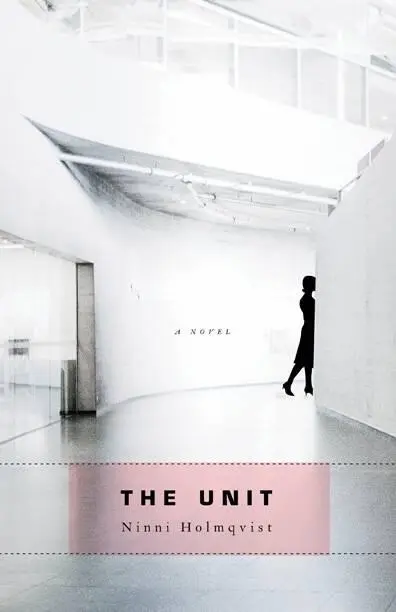
- Название:The Unit
- Автор:
- Жанр:
- Год:неизвестен
- ISBN:нет данных
- Рейтинг книги:3 / 5. Голосов: 1
-
Избранное:Добавить в избранное
- Отзывы:
-
Ваша оценка:
The Unit: краткое содержание, описание и аннотация
Предлагаем к чтению аннотацию, описание, краткое содержание или предисловие (зависит от того, что написал сам автор книги «The Unit»). Если вы не нашли необходимую информацию о книге — напишите в комментариях, мы постараемся отыскать её.
The Unit uncannily echoes its organ-donation-dystopia predecessor, Kazuo Ishiguro’s Never Let Me Go (2005); both imagine societies of extreme utilitarianism that plunder their margins for body parts, and both raise the prospect of art for art’s sake, and love for love’s, as weapons against such thinking. The Unit’s heroine, Dorrit, has chosen not to have children and thus “spill over like rising bread dough”; at the book’s opening, Dorrit’s independence has just earned her incarceration in the Unit, a death camp puzzlingly replete with art galleries and gourmet restaurants where her individualism seems to lapse into passivity.
Through flashbacks, we learn of all Dorrit has lost-her career as a novelist, her beloved dog, the small house she owned herself, the opportunities to save herself by becoming “useful” to society. These snippets of memory are interspersed with descriptions of the eponymous unit and its dying inhabitants, descriptions so matter-of-fact they lull. The novel grips toward the end when Dorrit finds love-and with it a potential escape-and makes a startling choice.
Dorrit’s play-by-play narration can be clunky in translation, but the spare, cumulative prose effectively reveals a character whose story can barely ward off the disintegration of the self it relates. Holmqvist cleverly makes that very self unreliable; The Unit is the latest in a trend of anti-heroic dystopias such as Never Let Me Go and P.D. James’s The Children of Men. In these novels of bad futures, the trustworthy memories of protagonists such as Nineteen Eighty-Four’s Winston Smith (“Airstrip One… had been called England or Britain, though London, [Winston] felt fairly certain, had always been called London”) are replaced by the self-delusions of narrators who mislead the reader and themselves lose control of the stories they are telling. In these novels, rebellion must be expressed obliquely. Like Kathy, the complacent carer of Never Let Me Go, who survives her childhood friends, nursing them as they donate all their organs, Dorrit displaces her anger onto a clearer-eyed friend who calls the Unit what it is, a “luxury slaughterhouse.”
While Holmqvist builds a powerfully imaginative scenario around the concept of killing off the childless, her message on gender roles is clumsy and unconvincing. In Dorrit’s world, flirting and other “typically male” behavior has been criminalized, and retrograde domestic fantasies have to be played out in secret, making the missionary position an act of transgression. We have come a long way from the rage of Margaret Atwood’s 1985 A Handmaid’s Tale, with its neo-Biblical America in which all women are forced either to bear children or to raise them. In today’s climate of threatened reproductive rights, a critique of compulsory motherhood would be welcome, but The Unit displays the same innate conservatism that is the pitfall of Never Let Me Go-a disturbing willingness to locate tragedy not in the horror of forced organ donation and premature death, but in Kathy and Dorrit’s lost opportunities to become mothers.
Copyright 2010 Fran Bigman
The Unit — читать онлайн бесплатно полную книгу (весь текст) целиком
Ниже представлен текст книги, разбитый по страницам. Система сохранения места последней прочитанной страницы, позволяет с удобством читать онлайн бесплатно книгу «The Unit», без необходимости каждый раз заново искать на чём Вы остановились. Поставьте закладку, и сможете в любой момент перейти на страницу, на которой закончили чтение.
Интервал:
Закладка:
During the same period Vivi donated one kidney and a section of her liver; she also participated in all kinds of medical experiments, mostly involving psychiatric drugs that, as well as making her either listless and calm or euphorically high, also caused side effects including dizziness, palpitations, swollen limbs, rashes and hair loss. Within a very short time she and Elsa became old ladies, slowly hobbling along, arm in arm, as they went for their daily walk in the winter garden, stopping every few minutes to cough, catch their breath, or clutch their chest.
Lena, who by this time was one of the seniors, having spent three years in the unit, was taken in to donate her pancreas, liver, kidney and intestinal system. She did what Majken had done: told us that she was going to make her final donation, but not when, so that one day she simply wasn’t there anymore. The same thing happened to Elsa and Vivi as had happened to me: they went to Lena ’s room to look for her just as the section orderlies were busy clearing everything out.
But in my opinion Alice was the one who had suffered most because of the increased demand for dispensable material.
Meanwhile I was safe, protected like a sea eagle, and was sent for regular checks, given tried and tested dietary supplements, and went to yoga and dance and Friskis & Svettis. And the humane experiments I took part in involved harmless things like sleep or dream studies, or comparing and charting a person’s ability to see in the dark or to distinguish different tastes, smells and sounds.
It was only a matter of time before Elsa, Vivi and Alice would notice that I was being treated completely differently from them, despite the fact that the four of us had been in the unit for roughly the same length of time. It was of course also only a question of time before they would be able to see that I was pregnant. I had already filled out: my hips were broader, my breasts were bigger, and my stomach was protruding under the loose clothes I had started to wear to hide the changes for as long as possible. So far I could just about get away with looking like someone who had just put on weight-at least as long as I kept my clothes on. But at around this time I started to avoid changing or showering in the sports center, I stopped taking a sauna, stopped swimming because the shape of my stomach under my swimsuit was unmistakable.
In other words, it was high time I told the others about my condition. Since I still regarded Elsa as my best friend and confidante, I decided to start with her, and took the opportunity one evening when the two of us were alone together in her room. Vivi was busy with library inventory and wouldn’t be there until late-they always slept together nowadays, just as Johannes and I had done.
Elsa was lying on the sofa, breathing heavily and gasping for air from time to time. I was sitting in the armchair across from her.
“Elsa,” I said. “There’s something I have to tell you, something I’ve been… carrying for a while.”
She looked at me, closing her cloudy eye-the one from which the cornea had been donated-and squinting anxiously with the other.
“Don’t tell me you’re sick too, Dorrit?”
“No, I’m not sick. I’m pregnant.”
“What?” Elsa’s arms and legs flailed as she struggled into a sitting position, turned her good ear toward me, coughed, cleared her throat noisily, then said hoarsely, almost hissing: “What did you say?”
“I’m pregnant,” I repeated.
“Are you joking, have you gone mad?”
“I’m not joking,” I said.
Her expression-she had never looked at me that way, I didn’t recognize the way she was looking at me, didn’t know how to interpret it-disbelief or envy or disgust or what?
“How the fuck did that happen?” she spat out eventually.
I felt as if I’d been stabbed, she’d never sworn at me before. I didn’t reply.
“How long have you known?” she asked.
“Since the day before Johannes’s final donation,” I answered.
“But that was several months ago. Why didn’t you say anything?”
“I’m saying it now,” I said. “It’s…” I was stumbling now, a lump in my throat, “it’s not unusual to wait for a while before you tell friends and acquaintances; the risk of miscarriage is highest in the early weeks.”
“I know that, for fuck’s sake! Do you think I was born yesterday, do you think you’re the first person I know who’s ended up pregnant and started handing out a whole lot of completely superfluous information?”
Once again I didn’t reply.
“How far along are you?” she asked, then gasped for air.
“Seventeen or eighteen weeks,” I managed to say before her chest started rattling, and it was as if her windpipe was somehow blocked, as if something had gone down the wrong way, but then came a thin, whistling sound. I imagined a very, very narrow, flattened tube through which a minute amount of air managed to filter, down into her lungs. She grabbed her inhaler, which was next to her on the sofa, held it to her mouth, and pressed the button; there was a faint click and she breathed in. After a little while she began to breathe more evenly, more calmly, but the whistling sound was still there as a faint accompaniment when she spoke:
“So you’re going to have a child?” she said. “A baby? Here?”
I shook my head.
“No. Not here. Are you going to go out there and live a needed, worthwhile life, showing off with your offspring and spreading yourself out all over the streets and squares and public transportation, pushing everybody else out of the way with your stroller and all the rest of the stuff you’ll find it necessary to carry around with you?”
I shook my head again, then told her as briefly and matter-of-factly as I could about the two choices Petra had given me: have the fetus transplanted or have the child adopted. Of course I didn’t say anything about the third alternative, the one connected to the key card that was still in the right pocket of my pants; I put my hand in my pocket and touched it from time to time, undecided. So far I hadn’t been in any state to make my mind up on that particular question, or even to look for doors that might lead out of the unit.
After my short explanation I expected Elsa to be sympathetic, or at least to politely express regret at the fact that I wouldn’t be allowed to be a parent to my child. But she didn’t. Instead she said:
“I don’t know, Dorrit, but this feels really bad. It feels like shit, to be honest.”
“What do you mean?” I said.
“Well, you’re not one of us anymore. I mean, how are we going to be able to… How are we going to be able to trust you? Now that you’ve gone and become like them?”
I didn’t know how to respond to this. I was completely unprepared for her reaction. I didn’t understand it. I understood that she probably, in common with most dispensable individuals, lived with the sorrow encapsulated within her of never having had a child, and that this sorrow had now been activated. But I didn’t understand why she was so angry with me; after all, I hadn’t gotten pregnant in order to upset her or to hurt anyone.
When I didn’t speak, she went on:
“So you’re going to be waddling around here, with a big belly like a Buddha, looking smug and important and on a higher plane, just like all those needed stuck-up bitches out there in the community?”
I didn’t say anything now either. I just got up and left. Behind me I could hear her having another attack, gasping and panting for air. The faint click of the inhaler was the last thing I heard before I closed the door behind me.
3
Alice went downhill quickly. It had begun with headaches, pains in her jaw, dizziness and anxiety. Just after she had told us about her tumor, she started to get confused from time to time. She would suddenly lose the thread while she was talking, would forget that we’d arranged to meet, would get lost and be unable to find her way home, or would get the day’s activities all mixed up. She was often upset, weeping in despair. The unit authorities let her carry on as long as she was no danger to herself or to others, for example as long as she didn’t do anything like leaving something on the stove. But we all knew it was only a matter of time before she was sent away to make her final donation.
Читать дальшеИнтервал:
Закладка:
Похожие книги на «The Unit»
Представляем Вашему вниманию похожие книги на «The Unit» списком для выбора. Мы отобрали схожую по названию и смыслу литературу в надежде предоставить читателям больше вариантов отыскать новые, интересные, ещё непрочитанные произведения.










Обсуждение, отзывы о книге «The Unit» и просто собственные мнения читателей. Оставьте ваши комментарии, напишите, что Вы думаете о произведении, его смысле или главных героях. Укажите что конкретно понравилось, а что нет, и почему Вы так считаете.