Ninni Holmqvist - The Unit
Здесь есть возможность читать онлайн «Ninni Holmqvist - The Unit» весь текст электронной книги совершенно бесплатно (целиком полную версию без сокращений). В некоторых случаях можно слушать аудио, скачать через торрент в формате fb2 и присутствует краткое содержание. Жанр: Современная проза, на английском языке. Описание произведения, (предисловие) а так же отзывы посетителей доступны на портале библиотеки ЛибКат.
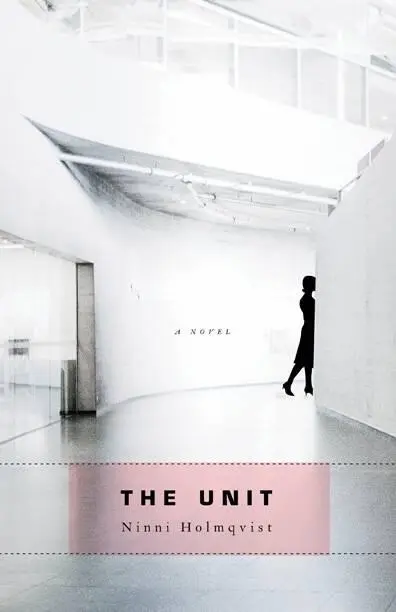
- Название:The Unit
- Автор:
- Жанр:
- Год:неизвестен
- ISBN:нет данных
- Рейтинг книги:3 / 5. Голосов: 1
-
Избранное:Добавить в избранное
- Отзывы:
-
Ваша оценка:
The Unit: краткое содержание, описание и аннотация
Предлагаем к чтению аннотацию, описание, краткое содержание или предисловие (зависит от того, что написал сам автор книги «The Unit»). Если вы не нашли необходимую информацию о книге — напишите в комментариях, мы постараемся отыскать её.
The Unit uncannily echoes its organ-donation-dystopia predecessor, Kazuo Ishiguro’s Never Let Me Go (2005); both imagine societies of extreme utilitarianism that plunder their margins for body parts, and both raise the prospect of art for art’s sake, and love for love’s, as weapons against such thinking. The Unit’s heroine, Dorrit, has chosen not to have children and thus “spill over like rising bread dough”; at the book’s opening, Dorrit’s independence has just earned her incarceration in the Unit, a death camp puzzlingly replete with art galleries and gourmet restaurants where her individualism seems to lapse into passivity.
Through flashbacks, we learn of all Dorrit has lost-her career as a novelist, her beloved dog, the small house she owned herself, the opportunities to save herself by becoming “useful” to society. These snippets of memory are interspersed with descriptions of the eponymous unit and its dying inhabitants, descriptions so matter-of-fact they lull. The novel grips toward the end when Dorrit finds love-and with it a potential escape-and makes a startling choice.
Dorrit’s play-by-play narration can be clunky in translation, but the spare, cumulative prose effectively reveals a character whose story can barely ward off the disintegration of the self it relates. Holmqvist cleverly makes that very self unreliable; The Unit is the latest in a trend of anti-heroic dystopias such as Never Let Me Go and P.D. James’s The Children of Men. In these novels of bad futures, the trustworthy memories of protagonists such as Nineteen Eighty-Four’s Winston Smith (“Airstrip One… had been called England or Britain, though London, [Winston] felt fairly certain, had always been called London”) are replaced by the self-delusions of narrators who mislead the reader and themselves lose control of the stories they are telling. In these novels, rebellion must be expressed obliquely. Like Kathy, the complacent carer of Never Let Me Go, who survives her childhood friends, nursing them as they donate all their organs, Dorrit displaces her anger onto a clearer-eyed friend who calls the Unit what it is, a “luxury slaughterhouse.”
While Holmqvist builds a powerfully imaginative scenario around the concept of killing off the childless, her message on gender roles is clumsy and unconvincing. In Dorrit’s world, flirting and other “typically male” behavior has been criminalized, and retrograde domestic fantasies have to be played out in secret, making the missionary position an act of transgression. We have come a long way from the rage of Margaret Atwood’s 1985 A Handmaid’s Tale, with its neo-Biblical America in which all women are forced either to bear children or to raise them. In today’s climate of threatened reproductive rights, a critique of compulsory motherhood would be welcome, but The Unit displays the same innate conservatism that is the pitfall of Never Let Me Go-a disturbing willingness to locate tragedy not in the horror of forced organ donation and premature death, but in Kathy and Dorrit’s lost opportunities to become mothers.
Copyright 2010 Fran Bigman
The Unit — читать онлайн бесплатно полную книгу (весь текст) целиком
Ниже представлен текст книги, разбитый по страницам. Система сохранения места последней прочитанной страницы, позволяет с удобством читать онлайн бесплатно книгу «The Unit», без необходимости каждый раз заново искать на чём Вы остановились. Поставьте закладку, и сможете в любой момент перейти на страницу, на которой закончили чтение.
Интервал:
Закладка:
She had said it that morning after Johannes’s final donation, and-amusingly enough-she said it again when I bumped into her in the crowd at the party just a few minutes after I returned from my nocturnal stroll beneath the stars. I had been gone for about an hour and had had time to think about a lot of things, so when she asked me I was perfectly clear about what she could do for me.
“Okay,” I replied. “Do you want to know right now?”
“Sure,” she said. “Let’s go and sit somewhere a bit quieter.”
We went out into the lobby. There were low tables, sofas with short backs and round padded stools; it looked like an airport lounge, impersonal and no more comfortable than necessary. I sat down on one of the sofas, with Petra on a stool opposite me. She took a notepad and pen out of the inside pocket of her jacket, then nodded to me in her everlastingly sincere way.
“Three things,” I said. “I want to be awake during the C-section. I want to see the child. And I want”-I stretched out my left leg so that I could get my hand in my pocket, took out the fossil stone and held it up in front of Petra in the palm of my hand-“the child to have this, I want the adoptive parents to promise to give it to the child, along with a letter from me, when it begins to ask about its biological parents-or at the latest when it comes of age. The letter will not contain anything that reveals the fact that the parents were dispensable. Can you arrange it?”
Petra scribbled feverishly, then she looked up:
“Yes. I think so. Of course I can’t guarantee that the parents will actually keep their promise, but I can certainly get them to sign an agreement.”
She promised to come back to me with further information, I thanked her, and we returned to the party, where we went our separate ways; I then went to look for Miranda. When I found her I explained my absence by saying I’d bumped into someone who was upset and needed to talk.
“The way you looked,” said Miranda, “I would have thought you were the one who needed someone to talk to.”
I laughed, assured her I was absolutely fine, and asked if she was up for that dance now. She was.
It’s February again. Eight months have passed since that party. And just about four months since I gave birth. There are two reasons why I’ve hung on for so long.
For one thing, I wanted to finish writing this-even if it will probably be one of the manuscripts that immediately ends up in some underground passage beneath the Royal Library in Stockholm. That’s if it ends up anywhere at all, and isn’t simply destroyed.
For another, Vivi was sent for her final donation just after I gave birth, and I wanted to be there for Elsa, because she was there for me after Johannes’s final donation.
But now Elsa is gone too, and no one here needs me anymore, not even myself. I only have a few lines left, then that’s it. This time tomorrow my heart and lungs will belong to someone else, to be exact a local politician, the mother of two children.
My daughter’s parent, by the way, is a single woman, aged forty-two, the director of a small recruitment company within the business and office sector. I’ve seen a picture of her. She looked nice, but also a bit sad. She’s had several miscarriages and has been on the adoption waiting list for a long time. I have also been offered the chance to see pictures of her together with my daughter, but I have declined the offer.
According to Petra Runhede, the adoptive parent was happy to sign an agreement promising to pass on the stone and the letter according to my instructions. Of course I can’t be sure that Petra is telling the truth, but I have chosen to assume that she is, just as I have chosen to believe that the adoptive mother will not break the agreement.
In the letter to my daughter I wrote some of the things I would have told her if I had chosen freedom along with her instead of giving her up to someone who can give her security and the chance of a dignified life. I wrote that when she was born she had her father’s nose and mouth and chin, and that if I look like my mother, then she had her own mother’s forehead and the shape of her face. I wrote that the stone with the cone-shaped fossil had belonged to her father, that he died before she was born, that the stone was the only thing I had left of him, and that I wanted her to have it as a memory of him from me. I wrote that he found it on the beach between Abbekås and Mossbystrand the day we met each other in the November twilight, when he was out collecting stones and I was walking my dog.
Интервал:
Закладка:
Похожие книги на «The Unit»
Представляем Вашему вниманию похожие книги на «The Unit» списком для выбора. Мы отобрали схожую по названию и смыслу литературу в надежде предоставить читателям больше вариантов отыскать новые, интересные, ещё непрочитанные произведения.




Обсуждение, отзывы о книге «The Unit» и просто собственные мнения читателей. Оставьте ваши комментарии, напишите, что Вы думаете о произведении, его смысле или главных героях. Укажите что конкретно понравилось, а что нет, и почему Вы так считаете.