Ninni Holmqvist - The Unit
Здесь есть возможность читать онлайн «Ninni Holmqvist - The Unit» весь текст электронной книги совершенно бесплатно (целиком полную версию без сокращений). В некоторых случаях можно слушать аудио, скачать через торрент в формате fb2 и присутствует краткое содержание. Жанр: Современная проза, на английском языке. Описание произведения, (предисловие) а так же отзывы посетителей доступны на портале библиотеки ЛибКат.
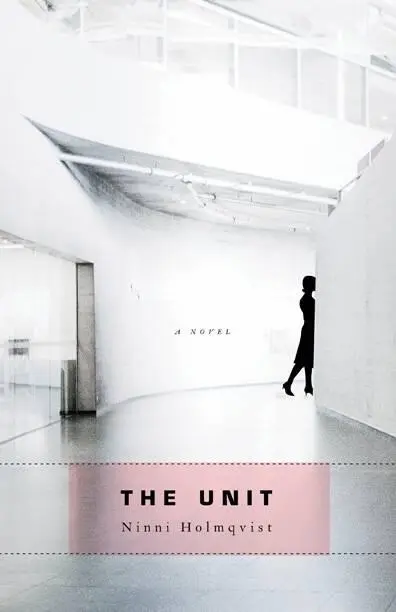
- Название:The Unit
- Автор:
- Жанр:
- Год:неизвестен
- ISBN:нет данных
- Рейтинг книги:3 / 5. Голосов: 1
-
Избранное:Добавить в избранное
- Отзывы:
-
Ваша оценка:
The Unit: краткое содержание, описание и аннотация
Предлагаем к чтению аннотацию, описание, краткое содержание или предисловие (зависит от того, что написал сам автор книги «The Unit»). Если вы не нашли необходимую информацию о книге — напишите в комментариях, мы постараемся отыскать её.
The Unit uncannily echoes its organ-donation-dystopia predecessor, Kazuo Ishiguro’s Never Let Me Go (2005); both imagine societies of extreme utilitarianism that plunder their margins for body parts, and both raise the prospect of art for art’s sake, and love for love’s, as weapons against such thinking. The Unit’s heroine, Dorrit, has chosen not to have children and thus “spill over like rising bread dough”; at the book’s opening, Dorrit’s independence has just earned her incarceration in the Unit, a death camp puzzlingly replete with art galleries and gourmet restaurants where her individualism seems to lapse into passivity.
Through flashbacks, we learn of all Dorrit has lost-her career as a novelist, her beloved dog, the small house she owned herself, the opportunities to save herself by becoming “useful” to society. These snippets of memory are interspersed with descriptions of the eponymous unit and its dying inhabitants, descriptions so matter-of-fact they lull. The novel grips toward the end when Dorrit finds love-and with it a potential escape-and makes a startling choice.
Dorrit’s play-by-play narration can be clunky in translation, but the spare, cumulative prose effectively reveals a character whose story can barely ward off the disintegration of the self it relates. Holmqvist cleverly makes that very self unreliable; The Unit is the latest in a trend of anti-heroic dystopias such as Never Let Me Go and P.D. James’s The Children of Men. In these novels of bad futures, the trustworthy memories of protagonists such as Nineteen Eighty-Four’s Winston Smith (“Airstrip One… had been called England or Britain, though London, [Winston] felt fairly certain, had always been called London”) are replaced by the self-delusions of narrators who mislead the reader and themselves lose control of the stories they are telling. In these novels, rebellion must be expressed obliquely. Like Kathy, the complacent carer of Never Let Me Go, who survives her childhood friends, nursing them as they donate all their organs, Dorrit displaces her anger onto a clearer-eyed friend who calls the Unit what it is, a “luxury slaughterhouse.”
While Holmqvist builds a powerfully imaginative scenario around the concept of killing off the childless, her message on gender roles is clumsy and unconvincing. In Dorrit’s world, flirting and other “typically male” behavior has been criminalized, and retrograde domestic fantasies have to be played out in secret, making the missionary position an act of transgression. We have come a long way from the rage of Margaret Atwood’s 1985 A Handmaid’s Tale, with its neo-Biblical America in which all women are forced either to bear children or to raise them. In today’s climate of threatened reproductive rights, a critique of compulsory motherhood would be welcome, but The Unit displays the same innate conservatism that is the pitfall of Never Let Me Go-a disturbing willingness to locate tragedy not in the horror of forced organ donation and premature death, but in Kathy and Dorrit’s lost opportunities to become mothers.
Copyright 2010 Fran Bigman
The Unit — читать онлайн бесплатно полную книгу (весь текст) целиком
Ниже представлен текст книги, разбитый по страницам. Система сохранения места последней прочитанной страницы, позволяет с удобством читать онлайн бесплатно книгу «The Unit», без необходимости каждый раз заново искать на чём Вы остановились. Поставьте закладку, и сможете в любой момент перейти на страницу, на которой закончили чтение.
Интервал:
Закладка:
I had always thought this was a deliberate stance, that they actually chose to close themselves off to more or less everyone except the child, who of course was dependent on them for its existence. I had always been convinced that this was a conscious decision to prioritize. But now I wasn’t so sure anymore. Now, while I was carrying something that would be a child, I noticed that I was changing; I was becoming self-absorbed in a new way that was hard to define, and I was beginning to sense that the self-sufficiency of those parents I had known was perhaps not a matter of choice. It wasn’t that I didn’t care about my friends anymore. My senses were heightened as never before, particularly my sense of smell and my hearing, and I was sensitive and easily moved, but at the same time I was becoming less and less receptive to the sorrows and troubles of those around me, and to their joy and happiness as well, when it came down to it. My friends meant a great deal to me-the few who were left. I didn’t think any less of them than before, quite the opposite, in fact. I rejoiced in the new ones, Görel and Mats and a couple of others, was immensely grateful that Vivi was such a good friend, and I grieved for Alice and Lena and Erik and Vanja and Majken and all the others I had lost. And Elsa, lying here in front of me on the grass, her head resting on her arm-I missed Elsa so much it felt as if my heart were being ripped out of my body. I enjoyed meeting and spending time with my friends, and when I did see them I registered everything they said and reacted to it, but a second later it slid off me like rain off a newly polished car: rapidly and without friction and without a single drop penetrating the surface. It was strange: in one way I was more sensitive than ever, in another I was more or less closed off.
When I had perceived this change in my own attitude, I couldn’t help asking myself if there might be a biological cause, if this might be some form of primitive behavior on the part of the female mammal that women couldn’t escape, just as we couldn’t escape the fact that if we were to become a parent naturally, then unlike men we didn’t have all the time in the world.
At any rate, I had to admit that Elsa was right, and I intended to tell her so as soon as she woke up, which I did. She had just about realized that I was sitting there, when I said:
“You were right, Elsa. I am indeed waddling around looking smug and important and on a higher plane, just like all those needed stuck-up bitches out there in the community.”
She sat up, pushed her hair back, yawned, and rubbed her eyes. “Oh yes?”
“But,” I went on, “I have to tell you that the smugness has nothing whatsoever to do with human economic growth. It’s not that kind of self-sufficiency; it has absolutely nothing to do with what I can do for society or how good and valuable I am. Everything is here-and here.” I placed my hand on my midriff, then on my head. “And I can’t help it. It isn’t something I have any control over, that’s just the way it is. I’m at the mercy of my hormones!”
“Okay,” she said. “I understand. I understand that’s something I don’t understand. I don’t suppose you’d like to go for a swim instead of sitting here talking in riddles?”
I couldn’t help laughing. I stood up, held my hand out and pulled her to her feet in a gentlemanly manner. She picked up her book, Emily Brontë’s Wuthering Heights , and I folded up her blanket, and we ambled off arm in arm with the book and the blanket along the gravel path toward the galleria, stopping to say hi to Mats who was digging in a flowerbed, dressed only in shorts and heavy boots and a tool belt. On a cart behind him on the path were shrubs in pots, waiting to be planted. In the distance, on a bench, I could see Potter with his round, black-framed glasses. He was munching on an apple and flipping through a magazine. It was lunchtime; people were pouring up and down the staircase to the Terrace restaurant and its groaning buffet. Still arm in arm, Elsa and I emerged into the Atrium Walkway, and took the first elevator down to the sports facility.
We swam, slowly and for a long time, side by side, in silence. Afterward we had a sauna. I sat at the bottom, closest to the door, pushing it open slightly from time to time, unsure what I had actually heard about pregnancy and saunas: had I heard that it was a good thing, or had I heard that it wasn’t? Elsa sat right up at the top where it was hottest, on the third bench, and leaned back against the wall. We didn’t say much, we mostly just sat there being friends again. From time to time one of us would say lazily to the other something along the lines of: “Have you heard that so-and-so is involved in an experiment with this and that?” or “So-and-so has finished with so-and-so, did you know?” or “Do you remember that guy back home in the village who was like this or that and who used to do this or that?”
But when we eventually decided we’d had enough, and Elsa climbed down, she said:
“Dorrit, do you remember what we promised each other at the start?”
I remembered. Shortly after Majken’s death Elsa and I had promised each other that the day one of us found out we were on the list for our final donation, we would tell the other-and not only that it was going to happen, but also when . So that the other person wouldn’t have to run around looking for someone who no longer existed.
“Yes,” I said, looking up at her as she stood there in front of me, the sweat pouring down her wiry body, which was quite scarred by this stage.
“Why?”
“Does it still apply?” she said.
“Yes, I guess it does,” I said, and felt the anxiety stab down into my chest and squeeze it, hard. Don’t say it’s time now! I thought. Don’t say we have to part now, when we’ve just made friends again, don’t say that she’s going to… and my voice was trembling as I repeated, emphasizing the question:
“ Why? ”
“Oh,” said Elsa, taking a step toward the door and pushing it open, “I just wanted to check. I just wanted to know that’s what will happen. That you won’t just disappear. That you won’t just be gone one day, without telling me in advance.”
Feeling relieved I got up and followed her out. My legs were shaking, I had been so scared and now I was so relieved. In the shower room she turned to me.
“Can we promise each other, Dorrit? Can we promise each other again?”
“Of course, Elsa,” I said. “Of course we can.”
“Good,” she said, and her voice gave away the fact that she was moved. It was trembling, somehow exposed, as she went on: “Shall we shake on it?”
We clasped hands and then we hugged each other, standing there naked and covered in sweat on the tiled floor outside the sauna. A woman with short white hair smiled at us as she passed on the way in. She reminded me a little of Lena, but she had a longer, narrower face and her expression was more tired.
It was only some hours later, during the night, as I was lying alone in my bed with one hand on my stomach, gazing up at the ceiling, that it occurred to me: “disappear” didn’t necessarily have to mean “make the final donation.” It could just as easily mean “leave,” “run away.” And if I decided to go, if I decided to run away, I wouldn’t be able to keep my promise to Elsa unless I revealed my secret to her, which would mean breaking the promise I had made never to tell anyone about the key card. And I am not the kind of person who breaks promises. I am not the kind of person who betrays a trust. For example, in this story I have not revealed the true circumstances under which I received the key card. Neither of the two nurses who met me when I raced into the surgical department that day has a birthmark. Nor was it either of those two who gave me the key card, and the conversation with the person who did give me the card did not in fact take place in the break room where I sat and waited as I gazed out at the snow-covered park with the pond and the ducks, but in a completely different room in a completely different part of the unit, and at another time. And the code is actually not 98 44 at all.
Читать дальшеИнтервал:
Закладка:
Похожие книги на «The Unit»
Представляем Вашему вниманию похожие книги на «The Unit» списком для выбора. Мы отобрали схожую по названию и смыслу литературу в надежде предоставить читателям больше вариантов отыскать новые, интересные, ещё непрочитанные произведения.









Обсуждение, отзывы о книге «The Unit» и просто собственные мнения читателей. Оставьте ваши комментарии, напишите, что Вы думаете о произведении, его смысле или главных героях. Укажите что конкретно понравилось, а что нет, и почему Вы так считаете.