Ninni Holmqvist - The Unit
Здесь есть возможность читать онлайн «Ninni Holmqvist - The Unit» весь текст электронной книги совершенно бесплатно (целиком полную версию без сокращений). В некоторых случаях можно слушать аудио, скачать через торрент в формате fb2 и присутствует краткое содержание. Жанр: Современная проза, на английском языке. Описание произведения, (предисловие) а так же отзывы посетителей доступны на портале библиотеки ЛибКат.
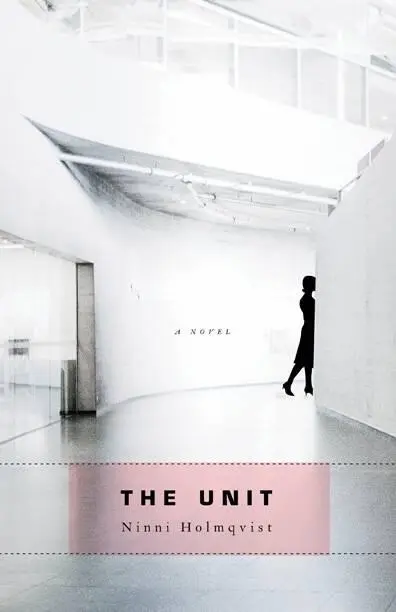
- Название:The Unit
- Автор:
- Жанр:
- Год:неизвестен
- ISBN:нет данных
- Рейтинг книги:3 / 5. Голосов: 1
-
Избранное:Добавить в избранное
- Отзывы:
-
Ваша оценка:
The Unit: краткое содержание, описание и аннотация
Предлагаем к чтению аннотацию, описание, краткое содержание или предисловие (зависит от того, что написал сам автор книги «The Unit»). Если вы не нашли необходимую информацию о книге — напишите в комментариях, мы постараемся отыскать её.
The Unit uncannily echoes its organ-donation-dystopia predecessor, Kazuo Ishiguro’s Never Let Me Go (2005); both imagine societies of extreme utilitarianism that plunder their margins for body parts, and both raise the prospect of art for art’s sake, and love for love’s, as weapons against such thinking. The Unit’s heroine, Dorrit, has chosen not to have children and thus “spill over like rising bread dough”; at the book’s opening, Dorrit’s independence has just earned her incarceration in the Unit, a death camp puzzlingly replete with art galleries and gourmet restaurants where her individualism seems to lapse into passivity.
Through flashbacks, we learn of all Dorrit has lost-her career as a novelist, her beloved dog, the small house she owned herself, the opportunities to save herself by becoming “useful” to society. These snippets of memory are interspersed with descriptions of the eponymous unit and its dying inhabitants, descriptions so matter-of-fact they lull. The novel grips toward the end when Dorrit finds love-and with it a potential escape-and makes a startling choice.
Dorrit’s play-by-play narration can be clunky in translation, but the spare, cumulative prose effectively reveals a character whose story can barely ward off the disintegration of the self it relates. Holmqvist cleverly makes that very self unreliable; The Unit is the latest in a trend of anti-heroic dystopias such as Never Let Me Go and P.D. James’s The Children of Men. In these novels of bad futures, the trustworthy memories of protagonists such as Nineteen Eighty-Four’s Winston Smith (“Airstrip One… had been called England or Britain, though London, [Winston] felt fairly certain, had always been called London”) are replaced by the self-delusions of narrators who mislead the reader and themselves lose control of the stories they are telling. In these novels, rebellion must be expressed obliquely. Like Kathy, the complacent carer of Never Let Me Go, who survives her childhood friends, nursing them as they donate all their organs, Dorrit displaces her anger onto a clearer-eyed friend who calls the Unit what it is, a “luxury slaughterhouse.”
While Holmqvist builds a powerfully imaginative scenario around the concept of killing off the childless, her message on gender roles is clumsy and unconvincing. In Dorrit’s world, flirting and other “typically male” behavior has been criminalized, and retrograde domestic fantasies have to be played out in secret, making the missionary position an act of transgression. We have come a long way from the rage of Margaret Atwood’s 1985 A Handmaid’s Tale, with its neo-Biblical America in which all women are forced either to bear children or to raise them. In today’s climate of threatened reproductive rights, a critique of compulsory motherhood would be welcome, but The Unit displays the same innate conservatism that is the pitfall of Never Let Me Go-a disturbing willingness to locate tragedy not in the horror of forced organ donation and premature death, but in Kathy and Dorrit’s lost opportunities to become mothers.
Copyright 2010 Fran Bigman
The Unit — читать онлайн бесплатно полную книгу (весь текст) целиком
Ниже представлен текст книги, разбитый по страницам. Система сохранения места последней прочитанной страницы, позволяет с удобством читать онлайн бесплатно книгу «The Unit», без необходимости каждый раз заново искать на чём Вы остановились. Поставьте закладку, и сможете в любой момент перейти на страницу, на которой закончили чтение.
Интервал:
Закладка:
Without thinking-as if I were on autopilot, simply functioning, simply acting, like a robot-I took the key card out of my pocket and swiped it through the slot as if in passing. A small gap in the door frame immediately slid open, revealing a keypad not much bigger than that of a cell phone. In a state that can best be described as a panic-stricken trance, I keyed in 98 44, pushed open the door, stepped over the threshold and onto the other side, and before I gave myself time to see or register where I had ended up, I grabbed the handle on my side of the door and pushed it firmly shut.
It was incredibly bright. I was bathed in a white, harsh neon light and a silence so complete that my own heart sounded like thunderclaps recorded on a loop and played back at a very high speed. It took a little while, I don’t know how long, seconds or minutes, before I was able to see in the cold light. And when I finally saw that I was on a landing in a stairwell, exactly as the person I call Birthmark had explained, my feelings caught up with me. Panic grabbed hold and penetrated my body and raced through my veins and arteries, rushing and roaring right through me.
Up or down? I thought feverishly, shrugged my shoulders and started to run upstairs; the party room was on K1, and should therefore be below ground level. It was only when I had gone up a couple of floors that I remembered my experience in the break room in the surgical department, where there had been a window facing onto the outside world despite the fact that it was located on what was called the basement level.
So I turned and ran downstairs instead, two floors, three, then down another half staircase which came to a stop at another door, a substantial door made of metal. This time the slot wasn’t hidden in the door frame, but was on the wall next to it, in full view and with a keypad similar to the ones you find in stores for customers to key in their debit pin number.
With my hand shaking-shaking and sweating-I swiped the card, my other hand hovering over the keypad, ready, and-oh no! It was as if the code had been completely wiped out of my memory, the code was-yes, that was it, I remembered, keyed in 94 88. But nothing happened, there was no click. I pushed down the handle anyway, but the door was locked, obviously.
I tried again: 99 48-no.
48 99 then? No.
There was something wrong with those four numbers, they were right but yet they were wrong. My whole body was shaking now, sweat pouring down my back, my mouth was dry and I was on the verge of tears, almost hysterical, my head was spinning-when that trivial refrain suddenly echoed through my brain and stopped the spinning:
This is for my girl, this is for my woman, for my world. Baby, baby, this is all for you…
All at once I was perfectly calm, perfectly clear, and firmly keyed in the combination 98 44, whereupon the door obediently gave a faint click and I pressed down the handle, pushed open the heavy door, walked out, took two steps, and the metal door closed behind me.
I was out. Outside. There was a breeze, that was the first thing I noticed. I could feel it against my face, I could feel it in my hair, lifting it and messing it up. I could feel it making the legs of my pants flap loosely against my calves. It was almost dark; the sun was drawing its last burning threads from a part of the sky that was already dark and full of stars, toward a still-glowing strip on the opposite side. It wasn’t cold, but it was very cool; the night was likely to be quite chilly.
I stood there for a moment just outside the door, watching the wind run its invisible fingers through the leaves on the trees, making the flowers on the lilac bushes nod and bow and the birch trees rustle and whisper. I was in a park. There were lawns and gravel paths; one of the paths led to the left, around the corner of the building. Beyond the corner there was, from my point of view, only darkness. A little way ahead of me, over to the right, I could just see a pond among some low bushes. Tall trees towered up behind the pond, their huge crowns swaying. It was the same pond I had seen from the window of the break room that day in February. My first impulse was to run over there, to get behind the bushes and in among the trees, and to hide myself somewhere. But I realized at once that if there were surveillance cameras out here, which seemed likely, and if anyone saw me running, that would attract attention. It would look suspicious, because why would a staff member run out of the workplace and in among the bushes to hide? No, that would be silly, I reasoned, the only sensible thing I could do was to follow the path around the corner. So that’s what I did.
The gravel crunched beneath my feet-deafeningly, it seemed to me-and I expected to hear running footsteps behind me at any moment, to be escorted back into the building by a couple of strong guards, or for a patrol of some kind to be waiting around the bend. But nobody came running and no patrol was waiting. When I got around the corner I saw instead, in the romantic, ghostly atmosphere of the twilight, with its mixture of evening sun and darkness, heightened here by the glow of the streetlamps, that the path led over a patch of grass to a low white wooden fence with an open gate in it. I walked the twenty yards or so to the fence which was ridiculously low, hardly up to my knees; the open gate was completely superfluous, but as the path led to the gate I went out through it anyway, and found myself on a road that was illuminated for fifty yards or so in each direction.
On the other side of the road was a rolling landscape of fields and forest groves and individual farms and houses, their outside lights twinkling like lanterns in a sea of night. Above this sea there was still a glowing, golden pink strip from the sun. So that was the west, I established, or rather northwest, as it was around midsummer. In other words, the road ran north-south-roughly, at any rate. After a moment’s hesitation I chose to go north.
When I had gotten beyond the scope of the streetlights, and the golden twilight strip in the northwest had changed to a faint grayish glow, I found myself surrounded by black, cool night. With each step I took it was like climbing further and further into total nothingness. I wasn’t afraid, it didn’t feel eerie, just uncertain. Since I couldn’t see the ground in front of me, I looked up instead, and above my head the sky was so clear that even the most distant stars could be seen-some so distant they have never been named and do not appear on any map of the constellations. The sky was covered with them. Less distant, far below these billions of anonymous stars, was the Little Bear, which Johannes had taught me to find. And there was the Dipper, and there, just to the side and in a straight line from the two stars at the back of the Dipper, glowed the North Star.
PART 4
I did get to see her. Only for a moment, but still. She had black hair. Her face was smooth and delicate, like a doll’s. She had Johannes’s nose, his upper lip and his mouth. And his chin too, I think. But there was also something of my mother in her face, perhaps something about the forehead, perhaps it was the actual shape of her face. She was a little bundle: arms and legs curled in the fetal position, those incomprehensibly tiny hands clenched, the fingers of one hand curled around the thumb. Eyes tightly closed, her toes alternately bending and flexing in time with her cries.
That was what I saw and heard when the midwife held her up in front of me: that she was real and that she was alive and healthy. Then she was taken away. And I was stitched up as I lay there on the operating table, anesthetized from my rib cage downward.
Petra Runhede had said: “Let me know if there’s anything I can do for you, Dorrit.”
Читать дальшеИнтервал:
Закладка:
Похожие книги на «The Unit»
Представляем Вашему вниманию похожие книги на «The Unit» списком для выбора. Мы отобрали схожую по названию и смыслу литературу в надежде предоставить читателям больше вариантов отыскать новые, интересные, ещё непрочитанные произведения.








Обсуждение, отзывы о книге «The Unit» и просто собственные мнения читателей. Оставьте ваши комментарии, напишите, что Вы думаете о произведении, его смысле или главных героях. Укажите что конкретно понравилось, а что нет, и почему Вы так считаете.