Ninni Holmqvist - The Unit
Здесь есть возможность читать онлайн «Ninni Holmqvist - The Unit» весь текст электронной книги совершенно бесплатно (целиком полную версию без сокращений). В некоторых случаях можно слушать аудио, скачать через торрент в формате fb2 и присутствует краткое содержание. Жанр: Современная проза, на английском языке. Описание произведения, (предисловие) а так же отзывы посетителей доступны на портале библиотеки ЛибКат.
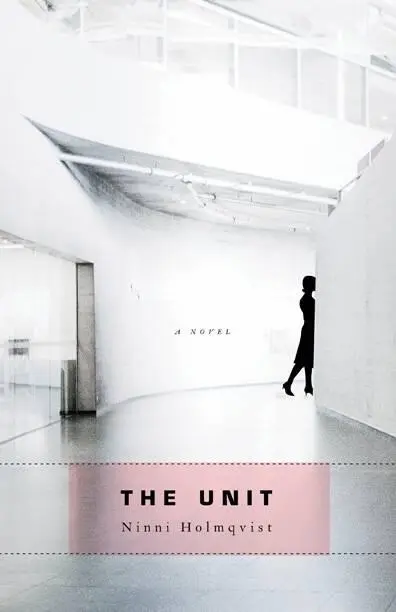
- Название:The Unit
- Автор:
- Жанр:
- Год:неизвестен
- ISBN:нет данных
- Рейтинг книги:3 / 5. Голосов: 1
-
Избранное:Добавить в избранное
- Отзывы:
-
Ваша оценка:
The Unit: краткое содержание, описание и аннотация
Предлагаем к чтению аннотацию, описание, краткое содержание или предисловие (зависит от того, что написал сам автор книги «The Unit»). Если вы не нашли необходимую информацию о книге — напишите в комментариях, мы постараемся отыскать её.
The Unit uncannily echoes its organ-donation-dystopia predecessor, Kazuo Ishiguro’s Never Let Me Go (2005); both imagine societies of extreme utilitarianism that plunder their margins for body parts, and both raise the prospect of art for art’s sake, and love for love’s, as weapons against such thinking. The Unit’s heroine, Dorrit, has chosen not to have children and thus “spill over like rising bread dough”; at the book’s opening, Dorrit’s independence has just earned her incarceration in the Unit, a death camp puzzlingly replete with art galleries and gourmet restaurants where her individualism seems to lapse into passivity.
Through flashbacks, we learn of all Dorrit has lost-her career as a novelist, her beloved dog, the small house she owned herself, the opportunities to save herself by becoming “useful” to society. These snippets of memory are interspersed with descriptions of the eponymous unit and its dying inhabitants, descriptions so matter-of-fact they lull. The novel grips toward the end when Dorrit finds love-and with it a potential escape-and makes a startling choice.
Dorrit’s play-by-play narration can be clunky in translation, but the spare, cumulative prose effectively reveals a character whose story can barely ward off the disintegration of the self it relates. Holmqvist cleverly makes that very self unreliable; The Unit is the latest in a trend of anti-heroic dystopias such as Never Let Me Go and P.D. James’s The Children of Men. In these novels of bad futures, the trustworthy memories of protagonists such as Nineteen Eighty-Four’s Winston Smith (“Airstrip One… had been called England or Britain, though London, [Winston] felt fairly certain, had always been called London”) are replaced by the self-delusions of narrators who mislead the reader and themselves lose control of the stories they are telling. In these novels, rebellion must be expressed obliquely. Like Kathy, the complacent carer of Never Let Me Go, who survives her childhood friends, nursing them as they donate all their organs, Dorrit displaces her anger onto a clearer-eyed friend who calls the Unit what it is, a “luxury slaughterhouse.”
While Holmqvist builds a powerfully imaginative scenario around the concept of killing off the childless, her message on gender roles is clumsy and unconvincing. In Dorrit’s world, flirting and other “typically male” behavior has been criminalized, and retrograde domestic fantasies have to be played out in secret, making the missionary position an act of transgression. We have come a long way from the rage of Margaret Atwood’s 1985 A Handmaid’s Tale, with its neo-Biblical America in which all women are forced either to bear children or to raise them. In today’s climate of threatened reproductive rights, a critique of compulsory motherhood would be welcome, but The Unit displays the same innate conservatism that is the pitfall of Never Let Me Go-a disturbing willingness to locate tragedy not in the horror of forced organ donation and premature death, but in Kathy and Dorrit’s lost opportunities to become mothers.
Copyright 2010 Fran Bigman
The Unit — читать онлайн бесплатно полную книгу (весь текст) целиком
Ниже представлен текст книги, разбитый по страницам. Система сохранения места последней прочитанной страницы, позволяет с удобством читать онлайн бесплатно книгу «The Unit», без необходимости каждый раз заново искать на чём Вы остановились. Поставьте закладку, и сможете в любой момент перейти на страницу, на которой закончили чтение.
Интервал:
Закладка:
“There is absolutely no need to switch off the surveillance cameras, from my point of view; it would give me no pleasure whatsoever. I have no intention of doing anything that would be better unseen or unheard. And in any case I have no way of checking whether the surveillance is switched off or not, so it makes no difference.”
But she didn’t give up:
“Irrespective of what you believe or think or feel might give you pleasure, I will personally ensure that the apartment is blocked to the cameras between…”
She looked at her watch, then glanced up at me:
“Is two hours enough?”
I shrugged my shoulders.
“Let’s say three,” she said. “Shall we say between one and four this afternoon?”
I nodded.
“Okay, so you have free access to room 3, section F2 between thirteen hundred hours and sixteen hundred hours today.”
“Thank you,” I said.
“During that time the surveillance will be switched off.”
“Whatever you say,” I said.
She got up and came around the table on her way to the door. As she was passing me, she stopped and pressed her hand lightly on my shoulder.
“And let me know,” she said, “if there’s anything else I can do for you.”
Then she removed her hand and left.
26
The only sound was a faint humming from the air-conditioning. No sounds penetrated from outside, the silence was compact-like in a padded cell, where any risk of an echo or other sound effects has been removed. I had never experienced this kind of silence in Johannes’s apartment before-or any other apartment in the unit, for that matter.
I had closed the door behind me, turned the bolt, and was now standing with my back to the door, looking at Johannes’s living room and the wall he had built around his kitchenette. If I had placed my hands on my back I would have touched the door, I was standing so close to it. You might have thought I was afraid of something in the room, you might have thought I was afraid to go in, that I was unsure whether I really wanted to be there, or whether I ought to be there. But it wasn’t that. I wasn’t afraid, or uncertain, just slow; perhaps it was the stillness in the room that was making me that way.
On the dining table stood two empty coffee mugs, a bread basket containing a forgotten slice of whole-grain bread, and two plates with crumbs; one of the plates had on it a half-eaten sandwich with a shiny slice of cheese, the edges turning upward. The remains of yesterday’s breakfast. The half-sandwich was mine; I had been hungry, much hungrier than I usually was in the mornings-perhaps it was the knowledge of the child in my stomach that made me suddenly think I needed to eat more than usual. But when I started my third sandwich I had realized I couldn’t finish it.
“Do you want half of this?” I’d asked.
Johannes had shaken his head and said:
“No thanks, darling, I’m full.”
Then he had sat there looking at me for a long time, his expression serious. In the end I had laughed out loud and asked:
“What’s the matter? Do I look funny?”
“Not in the least. You look more beautiful than I’ve ever seen you.”
When we left the table and I was leaving to go back to my room to work, we had hugged exactly as we always did, and I had said:
“See you tonight.”
And he had said:
“I love you, Dorrit. I love both of you ,” and he had placed one hand on my stomach and I had replied that I loved him more than I had ever loved anyone, which was true.
And he had kissed me and stroked my hair and whispered:
“You have given my life a meaning, do you know that? The meaning of my life is you.”
All morning he had been a little more serious than usual, a little less flirtatious, slightly less playful and naughty. But then he had just found out he was going to be a parent, and it wasn’t unusual for him to say serious, loving things to me-for us to say serious and loving things to each other-when we went our separate ways after breakfast. So how was I to know that this talk of the meaning of life was his way of saying good-bye?
Was it cowardly of him not to say anything? Or was it thoughtful? I don’t know. I only know that whether he was cowardly or thoughtful or both, he did it out of love.
How long I stood there just inside the door I don’t know, but when I finally began to move I was stiff, and my legs felt numb and swollen, just like when I was really young and I was at high school and worked in the book department of a big store in my spare time, or later on when I wasn’t quite so young and I supported myself by posing as a life model for art classes, standing still for twenty minutes at a time with a five-minute break, day in and day out for several weeks sometimes; I would feel numb and swollen just as I did now, and in this state I moved through the room, over to Johannes’s desk, where I found a CD in a clear plastic case beside the computer. Blue Whale , Johannes had printed on the disk with a black marker pen. His collection of short stories. I left it where it was, I didn’t even touch it; partly because I had already read it, partly because I was quite sure that the work of dispensable authors was well looked after by the unit staff who, unlike us, had contact with the outside world. During the past year I had read a small number of new books written by “unusually driven authors making their debut,” who later turned out to be authors who were, or had been, here in the unit.
Between the computer and the printer lay all kinds of things that are typically found on a desk: pens, an eraser, a ruler, paper clips, and Post-it notes in different colors and sizes. Among these bits and pieces lay the pink fossil stone. I picked it up and weighed it in my hand, closing my fingers around it. It was cool and smooth and had a distinct weight, without actually being heavy.
In the bedroom the bed was unmade. I had always slept on the inside, next to the wall, when I spent the night with Johannes. Now I lay down on the outside, in his place, and drew the duvet up to my chin. The scent of him was here, acrid and subtle at the same time, like nutmeg or cumin, and on the pillow where his head had rested lay odd white hairs that had been his.
I lay on my side, inhaled the scent and clutched the fossil stone in my hand.
If he had driven to the south coast on a different afternoon, I thought. If he had driven there on one of those afternoons when I was there with Jock during the autumn and winter, instead of one of the days when I wasn’t there. And if we had walked toward each other and caught sight of each other, and I had thought, Oh look, there’s Johannes Alby, and he’d thought, Oh look, there’s Dorrit Weger with her little dog. And if we had stopped and chatted, and if I had invited him back to my house for a cup of coffee or a bowl of soup or some pasta. If it had started like that. If it had started then.
PART 3
1
The aroma of chervil and freshly baked bread hit me as Vivi opened the door. I was late. I had hesitated for quite some time before I had actually walked out of my apartment and taken the few steps down the hall to Vivi’s door and knocked.
I had been feeling so tired. I had been so tired for so long, I just hadn’t had the strength to socialize, to turn up at parties or dinners or other gatherings where you were expected to have fun, to be interested in other people and to talk to more than one person at a time. I had withdrawn, been passive, at times even apathetic, and I would probably have cut myself off completely if it hadn’t been for Elsa, Alice, Vivi and Lena. They had been there the whole time. During the first weeks after Johannes’s final donation they had even taken turns to stay the night with me. Every time I woke up because I was upset or angry or felt sick or whatever, there was someone there to support and console and fetch water and make tea and listen and hold my hand until I went back to sleep.
Читать дальшеИнтервал:
Закладка:
Похожие книги на «The Unit»
Представляем Вашему вниманию похожие книги на «The Unit» списком для выбора. Мы отобрали схожую по названию и смыслу литературу в надежде предоставить читателям больше вариантов отыскать новые, интересные, ещё непрочитанные произведения.







Обсуждение, отзывы о книге «The Unit» и просто собственные мнения читателей. Оставьте ваши комментарии, напишите, что Вы думаете о произведении, его смысле или главных героях. Укажите что конкретно понравилось, а что нет, и почему Вы так считаете.