Ninni Holmqvist - The Unit
Здесь есть возможность читать онлайн «Ninni Holmqvist - The Unit» весь текст электронной книги совершенно бесплатно (целиком полную версию без сокращений). В некоторых случаях можно слушать аудио, скачать через торрент в формате fb2 и присутствует краткое содержание. Жанр: Современная проза, на английском языке. Описание произведения, (предисловие) а так же отзывы посетителей доступны на портале библиотеки ЛибКат.
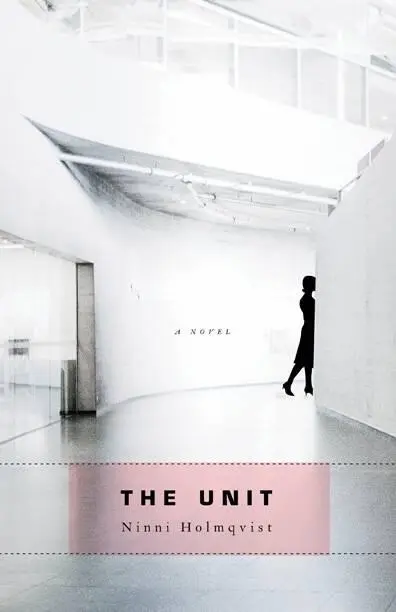
- Название:The Unit
- Автор:
- Жанр:
- Год:неизвестен
- ISBN:нет данных
- Рейтинг книги:3 / 5. Голосов: 1
-
Избранное:Добавить в избранное
- Отзывы:
-
Ваша оценка:
The Unit: краткое содержание, описание и аннотация
Предлагаем к чтению аннотацию, описание, краткое содержание или предисловие (зависит от того, что написал сам автор книги «The Unit»). Если вы не нашли необходимую информацию о книге — напишите в комментариях, мы постараемся отыскать её.
The Unit uncannily echoes its organ-donation-dystopia predecessor, Kazuo Ishiguro’s Never Let Me Go (2005); both imagine societies of extreme utilitarianism that plunder their margins for body parts, and both raise the prospect of art for art’s sake, and love for love’s, as weapons against such thinking. The Unit’s heroine, Dorrit, has chosen not to have children and thus “spill over like rising bread dough”; at the book’s opening, Dorrit’s independence has just earned her incarceration in the Unit, a death camp puzzlingly replete with art galleries and gourmet restaurants where her individualism seems to lapse into passivity.
Through flashbacks, we learn of all Dorrit has lost-her career as a novelist, her beloved dog, the small house she owned herself, the opportunities to save herself by becoming “useful” to society. These snippets of memory are interspersed with descriptions of the eponymous unit and its dying inhabitants, descriptions so matter-of-fact they lull. The novel grips toward the end when Dorrit finds love-and with it a potential escape-and makes a startling choice.
Dorrit’s play-by-play narration can be clunky in translation, but the spare, cumulative prose effectively reveals a character whose story can barely ward off the disintegration of the self it relates. Holmqvist cleverly makes that very self unreliable; The Unit is the latest in a trend of anti-heroic dystopias such as Never Let Me Go and P.D. James’s The Children of Men. In these novels of bad futures, the trustworthy memories of protagonists such as Nineteen Eighty-Four’s Winston Smith (“Airstrip One… had been called England or Britain, though London, [Winston] felt fairly certain, had always been called London”) are replaced by the self-delusions of narrators who mislead the reader and themselves lose control of the stories they are telling. In these novels, rebellion must be expressed obliquely. Like Kathy, the complacent carer of Never Let Me Go, who survives her childhood friends, nursing them as they donate all their organs, Dorrit displaces her anger onto a clearer-eyed friend who calls the Unit what it is, a “luxury slaughterhouse.”
While Holmqvist builds a powerfully imaginative scenario around the concept of killing off the childless, her message on gender roles is clumsy and unconvincing. In Dorrit’s world, flirting and other “typically male” behavior has been criminalized, and retrograde domestic fantasies have to be played out in secret, making the missionary position an act of transgression. We have come a long way from the rage of Margaret Atwood’s 1985 A Handmaid’s Tale, with its neo-Biblical America in which all women are forced either to bear children or to raise them. In today’s climate of threatened reproductive rights, a critique of compulsory motherhood would be welcome, but The Unit displays the same innate conservatism that is the pitfall of Never Let Me Go-a disturbing willingness to locate tragedy not in the horror of forced organ donation and premature death, but in Kathy and Dorrit’s lost opportunities to become mothers.
Copyright 2010 Fran Bigman
The Unit — читать онлайн бесплатно полную книгу (весь текст) целиком
Ниже представлен текст книги, разбитый по страницам. Система сохранения места последней прочитанной страницы, позволяет с удобством читать онлайн бесплатно книгу «The Unit», без необходимости каждый раз заново искать на чём Вы остановились. Поставьте закладку, и сможете в любой момент перейти на страницу, на которой закончили чтение.
Интервал:
Закладка:
“What am I supposed to do with this?” I asked.
“I…” he began, but then he stopped, looked away, out of the window-a streetlamp was just coming on out there, and an orange glow blended with the ever-deepening blue twilight. He cleared his throat, started again:
“I presume that you, like other dispensable individuals, have already lost everything once. And now it’s happening to you again. And I feel… well, I can’t just stand and watch. Yes, you are dispensable, and no doubt you could have avoided that situation if you had just made enough of an effort. But you’re also a human being. And now you’ve succeeded in getting pregnant as well, and if that had happened just a year ago you wouldn’t even have ended up in here. And whatever happens, you ought to have the right, in the name of democracy, to your own offspring-both you and Johannes Alby ought to have had that right.”
Birthmark paused, cleared his throat.
“This,” he went on, pointing to the plastic card in my hand, “is a key card. It opens all staff areas and all the rooms and areas that are locked to residents at night. And above all, it opens all exits.”
What exits? was my first thought. I stared at the card. The idea of trying to get out, away, escape from here had never crossed my mind. Not even during the very early days when I had missed Jock so much, not even a couple of hours ago when I had tugged at the window, not even when I discovered shortly afterward that the room had no cameras, not even when I watched the wild duck flying away through the trees. Not even when I had felt Johannes’s pulse and at the same time realized that he no longer existed.
Birthmark continued:
“I didn’t send your application form through the internal post. Instead I actually took the liberty of putting it in the shredder. To give you time. Time to think this over. You can always fill out a new one; it’s never too late. But if you don’t, and instead agree to give birth to the child so that it can be adopted, then you will have seven or eight months with no experiments or any kind of interference that would put your health or that of your child at risk. And during that time you can think things over, you can plan an escape, and you can carry it out.”
He paused again, as if to give me the chance to say something. But I didn’t know what to say; I only knew what I absolutely must not say, which was that he ought to have that unnaturally perfect birthmark removed. After a silence he said:
“The card is personal. It’s a duplicate of my own key card. When, or if-it’s your decision, of course, I only want to give you the chance-when or if you use the card, then you swipe it through the reader at the edge of the doors in question. This one, for example.”
He got up from the bed, took the card from me, went over to the door and swiped the card through a reader mounted in the edge of the door frame, so discreetly placed that you would never have noticed it if you didn’t know exactly what you were looking for and where to look. A small opening in the door frame silently appeared, revealing a keypad. Birthmark punched in a code at lightning speed, and the door gave a barely audible click . He pushed down the door handle, opened the door an inch or so and immediately closed it again. He walked over to the bed and gave the card back to me.
“Right,” I said. “So where do I find these doors, then? I’ve never seen any-apart from this one just now. And how do I know which of them are exits and which just lead to staff areas?”
“All the doors of this kind in the large communal areas, for example the square and the Atrium Walkway and the big party room, lead to stairwells. In these stairwells are identical doors leading to break rooms, staff rooms, changing rooms, washing facilities and so on. Those you need to avoid, obviously. All you have to do is take the staircase down to the main door. And you haven’t seen these doors because you’ve never looked for ways out, have you? You’ve never looked for escape routes, never even given it a thought. You’ve never had the motivation.”
I gave an embarrassed snort and muttered:
“Are you a mind reader or something?”
“No, I’m not a mind reader. But I’ve done my training and I know what psychological methods and power games they use to control the dispensable residents. I know how it works, how they make sure you have no motivation to escape. But if you do manage to get motivated, if you really do want to survive, then you will find those exit doors. I know it sounds crazy, but that’s just how the human psyche works: we generally see what we are prepared for, what we expect to see.”
“But what then?” I said. “If I do decide I want to survive and I manage to get out without being discovered. Where do you imagine I could go? Without money. Without anywhere to live. Without friends. How would I manage? Where would I give birth to my child? How would I support it?”
“I don’t know,” said Birthmark. “But you’ll think of something. If you have the courage and strength to get out of here, then I’m sure you also have the courage and strength to do what’s necessary for yourself and your child once you’re out. You’re strong. I know you’ll cope.”
I’d heard that before; I’d heard it until I was completely sick of it. People had often told me I was strong, and I regarded it as something dismissive rather than a compliment-or whatever it was meant to be. Because I knew, and I know, that there are no strong people. All people are weak. Some are certainly more independent than others, but that doesn’t mean they’re strong.
But strong or not: I was holding a key in my hand, and, I thought, perhaps it will act as a substitute for strength.
We were silent for a long time, both Birthmark and I. The room grew dark, at least as dark as it can be in a room with snow and streetlamps glowing outside. I could still see Birthmark’s face. I could still see his birthmark.
“The code,” he said at last, “is 98 44. I want you to memorize it, don’t write it down anywhere, don’t tell anyone about it. Don’t tell anyone about this conversation either. Ever. Whatever you decide to do, or not do. Wherever you end up in the world.”
I nodded to show that I had understood, then said perfectly calmly:
“I don’t know what to say. You’re taking an enormous risk, perhaps even putting yourself in danger. What if I happen to drop the card? What if I’m suddenly taken ill or have an accident and they have to cut my clothes off and they spot the card? It wouldn’t take many minutes to trace it back to you. And then you’d be up shit’s creek.”
“Yes, I would,” he admitted. “That’s one of the reasons why I’m begging you to be careful. It’s for my sake as well as yours. Learn the code by heart. Never take the card out so it’s exposed to the cameras, and never take it out or look at it in a way that could make anyone curious or suspicious. Be silent, quick, and discreet. If anything beyond your control should happen, well, that’s the way it is, that’s fate. I would never blame you for that.”
I fingered the card, turning it this way and that. Then I pushed it into my pocket.
“Did you say 98 44?” I asked.
“Yep!” he said with a smile. “And if you forget the code…”
“I won’t,” I said.
“Good,” said Birthmark. “Now go home and rest. And by the way-my condolences on your loss.”
This last comment was made with a different sort of sincere tone than the professional one, a tone of voice that sounded genuinely honest.
Together we left the break room; the cold neon light in the supposedly underground corridor stabbed at my eyes. Shooting pain seared up into my head, and my eyes began to run. Dazzled and with tears in my eyes I thanked Birthmark for the helpful conversation he had found the time to have with me. Then I left the surgical department, my eyes still running, came out into the green culvert, took the first elevator up to the Atrium Walkway, then changed to elevator H.
Читать дальшеИнтервал:
Закладка:
Похожие книги на «The Unit»
Представляем Вашему вниманию похожие книги на «The Unit» списком для выбора. Мы отобрали схожую по названию и смыслу литературу в надежде предоставить читателям больше вариантов отыскать новые, интересные, ещё непрочитанные произведения.







Обсуждение, отзывы о книге «The Unit» и просто собственные мнения читателей. Оставьте ваши комментарии, напишите, что Вы думаете о произведении, его смысле или главных героях. Укажите что конкретно понравилось, а что нет, и почему Вы так считаете.