Ninni Holmqvist - The Unit
Здесь есть возможность читать онлайн «Ninni Holmqvist - The Unit» весь текст электронной книги совершенно бесплатно (целиком полную версию без сокращений). В некоторых случаях можно слушать аудио, скачать через торрент в формате fb2 и присутствует краткое содержание. Жанр: Современная проза, на английском языке. Описание произведения, (предисловие) а так же отзывы посетителей доступны на портале библиотеки ЛибКат.
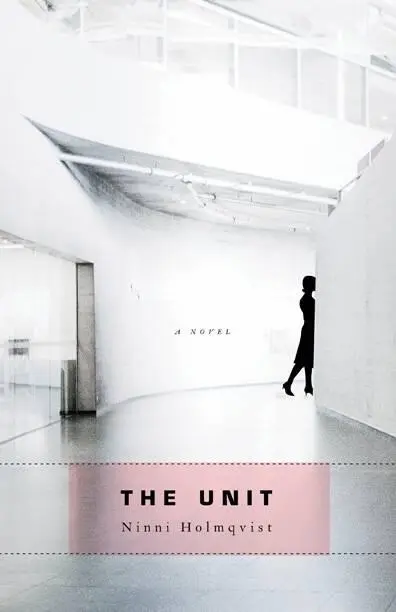
- Название:The Unit
- Автор:
- Жанр:
- Год:неизвестен
- ISBN:нет данных
- Рейтинг книги:3 / 5. Голосов: 1
-
Избранное:Добавить в избранное
- Отзывы:
-
Ваша оценка:
The Unit: краткое содержание, описание и аннотация
Предлагаем к чтению аннотацию, описание, краткое содержание или предисловие (зависит от того, что написал сам автор книги «The Unit»). Если вы не нашли необходимую информацию о книге — напишите в комментариях, мы постараемся отыскать её.
The Unit uncannily echoes its organ-donation-dystopia predecessor, Kazuo Ishiguro’s Never Let Me Go (2005); both imagine societies of extreme utilitarianism that plunder their margins for body parts, and both raise the prospect of art for art’s sake, and love for love’s, as weapons against such thinking. The Unit’s heroine, Dorrit, has chosen not to have children and thus “spill over like rising bread dough”; at the book’s opening, Dorrit’s independence has just earned her incarceration in the Unit, a death camp puzzlingly replete with art galleries and gourmet restaurants where her individualism seems to lapse into passivity.
Through flashbacks, we learn of all Dorrit has lost-her career as a novelist, her beloved dog, the small house she owned herself, the opportunities to save herself by becoming “useful” to society. These snippets of memory are interspersed with descriptions of the eponymous unit and its dying inhabitants, descriptions so matter-of-fact they lull. The novel grips toward the end when Dorrit finds love-and with it a potential escape-and makes a startling choice.
Dorrit’s play-by-play narration can be clunky in translation, but the spare, cumulative prose effectively reveals a character whose story can barely ward off the disintegration of the self it relates. Holmqvist cleverly makes that very self unreliable; The Unit is the latest in a trend of anti-heroic dystopias such as Never Let Me Go and P.D. James’s The Children of Men. In these novels of bad futures, the trustworthy memories of protagonists such as Nineteen Eighty-Four’s Winston Smith (“Airstrip One… had been called England or Britain, though London, [Winston] felt fairly certain, had always been called London”) are replaced by the self-delusions of narrators who mislead the reader and themselves lose control of the stories they are telling. In these novels, rebellion must be expressed obliquely. Like Kathy, the complacent carer of Never Let Me Go, who survives her childhood friends, nursing them as they donate all their organs, Dorrit displaces her anger onto a clearer-eyed friend who calls the Unit what it is, a “luxury slaughterhouse.”
While Holmqvist builds a powerfully imaginative scenario around the concept of killing off the childless, her message on gender roles is clumsy and unconvincing. In Dorrit’s world, flirting and other “typically male” behavior has been criminalized, and retrograde domestic fantasies have to be played out in secret, making the missionary position an act of transgression. We have come a long way from the rage of Margaret Atwood’s 1985 A Handmaid’s Tale, with its neo-Biblical America in which all women are forced either to bear children or to raise them. In today’s climate of threatened reproductive rights, a critique of compulsory motherhood would be welcome, but The Unit displays the same innate conservatism that is the pitfall of Never Let Me Go-a disturbing willingness to locate tragedy not in the horror of forced organ donation and premature death, but in Kathy and Dorrit’s lost opportunities to become mothers.
Copyright 2010 Fran Bigman
The Unit — читать онлайн бесплатно полную книгу (весь текст) целиком
Ниже представлен текст книги, разбитый по страницам. Система сохранения места последней прочитанной страницы, позволяет с удобством читать онлайн бесплатно книгу «The Unit», без необходимости каждый раз заново искать на чём Вы остановились. Поставьте закладку, и сможете в любой момент перейти на страницу, на которой закончили чтение.
Интервал:
Закладка:
When I reached H3 I hurried through the lounge to my apartment, into the bedroom, where I sank down on the bed, my cheek against the pillow, my legs drawn up in the fetal position, my arms around my knees. Eyes tight shut.
25
When I woke up it was because I was freezing. I was so cold I was shaking. It was night, the clock on the bedside table showed 2:18. I got up and felt the radiator; it was warm, almost hot. I went over to the other end of the room where there was a thermometer hanging on the wall. It was showing seventy-five degrees; so the fact that I was freezing had absolutely nothing to do with the temperature in the room.
This is the delayed reaction, I thought-and was amazed at how the human brain works: you can be at the mercy of your emotions to the extent that your teeth are literally chattering, while at the same time in another part of your brain you can calmly work out “here comes the delayed reaction.” And as if that weren’t enough, you can sit there being amazed at how the brain works.
I had fallen asleep with my clothes on; I put my robe on over my clothes, turned up the collar and pulled it tightly around my body, knotting the belt around my waist. But that wasn’t enough, I was still frozen, I was so cold I felt sick. Shivering, I pulled out a chair and placed it in front of the closet, climbed up and opened the cabinet above the closet, took out my old peacoat-100 percent wool-and put that on as well. Then I went into the living room and through to the kitchenette to make myself a cup of tea with warm milk and honey.
I curled up on the sofa, my hands wrapped around the warm mug. I sat cross-legged, with a blanket over my legs. The steaming drink smelled of bergamot and milk, and I raised the mug to my lips, taking big, deep gulps as I gazed at my blurred gray-green reflection in the blank television screen. I looked like an apparition. Or like an old American Indian. I thought I looked like the ghost of Sitting Bull in the lotus position.
I didn’t get any more sleep that night. It turned into a kind of vigil, but without a body to watch over, during which I did nothing and thought nothing-I didn’t even think about Johannes, or about our child, growing in my stomach, or about the key card in my pocket. I just sat there and drank my tea, and when I’d finished it I sat there with the empty mug in my hands.
Gradually I became aware that the room had grown light. The clock on the DVD player showed six, then seven, then eight, then nine. Just after nine I heard a series of loud rapping noises; I jumped, looked around me. What the hell is he doing? I thought.
“What are you doing, Johannes?” I asked. But when three more loud knocks echoed through the room I understood someone was knocking on the door, and I remembered that I had spent the night alone, that Johannes wasn’t there, and I realized that despite everything I had been in a kind of slumber with my eyes open, somewhere on the shifting border between sleep and wakefulness. I realized that and yet I believed, for a fraction of a second, that since Johannes wasn’t there with me then it must be him knocking on the door, wanting to come in to say good morning. But as I said, that was only for a fraction of a second, the idea simply flickered through my mind, and then I was right back in reality, where Johannes no longer existed, and I tried to get up, but it was as if the lower half of my body had suddenly become incredibly large and heavy, and I had to gather myself and drag myself off the sofa as the knocking started again, louder this time, and in three series of three knocks each, and when I at last got to my feet I felt dizzy and had to lean over and support myself on the coffee table for several seconds, black dots spinning before my eyes. And the knocking went on and on, nonstop, six, seven, eight, nine impatient knocks.
“I’m coming!” I shouted, then finally managed to straighten up, shrug off the peacoat, which now felt clumsy, and open the door.
Outside stood Petra Runhede, her head tilted slightly to one side, gazing sympathetically into my eyes as she said, her voice respectfully muted:
“ May I come in?”
At this point three things happened simultaneously. The first was that I took a step to one side to allow Petra to go past me into the apartment. The second was that my emotions woke up, just as I took that step to one side they woke up, and they woke up like a cat, going from a deep sleep to full awareness in no time at all, and the emotion I felt was a searing hatred toward this polite woman with her artificial intimacy, her professional empathy. And at the precise moment when I took a step to one side and my hatred came to life, nausea welled up inside me, like a volcano.
“Excuse me,” I managed to blurt out before I rushed into the bathroom with my hand to my mouth, slammed the door and lifted the toilet seat. And with the vomiting came the crying, a howling, gulping sobbing that hurt my throat and filled my nose. I stood there for a good while, bent over the toilet bowl with tears and snot pouring out of the orifices in my face and cold sweat pouring out of all the pores in my skin.
When it was all over, I blew my nose several times. Flushed the toilet. Got to my feet with difficulty; I had a new kind of soreness in my lower back, stiff and yet porous at the same time, as if I were crumbling just there at the base of my spine, and I had to hold onto myself, press one hand against my back as I grabbed hold of the sink with the other and pulled myself to my feet. Then I turned on the cold water, washed my hands, cupping them under the stream, leaned forward cautiously, bathed my face with the cold water, lapped at the water, rinsed my mouth. Then I straightened up once more, panting with pain and with one hand pressed to my back again, and brushed my teeth, but very quickly and only at the front of my mouth so that I wouldn’t risk making myself gag again when the toothbrush went farther in. I spat and rinsed quickly, turned off the faucet, dried my mouth and face with a towel. I stood there, contemplating my reflection above the sink: my skin grayish white, eyes red-rimmed and bloodshot, nose swollen, cheeks puffy, hair standing on end, clothes creased and sweaty beneath the dressing gown, which had fallen open. I smoothed down my hair and ran my hands over my clothes in a vain attempt to smooth them down as well. As my hand passed over the right-hand pocket of my pants I felt the rectangular key card through the fabric and I thought, There it is, there’s my secret. I didn’t think, There’s my way out, my ticket to freedom, to survival, to a life with my child; I just thought, There’s my secret. Then I pulled my dressing gown around me and knotted the belt at my waist.
Petra had made coffee and two cheese sandwiches. I sat down at the table and allowed her to pour me coffee and place the plate of sandwiches in front of me.
“Do you mind if I sit down opposite you?” she asked, almost submissively, and I had the urge to answer yes, I do mind, you can go out into the hallway and wait there until I call you and then you can come in and clear the table and wash the dishes and then you can discreetly disappear again. But of course I didn’t say that, I just shook my head and made a feeble gesture toward the chair on the other side of the table. She pulled out the chair and sat down on it, sat there without saying anything for a long time, while I drank the coffee and took small bites from one of the sandwiches and chewed slowly.
My newly awakened hatred was now under control. It was lying beneath the surface, awake but resting. It had woken like a cat and it was resting like a cat: with its eyes half closed and its ears acting like periscopes, picking up the slightest movement, the slightest hiss, whisper or sigh.
Читать дальшеИнтервал:
Закладка:
Похожие книги на «The Unit»
Представляем Вашему вниманию похожие книги на «The Unit» списком для выбора. Мы отобрали схожую по названию и смыслу литературу в надежде предоставить читателям больше вариантов отыскать новые, интересные, ещё непрочитанные произведения.










Обсуждение, отзывы о книге «The Unit» и просто собственные мнения читателей. Оставьте ваши комментарии, напишите, что Вы думаете о произведении, его смысле или главных героях. Укажите что конкретно понравилось, а что нет, и почему Вы так считаете.