Ninni Holmqvist - The Unit
Здесь есть возможность читать онлайн «Ninni Holmqvist - The Unit» весь текст электронной книги совершенно бесплатно (целиком полную версию без сокращений). В некоторых случаях можно слушать аудио, скачать через торрент в формате fb2 и присутствует краткое содержание. Жанр: Современная проза, на английском языке. Описание произведения, (предисловие) а так же отзывы посетителей доступны на портале библиотеки ЛибКат.
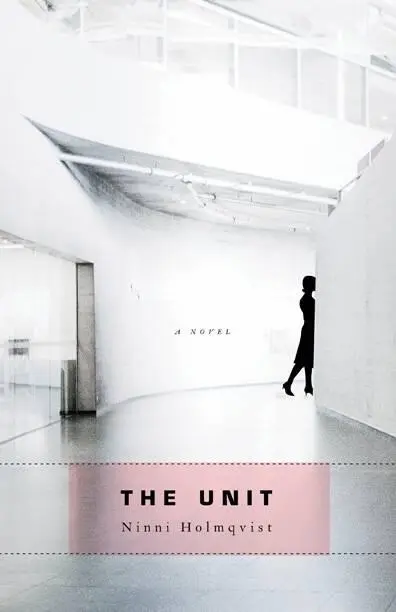
- Название:The Unit
- Автор:
- Жанр:
- Год:неизвестен
- ISBN:нет данных
- Рейтинг книги:3 / 5. Голосов: 1
-
Избранное:Добавить в избранное
- Отзывы:
-
Ваша оценка:
The Unit: краткое содержание, описание и аннотация
Предлагаем к чтению аннотацию, описание, краткое содержание или предисловие (зависит от того, что написал сам автор книги «The Unit»). Если вы не нашли необходимую информацию о книге — напишите в комментариях, мы постараемся отыскать её.
The Unit uncannily echoes its organ-donation-dystopia predecessor, Kazuo Ishiguro’s Never Let Me Go (2005); both imagine societies of extreme utilitarianism that plunder their margins for body parts, and both raise the prospect of art for art’s sake, and love for love’s, as weapons against such thinking. The Unit’s heroine, Dorrit, has chosen not to have children and thus “spill over like rising bread dough”; at the book’s opening, Dorrit’s independence has just earned her incarceration in the Unit, a death camp puzzlingly replete with art galleries and gourmet restaurants where her individualism seems to lapse into passivity.
Through flashbacks, we learn of all Dorrit has lost-her career as a novelist, her beloved dog, the small house she owned herself, the opportunities to save herself by becoming “useful” to society. These snippets of memory are interspersed with descriptions of the eponymous unit and its dying inhabitants, descriptions so matter-of-fact they lull. The novel grips toward the end when Dorrit finds love-and with it a potential escape-and makes a startling choice.
Dorrit’s play-by-play narration can be clunky in translation, but the spare, cumulative prose effectively reveals a character whose story can barely ward off the disintegration of the self it relates. Holmqvist cleverly makes that very self unreliable; The Unit is the latest in a trend of anti-heroic dystopias such as Never Let Me Go and P.D. James’s The Children of Men. In these novels of bad futures, the trustworthy memories of protagonists such as Nineteen Eighty-Four’s Winston Smith (“Airstrip One… had been called England or Britain, though London, [Winston] felt fairly certain, had always been called London”) are replaced by the self-delusions of narrators who mislead the reader and themselves lose control of the stories they are telling. In these novels, rebellion must be expressed obliquely. Like Kathy, the complacent carer of Never Let Me Go, who survives her childhood friends, nursing them as they donate all their organs, Dorrit displaces her anger onto a clearer-eyed friend who calls the Unit what it is, a “luxury slaughterhouse.”
While Holmqvist builds a powerfully imaginative scenario around the concept of killing off the childless, her message on gender roles is clumsy and unconvincing. In Dorrit’s world, flirting and other “typically male” behavior has been criminalized, and retrograde domestic fantasies have to be played out in secret, making the missionary position an act of transgression. We have come a long way from the rage of Margaret Atwood’s 1985 A Handmaid’s Tale, with its neo-Biblical America in which all women are forced either to bear children or to raise them. In today’s climate of threatened reproductive rights, a critique of compulsory motherhood would be welcome, but The Unit displays the same innate conservatism that is the pitfall of Never Let Me Go-a disturbing willingness to locate tragedy not in the horror of forced organ donation and premature death, but in Kathy and Dorrit’s lost opportunities to become mothers.
Copyright 2010 Fran Bigman
The Unit — читать онлайн бесплатно полную книгу (весь текст) целиком
Ниже представлен текст книги, разбитый по страницам. Система сохранения места последней прочитанной страницы, позволяет с удобством читать онлайн бесплатно книгу «The Unit», без необходимости каждый раз заново искать на чём Вы остановились. Поставьте закладку, и сможете в любой момент перейти на страницу, на которой закончили чтение.
Интервал:
Закладка:
When I had slowly forced one of the sandwiches down, Petra cleared her throat. I ignored her, looking down into my coffee cup before picking it up and drinking the last drops.
“Dorrit,” she said in that quiet, intimate voice that was her signature. “I am sorry. Really. I’m sorry about everything.”
“Everything?” I glanced at her, skeptically, before putting the cup down.
“Everything you’re going through,” she clarified. “And everything you’ve been through. I think that those of you who are dispensable are often subjected to an unnecessary amount of suffering. You’re not criminals, after all, you haven’t done any harm to anyone or anything. You have simply lived your lives, without thinking too much about the future or the world around you, it has to be said, but on the other hand you have often lived on very little money and for the most part you haven’t made a great deal of fuss. Presumably you all had neighbors who didn’t even notice you existed, and very few of you have actually been a burden to society-I know you haven’t. And you have all lived in a headwind, a social headwind. Then you end up here, and things are often really good during the time you have…”
She broke off.
“… left,” I supplied, whereupon a dark red flush flooded her face. She cleared her throat again and went on:
“But sometimes some of you are struck by tragedies. Like what you’re going through now. I wish you didn’t have to suffer like this. I wish there was another solution. That there could be a different policy, one less driven by economic considerations, one that was a little…”-she fell silent, leaned across the table, glanced covertly at me, then went on in a quiet voice-“… one that was more of a planned economy , in fact.”
I raised my eyebrows. What in the world was she talking about? What was she up to?
She stopped talking. The flush was still visible on her cheeks, just a little more faint than when it had appeared, and there was something glassy about her eyes, a kind of feverish eagerness, as if she were sharing secret desires with me, forbidden values.
But there are no forbidden values. Anyone who lives in a democracy has the right to wish for whatever they want, and to express any views and feelings whatsoever, as long as these do not offend, threaten or persecute. And if there did perchance happen to be any limitation to this right, then Petra, director of the Second Reserve Bank Unit for Biological Material, would hardly have been sitting there expressing her views in my bugged room. Besides which I knew perfectly well, from my own experience, how sensitive the microphones were and how crystal clear the sound quality was. But Petra obviously wasn’t aware that I knew, because she went on, in a whisper now:
“I would like to see a more… socialist-oriented policy, one where not everyone has to be profitable all the time.”
She really was very good. I didn’t understand what she was trying to achieve with all this, but she was certainly good. If it hadn’t been for the surveillance and for the fact that she was the director of the unit, I’m sure I would have believed her. But as I didn’t, I said:
“Stop talking crap, Petra. Tell me why you’re here.”
She gave me a hurt look, then replied in her submissive voice:
“I just wanted to see how you were.”
“Right. Thank you so much.”
“And to let you know that you’re being given a week’s sick leave.”
“Very kind of you,” I said.
“And then I thought I’d take the opportunity to ask you to decide-when you feel up to it-what you’re going to do. How you want things to be. Whether you…”-she cleared her throat again-“… whether you want to donate the fetus or carry it to full term and-”
“I intend to give birth to my child,” I interrupted her.
She laughed out loud, relieved, and said that was fantastic, before adding:
“Then I’ll let Amanda Jonstorp know. You’ll have a series of regular checks and ultrasound scans and amniotic fluid samples and all the other tests. And when-or if-we know that everything is as it should be with the child, you can decide on a suitable time for a C-section. And I’ll get in touch with the Adoption Commission. I can tell you, Dorrit, that in cases like this-which are very rare, for obvious reasons-the adoptive parents are more or less handpicked. There will be very, very thorough investigations before they decide who will be considered as parents for the child you are carrying.”
“Surely that’s always the case,” I said, and it was more of a statement than a question, because I knew perfectly well how thoroughly those who applied for permission to adopt were investigated. On those occasions when I myself had applied I had been rejected for a whole range of reasons, from my low and uncertain income to the lack of suitable male role models in my social network. The last time I had applied I had also been deemed too old.
It struck me now that if I had been granted permission to adopt and had managed to scrape together the necessary funds for all the fees and possible journeys involved, then I might well have ended up with a child that a dispensable woman had given birth to and been forced to give up.
Petra didn’t reply to my question, which was more of a statement, but placed her hands on her knees and made a move to get up. But then she stopped:
“By the way. Is there anything I can do for you, Dorrit? Is there anything you need?”
“Yes,” I replied, and I was surprised at my own quick thinking. “If they haven’t already emptied Johannes’s room, I’d like access to it before they do. There are things in there that belong to me.”
This was only an excuse, of course; in fact I just wanted to be there for a while, alone, and Petra seemed to understand that, because she said:
“I’ll arrange it. I’ll also make sure the surveillance unit doesn’t monitor Johannes’s apartment while you’re there.”
“Why?” I said.
She sighed mournfully. “Because in my opinion you have the right to be completely on your own for a while.”
What did she want? Either she was expecting me to return the favor somehow, or she thought I would be eternally grateful and thus particularly cooperative and pliant. Or she really did have a bad conscience, felt genuinely guilty about her part in this whole luxury slaughterhouse-which was one of Elsa’s descriptions of the place.
And I suppose Petra was only a human being after all. She probably had children of her own and a man or woman of her own with whom she shared the children. Or perhaps she’d also lost a partner at some point-perhaps she’d lost the man or woman she shared her children with. Or perhaps she’d actually lost a child.
I never found out how things stood in that respect, I didn’t ask, of course, and actually I didn’t want to know what her reasons or motives were, but I was very keen to keep my distance from this undoubtedly very gifted individual. She obviously had considerable talent as an actress-even if she overplayed things slightly sometimes; she could have done with honing her exaggerated sincerity and her sympathy-perhaps she was a former wannabe actress who had chosen security and normality over her youthful dream. Such people are, in my experience, rarely entirely kindly disposed toward those who have chosen to follow their youthful dream-like me. They despise our almost childish sensitivity, still intact after all these years, and our unwillingness-or inability-to compromise and fit in. They call us bohemians, oddballs, aliens or divas. They envy those of us who achieve some success, and rub their hands with glee when they see the rest slowly going under.
No, I had no desire whatsoever to get close to Petra, to ask personal questions or even to pretend to believe that her goodwill was genuine. I said:
Читать дальшеИнтервал:
Закладка:
Похожие книги на «The Unit»
Представляем Вашему вниманию похожие книги на «The Unit» списком для выбора. Мы отобрали схожую по названию и смыслу литературу в надежде предоставить читателям больше вариантов отыскать новые, интересные, ещё непрочитанные произведения.






Обсуждение, отзывы о книге «The Unit» и просто собственные мнения читателей. Оставьте ваши комментарии, напишите, что Вы думаете о произведении, его смысле или главных героях. Укажите что конкретно понравилось, а что нет, и почему Вы так считаете.