Ninni Holmqvist - The Unit
Здесь есть возможность читать онлайн «Ninni Holmqvist - The Unit» весь текст электронной книги совершенно бесплатно (целиком полную версию без сокращений). В некоторых случаях можно слушать аудио, скачать через торрент в формате fb2 и присутствует краткое содержание. Жанр: Современная проза, на английском языке. Описание произведения, (предисловие) а так же отзывы посетителей доступны на портале библиотеки ЛибКат.
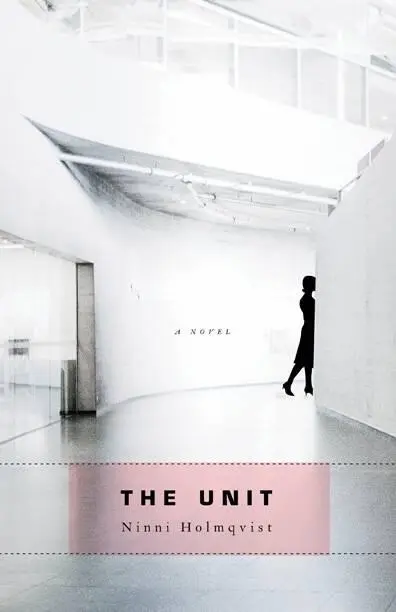
- Название:The Unit
- Автор:
- Жанр:
- Год:неизвестен
- ISBN:нет данных
- Рейтинг книги:3 / 5. Голосов: 1
-
Избранное:Добавить в избранное
- Отзывы:
-
Ваша оценка:
The Unit: краткое содержание, описание и аннотация
Предлагаем к чтению аннотацию, описание, краткое содержание или предисловие (зависит от того, что написал сам автор книги «The Unit»). Если вы не нашли необходимую информацию о книге — напишите в комментариях, мы постараемся отыскать её.
The Unit uncannily echoes its organ-donation-dystopia predecessor, Kazuo Ishiguro’s Never Let Me Go (2005); both imagine societies of extreme utilitarianism that plunder their margins for body parts, and both raise the prospect of art for art’s sake, and love for love’s, as weapons against such thinking. The Unit’s heroine, Dorrit, has chosen not to have children and thus “spill over like rising bread dough”; at the book’s opening, Dorrit’s independence has just earned her incarceration in the Unit, a death camp puzzlingly replete with art galleries and gourmet restaurants where her individualism seems to lapse into passivity.
Through flashbacks, we learn of all Dorrit has lost-her career as a novelist, her beloved dog, the small house she owned herself, the opportunities to save herself by becoming “useful” to society. These snippets of memory are interspersed with descriptions of the eponymous unit and its dying inhabitants, descriptions so matter-of-fact they lull. The novel grips toward the end when Dorrit finds love-and with it a potential escape-and makes a startling choice.
Dorrit’s play-by-play narration can be clunky in translation, but the spare, cumulative prose effectively reveals a character whose story can barely ward off the disintegration of the self it relates. Holmqvist cleverly makes that very self unreliable; The Unit is the latest in a trend of anti-heroic dystopias such as Never Let Me Go and P.D. James’s The Children of Men. In these novels of bad futures, the trustworthy memories of protagonists such as Nineteen Eighty-Four’s Winston Smith (“Airstrip One… had been called England or Britain, though London, [Winston] felt fairly certain, had always been called London”) are replaced by the self-delusions of narrators who mislead the reader and themselves lose control of the stories they are telling. In these novels, rebellion must be expressed obliquely. Like Kathy, the complacent carer of Never Let Me Go, who survives her childhood friends, nursing them as they donate all their organs, Dorrit displaces her anger onto a clearer-eyed friend who calls the Unit what it is, a “luxury slaughterhouse.”
While Holmqvist builds a powerfully imaginative scenario around the concept of killing off the childless, her message on gender roles is clumsy and unconvincing. In Dorrit’s world, flirting and other “typically male” behavior has been criminalized, and retrograde domestic fantasies have to be played out in secret, making the missionary position an act of transgression. We have come a long way from the rage of Margaret Atwood’s 1985 A Handmaid’s Tale, with its neo-Biblical America in which all women are forced either to bear children or to raise them. In today’s climate of threatened reproductive rights, a critique of compulsory motherhood would be welcome, but The Unit displays the same innate conservatism that is the pitfall of Never Let Me Go-a disturbing willingness to locate tragedy not in the horror of forced organ donation and premature death, but in Kathy and Dorrit’s lost opportunities to become mothers.
Copyright 2010 Fran Bigman
The Unit — читать онлайн бесплатно полную книгу (весь текст) целиком
Ниже представлен текст книги, разбитый по страницам. Система сохранения места последней прочитанной страницы, позволяет с удобством читать онлайн бесплатно книгу «The Unit», без необходимости каждый раз заново искать на чём Вы остановились. Поставьте закладку, и сможете в любой момент перейти на страницу, на которой закончили чтение.
Интервал:
Закладка:
There I was met-of course I was met, the cameras had been following me, obviously, and Petra had naturally understood where I was heading and had rung down to warn them-by two sturdy young nurses in green scrubs. They blocked my way, forming a human barricade, like the riot police but with masks and protective headgear like shower caps instead of visors and helmets. One took off his mask, revealing a large birthmark on his upper lip. He said:
“It’s already happened, Dorrit. Johannes Alby is already on the operating table. We’re very sorry.”
I stared at him. I stared at his birthmark; it was dark, like dark chocolate, about a quarter of an inch in diameter, and perfectly round. It looked unreal, as if it had been painted on, and in his place I would have had it removed-particularly as he was surrounded at work by surgeons and scalpels. When I had finished staring I tried to force my way through the two-man wall, the living riot shield, by quickly ducking and diving in between the two nurses, but of course I didn’t succeed; they were too big, too strong, too well-prepared, and the second one-who hadn’t yet had time to take off his mask-grabbed me, gripped my arms firmly behind my back, and held me tightly from behind so that I was forced to lean forward. All I could see were my own legs and shoes and the dingy green floor. I struggled to free myself, but then the grip tightened so that it hurt my upper arms.
His voice was strangely gentle against the back of my neck as he said: “It’s already happened, didn’t you hear?” As if he was trying to sound calming, as if he was trying to console me-a stark contrast to the police hold he had on me. He carried on, in the same gentle voice:
“There’s nothing you can do. The narcotics specialist has already caused his brain to die. Johannes Alby is gone. Clinically dead.”
I made a final effort to free myself, but realized that I was only wearing myself out, and gave up. He must have felt in my limbs that I’d given up, because he let me go. I smoothed my shirt and turned to the two men, rubbing my upper arms, and said in as controlled a voice as I could manage:
“I want to see him anyway.”
“There’s no point,” said the one with the gentle voice and the police hold, as he took off his mask to reveal a pointed nose and a pair of thin lips. “He isn’t alive,” he went on, “even if it looks as though he is. His breathing is being supported by the respirator, his heart is beating and his blood is being oxygenated, but there is no real life there, and you know that perfectly well. He has no perception of anything. He can’t hear or feel anything.”
“But I can,” I said. “Let me see him.”
“They’re operating right now, they’re getting ready to remove the liver, and a team is waiting in a helicopter outside the building to take it. It’s impossible for you to go in there now. It’s too late. I’m sorry. You need to go back, go home. If you want we can book an emergency appointment with your psychologist. Who do you see?”
“I don’t need any psychologist. I need to see Johannes. That’s the only thing I need, the only thing I want, and the only thing I’m going to agree to. If I don’t get it, I shall kill myself. And I can assure you that I know how I’m going to do it, and it will be so quick and effective that nobody will have time to stop me or save me.”
Irrespective of whether they believed my threat or not, I knew it was an argument they had to take notice of. It’s just like when the police get information about a bomb threat in a department store, for example; they have to evacuate the building whether or not they believe there really is a bomb. I knew I was valuable as a dispensable person; I was in perfect health, had excellent readings, was very fit, still had almost all my organs, and on top of that I was carrying a child-fresh human capital-beneath my heart. I was, literally, worth my weight in gold. They couldn’t afford to risk losing me.
The nurse with the birthmark on his upper lip said:
“Perhaps we might be able to arrange it. It’s possible they might agree to let you in for a short while when they’ve finished with the liver.”
“But then they’re going to take…” began the one with the police hold.
“Yes, but there’s no real hurry with that,” interrupted Birthmark. “Most of it’s only going into the banks anyway.”
The banks, that’s where they keep the organs and tissues that can be preserved; the other parts of Johannes’s body were going to be kept there, the parts they always take if they are medically viable: some of the remaining vital organs plus corneas, cardiac valves, bone and other tissue. Everything that can be used is removed and placed in a nutritional fluid or deep frozen and preserved. It’s purely routine, and naturally applies also to needed individuals who are brain-dead as a result of accidents or violent crimes.
The nurses showed me to a small break room, closed the door behind me and tried the handle from the outside, presumably to make sure it was locked.
The room was furnished with a bed, a chair and a desk. And it had a window. Yes, a window, a real one. A real window looking out over a park. There was snow in the park. It was winter. There was a frozen pond with a gap in the ice in the middle, with ducks, grebes and other waterfowl walking to and fro, taking a quick dip like winter swimmers. The pond was partly surrounded by bushes and tall trees, the snow lying on the bushes like little caps, and like a soft, shimmering mattress on the ground. A gust of wind shook the treetops, and the snow drifted from the branches like sifted powdered sugar.
Something didn’t add up; I was on level K1. In the basement. But now it turned out that this upper basement level was above ground. There was no doubt that this was a real window and a real view-when I went right up close I could feel the draft through the gaps, a draft that was cold and smelled of winter. In a pure reflex action I grabbed hold of the handles on the window and tried to lift it upward, but it was locked, and I let my arm drop and remained standing there, upright, gazing out at this whiteness, this reality. This outdoor space.
In the end I managed to tear myself away from the window and allowed my eyes to travel slowly over the walls, the ceiling, the corners, the furniture, the light, and it was as I’d thought: no cameras. At least I couldn’t see any. Unless they were as tiny as the head of a pin, there were no cameras. Clearly the two nurses were more afraid that I would run amok in the operating room than that I would kill myself, despite everything.
Birthmark came back.
“That’s fine,” he said. “But it’ll be about another hour, and you’ll have to wait in here. And we’ve been ordered to lock the door. I hope you understand.”
I nodded.
“Would you like anything while you’re waiting? Coffee? Tea? A sandwich?”
“No.”
He had backed out and was about to close the door when I changed my mind.
“Actually, yes. One of those application forms, you know the ones.”
“What kind of application form?”
“One of those you fill in when you want to make a final donation as soon as possible.”
An expression of dismay appeared on Birthmark’s face.
“Are you sure?” he said. “You’re… you’re expecting a child, aren’t you?”
I didn’t reply, just gave him a long stare. He looked away, slightly embarrassed I thought; he looked as if he felt stupid.
He went away, came back with an application form, and left me alone once again. I sat down at the desk. The first question was:
1. This application comprises
A. a request to be moved to another section. (Proceed to question 2)
B. a request to be moved to another unit. (Proceed to question 5)
Читать дальшеИнтервал:
Закладка:
Похожие книги на «The Unit»
Представляем Вашему вниманию похожие книги на «The Unit» списком для выбора. Мы отобрали схожую по названию и смыслу литературу в надежде предоставить читателям больше вариантов отыскать новые, интересные, ещё непрочитанные произведения.







Обсуждение, отзывы о книге «The Unit» и просто собственные мнения читателей. Оставьте ваши комментарии, напишите, что Вы думаете о произведении, его смысле или главных героях. Укажите что конкретно понравилось, а что нет, и почему Вы так считаете.