Ninni Holmqvist - The Unit
Здесь есть возможность читать онлайн «Ninni Holmqvist - The Unit» весь текст электронной книги совершенно бесплатно (целиком полную версию без сокращений). В некоторых случаях можно слушать аудио, скачать через торрент в формате fb2 и присутствует краткое содержание. Жанр: Современная проза, на английском языке. Описание произведения, (предисловие) а так же отзывы посетителей доступны на портале библиотеки ЛибКат.
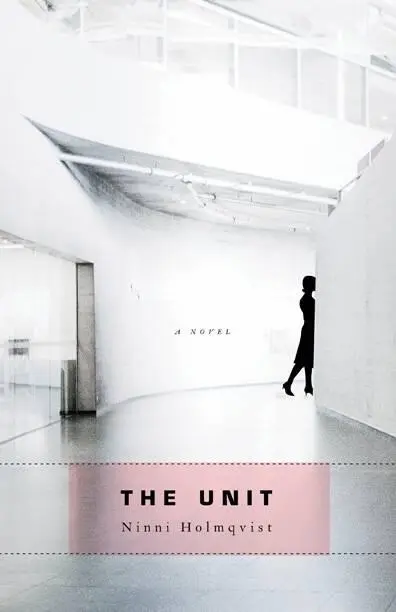
- Название:The Unit
- Автор:
- Жанр:
- Год:неизвестен
- ISBN:нет данных
- Рейтинг книги:3 / 5. Голосов: 1
-
Избранное:Добавить в избранное
- Отзывы:
-
Ваша оценка:
The Unit: краткое содержание, описание и аннотация
Предлагаем к чтению аннотацию, описание, краткое содержание или предисловие (зависит от того, что написал сам автор книги «The Unit»). Если вы не нашли необходимую информацию о книге — напишите в комментариях, мы постараемся отыскать её.
The Unit uncannily echoes its organ-donation-dystopia predecessor, Kazuo Ishiguro’s Never Let Me Go (2005); both imagine societies of extreme utilitarianism that plunder their margins for body parts, and both raise the prospect of art for art’s sake, and love for love’s, as weapons against such thinking. The Unit’s heroine, Dorrit, has chosen not to have children and thus “spill over like rising bread dough”; at the book’s opening, Dorrit’s independence has just earned her incarceration in the Unit, a death camp puzzlingly replete with art galleries and gourmet restaurants where her individualism seems to lapse into passivity.
Through flashbacks, we learn of all Dorrit has lost-her career as a novelist, her beloved dog, the small house she owned herself, the opportunities to save herself by becoming “useful” to society. These snippets of memory are interspersed with descriptions of the eponymous unit and its dying inhabitants, descriptions so matter-of-fact they lull. The novel grips toward the end when Dorrit finds love-and with it a potential escape-and makes a startling choice.
Dorrit’s play-by-play narration can be clunky in translation, but the spare, cumulative prose effectively reveals a character whose story can barely ward off the disintegration of the self it relates. Holmqvist cleverly makes that very self unreliable; The Unit is the latest in a trend of anti-heroic dystopias such as Never Let Me Go and P.D. James’s The Children of Men. In these novels of bad futures, the trustworthy memories of protagonists such as Nineteen Eighty-Four’s Winston Smith (“Airstrip One… had been called England or Britain, though London, [Winston] felt fairly certain, had always been called London”) are replaced by the self-delusions of narrators who mislead the reader and themselves lose control of the stories they are telling. In these novels, rebellion must be expressed obliquely. Like Kathy, the complacent carer of Never Let Me Go, who survives her childhood friends, nursing them as they donate all their organs, Dorrit displaces her anger onto a clearer-eyed friend who calls the Unit what it is, a “luxury slaughterhouse.”
While Holmqvist builds a powerfully imaginative scenario around the concept of killing off the childless, her message on gender roles is clumsy and unconvincing. In Dorrit’s world, flirting and other “typically male” behavior has been criminalized, and retrograde domestic fantasies have to be played out in secret, making the missionary position an act of transgression. We have come a long way from the rage of Margaret Atwood’s 1985 A Handmaid’s Tale, with its neo-Biblical America in which all women are forced either to bear children or to raise them. In today’s climate of threatened reproductive rights, a critique of compulsory motherhood would be welcome, but The Unit displays the same innate conservatism that is the pitfall of Never Let Me Go-a disturbing willingness to locate tragedy not in the horror of forced organ donation and premature death, but in Kathy and Dorrit’s lost opportunities to become mothers.
Copyright 2010 Fran Bigman
The Unit — читать онлайн бесплатно полную книгу (весь текст) целиком
Ниже представлен текст книги, разбитый по страницам. Система сохранения места последней прочитанной страницы, позволяет с удобством читать онлайн бесплатно книгу «The Unit», без необходимости каждый раз заново искать на чём Вы остановились. Поставьте закладку, и сможете в любой момент перейти на страницу, на которой закончили чтение.
Интервал:
Закладка:
Amanda nodded. Petra went on:
“And we ought to make the most of that opportunity. In view of your age, I mean.”
We, I thought. What we? The only “we” I could see in all this was Johannes and I. But I said nothing, I didn’t want Petra, or Amanda either for that matter, to get the impression that I was somehow unbalanced.
Petra now got to the point, and she was talking quickly, as if to get it out of the way as rapidly as possible:
“Your choice is whether to donate the fetus for transplantation, or to carry it to full term and then have it adopted. The latter is of course the safest option, for the child that is, but it might also be the most painful for you, so think it over carefully. Whatever choice you make, you will be allowed to know something about the people who adopt the child, as with any donation, and if you wish I’m sure we can arrange it so that you continue to receive information about how the child is getting on in its family.”
My mouth dropped open. I thought: Is she stupid? I sat up straight, cleared my throat, and said, clearly and lucidly:
“You don’t understand. I have no intention of giving up this child. It’s mine. Mine and Johannes’s. We are the child’s parents. It is not going to be transplanted or adopted. I mean, we’re no longer dispensable, are we? We’ve become needed.”
“No, Dorrit. Your child is-at best-needed. You are and remain dispensable. And as for Johannes Alby…”
She broke off. Stared at me-she looked absolutely terrified, all of a sudden, which confused me. Was she afraid of me? I didn’t understand. She took a deep breath and approached the issue from a different angle.
“You must understand,” she said pleadingly. “At your age, Dorrit… how suitable do you think you would really be as a parent?”
“I can’t see that I’d be any less suitable than any other parent. Surely age can also be an advantage? I have considerable experience of life, and self-awareness. I’ve had my fun, and all trace of youthful egoism and self-obsession is gone. And I’m strong and healthy, mentally as well as physically. Not so long ago I was told I was as fit as a twenty-year-old.”
“It’s not just about fitness,” Petra interrupted.
“I didn’t say it was.”
Petra now had red patches on her neck-otherwise she was noticeably pale-and she turned to Amanda, as if seeking help. But Amanda was no help, not to either of us; she sat there in silence, her lips pressed together, looking down at some papers in front of her on the table. Petra turned back to me.
“First of all,” she said, “the lifespan of a human being is limited. For many centuries the average lifespan increased, but it has now remained virtually static for several decades. It seems as if we have reached the ceiling when it comes to how long we can live naturally, and the health risks associated with the drugs available to slow down the aging process have so far proved to be far too great for them to be launched on the open market. And secondly…”
I interrupted her. “This child will have plenty of time to grow up before either Johannes or I fall off our perch.”
Amanda glanced up from her papers and Petra opened her mouth to say something, but I raised my voice and carried on:
“We might not live long enough to see our grandchildren, but we’ll damned well have time to fulfill our role as parents. Both of us. Because even if Johannes is thirteen years older than me, he’s still as full of life as a thirty-year-old.”
By this stage Petra ’s face was the color of ivory, her mouth a thin, ashen pink line, her neck as red as if someone had poured boiling water over it. I interpreted her expression as a mixture of intense annoyance and the kind of panic that can affect those in a position of power when they feel they are losing their authority. In other words, I thought I had the upper hand in our discussion, and that Petra was losing her grip and was about to collapse in the face of my solid reasoning. She looked pleadingly at Amanda once again, but Amanda looked away again, down at her papers. Petra looked at me. She swallowed, and then she answered me quietly and slowly, as if feeling her way forward:
“But Dorrit. Have you thought about the fact that you-that both of you-would be the same age as the grandparents of the child’s friends? There is a significant risk that the child would feel different and would be rejected, perhaps even bullied. Besides which, dispensable parents are hardly a good example for a child.”
“There are no dispensable parents, Petra,” I said smugly. “That equation doesn’t add up.”
“The dispensable stamp would remain,” she said.
“What stamp? I haven’t got a stamp. Can you see a stamp?” I spread my hands wide.
“You wouldn’t be good role models,” said Petra, her face still as white as a sheet, still speaking quietly, but now with a slight quiver in her voice. “You would…”
She seemed to respect me, that was undeniable; she definitely seemed to be in an inferior position. I leaned back in the chair and let her talk for a while. But as she talked without being interrupted, her voice became less shaky and muted, and she gradually regained her composure, became herself again:
“You would-in one way or another-become a burden to your child, Dorrit. Something to… be ashamed of. It’s true. It is of course extremely… praiseworthy that you have both created this child. And if you can bring yourself to carry it throughout your pregnancy-provided it goes to full term, that is-then all credit to you. Naturally you will not be expected to go through the process of giving birth. A date will be set for a C-section, when you will be completely anesthetized so that you will not have to see or hear anything. The reserve bank authority will thank you in every possible way you can think of. There will be… you will receive certain favors, to put it simply. But-and this is and will remain a very definite ‘but’-we cannot allow you to act as a parent. Unfortunately that is completely out of the question. And when it comes to Johannes Alby…”
She broke off once again, and this time I reacted.
“What?” I said, slowly sitting up straight in my chair again. “What’s going on with Johannes?”
Petra was noticeably nervous. Or was she distressed? Or upset? In an almost breathless voice she said:
“He… he hasn’t told you, then?”
“Told me what?”
She stared stupidly at me. Stupidly and desperately.
“It’s been decided for more than a week,” she said.
“What has? What are you talking about?”
By this point I should have understood what she was trying to say-what she had been trying to say all along. I’m not stupid, I should have realized. But there are certain things that, despite the fact that they are looming so clearly in front of you, like enormous waves, are just too overwhelming, too huge, too crushing for us to grasp.
Petra said:
“I… I really am sorry that you have to find out this way, Dorrit, but at this stage it’s presumably too late for him to…”
She broke off again.
“ Out with it, woman !” I yelled.
Then Amanda Jonstorp looked up from her papers, and after a quick glance at Petra she turned to me, opened her mouth and said:
“What Petra is trying to tell you is that Johannes Alby was taken in this afternoon to donate his liver to a carpenter with three children and six grandchildren. We’re very sorry.”
23
I ran. I ran along the hallway into the clinic, past one consulting room after another, past nurses, doctors, patients, cleaners and others who stepped aside, shocked. I ran through the waiting room, past reception, tore open the fire exit door-the elevators were too slow-and raced down the spiral staircase. My footsteps echoed in the empty stairwell; the echo bounced off the walls and hammered into my head, where it got mixed up with the echo of those words: hasn’t told you then… been decided for more than a week… that you have to find out this way… And I ran along another corridor, down another spiral staircase, a third corridor-alongside the swimming pool this time-and a third staircase: round and round and the words went round and round- too late for him… donate his liver… carpenter… six grandchildren… We’re very sorry …-and the words and the echo and the stairs made me dizzy, and I staggered out into yet another corridor, down one last winding staircase, out into the culvert on the upper basement level, and finally in through the heavy metal doors of the surgical department.
Читать дальшеИнтервал:
Закладка:
Похожие книги на «The Unit»
Представляем Вашему вниманию похожие книги на «The Unit» списком для выбора. Мы отобрали схожую по названию и смыслу литературу в надежде предоставить читателям больше вариантов отыскать новые, интересные, ещё непрочитанные произведения.






Обсуждение, отзывы о книге «The Unit» и просто собственные мнения читателей. Оставьте ваши комментарии, напишите, что Вы думаете о произведении, его смысле или главных героях. Укажите что конкретно понравилось, а что нет, и почему Вы так считаете.