Ninni Holmqvist - The Unit
Здесь есть возможность читать онлайн «Ninni Holmqvist - The Unit» весь текст электронной книги совершенно бесплатно (целиком полную версию без сокращений). В некоторых случаях можно слушать аудио, скачать через торрент в формате fb2 и присутствует краткое содержание. Жанр: Современная проза, на английском языке. Описание произведения, (предисловие) а так же отзывы посетителей доступны на портале библиотеки ЛибКат.
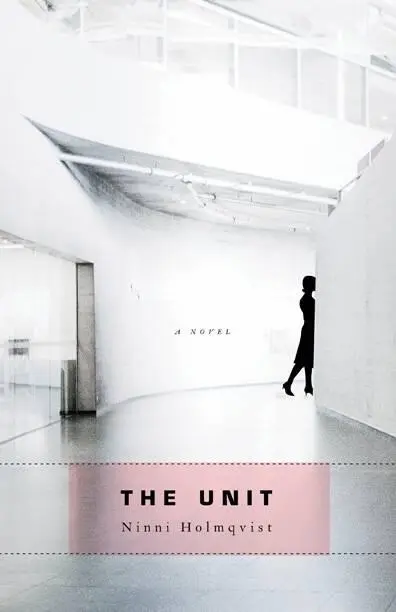
- Название:The Unit
- Автор:
- Жанр:
- Год:неизвестен
- ISBN:нет данных
- Рейтинг книги:3 / 5. Голосов: 1
-
Избранное:Добавить в избранное
- Отзывы:
-
Ваша оценка:
The Unit: краткое содержание, описание и аннотация
Предлагаем к чтению аннотацию, описание, краткое содержание или предисловие (зависит от того, что написал сам автор книги «The Unit»). Если вы не нашли необходимую информацию о книге — напишите в комментариях, мы постараемся отыскать её.
The Unit uncannily echoes its organ-donation-dystopia predecessor, Kazuo Ishiguro’s Never Let Me Go (2005); both imagine societies of extreme utilitarianism that plunder their margins for body parts, and both raise the prospect of art for art’s sake, and love for love’s, as weapons against such thinking. The Unit’s heroine, Dorrit, has chosen not to have children and thus “spill over like rising bread dough”; at the book’s opening, Dorrit’s independence has just earned her incarceration in the Unit, a death camp puzzlingly replete with art galleries and gourmet restaurants where her individualism seems to lapse into passivity.
Through flashbacks, we learn of all Dorrit has lost-her career as a novelist, her beloved dog, the small house she owned herself, the opportunities to save herself by becoming “useful” to society. These snippets of memory are interspersed with descriptions of the eponymous unit and its dying inhabitants, descriptions so matter-of-fact they lull. The novel grips toward the end when Dorrit finds love-and with it a potential escape-and makes a startling choice.
Dorrit’s play-by-play narration can be clunky in translation, but the spare, cumulative prose effectively reveals a character whose story can barely ward off the disintegration of the self it relates. Holmqvist cleverly makes that very self unreliable; The Unit is the latest in a trend of anti-heroic dystopias such as Never Let Me Go and P.D. James’s The Children of Men. In these novels of bad futures, the trustworthy memories of protagonists such as Nineteen Eighty-Four’s Winston Smith (“Airstrip One… had been called England or Britain, though London, [Winston] felt fairly certain, had always been called London”) are replaced by the self-delusions of narrators who mislead the reader and themselves lose control of the stories they are telling. In these novels, rebellion must be expressed obliquely. Like Kathy, the complacent carer of Never Let Me Go, who survives her childhood friends, nursing them as they donate all their organs, Dorrit displaces her anger onto a clearer-eyed friend who calls the Unit what it is, a “luxury slaughterhouse.”
While Holmqvist builds a powerfully imaginative scenario around the concept of killing off the childless, her message on gender roles is clumsy and unconvincing. In Dorrit’s world, flirting and other “typically male” behavior has been criminalized, and retrograde domestic fantasies have to be played out in secret, making the missionary position an act of transgression. We have come a long way from the rage of Margaret Atwood’s 1985 A Handmaid’s Tale, with its neo-Biblical America in which all women are forced either to bear children or to raise them. In today’s climate of threatened reproductive rights, a critique of compulsory motherhood would be welcome, but The Unit displays the same innate conservatism that is the pitfall of Never Let Me Go-a disturbing willingness to locate tragedy not in the horror of forced organ donation and premature death, but in Kathy and Dorrit’s lost opportunities to become mothers.
Copyright 2010 Fran Bigman
The Unit — читать онлайн бесплатно полную книгу (весь текст) целиком
Ниже представлен текст книги, разбитый по страницам. Система сохранения места последней прочитанной страницы, позволяет с удобством читать онлайн бесплатно книгу «The Unit», без необходимости каждый раз заново искать на чём Вы остановились. Поставьте закладку, и сможете в любой момент перейти на страницу, на которой закончили чтение.
Интервал:
Закладка:
So I sat down on the bench next to Potter, who held out the unclear little picture to me. I feigned interest and took it between the thumb and index finger of my right hand, with the other fingers still holding the piece of paper. He pointed at two paler kidney-shaped areas among all the lines and shadows on the picture, and I nodded and said something about how fascinating it was and asked how old they were now, the twin fetuses, and whether he was looking forward to being a parent, and he replied and explained and chatted, and somewhere in the middle of all this pointing and asking and explaining, while we were still sitting there leaning over the little photograph, I managed to pass the little crumpled piece of paper from my hand into his. When I had done it I glanced quickly up at his face. He didn’t look surprised, but just nodded, briefly, almost imperceptibly and with a tiny wink-I got the impression that he realized my interested questions had been nothing more than a kind of camouflage-and then, when we had finished looking at the picture, he put it into his wallet along with the crumpled piece of paper, and put the wallet back in his pocket.
It was several weeks before I bumped into Potter again, this time one evening in section E4. Alice lived there. She had borrowed a DVD from the library and invited me and Elsa and Lena and Vivi to watch the film and to have some homemade fruitcake and tea. The film was a romantic comedy, a frothy story full of mix-ups and misunderstandings that ended with a wedding. As soon as the titles rolled Elsa and Vivi left. They had begun to spend a lot of time together lately, just the two of them, and I was slowly starting to realize that there was something going on between them, that they were falling in love. I wanted to get back to Johannes, so shortly after Elsa and Vivi left I thanked Alice and went on my way. And that was when I caught sight of Potter in the laundry room as I was on my way out of the section. He was doing something to the drain in the floor.
“Is it blocked?” I said and stopped, hesitated in the doorway and then leaned on the door frame.
He looked up.
“Yes,” he sighed. “And it’s the third time in a week.”
And so we stood there for a little while-or rather I stood, while he was on his knees-and chatted about blockages and how to sort them out. As the former owner of a house with old drains and narrow pipes that often got blocked, I was able to give him some tips on how to solve the problem, and clever ways to help avoid it in the future.
When he had finished, at least for this time, as he said while replacing the grid over the drain, he got up and walked past me on the way out, and we said good-bye, and a neatly folded piece of paper was slipped into my hand, which I smuggled into my pocket.
Despite the fact that it wasn’t particularly late, Johannes was already asleep when I got back. He had left the light on above the sink in the kitchen. From the bedroom I could hear the sighing noises he made in his sleep; it wasn’t really snoring, but it wasn’t ordinary breathing either. He sounded like a dreaming child. He sounded like my brother Ole, when he was four and I was nine and he and Ida and I shared a room during a vacation in a cottage. He sounded like the wind whispering through a field of corn in late summer. It made me feel at peace. Safe.
I sat down at the dining table in the half darkness. From time to time Johannes would smack his lips in his sleep, half whimpering and muttering something in a thick voice (which didn’t sound like Ole at all). Then he would go back to the regular sighing, and that was the only sound apart from the faint, even hum of the air-conditioning. Apart from that the silence was complete. On the table lay the fossil Johannes had picked up on the beach. Beside the stone lay a magazine, I can’t remember what it was. I touched the stone, running my index finger over the contours of the cone-shaped fossil that had once been an animal, or at least part of an animal. I picked up the stone, weighed it in my hand, closed my fingers around it, turned it round and round in my cupped hand. It felt good; the stone was cool and smooth. Then I put it down again, pulled the magazine toward me, opened it, flicked through the pages and pretended to skim an article here and there while fiddling in my pocket with my hand-I was trying to make it look as if I were scratching my thigh-and fumbling for the piece of paper Potter had given me. I got hold of it and pulled it out as silently as I could, holding it between my index and middle finger, then carefully unfolded it under the table. Then I quickly slipped it in between two pages of the magazine, which I had positioned right by the edge of the table. Then all I had to do was leaf through until I got to the right place. When I got there I leaned forward slightly with one elbow on the table and my chin resting on the palm of my hand, so that I was hiding as much as possible.
I don’t see particularly well in the dark, and it took a while before I realized what the piece of paper was. It wasn’t a message, or a letter, not one single word was written or printed on it. It was two pictures. Two photographs, color photographs, printed next to one another in the middle of the piece of paper. I moved a fraction so that the light from the kitchen would shine down on the pictures.
They were taken in Sten and Lisa’s garden. In the left-hand picture Jock is with their youngest child, a little girl with round cheeks and curly black hair, big brown eyes and a funny little turned-up nose. Jock has a blue ball in his mouth-at least it looks like a ball-and is running toward the girl with his head up, proud, fearless. She’s wearing jeans, Wellington boots, a blue knitted sweater with a big red car on the front, and a gray scarf, and she’s laughing and clapping her hands above her head. She had grown, she seemed taller and slimmer, more sturdy-the previous autumn her brother, two years older, had been wearing that sweater. On the lawn, where she and Jock are playing, lie red, brown, and yellow autumn leaves. A few yellowish white mushrooms are sticking up out of the ground. Windfalls: red and pale green apples, half eaten by the birds, rotting. In the background you can see the chicken coop and two of the speckled hens. Sten’s red bicycle with child seats at the front and back is just visible on the far side of the chicken coop.
In the right-hand picture Jock and Lisa are sitting on the bench in front of the house and the flowerbed, where a few roses and marigolds are still hanging on, glowing along with the deep red ivy scrambling up the wall. Jock and Lisa are facing each other, one of her hands is resting on his back, level with his shoulder blades. His ears are pointing forward, her eyebrows are raised just a fraction, both of them have their mouths slightly open. It almost looks as if they’re singing a duet. It’s an amusing picture-and I laughed out loud. Inside me was a different kind of laughter, a kind of huge relief mixed with grief, exploding and bumping at my chest, just inside my breastbone, trying to get out. But it was impossible. I didn’t dare let it out. It was too big, this relief, it hurt too much to be set free.
I folded up the piece of paper with the pictures on it, smuggled it back into my pocket, got up, went and turned off the light in the kitchen, then fumbled my way back to the bathroom in the darkness, had a wash and brushed my teeth, crept into the bedroom, got undressed, and slipped under the covers close, so close to Johannes, who was still sighing in his sleep.
I never did find out how it had come about, that business with the photographs-whether Potter had been there, met Lisa and the girl and Jock and taken the pictures himself, or whether Sten and Lisa, or someone else, had sent them to him. I would bump into Potter from time to time in the future, but never had the opportunity to ask him; all I could do was thank him with a nod and a smile for the trouble he had gone to on my behalf. However, judging by the season and by the girl, who had grown since I last saw her, the pictures had been taken recently. And that was all I needed to know.
Читать дальшеИнтервал:
Закладка:
Похожие книги на «The Unit»
Представляем Вашему вниманию похожие книги на «The Unit» списком для выбора. Мы отобрали схожую по названию и смыслу литературу в надежде предоставить читателям больше вариантов отыскать новые, интересные, ещё непрочитанные произведения.








Обсуждение, отзывы о книге «The Unit» и просто собственные мнения читателей. Оставьте ваши комментарии, напишите, что Вы думаете о произведении, его смысле или главных героях. Укажите что конкретно понравилось, а что нет, и почему Вы так считаете.