Ninni Holmqvist - The Unit
Здесь есть возможность читать онлайн «Ninni Holmqvist - The Unit» весь текст электронной книги совершенно бесплатно (целиком полную версию без сокращений). В некоторых случаях можно слушать аудио, скачать через торрент в формате fb2 и присутствует краткое содержание. Жанр: Современная проза, на английском языке. Описание произведения, (предисловие) а так же отзывы посетителей доступны на портале библиотеки ЛибКат.
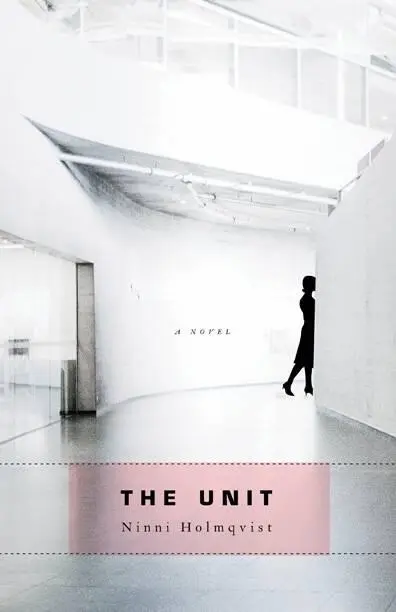
- Название:The Unit
- Автор:
- Жанр:
- Год:неизвестен
- ISBN:нет данных
- Рейтинг книги:3 / 5. Голосов: 1
-
Избранное:Добавить в избранное
- Отзывы:
-
Ваша оценка:
The Unit: краткое содержание, описание и аннотация
Предлагаем к чтению аннотацию, описание, краткое содержание или предисловие (зависит от того, что написал сам автор книги «The Unit»). Если вы не нашли необходимую информацию о книге — напишите в комментариях, мы постараемся отыскать её.
The Unit uncannily echoes its organ-donation-dystopia predecessor, Kazuo Ishiguro’s Never Let Me Go (2005); both imagine societies of extreme utilitarianism that plunder their margins for body parts, and both raise the prospect of art for art’s sake, and love for love’s, as weapons against such thinking. The Unit’s heroine, Dorrit, has chosen not to have children and thus “spill over like rising bread dough”; at the book’s opening, Dorrit’s independence has just earned her incarceration in the Unit, a death camp puzzlingly replete with art galleries and gourmet restaurants where her individualism seems to lapse into passivity.
Through flashbacks, we learn of all Dorrit has lost-her career as a novelist, her beloved dog, the small house she owned herself, the opportunities to save herself by becoming “useful” to society. These snippets of memory are interspersed with descriptions of the eponymous unit and its dying inhabitants, descriptions so matter-of-fact they lull. The novel grips toward the end when Dorrit finds love-and with it a potential escape-and makes a startling choice.
Dorrit’s play-by-play narration can be clunky in translation, but the spare, cumulative prose effectively reveals a character whose story can barely ward off the disintegration of the self it relates. Holmqvist cleverly makes that very self unreliable; The Unit is the latest in a trend of anti-heroic dystopias such as Never Let Me Go and P.D. James’s The Children of Men. In these novels of bad futures, the trustworthy memories of protagonists such as Nineteen Eighty-Four’s Winston Smith (“Airstrip One… had been called England or Britain, though London, [Winston] felt fairly certain, had always been called London”) are replaced by the self-delusions of narrators who mislead the reader and themselves lose control of the stories they are telling. In these novels, rebellion must be expressed obliquely. Like Kathy, the complacent carer of Never Let Me Go, who survives her childhood friends, nursing them as they donate all their organs, Dorrit displaces her anger onto a clearer-eyed friend who calls the Unit what it is, a “luxury slaughterhouse.”
While Holmqvist builds a powerfully imaginative scenario around the concept of killing off the childless, her message on gender roles is clumsy and unconvincing. In Dorrit’s world, flirting and other “typically male” behavior has been criminalized, and retrograde domestic fantasies have to be played out in secret, making the missionary position an act of transgression. We have come a long way from the rage of Margaret Atwood’s 1985 A Handmaid’s Tale, with its neo-Biblical America in which all women are forced either to bear children or to raise them. In today’s climate of threatened reproductive rights, a critique of compulsory motherhood would be welcome, but The Unit displays the same innate conservatism that is the pitfall of Never Let Me Go-a disturbing willingness to locate tragedy not in the horror of forced organ donation and premature death, but in Kathy and Dorrit’s lost opportunities to become mothers.
Copyright 2010 Fran Bigman
The Unit — читать онлайн бесплатно полную книгу (весь текст) целиком
Ниже представлен текст книги, разбитый по страницам. Система сохранения места последней прочитанной страницы, позволяет с удобством читать онлайн бесплатно книгу «The Unit», без необходимости каждый раз заново искать на чём Вы остановились. Поставьте закладку, и сможете в любой момент перейти на страницу, на которой закончили чтение.
Интервал:
Закладка:
18
After the incident with the failed antidepressant experiment, Elsa and I ended up for the first and only time in the same scientific experiment, a psychological study where the researchers wanted to find out if there was a biological or genetic parental instinct, and if so, whether it was the same in women and men. As dispensable people we were the perfect target group, since none of us had the physical or emotional experience of caring for and bringing up our own children, as mothers and fathers have.
For the first few days we each sat with our head inside a brain scanner, which measured and registered the reactions of the brain as we were exposed to a series of visual, audio, and olfactory impressions. There were pictures of children at different ages and in different situations, the sound of babies crowing, children laughing, newborn babies crying, tantrums, the smell of baby rice, talcum powder, baby feces, wet diapers and baby vomit. There were also pictures, noises, and smells that signaled different kinds of threat or danger: hot stoves, the screech of a car’s brakes, fire, smoke, swimming pools, steep staircases, buzzing wasps, growling dogs baring their teeth, sharp and pointed objects, guns, different kinds of poisonous items, nasty old men offering children candy, images of child pornography and lots of other things.
After these introductory days the experiment continued with a series of different tests. There were multiple-choice questionnaires, there were discussion groups, there were sessions when different scenarios were acted out for us and our reactions measured in different ways. The experiment lasted for two weeks and on the penultimate day we got-or at least I got-a small shock when we arrived in lab 2, where the majority of the work had taken place, to find the place crawling with real live children. There were something like twenty of them, aged between eighteen months and six years, and we were to play with them, talk to them and, if necessary, feed them and change their diapers and their clothes.
Elsa and I spent several hours playing with a girl aged four and a boy aged two and a half. We built a cabin using a table, some blankets and some cushions, and we had a tea party with some dolls and were attacked by extremists and had a battle with the terrorists and died and we were dead until the girl decided it wasn’t actually that serious, we were just badly injured and needed Band-Aids and bandages, and then we could carry on eating cake and conversing with the dolls. Although after a while we were interrupted again, because the boy needed to pee so urgently and so badly that we didn’t quite make it to the bathroom before he wet his pants a bit, so he had to change into a pair of dark green pants that he didn’t like instead of the red ones he’d been wearing, which he liked much better. And he wept, furious and desolate, for a while until Elsa came up with the idea that he was actually wearing a pair of green military pants, and that it was time for a new war on terror, and everything was fine again. The boy was called Olav and the girl was called Kristina; I thought they were a delight.
The following day we were interviewed, one on one in separate little rooms, about how we had felt and how we had reacted to our time with the children. The room was equipped with a very basic desk, two chairs, a DAT recorder, a TV and a DVD player. The person who interviewed me was a woman of roughly my age, quite powerful and with a calm, steady gaze. Under normal circumstances I would have found her reassuring, but not this particular morning.
During the previous evening and night I had been very low, and had felt the same kind of ache in my stomach and chest that missing Jock had caused during my first months in the unit. I had fought back the tears and turned my back on Johannes in bed; he had noticed that something was wrong and tried to comfort me, but hadn’t really succeeded. Naturally I didn’t want to talk about this during the interview. But the psychologists running the tests had access to our journals, and therefore the woman interviewing me knew that I had had an abortion when I was young. And-as if that weren’t enough-when she asked how I had experienced the contact with the children in light of the fact that I had had an abortion early in life and then not had any children, and I refused to answer, she said:
“Look at this, Dorrit,” and she pressed PLAY on the DVD.
Something greenish that looked as if it had been filmed with an underwater camera appeared on the screen. I was automatically expecting to see fish, starfish, corals, and billowing seaweed, and perhaps a diver in a rubber suit with an oxygen tank on his back. But after only a couple of seconds I realized this was no film recorded at the bottom of some ocean, not even at the bottom of some lake, or even an aquarium, it was a room, a greenish bedroom, with two greenish people in a greenish double bed filmed with a thermal imaging camera. At first the two people were lying there still and silent, one with their back to the other, but then there were some muffled sounds, then a murmur, and the murmur had words: “Dorrit…? Darling, what is it?”
And I saw, from above and at an angle, how Johannes turned me to face him with gentle force, and I heard my own muffled sounds transformed into words and sentences, at first chopped about by sobs and incomprehensible, then a little unclear but perfectly audible. I was surprised-and horrified-at the sound quality.
The interviewer stopped the film, turned to me, looked at me, calmly waiting, without saying a word. It lasted quite a long time. We sat there in silence, she with her hands on her knee and her gaze fixed on my face, me as stiff as a corpse. I was silent and stiff for so long that it finished me off completely, it was as if everything inside had shut down, I was empty, and when that happened I was able-mechanically-to begin to explain how I had felt about the events of yesterday and what I had felt and thought afterward.
19
Time passed. Time flew. The days flew like balloons, filled with hours at the computer beneath the picture of Majken’s deformed fetus, hours spent on experiments and humane tests, hours of walking, stamina training, swimming, appointments with the psychologist, massages, pedicures and saunas. The evenings came and went with visits to the cinema, dinners, conversations, time spent with friends. And the nights came in to land, only to drift away again filled with hours of lovemaking, whispering, sleep and dreams. And the days and nights turned into weeks, the weeks into months, and at the end of each month five, six, seven or eight new dispensable individuals would arrive in the unit, and a new welcome party would be held with dinner, entertainment and dancing. And each month a number of residents would disappear from the unit and would not come back; more and more often there would be someone I knew among them. And for a while the time just flowed into one for me. Or to put it more accurately: in my memory the time flows into one. And that probably isn’t only due to the fact that our memory is selective and mixes things up and picks out what seems right at the time. Under normal circumstances, in the real world out there, our memory can usually support itself by the seasons; a certain event is linked with a particular time of year. For example, I know that my father died and was buried in the fall, because the maples in the churchyard were red and orange, and the weather was crisp and clear and cold. And my mother died the following summer, right at the beginning, when the oilseed rape is in flower and the schools are letting out. I also know that it was early spring when Nils came home with me for the first time, because I remember showing him the hepatica that had just come into flower behind the compost, and at first he didn’t believe they really were hepatica, because for some reason he thought they were extinct, and I had to go in and get my flower book and look it up and show him. I had moved into my house in the late fall when the trees were bare and the fields muddy and heavy. And Jock became mine that same winter; I had to clear the car windshield of freshly fallen wet snow and clear the garden path before I drove, slowly and carefully, through the slush to the animal rescue to collect him. But when I think back over my time in the unit my memory has no such assistance from the seasons, because the seasons never change. In the unit there are only days and nights, that’s the only thing that changes: darkness and daylight. In the winter garden everything is in bud or in flower, but nothing shrivels, withers or dies. It is never winter in the winter garden.
Читать дальшеИнтервал:
Закладка:
Похожие книги на «The Unit»
Представляем Вашему вниманию похожие книги на «The Unit» списком для выбора. Мы отобрали схожую по названию и смыслу литературу в надежде предоставить читателям больше вариантов отыскать новые, интересные, ещё непрочитанные произведения.










Обсуждение, отзывы о книге «The Unit» и просто собственные мнения читателей. Оставьте ваши комментарии, напишите, что Вы думаете о произведении, его смысле или главных героях. Укажите что конкретно понравилось, а что нет, и почему Вы так считаете.