Ninni Holmqvist - The Unit
Здесь есть возможность читать онлайн «Ninni Holmqvist - The Unit» весь текст электронной книги совершенно бесплатно (целиком полную версию без сокращений). В некоторых случаях можно слушать аудио, скачать через торрент в формате fb2 и присутствует краткое содержание. Жанр: Современная проза, на английском языке. Описание произведения, (предисловие) а так же отзывы посетителей доступны на портале библиотеки ЛибКат.
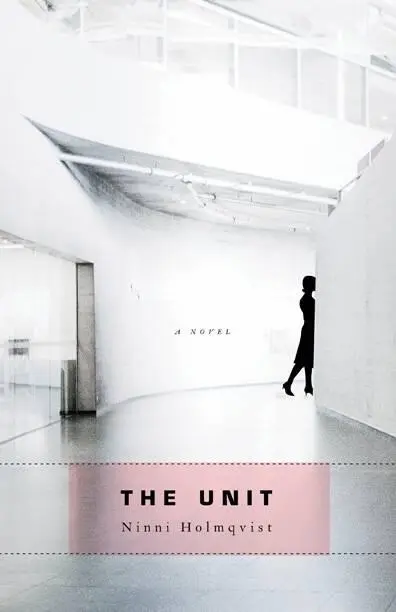
- Название:The Unit
- Автор:
- Жанр:
- Год:неизвестен
- ISBN:нет данных
- Рейтинг книги:3 / 5. Голосов: 1
-
Избранное:Добавить в избранное
- Отзывы:
-
Ваша оценка:
The Unit: краткое содержание, описание и аннотация
Предлагаем к чтению аннотацию, описание, краткое содержание или предисловие (зависит от того, что написал сам автор книги «The Unit»). Если вы не нашли необходимую информацию о книге — напишите в комментариях, мы постараемся отыскать её.
The Unit uncannily echoes its organ-donation-dystopia predecessor, Kazuo Ishiguro’s Never Let Me Go (2005); both imagine societies of extreme utilitarianism that plunder their margins for body parts, and both raise the prospect of art for art’s sake, and love for love’s, as weapons against such thinking. The Unit’s heroine, Dorrit, has chosen not to have children and thus “spill over like rising bread dough”; at the book’s opening, Dorrit’s independence has just earned her incarceration in the Unit, a death camp puzzlingly replete with art galleries and gourmet restaurants where her individualism seems to lapse into passivity.
Through flashbacks, we learn of all Dorrit has lost-her career as a novelist, her beloved dog, the small house she owned herself, the opportunities to save herself by becoming “useful” to society. These snippets of memory are interspersed with descriptions of the eponymous unit and its dying inhabitants, descriptions so matter-of-fact they lull. The novel grips toward the end when Dorrit finds love-and with it a potential escape-and makes a startling choice.
Dorrit’s play-by-play narration can be clunky in translation, but the spare, cumulative prose effectively reveals a character whose story can barely ward off the disintegration of the self it relates. Holmqvist cleverly makes that very self unreliable; The Unit is the latest in a trend of anti-heroic dystopias such as Never Let Me Go and P.D. James’s The Children of Men. In these novels of bad futures, the trustworthy memories of protagonists such as Nineteen Eighty-Four’s Winston Smith (“Airstrip One… had been called England or Britain, though London, [Winston] felt fairly certain, had always been called London”) are replaced by the self-delusions of narrators who mislead the reader and themselves lose control of the stories they are telling. In these novels, rebellion must be expressed obliquely. Like Kathy, the complacent carer of Never Let Me Go, who survives her childhood friends, nursing them as they donate all their organs, Dorrit displaces her anger onto a clearer-eyed friend who calls the Unit what it is, a “luxury slaughterhouse.”
While Holmqvist builds a powerfully imaginative scenario around the concept of killing off the childless, her message on gender roles is clumsy and unconvincing. In Dorrit’s world, flirting and other “typically male” behavior has been criminalized, and retrograde domestic fantasies have to be played out in secret, making the missionary position an act of transgression. We have come a long way from the rage of Margaret Atwood’s 1985 A Handmaid’s Tale, with its neo-Biblical America in which all women are forced either to bear children or to raise them. In today’s climate of threatened reproductive rights, a critique of compulsory motherhood would be welcome, but The Unit displays the same innate conservatism that is the pitfall of Never Let Me Go-a disturbing willingness to locate tragedy not in the horror of forced organ donation and premature death, but in Kathy and Dorrit’s lost opportunities to become mothers.
Copyright 2010 Fran Bigman
The Unit — читать онлайн бесплатно полную книгу (весь текст) целиком
Ниже представлен текст книги, разбитый по страницам. Система сохранения места последней прочитанной страницы, позволяет с удобством читать онлайн бесплатно книгу «The Unit», без необходимости каждый раз заново искать на чём Вы остановились. Поставьте закладку, и сможете в любой момент перейти на страницу, на которой закончили чтение.
Интервал:
Закладка:
I didn’t get much done that day. After Johannes had gone home to write-reluctantly, because of course he noticed that I wasn’t feeling too good, but I told him I had to work-I sat for a long time, first in bed with my notepad on my knee, then in front of the computer, but I was incapable of writing one single syllable.
Around eleven o’clock in the morning I gave up, took a shower, got dressed and went out. Restlessly I meandered along the paths and tracks in the winter garden, did a circuit of the Atrium Walkway, then went back into the garden, the Monet part this time, but I felt kind of suffocated, shut in, almost as if I was about to have an attack of claustrophobia in there. So I turned and left via the nearest air lock, and did another half circuit of the Walkway until I reached the galleria and took the elevator up to the Terrace restaurant. Up there, closer to the glass roof, closer to the sky, it was lighter, and it made me feel slightly better to be looking out over the tops of the trees rather than being beneath them. I sat there for a long time in the middle of the lunchtime rush with my back to those who were eating, looking out over the garden without doing anything, just sitting and trying to breathe normally, until I felt a hand on my shoulder and turned my head. Alice.
“How are you, my friend?” she asked.
“I don’t actually know,” I replied, and I really didn’t know. I couldn’t understand myself: I had Johannes, after all; I loved him and everything pointed to the fact that he loved me in return. And I had friends who I cared about and respected, and who cared about me, and with whom I felt secure. And the information that Siv was dead had come as no surprise. I had assumed as much long ago and accepted it.
But there is a difference between assuming something and having it confirmed. There’s a big difference. They’re two completely different things.
And then there was Jock.
Alice went and got a chair, sat down beside me and put her arm around my shoulders.
“I miss my dog,” I said.
“Your dog? I didn’t know you had a dog.”
“But I did.”
“Poor you,” said Alice. “Poor, dear Dorrit.”
I leaned against her. I don’t remember if I cried, but I think so.
That same afternoon and evening I attended an information meeting about a medical experiment in which I was to participate. The experiment was to do with a new kind of psychiatric drug, a kind of antidepressant that was intended to work immediately, not like earlier versions that were fully effective only after several weeks of increased depression and fatigue. There were thirty of us at the meeting, including Erik, Lena and Kjell. Kjell was in a bad mood, claiming he had been misled; for some reason it seemed he had believed that his role of librarian within the unit exempted him from medical experiments. I didn’t really follow his argument, but it had something to do with the service at the library.
“It’s only for now, Kjell,” said one of the orderlies involved with the experiment, a heavily pregnant woman with greasy hair and a double chin, “it’s only during this particular meeting,” she clarified, “that you can’t be in the library. But Vivi Ljungberg is standing in for you, and she’s supposed to be an excellent librarian, so…”
Kjell snorted. “Vivi Ljungberg is not a librarian. Vivi Ljungberg is a library assistant . And what’s more she’s not familiar with this particular library. And besides…”
And he went on and on and on in his monotonous, whining voice. I got really irritated with him, and felt not a little uncomfortable. I thought he was making himself look ridiculous.
After the meeting, as I was standing in elevator F on my way up to Johannes, I became aware of how anxious I was about these happy pills I was due to start popping the next morning. There was a risk of certain side effects, and we had been asked to be on the lookout for symptoms such as dizziness, nausea, vomiting, disturbed vision, numbness in the hands and feet and loss of feeling in the face. This would be the second experiment with the drug, after an adjustment to its composition. The side effects I mentioned had, in the first experiment, affected 90 percent of those taking part, and in certain circumstances they had been extremely serious, developing into bleeding stomach ulcers, strokes, and a dementialike state. There were rumors that a couple of people had actually died. Because of these risks and rumors the team leaders had decided it was necessary for us to take our pills under their supervision. They were afraid that otherwise we would wreck the whole project by not taking them.
When I knocked on Johannes’s door I was very tired. I felt heavy and old. But when I heard his footsteps approaching the door I felt lighter, it was as if I were being filled with helium or laughing gas; I felt happy and giddy.
“Here you are at last!” he said when he opened the door.
And he more or less pulled me into the apartment, into his arms, closed the door behind me, kissing my forehead, the tip of my nose, my cheeks, my mouth. My hands fumbled and grabbed and tore at his back, his upper arms, his back again and his buttocks, and he ran his hands through my hair, over my face, my neck, my breasts, forced one thumb into my mouth and made me suck it while he ordered me to look into his eyes. And with the other hand he found his way under my shirt and unbuttoned my pants, pulled them down, then my panties-not far down, just enough so that he could get at me. Then he slowly took his thumb out of my mouth and got hold of the hair at the back of my neck instead and held my head so that it was impossible for me to take my eyes off his face, while at the same time alternately rubbing my clitoris with his middle finger and pushing one, two, three, four fingers inside me. At the moment of orgasm my knees gave way, and if he hadn’t held me firmly I would have fallen forward onto my knees; instead I stayed there in his grasp, supported by his upper body and the hand massaging my pussy, and I heard myself uttering gurgling, whimpering noises of pain and pleasure mixed together.
Afterward he allowed me to slide slowly to my knees, and I stayed there, panting, sobbing, and watching his coarse yet at the same time soft hands with the raised lilac-blue veins floating in a sparse forest of white hairs, as they unbuttoned his pants and his cock emerged in front of my face, and I opened my mouth, closed my lips around it, hard, like a sphincter. He breathed out with a slow “aaah…”
Later we lay in bed naked. I still hadn’t told Johannes what Elsa had found out about Siv-I hadn’t actually mentioned Siv or the rest of my family at all-so I told him now.
“Superwoman Siv!” he exclaimed before I’d even finished telling him. “Was Superwoman Siv your sister? I didn’t know her name was Weger.”
“Did you know her?” I sat up in bed.
“No. But when I arrived here three-or what is it now, three and a half years ago-people were always talking about her and Ellen, her partner. Majken had time to get to know her, though. Just about. I think Superwoman Siv might have been to Majken something of what Majken was to you.”
“Do you really think so?” I said. “You’re not just saying that to make me feel better?”
“Now you’re being stupid, Dorrit! Why on earth would I do such a thing? I’m saying it because that’s the impression I got about the contact between Siv and Majken: a short friendship that made a deep impression and helped Majken to achieve a kind of balance pretty quickly, to get on an even keel and be able to cope with the circumstances of life in here.”
“She seemed to cope very well.”
“Presumably thanks to your sister, to a certain extent.”
Читать дальшеИнтервал:
Закладка:
Похожие книги на «The Unit»
Представляем Вашему вниманию похожие книги на «The Unit» списком для выбора. Мы отобрали схожую по названию и смыслу литературу в надежде предоставить читателям больше вариантов отыскать новые, интересные, ещё непрочитанные произведения.









Обсуждение, отзывы о книге «The Unit» и просто собственные мнения читателей. Оставьте ваши комментарии, напишите, что Вы думаете о произведении, его смысле или главных героях. Укажите что конкретно понравилось, а что нет, и почему Вы так считаете.