Ninni Holmqvist - The Unit
Здесь есть возможность читать онлайн «Ninni Holmqvist - The Unit» весь текст электронной книги совершенно бесплатно (целиком полную версию без сокращений). В некоторых случаях можно слушать аудио, скачать через торрент в формате fb2 и присутствует краткое содержание. Жанр: Современная проза, на английском языке. Описание произведения, (предисловие) а так же отзывы посетителей доступны на портале библиотеки ЛибКат.
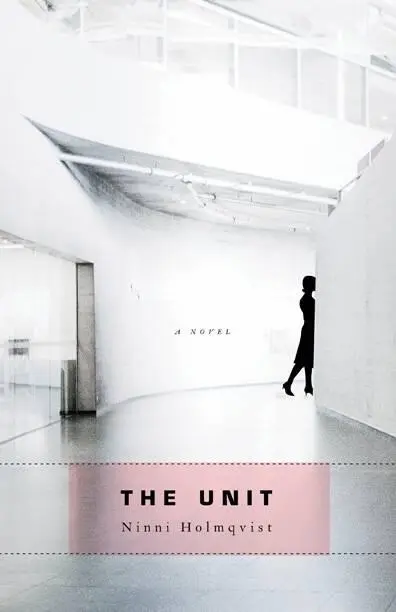
- Название:The Unit
- Автор:
- Жанр:
- Год:неизвестен
- ISBN:нет данных
- Рейтинг книги:3 / 5. Голосов: 1
-
Избранное:Добавить в избранное
- Отзывы:
-
Ваша оценка:
The Unit: краткое содержание, описание и аннотация
Предлагаем к чтению аннотацию, описание, краткое содержание или предисловие (зависит от того, что написал сам автор книги «The Unit»). Если вы не нашли необходимую информацию о книге — напишите в комментариях, мы постараемся отыскать её.
The Unit uncannily echoes its organ-donation-dystopia predecessor, Kazuo Ishiguro’s Never Let Me Go (2005); both imagine societies of extreme utilitarianism that plunder their margins for body parts, and both raise the prospect of art for art’s sake, and love for love’s, as weapons against such thinking. The Unit’s heroine, Dorrit, has chosen not to have children and thus “spill over like rising bread dough”; at the book’s opening, Dorrit’s independence has just earned her incarceration in the Unit, a death camp puzzlingly replete with art galleries and gourmet restaurants where her individualism seems to lapse into passivity.
Through flashbacks, we learn of all Dorrit has lost-her career as a novelist, her beloved dog, the small house she owned herself, the opportunities to save herself by becoming “useful” to society. These snippets of memory are interspersed with descriptions of the eponymous unit and its dying inhabitants, descriptions so matter-of-fact they lull. The novel grips toward the end when Dorrit finds love-and with it a potential escape-and makes a startling choice.
Dorrit’s play-by-play narration can be clunky in translation, but the spare, cumulative prose effectively reveals a character whose story can barely ward off the disintegration of the self it relates. Holmqvist cleverly makes that very self unreliable; The Unit is the latest in a trend of anti-heroic dystopias such as Never Let Me Go and P.D. James’s The Children of Men. In these novels of bad futures, the trustworthy memories of protagonists such as Nineteen Eighty-Four’s Winston Smith (“Airstrip One… had been called England or Britain, though London, [Winston] felt fairly certain, had always been called London”) are replaced by the self-delusions of narrators who mislead the reader and themselves lose control of the stories they are telling. In these novels, rebellion must be expressed obliquely. Like Kathy, the complacent carer of Never Let Me Go, who survives her childhood friends, nursing them as they donate all their organs, Dorrit displaces her anger onto a clearer-eyed friend who calls the Unit what it is, a “luxury slaughterhouse.”
While Holmqvist builds a powerfully imaginative scenario around the concept of killing off the childless, her message on gender roles is clumsy and unconvincing. In Dorrit’s world, flirting and other “typically male” behavior has been criminalized, and retrograde domestic fantasies have to be played out in secret, making the missionary position an act of transgression. We have come a long way from the rage of Margaret Atwood’s 1985 A Handmaid’s Tale, with its neo-Biblical America in which all women are forced either to bear children or to raise them. In today’s climate of threatened reproductive rights, a critique of compulsory motherhood would be welcome, but The Unit displays the same innate conservatism that is the pitfall of Never Let Me Go-a disturbing willingness to locate tragedy not in the horror of forced organ donation and premature death, but in Kathy and Dorrit’s lost opportunities to become mothers.
Copyright 2010 Fran Bigman
The Unit — читать онлайн бесплатно полную книгу (весь текст) целиком
Ниже представлен текст книги, разбитый по страницам. Система сохранения места последней прочитанной страницы, позволяет с удобством читать онлайн бесплатно книгу «The Unit», без необходимости каждый раз заново искать на чём Вы остановились. Поставьте закладку, и сможете в любой момент перейти на страницу, на которой закончили чтение.
Интервал:
Закладка:
“I wonder who was a friend like that to Siv,” I said.
Johannes didn’t reply, he just looked at me, and it seemed to me that his expression was suddenly sorrowful and slightly distant.
“Are you sad, or just serious?” I asked.
“I don’t really know,” he said.
I lay down again, took hold of his hand. We lay there on our backs, hand in hand, gazing up at the ceiling.
“The generations are very short in this place,” I said.
“Yes,” said Johannes. “They are.”
After a while I could tell from his breathing that he was struggling with tears. I turned over onto my side facing him, and placed my hand on his slightly rough cheek. He turned off the light-perhaps he didn’t want me to see his face when he was crying, or maybe he just thought it was time to go to sleep now-then he turned to me in the darkness, pulled me close, one arm around my shoulders, the other holding my head against his chest, and I pressed myself against him with my arm around his waist, my forehead against his breastbone and one leg wrapped around his thighs, almost as if I were climbing him.
In the morning when we woke up we were in the same position: like two drowning souls who have clung to each other in a final fruitless attempt to save themselves-or simply to avoid dying alone.
15
The experiment involving the antidepressant drug forced me into new routines. Three times a day-morning, afternoon, and evening-I took the elevator down to lab 3 on K1 to swallow a little yellow pill. It upset my schedule, especially in the mornings when I had to interrupt my writing, or to put it more accurately: because I was always aware that at some point between eight and nine o’clock I would have to break away to get dressed and take the elevator and swallow that pill, I found it difficult to achieve the peace and concentration I needed to be able to write at all. So instead I would usually spend the time sitting and reading through what I’d already written, making the kind of notes and corrections I would have preferred to leave until I had the whole thing printed out.
This was irritating enough, but what upset me considerably more was the feeling of not being trusted, of being treated like a difficult child, a cheat, a rebel. I found it offensive to have to stand there and open my mouth in front of Nurse Karl or the brisk, naive Nurse Lis or one of the other nurses who handed out the yellow pills then looked in your mouth as if you were a horse at a horse fair back in the olden days, before carefully ticking it off from a list and chirruping smugly: “Well done, Dorrit. We’ll see you between two and three.”
My dignity shrank by several inches every time I had to go through this procedure.
On the other hand, I had more time to write, more time generally during this medical experiment than during the exercise experiment, because my only obligation was to make sure I was in the right place three times a day. That took up about half an hour per day in total, and it should have outweighed the disadvantages, but it didn’t.
During one of my many conversations with Arnold I took up this question of my dwindling dignity, and the fact that I found it difficult to settle down to work because of having to break away. I had hoped that he might manage to say the right thing and give me some idea how I should handle the problem, but he just nodded and listened, made notes, and asked questions like: “What kind of feelings do you get when you can’t write?” and “How would you define the term ‘offensive’?”
So I started to talk about my concerns regarding the side effects instead.
“Have you experienced any?” asked Arnold.
“No, but I haven’t felt any positive effects either. If anything I’m more anxious than I was before. These pills are supposed to have a direct effect.”
“Direct doesn’t always have to mean immediate,” said Arnold.
“Oh really?” I said. “And what does it mean when it doesn’t mean that?”
He didn’t reply. Just sat there opposite me in his armchair with one leg loosely crossed over the other, his elbows resting on the upholstered arms, pressing the tips of his fingers together as he contemplated me with a thoughtful expression. I changed the topic of conversation again, started talking about Siv: about how I had almost fallen apart when what I already knew about her was confirmed.
This clearly interested him, because his expression came alive, he placed his hands on his knees and began to ask questions about Siv and my family and the relationships when I was growing up. I answered dutifully and almost mechanically, rattling off my thoughts and theories on why Siv and I were the only two out of the five of us who hadn’t succeeded in establishing a family of our own, and had chosen professions with an uncertain income.
It would definitely have been more useful to talk about my recurring dreams involving Jock, or about what was happening between Johannes and me, because these were new phenomena and new feelings that I didn’t really understand, while my relationship with my family was old and already made sense. But I couldn’t bring myself to change the topic of conversation yet again, and when I left Arnold ’s office it was with the feeling that I had wasted a whole hour of my life.
16
One afternoon after I had been downstairs and swallowed the second pill of the day, I took the elevator up to the library to return some books, and found Vivi behind the desk. There was no sign of Kjell, and as I turned my books over with the bar code facing her, I asked where he was.
“Did he get fired?”
It was meant as a joke, but Vivi’s expression was serious.
“Haven’t you heard?” she said. “He’s sick. Serious side effects. He’s really dizzy all the time. And completely disoriented when it comes to time and space. He can hardly get out of bed or feed himself.”
“What?! How long has this been going on? I’m in the same experiment, so I mean I’m wondering…”
“… if it’s going to happen to you too? It won’t.”
“Really…?”
“If you haven’t had any side effects by now, then you’ve been given sugar pills. And if you’re wondering how I know, well of course I don’t. But all the indications would suggest that. Some of you became very happy at first, then confused and completely out of it. Up like the sun, down like a pancake, you could say. Kjell was like a completely different person for the first few days-I was here at the time, helping to unpack new films and clear out some of the old magazines and newspapers. He was in an excellent mood, joking and carrying on, and so intense that it was almost unbearable. Then all of a sudden, from one day to the next, he became listless and tired. Then it just went downhill; he found it difficult to judge distances, walked into things, tripped and fell over and dropped things left and right. And he got so forgetful, he hardly knew where he was after a while. In the end he couldn’t carry on here, it just wasn’t working. And, as I said, he isn’t the only one. That man who’s always so sad, for example, the one who sat opposite you at my welcome party-he’s the same. Bedridden.”
“Erik?” I said. “You mean Erik.” I felt my heart sink and I had to lean on the issue desk for support; my head was spinning. “How do you know all this?” I asked her.
Vivi said with a little smile that when you work in a place like a library, you find out all kinds of things about all kinds of things. And she went on telling me what she had heard about a couple of other people who were involved in the same experiment as me. But I wasn’t really listening, I was thinking about Erik. I was thinking about how low and lost he had been since Vanja’s final donation. He would have needed her now, he would have needed the love and solicitude of another person.
Читать дальшеИнтервал:
Закладка:
Похожие книги на «The Unit»
Представляем Вашему вниманию похожие книги на «The Unit» списком для выбора. Мы отобрали схожую по названию и смыслу литературу в надежде предоставить читателям больше вариантов отыскать новые, интересные, ещё непрочитанные произведения.










Обсуждение, отзывы о книге «The Unit» и просто собственные мнения читателей. Оставьте ваши комментарии, напишите, что Вы думаете о произведении, его смысле или главных героях. Укажите что конкретно понравилось, а что нет, и почему Вы так считаете.