Ninni Holmqvist - The Unit
Здесь есть возможность читать онлайн «Ninni Holmqvist - The Unit» весь текст электронной книги совершенно бесплатно (целиком полную версию без сокращений). В некоторых случаях можно слушать аудио, скачать через торрент в формате fb2 и присутствует краткое содержание. Жанр: Современная проза, на английском языке. Описание произведения, (предисловие) а так же отзывы посетителей доступны на портале библиотеки ЛибКат.
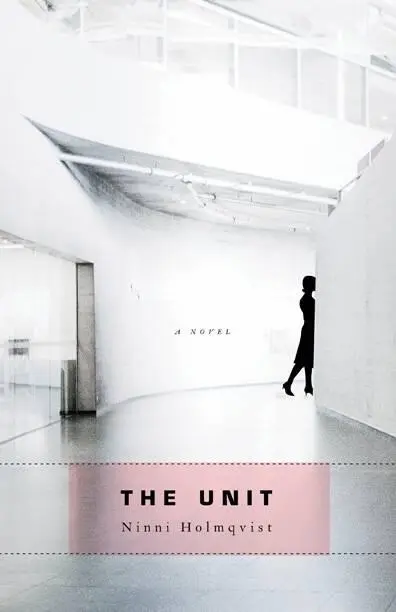
- Название:The Unit
- Автор:
- Жанр:
- Год:неизвестен
- ISBN:нет данных
- Рейтинг книги:3 / 5. Голосов: 1
-
Избранное:Добавить в избранное
- Отзывы:
-
Ваша оценка:
The Unit: краткое содержание, описание и аннотация
Предлагаем к чтению аннотацию, описание, краткое содержание или предисловие (зависит от того, что написал сам автор книги «The Unit»). Если вы не нашли необходимую информацию о книге — напишите в комментариях, мы постараемся отыскать её.
The Unit uncannily echoes its organ-donation-dystopia predecessor, Kazuo Ishiguro’s Never Let Me Go (2005); both imagine societies of extreme utilitarianism that plunder their margins for body parts, and both raise the prospect of art for art’s sake, and love for love’s, as weapons against such thinking. The Unit’s heroine, Dorrit, has chosen not to have children and thus “spill over like rising bread dough”; at the book’s opening, Dorrit’s independence has just earned her incarceration in the Unit, a death camp puzzlingly replete with art galleries and gourmet restaurants where her individualism seems to lapse into passivity.
Through flashbacks, we learn of all Dorrit has lost-her career as a novelist, her beloved dog, the small house she owned herself, the opportunities to save herself by becoming “useful” to society. These snippets of memory are interspersed with descriptions of the eponymous unit and its dying inhabitants, descriptions so matter-of-fact they lull. The novel grips toward the end when Dorrit finds love-and with it a potential escape-and makes a startling choice.
Dorrit’s play-by-play narration can be clunky in translation, but the spare, cumulative prose effectively reveals a character whose story can barely ward off the disintegration of the self it relates. Holmqvist cleverly makes that very self unreliable; The Unit is the latest in a trend of anti-heroic dystopias such as Never Let Me Go and P.D. James’s The Children of Men. In these novels of bad futures, the trustworthy memories of protagonists such as Nineteen Eighty-Four’s Winston Smith (“Airstrip One… had been called England or Britain, though London, [Winston] felt fairly certain, had always been called London”) are replaced by the self-delusions of narrators who mislead the reader and themselves lose control of the stories they are telling. In these novels, rebellion must be expressed obliquely. Like Kathy, the complacent carer of Never Let Me Go, who survives her childhood friends, nursing them as they donate all their organs, Dorrit displaces her anger onto a clearer-eyed friend who calls the Unit what it is, a “luxury slaughterhouse.”
While Holmqvist builds a powerfully imaginative scenario around the concept of killing off the childless, her message on gender roles is clumsy and unconvincing. In Dorrit’s world, flirting and other “typically male” behavior has been criminalized, and retrograde domestic fantasies have to be played out in secret, making the missionary position an act of transgression. We have come a long way from the rage of Margaret Atwood’s 1985 A Handmaid’s Tale, with its neo-Biblical America in which all women are forced either to bear children or to raise them. In today’s climate of threatened reproductive rights, a critique of compulsory motherhood would be welcome, but The Unit displays the same innate conservatism that is the pitfall of Never Let Me Go-a disturbing willingness to locate tragedy not in the horror of forced organ donation and premature death, but in Kathy and Dorrit’s lost opportunities to become mothers.
Copyright 2010 Fran Bigman
The Unit — читать онлайн бесплатно полную книгу (весь текст) целиком
Ниже представлен текст книги, разбитый по страницам. Система сохранения места последней прочитанной страницы, позволяет с удобством читать онлайн бесплатно книгу «The Unit», без необходимости каждый раз заново искать на чём Вы остановились. Поставьте закладку, и сможете в любой момент перейти на страницу, на которой закончили чтение.
Интервал:
Закладка:

I gathered together a little group: Elsa, Lena, Johannes, and Peder, and we went to visit Erik. It was around eight-thirty in the evening, after I had been to the gym, had dinner, and been down to lab 3 to take the final yellow pill of the day.
Erik was in a worse state than I had thought. He didn’t recognize any of us. And it wasn’t only because he had problems with his vision and was shaking so much that he couldn’t keep his head still. Something had happened inside his head as well, something to do with his awareness and his memory. He just didn’t know who we were, not even Peder, whom he’d known the longest.
“Oooh!” said Erik in a strange, singsong voice, and smiled with his whole face when we walked into his bedroom after being let into his apartment by a young orderly wearing big, round glasses with black frames, who was looking after him and helping him to eat and wash and go to the bathroom. “Wel-wel-wellllcome!”
His huge smile was the only redeeming feature about his condition; at least he was happy, and for the first time in weeks. But he called Peder Uncle Jonas, Johannes Grandpa, and Elsa Mommy. And he called me, with a certain amount of contempt, the Snork Maiden and Mademoiselle. He didn’t speak to Lena at all, but he was very shy around her, blushing and giggling and looking away every time she spoke to him or glanced at him.
We were all very low when we left. As we were walking through the living room on the way out, Johannes said so quietly that only I, walking next to him, could hear:
“It’s only a matter of days.”
I looked up at him but said nothing. Instead I went over to the young orderly, who was sitting on the sofa watching TV, and asked:
“How serious is it?”
“What do you mean?”
I sat down next to him on the sofa. POTTER read the name badge on his shirt.
“Will Erik be… normal again?” I asked.
Potter looked me in the eye, his expression behind the glasses strangely distant yet sympathetic at the same time.
“I don’t think anybody really knows for certain. But personally, I don’t think so.”
And after a while, in a very low voice-and protected by the noise of the television: “I’ve seen the X-ray plates.”
Then he leaned forward a fraction, coughed, cleared his throat, and at the end of the throat clearing he spat out, so quickly and hoarsely that I only just managed to get it: “Abnormal atrophy.” And another cough: “The brain…,” and a final throat clearing: “… has shrunk.”
I knew very well what abnormal brain atrophy was; it’s the cause of Alzheimer’s, and simply means that the brain becomes vestigial, that it shrinks inside the skull until nothing remains, just a big space between the ears and a despairing expression on the sufferer’s face. I had seen this a lot when I was young and working in geriatric care.
After his brief coughing attack Potter placed, very properly, a hand on my shoulder and said in a friendly, conversational tone:
“But you mustn’t worry. He’s getting very good care. And you could see how cheerful he is.”
I nodded, well aware that patients with Alzheimer’s are unhappy far more often than they are happy. As if Potter had heard what I was thinking, he added:
“He’s actually cheerful like this most of the time. He seems contented. Strangely enough.”
Of course I don’t know whether what he said was true, he might have said it just to console me.
“Have they stopped the experiment?” I asked.
“No, it’s still ongoing.”
“No, but I mean in Erik’s case. Is he still having three pills a day?”
“Of course. The experiment is still ongoing, as I said.”
Potter smiled-his expression now considerably more distant than sympathetic-and I realized that the audience was over, so I got up, asked him to take good care of Erik, and went to join the others, who were sitting in the lounge, pale and silent.
“What did he say?” asked Peder, who was palest of them all.
“He didn’t know much,” I lied, because I couldn’t abuse the young orderly’s trust and speak openly about the information he had been kind enough to cough at me. I just added: “But things don’t look too promising, he did say that.”
A few hours later, as soon as Johannes and I were inside my apartment, I pulled him to me and began kissing and caressing him, and as he moaned and grunted loudly I whispered in his ear what I had found out about Erik’s brain.
17
Erik and Kjell and thirteen others were sent to make their final donation. Officially the residents weren’t told much more than that. The unofficial information-the information that was whispered and coughed and spread among various sources-was patchy and, presumably, mixed with rumor and speculation. What we did eventually manage to establish as being reasonably reliable was this:
During the manufacture of the antidepressant drug an accidental mix-up had occurred between different components, and traces of a kind of nerve poison of the same type used in some chemical weapons had found their way into the pills. When the pharmaceutical company, late in the day and by pure chance, discovered this lamentable error, those responsible informed the leadership team in the reserve bank unit immediately; they in turn decided it would be best to eliminate the fifteen participants in the experiment who had been affected, since their brains were irrevocably destroyed and there was no point in drawing the whole thing out. They therefore chose to act quickly and effectively, to save what could be saved from the bodies of those involved, then to return to the normal way of things without saying any more than necessary about the matter-and to allow collective amnesia to play its part.
The account didn’t state to what extent the demand for organs and tissues matched this sudden flow onto the market, but I know that certain types of tissue can be preserved for a long time until a recipient is found, and I’m sure dead bodies are always welcome in research and teaching. So I hope and believe that the remains of Erik and the others were of use in some way.
The other fifteen of us involved in the experiment were called to a meeting led by the unit’s director, Petra Runhede, herself. As she allowed her gaze to glide over us, serious and sympathetic as always, lingering for a second or two on each person, she expressed her regret at what had happened and confirmed what Vivi had told me: that those of us who had not suffered side effects had been given sugar pills.
“Of course the experiment will be canceled with immediate effect,” she went on. “You will be allocated new tasks very shortly.”
Naturally we were all shaken, and overwhelmed by powerful, conflicting emotions. It is in the nature of things to feel conflicting emotions when you realize that you belong to a group of survivors, selected purely at random. Some people wept, some laughed hysterically, a couple sat staring blankly into space, shivering, their teeth chattering-of course they were taken care of and treated for shock-and two collapsed and had to be more or less carried out for emergency sessions with their respective psychologists. Lena and I kept calm, but we sat there holding hands throughout the entire meeting.

After Kjell’s death Vivi took over responsibility for the library. She seemed very happy with the arrangement, and unfortunately I have to say that not many people missed Kjell. He was a miserable complainer but didn’t make much noise apart from that, and he didn’t exactly have any friends in the unit, even if he didn’t have enemies either. He was mourned by no one, left no one behind, and Vivi slipped into his shoes just as if she had always been the one padding around between the shelves, putting the books, films, CDs, magazines and daily papers in the right place, noting down and sending off orders for distance loans, signing out readers, downloading e-books and exchanging a few words with the borrowers as they came and went. After just a few weeks it was as if Kjell had never existed, and if it hadn’t been for the fact that his life had come to an end because of a scandal and a tragedy, I don’t think anybody would ever have given him a thought.
Читать дальшеИнтервал:
Закладка:
Похожие книги на «The Unit»
Представляем Вашему вниманию похожие книги на «The Unit» списком для выбора. Мы отобрали схожую по названию и смыслу литературу в надежде предоставить читателям больше вариантов отыскать новые, интересные, ещё непрочитанные произведения.








Обсуждение, отзывы о книге «The Unit» и просто собственные мнения читателей. Оставьте ваши комментарии, напишите, что Вы думаете о произведении, его смысле или главных героях. Укажите что конкретно понравилось, а что нет, и почему Вы так считаете.