Ninni Holmqvist - The Unit
Здесь есть возможность читать онлайн «Ninni Holmqvist - The Unit» весь текст электронной книги совершенно бесплатно (целиком полную версию без сокращений). В некоторых случаях можно слушать аудио, скачать через торрент в формате fb2 и присутствует краткое содержание. Жанр: Современная проза, на английском языке. Описание произведения, (предисловие) а так же отзывы посетителей доступны на портале библиотеки ЛибКат.
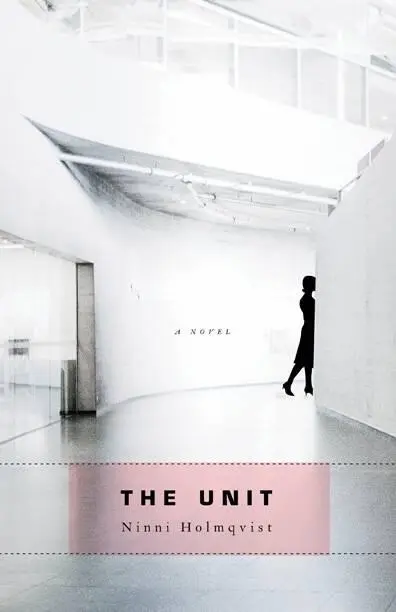
- Название:The Unit
- Автор:
- Жанр:
- Год:неизвестен
- ISBN:нет данных
- Рейтинг книги:3 / 5. Голосов: 1
-
Избранное:Добавить в избранное
- Отзывы:
-
Ваша оценка:
The Unit: краткое содержание, описание и аннотация
Предлагаем к чтению аннотацию, описание, краткое содержание или предисловие (зависит от того, что написал сам автор книги «The Unit»). Если вы не нашли необходимую информацию о книге — напишите в комментариях, мы постараемся отыскать её.
The Unit uncannily echoes its organ-donation-dystopia predecessor, Kazuo Ishiguro’s Never Let Me Go (2005); both imagine societies of extreme utilitarianism that plunder their margins for body parts, and both raise the prospect of art for art’s sake, and love for love’s, as weapons against such thinking. The Unit’s heroine, Dorrit, has chosen not to have children and thus “spill over like rising bread dough”; at the book’s opening, Dorrit’s independence has just earned her incarceration in the Unit, a death camp puzzlingly replete with art galleries and gourmet restaurants where her individualism seems to lapse into passivity.
Through flashbacks, we learn of all Dorrit has lost-her career as a novelist, her beloved dog, the small house she owned herself, the opportunities to save herself by becoming “useful” to society. These snippets of memory are interspersed with descriptions of the eponymous unit and its dying inhabitants, descriptions so matter-of-fact they lull. The novel grips toward the end when Dorrit finds love-and with it a potential escape-and makes a startling choice.
Dorrit’s play-by-play narration can be clunky in translation, but the spare, cumulative prose effectively reveals a character whose story can barely ward off the disintegration of the self it relates. Holmqvist cleverly makes that very self unreliable; The Unit is the latest in a trend of anti-heroic dystopias such as Never Let Me Go and P.D. James’s The Children of Men. In these novels of bad futures, the trustworthy memories of protagonists such as Nineteen Eighty-Four’s Winston Smith (“Airstrip One… had been called England or Britain, though London, [Winston] felt fairly certain, had always been called London”) are replaced by the self-delusions of narrators who mislead the reader and themselves lose control of the stories they are telling. In these novels, rebellion must be expressed obliquely. Like Kathy, the complacent carer of Never Let Me Go, who survives her childhood friends, nursing them as they donate all their organs, Dorrit displaces her anger onto a clearer-eyed friend who calls the Unit what it is, a “luxury slaughterhouse.”
While Holmqvist builds a powerfully imaginative scenario around the concept of killing off the childless, her message on gender roles is clumsy and unconvincing. In Dorrit’s world, flirting and other “typically male” behavior has been criminalized, and retrograde domestic fantasies have to be played out in secret, making the missionary position an act of transgression. We have come a long way from the rage of Margaret Atwood’s 1985 A Handmaid’s Tale, with its neo-Biblical America in which all women are forced either to bear children or to raise them. In today’s climate of threatened reproductive rights, a critique of compulsory motherhood would be welcome, but The Unit displays the same innate conservatism that is the pitfall of Never Let Me Go-a disturbing willingness to locate tragedy not in the horror of forced organ donation and premature death, but in Kathy and Dorrit’s lost opportunities to become mothers.
Copyright 2010 Fran Bigman
The Unit — читать онлайн бесплатно полную книгу (весь текст) целиком
Ниже представлен текст книги, разбитый по страницам. Система сохранения места последней прочитанной страницы, позволяет с удобством читать онлайн бесплатно книгу «The Unit», без необходимости каждый раз заново искать на чём Вы остановились. Поставьте закладку, и сможете в любой момент перейти на страницу, на которой закончили чтение.
Интервал:
Закладка:
After lunch one day, during one of my more or less daily walks in the garden, I arrived at the citrus grove just as the petals were falling. I went in among the low trees, into the Impressionist pattern of white dots, and stood there thinking of Majken and Jock-Majken because she liked the Impressionists’ way of portraying the world, Jock because I knew he would have loved this white blizzard of petals. I turned my face upward and watched the little petals as they drifted down toward me slowly and with dignity, like perfumed snowflakes that would never melt on this windless day, landing in my hair, on my forehead, on one eyelid, on the other eyebrow, on the tip of my nose, on my upper lip. I blew the last one away, then looked down again and gave myself a shake. Then I saw that I was not alone in the grove. A person wearing round glasses was standing a little way off in his pale green staff shirt, watching me through the white-dotted air. Potter.
“Hi there!” he called out, raising a hand in greeting when he realized I had seen him.
He started walking over, and when he got to me he asked:
“How are things?”
“Good,” I replied. “And how are you?”
“Fine…” Then he seemed to hesitate, looking down at the ground, then up again before taking a deep breath and saying:
“It was terrible, what happened.”
“With Erik and the others, you mean?”
“Yes. Mistakes like that just can’t be allowed to happen, and it just doesn’t matter whether the drug in question is being tested on those who are dispensable or on rats or amoebae or on those who are needed. It’s a completely indefensible…”-he searched for the right word-“… waste.”
“Yes,” I agreed. “They could just as well have thrown their research funding in the sea.”
“A waste of people, I mean,” said Potter. “Not money.”
“People are money,” I replied. “Just as time is money.”
He shook his head.
“People are people,” he said seriously. “Life.”
“Yes, yes,” I said. “Of course.”
“I nearly resigned,” Potter went on, clearly needing to unburden himself. “It’s difficult, seeing the way you’re treated here.”
“We’re treated very well,” I said.
“Do you think so?” He was genuinely surprised, and perhaps a little disappointed.
“Yes,” I replied. “If you compare it with the way we’re treated out in the community. In here I can be myself, on every level, completely openly, without being rejected or mocked, and without the risk of not being taken seriously. I am not regarded as odd or as some kind of alien or some troublesome fifth wheel that people don’t know what to do with. Here I’m like everybody else. I fit in. I count. And I can afford to go to the doctor and the dentist and even to the hairdresser and the podiatrist, and I can eat out and go to the movies and the theater. I have a dignified life here. I am respected.”
“Are you?”
“Yes. In comparison, I mean.”
Potter looked at me.
“Okay,” he said. “I understand. I think.”
I changed the topic of conversation.
“So why didn’t you resign, then?”
“Well… I don’t think I can afford to be out of work right now. My partner and I are expecting. Twins. We need a bigger place to live.”
“Right,” I said. “I understand. I think.”
He laughed. I smiled. Then we parted company. I carried on through the citrus grove. It was like walking through a landscape veiled in fresh snow, and suddenly I felt an intense longing for winter and wind, biting cold and steaming breath, mittens, a scarf and hat, and a little white dog with brown and black patches racing through drifts of powdery snow, tail wagging like mad, snuffling with his nose at the porous covering so that the white snow flew up ahead of him like little whirlwinds.
And I got an idea.
I had three things on my agenda for the rest of the afternoon: give blood at the central blood bank at the hospital, go down to the labs for a chromium injection-I was participating in an experiment where high doses of chromium were being tested as a means of raising the blood sugar-and go for a massage. Later, in the evening, Johannes and I were going to the theater to see a new play everyone was talking about.
While I was giving blood, and during the full body massage that followed, I had plenty of time to work out carefully my idea for a plan, and as soon as I got home I set the wheels in motion:
I opened my door and went into the living room, yawning and stretching lazily-a massage always made me sleepy-then ambled into the kitchenette and poured myself a large glass of water. Turned back to the living room with the glass in my hand, yawned again, then wandered across to the sofa, where I sank into a half-lying position and tried to drink my water. Then I put the glass on the table next to the remote, which I picked up and fiddled with absentmindedly. Turned onto my side with a sigh, pointed the remote at the TV and selected a channel at random. Watching television was something I had rarely done since I became dispensable, so I tried to make it look as if it were a spur of the moment impulse. The image of a hilly, lush landscape burst onto the screen: a valley with meadows and terraced vineyards scrambling up the slopes, the blue tones of distant mountain ridges in the background; then I lay there watching, apparently relaxed, a soap opera that was set in some French wine region.
I waited until a commercial break, and until the second advertising slot, which was for diapers; then I pretended that I’d had an idea, an idea for my writing, sat up quickly and put my feet on the floor, grabbed the notepad and pen that were always on the coffee table, placed the pad on my knee, bent over and scribbled feverishly. But my handwriting was much smaller than usual, and I had worked out what I wanted to say in advance, while I was giving blood:
I have a Danish-Swedish farm dog called Jock. He is white with brown and black patches; his left ear is white, the other black, and on his back he has a bigger brown patch that looks like a saddle that has slipped to one side slightly. He lives with Lisa and Sten Jansson, Verkholma Farm, just outside Elnarp, the second farm on the right just after the speed limit sign if you’re driving toward Kasstorp. Please, if you possibly can, find out how he’s getting by, and let me know!
When I had finished I read through the four sentences, said, “No, no!,” ripped the page from the pad, screwed it up and threw it on the coffee table, then slumped down on my side on the sofa again and finished watching the soap.
A while later, after a quick shower and a change of clothes, I was tidying the room while I waited for Johannes, who was being a gentleman and picking me up for our visit to the theater. I picked up the glass and the crumpled piece of paper, and as I walked toward the kitchenette with the glass in my left hand, I pretended to straighten my pants with my right hand, and took the opportunity to slip the piece of paper into my pocket. I put the glass down on the counter, then just to make things look right I opened the cabinet under the sink and pretended to throw something in the trash.
Then all I could do was wait. For Johannes, first of all, and then for the moment when I might bump into Potter again. I sank back down on the sofa, and half lay there wondering what might have come first: the name or the glasses. Was Potter a nickname he had acquired since he got those glasses with their round black frames, or did he go for glasses like that because he was called Potter? But who calls their child Potter-as a first name? If he’d been a girl, what would they have called her? Longstocking?
Johannes arrived. Kissed me on the mouth. His lips were cool, as if he had just come from the real outside world, from an outside world where the temperature was below freezing, or almost. I closed my eyes and pretended that was the case.
Читать дальшеИнтервал:
Закладка:
Похожие книги на «The Unit»
Представляем Вашему вниманию похожие книги на «The Unit» списком для выбора. Мы отобрали схожую по названию и смыслу литературу в надежде предоставить читателям больше вариантов отыскать новые, интересные, ещё непрочитанные произведения.







Обсуждение, отзывы о книге «The Unit» и просто собственные мнения читателей. Оставьте ваши комментарии, напишите, что Вы думаете о произведении, его смысле или главных героях. Укажите что конкретно понравилось, а что нет, и почему Вы так считаете.