Ninni Holmqvist - The Unit
Здесь есть возможность читать онлайн «Ninni Holmqvist - The Unit» весь текст электронной книги совершенно бесплатно (целиком полную версию без сокращений). В некоторых случаях можно слушать аудио, скачать через торрент в формате fb2 и присутствует краткое содержание. Жанр: Современная проза, на английском языке. Описание произведения, (предисловие) а так же отзывы посетителей доступны на портале библиотеки ЛибКат.
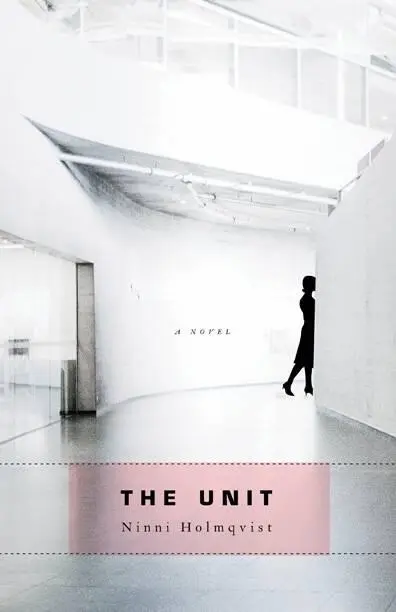
- Название:The Unit
- Автор:
- Жанр:
- Год:неизвестен
- ISBN:нет данных
- Рейтинг книги:3 / 5. Голосов: 1
-
Избранное:Добавить в избранное
- Отзывы:
-
Ваша оценка:
The Unit: краткое содержание, описание и аннотация
Предлагаем к чтению аннотацию, описание, краткое содержание или предисловие (зависит от того, что написал сам автор книги «The Unit»). Если вы не нашли необходимую информацию о книге — напишите в комментариях, мы постараемся отыскать её.
The Unit uncannily echoes its organ-donation-dystopia predecessor, Kazuo Ishiguro’s Never Let Me Go (2005); both imagine societies of extreme utilitarianism that plunder their margins for body parts, and both raise the prospect of art for art’s sake, and love for love’s, as weapons against such thinking. The Unit’s heroine, Dorrit, has chosen not to have children and thus “spill over like rising bread dough”; at the book’s opening, Dorrit’s independence has just earned her incarceration in the Unit, a death camp puzzlingly replete with art galleries and gourmet restaurants where her individualism seems to lapse into passivity.
Through flashbacks, we learn of all Dorrit has lost-her career as a novelist, her beloved dog, the small house she owned herself, the opportunities to save herself by becoming “useful” to society. These snippets of memory are interspersed with descriptions of the eponymous unit and its dying inhabitants, descriptions so matter-of-fact they lull. The novel grips toward the end when Dorrit finds love-and with it a potential escape-and makes a startling choice.
Dorrit’s play-by-play narration can be clunky in translation, but the spare, cumulative prose effectively reveals a character whose story can barely ward off the disintegration of the self it relates. Holmqvist cleverly makes that very self unreliable; The Unit is the latest in a trend of anti-heroic dystopias such as Never Let Me Go and P.D. James’s The Children of Men. In these novels of bad futures, the trustworthy memories of protagonists such as Nineteen Eighty-Four’s Winston Smith (“Airstrip One… had been called England or Britain, though London, [Winston] felt fairly certain, had always been called London”) are replaced by the self-delusions of narrators who mislead the reader and themselves lose control of the stories they are telling. In these novels, rebellion must be expressed obliquely. Like Kathy, the complacent carer of Never Let Me Go, who survives her childhood friends, nursing them as they donate all their organs, Dorrit displaces her anger onto a clearer-eyed friend who calls the Unit what it is, a “luxury slaughterhouse.”
While Holmqvist builds a powerfully imaginative scenario around the concept of killing off the childless, her message on gender roles is clumsy and unconvincing. In Dorrit’s world, flirting and other “typically male” behavior has been criminalized, and retrograde domestic fantasies have to be played out in secret, making the missionary position an act of transgression. We have come a long way from the rage of Margaret Atwood’s 1985 A Handmaid’s Tale, with its neo-Biblical America in which all women are forced either to bear children or to raise them. In today’s climate of threatened reproductive rights, a critique of compulsory motherhood would be welcome, but The Unit displays the same innate conservatism that is the pitfall of Never Let Me Go-a disturbing willingness to locate tragedy not in the horror of forced organ donation and premature death, but in Kathy and Dorrit’s lost opportunities to become mothers.
Copyright 2010 Fran Bigman
The Unit — читать онлайн бесплатно полную книгу (весь текст) целиком
Ниже представлен текст книги, разбитый по страницам. Система сохранения места последней прочитанной страницы, позволяет с удобством читать онлайн бесплатно книгу «The Unit», без необходимости каждый раз заново искать на чём Вы остановились. Поставьте закладку, и сможете в любой момент перейти на страницу, на которой закончили чтение.
Интервал:
Закладка:
“You look happy,” he said.
“Yes, you taste of winter. That’s why. You taste as if you’ve just come in from a storm.”
He laughed. “It almost feels that way. I feel as if I’ve been running against the wind all day. I’m shattered.”
Johannes had started on a new experiment involving drugs that lowered the blood pressure; perhaps his blood pressure was a bit too low. I frowned in concern:
“They are carrying out regular checks on you? Pulse, blood pressure, and so on?”
“Sure,” he said. “Don’t worry. Shall we go?”
The play was long and not particularly entertaining, but its premise was interesting: it was about a couple who had one miscarriage after another, and how their love grew stronger and stronger through this constant blossoming of hope that was dashed every time, how grief and yearning and their common goal bound them closer and closer together into a single unit. But when, roughly halfway through the play, they managed to carry and give birth to this longed-for child, they began, slowly but surely, to drift apart, only to end up as two strangers who didn’t speak the same language-quite literally; they spoke different languages and were unable to understand each other-and all communication was carried out through the child, who had to act as an interpreter between the parents. All very strange.
Johannes slept through most of the second act, which meant he was wide awake when it finished.
“A beer would be just fantastic right now!” he said, stretching as we came out into the square after he’d just woken up.
“A proper snowstorm and a good strong beer!” I said, because that was exactly what I felt like right then.
“You seem really into all this winter stuff. How come?”
“Oh, the petals were falling in the citrus grove today.”
Then we went back to my place. When I got undressed I was careful to fold up my pants so that the piece of paper wouldn’t fall out of the right-hand pocket.
“My, you’ve gotten very tidy all of a sudden,” said Johannes from the bed; he was already undressed and under the covers with one arm behind his head.
“I just don’t want them to get creased.”
“They already are.”
“Well, even more creased then.”
“Since when did you start worrying about that kind of thing?”
I wanted to change the subject.
“Since I met you,” I said, and quickly took off the rest of my clothes-folding them neatly if quickly and draping them over the chair on top of my pants-then lifted the duvet at the foot of the bed to make a gap and crept up the bed alongside one of Johannes’s legs, with its soft, curly hairs, its slightly rough skin that smelled of man, that smelled of precisely this man who smelled of sunshine and something that reminded me of cumin, coriander and cinnamon, the calf muscles pressing down against the mattress, the lower part of the kneecap particularly coarse and slightly knobbly and rough like a cat’s tongue, and the thigh-the huge thigh muscle at the front, tensing and swelling as my hands found their way further up.

That night I dreamed of Jock and the beach and the stick I picked up and threw over and over again, and which he brought back to me over and over again. But the dream was different this time. Sometimes it wasn’t Jock who came back to me with the stick in his mouth, but Johannes running toward me with his arms outstretched and his hair standing on end in the wind. And sometimes it wasn’t me throwing the stick but Johannes, and when Jock brought it back we both praised him. And then suddenly we were in the car outside the house, my old car and my old house. We got out of the car and went into the house and all three of us lived there. Johannes was hanging pictures on the walls, framed photographs. I asked him:
“What are those photographs?”
“Can’t you see?” replied Johannes. “Those are our children, of course.”
“Our children?” I said, and then I woke up and the dawn light was in the room.
I didn’t tell Johannes about the dream, not then. It frightened me. It was beautiful and we were very happy in it. And yet-or perhaps that was exactly why-it felt threatening in some way. During the rest of the day I tried to forget the dream, shake it off, the way you try to shake off nightmares. But I couldn’t do it, it had fixed itself in my consciousness and it sat there all day, coloring everything I did and everything that happened and everything that was said. Everything was colored by the feeling that I had a man and children and a house and a car and a dog.
20
Another day at lunchtime when I was out walking, I caught sight of young Potter in the winter garden again. This time he was sitting on a bench on a patio reading a book. It had been several weeks, or maybe a month or so, since the day when we had chatted in the citrus grove, and of course I had worn several different pairs of pants during that time. Each time I had carefully smuggled the little piece of paper from the right-hand pocket in one pair to the same place in the other, so that I always knew where it was, and when I saw Potter in there among the palms, half hidden by the little fountain, I pushed my hands into my pockets, wandered onto the patio, stopped and said hi.
He looked up absentmindedly from the book.
“Well hi there,” he said when he recognized me. “How are things?”
“Absolutely fine,” I said. “How about you?”
“Yes. Good.” He adjusted his glasses with his index finger, his gaze flickering up and down slightly; he clearly wanted to get back to his book, but he was polite and made an effort to give me a friendly smile. I didn’t want to give the impression that I was the kind of person who would insensitively impose on people who wanted to be left in peace, so I made as if to continue my walk, but then stopped and asked, as if in passing:
“And how are you getting on with finding a new place to live?”
It worked; he brightened up and closed the book with one finger keeping his place as he decided to take a break.
“Good,” he said, “we actually went to look at a really nice apartment yesterday. Four rooms with a little garden. It’s really close to the neighbors, but the garden is pretty mature and you can’t see inside. And it’s on two floors with a view over a park from the top floor. A big playground just outside, a day nursery and school close by, and lots of families with children in the community.”
I shuddered involuntarily at the very idea of living in a place like that, hemmed in between families noisily spreading themselves out, practically spilling over like rising bread dough, around and on top of people who were on their own and who neither wanted to make themselves heard nor were able to do so, who didn’t want to spread themselves like that, and thus became invisible and annihilated-crushed to nothingness. But Potter was feeling chatty now and in full swing, so I steeled myself and tried not to let it bother me as he told me in detail about the lovely, child-friendly residential area, and I pulled my right hand out of my pocket with the piece of paper pressed between my palm and my little finger, ring finger, and middle finger. Potter carried on explaining: about the apartment, its practical design, how they were going to decorate the children’s room, about an ultrasound scan of the twins in his partner’s stomach.
“Would you like to see it?” he said. “I’ve got it here.” Without waiting for a reply he pulled a wallet out of his back pocket.
Normally I would have hesitated and perhaps even refused, made some excuse and said that I was in a terrible rush-I had already had my fill of blurred ultrasound images of the developing babies of those who were needed-but of course I realized I couldn’t let this opportunity slip through my fingers just because of that.
Читать дальшеИнтервал:
Закладка:
Похожие книги на «The Unit»
Представляем Вашему вниманию похожие книги на «The Unit» списком для выбора. Мы отобрали схожую по названию и смыслу литературу в надежде предоставить читателям больше вариантов отыскать новые, интересные, ещё непрочитанные произведения.








Обсуждение, отзывы о книге «The Unit» и просто собственные мнения читателей. Оставьте ваши комментарии, напишите, что Вы думаете о произведении, его смысле или главных героях. Укажите что конкретно понравилось, а что нет, и почему Вы так считаете.