Ninni Holmqvist - The Unit
Здесь есть возможность читать онлайн «Ninni Holmqvist - The Unit» весь текст электронной книги совершенно бесплатно (целиком полную версию без сокращений). В некоторых случаях можно слушать аудио, скачать через торрент в формате fb2 и присутствует краткое содержание. Жанр: Современная проза, на английском языке. Описание произведения, (предисловие) а так же отзывы посетителей доступны на портале библиотеки ЛибКат.
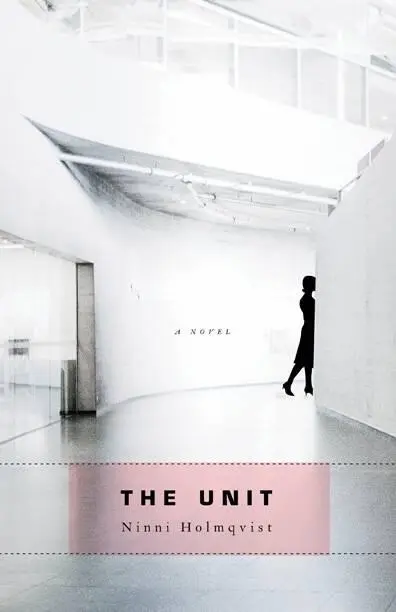
- Название:The Unit
- Автор:
- Жанр:
- Год:неизвестен
- ISBN:нет данных
- Рейтинг книги:3 / 5. Голосов: 1
-
Избранное:Добавить в избранное
- Отзывы:
-
Ваша оценка:
The Unit: краткое содержание, описание и аннотация
Предлагаем к чтению аннотацию, описание, краткое содержание или предисловие (зависит от того, что написал сам автор книги «The Unit»). Если вы не нашли необходимую информацию о книге — напишите в комментариях, мы постараемся отыскать её.
The Unit uncannily echoes its organ-donation-dystopia predecessor, Kazuo Ishiguro’s Never Let Me Go (2005); both imagine societies of extreme utilitarianism that plunder their margins for body parts, and both raise the prospect of art for art’s sake, and love for love’s, as weapons against such thinking. The Unit’s heroine, Dorrit, has chosen not to have children and thus “spill over like rising bread dough”; at the book’s opening, Dorrit’s independence has just earned her incarceration in the Unit, a death camp puzzlingly replete with art galleries and gourmet restaurants where her individualism seems to lapse into passivity.
Through flashbacks, we learn of all Dorrit has lost-her career as a novelist, her beloved dog, the small house she owned herself, the opportunities to save herself by becoming “useful” to society. These snippets of memory are interspersed with descriptions of the eponymous unit and its dying inhabitants, descriptions so matter-of-fact they lull. The novel grips toward the end when Dorrit finds love-and with it a potential escape-and makes a startling choice.
Dorrit’s play-by-play narration can be clunky in translation, but the spare, cumulative prose effectively reveals a character whose story can barely ward off the disintegration of the self it relates. Holmqvist cleverly makes that very self unreliable; The Unit is the latest in a trend of anti-heroic dystopias such as Never Let Me Go and P.D. James’s The Children of Men. In these novels of bad futures, the trustworthy memories of protagonists such as Nineteen Eighty-Four’s Winston Smith (“Airstrip One… had been called England or Britain, though London, [Winston] felt fairly certain, had always been called London”) are replaced by the self-delusions of narrators who mislead the reader and themselves lose control of the stories they are telling. In these novels, rebellion must be expressed obliquely. Like Kathy, the complacent carer of Never Let Me Go, who survives her childhood friends, nursing them as they donate all their organs, Dorrit displaces her anger onto a clearer-eyed friend who calls the Unit what it is, a “luxury slaughterhouse.”
While Holmqvist builds a powerfully imaginative scenario around the concept of killing off the childless, her message on gender roles is clumsy and unconvincing. In Dorrit’s world, flirting and other “typically male” behavior has been criminalized, and retrograde domestic fantasies have to be played out in secret, making the missionary position an act of transgression. We have come a long way from the rage of Margaret Atwood’s 1985 A Handmaid’s Tale, with its neo-Biblical America in which all women are forced either to bear children or to raise them. In today’s climate of threatened reproductive rights, a critique of compulsory motherhood would be welcome, but The Unit displays the same innate conservatism that is the pitfall of Never Let Me Go-a disturbing willingness to locate tragedy not in the horror of forced organ donation and premature death, but in Kathy and Dorrit’s lost opportunities to become mothers.
Copyright 2010 Fran Bigman
The Unit — читать онлайн бесплатно полную книгу (весь текст) целиком
Ниже представлен текст книги, разбитый по страницам. Система сохранения места последней прочитанной страницы, позволяет с удобством читать онлайн бесплатно книгу «The Unit», без необходимости каждый раз заново искать на чём Вы остановились. Поставьте закладку, и сможете в любой момент перейти на страницу, на которой закончили чтение.
Интервал:
Закладка:
21
Out in the community it was Christmastime. If you switched on the television or radio or opened a newspaper you were instantly aware of it. There was the sound of bells and there were Advent calendars and news reports of record sales and articles about the stress of it all and commercials for this year’s Christmas gifts and tips for Christmas dinner and Donald Duck and dancing around the tree and stories about the Virgin Mary and baby Jesus and the star shining above the stable.
But the unit itself was a blessedly Christmas-free zone. Everything carried on as normal, both before, during and after this holiday, which otherwise swallowed up everything in its path; no glitter, no Advent candles, no Christmas Muzak in the stores, no reduced opening hours at the sports center, no Santa hats on the instructors at Friskis & Svettis and no special gym classes with only Christmas music. The restaurant, art gallery, cinema, theater and stores were open exactly as usual and with no frills; no special Christmas menu, no film matinee for children on December 26, no sales between Christmas and New Year, no New Year celebrations and no Twelfth Night, which would loom up in front of you with a scornful grin just when you thought the whole thing was over for this year.
It was, however, a new year; it was impossible to avoid or ignore that fact; the number at the end of the year changed. Time was passing, inexorably. I would soon be fifty-one. Johannes had just turned sixty-four, which was old for a dispensable person. But he certainly didn’t feel old. And I actually felt younger than I had for many years. Presumably it was because I was desired, and because I loved and was loved in return.
My novel was more or less done; I was just putting the finishing touches on it. I read it and made small changes, read it again and made more small changes, didn’t really want to let go.
Johannes laughed at me, called me “a mother hen.” It was evening. We were lying in bed, naked.
“But don’t you get like that too?” I asked. “When you’ve almost finished something and you know you’ll soon have to part from it and start something new?”
“Yes.”
“Well then! Why are you laughing at me?” I pinched one of his nipples playfully.
“Because it’s fun,” he replied, pinching me in return.
“Ouch!” I said.
“That can’t have hurt,” he said.
“No.”
“So why did you say ouch, then?”
“Because it’s fun,” I replied, and the next second he was on top of me.
Afterward, when we’d fallen asleep, I dreamed the dream about Jock and the stick and the beach, the dream where Jock sometimes turns into Johannes, running toward me in the wind with his arms outstretched as the sea crashes and roars, the dream where Johannes sometimes throws the stick and Jock brings it back and we both praise him, the dream where we get back to my house and Johannes is hanging framed photographs on the walls and I ask him: “What are those photographs?” and he replies: “Can’t you see? Those are our children, of course.”
It was clearer this time, Johannes’s voice was very close, very real, as if we were dreaming the same dream at exactly the same time and the conversation were really taking place, as if we were talking about those photographs in our sleep.
The next day I stopped tinkering with my novel and decided that it was finished now; I burned it onto a CD and put it into a cardboard sleeve with the title of the novel and my name on it. Then I didn’t know what to do with it, so I just left it lying on the desk.
And straightaway I started sketching out some ideas for a new story. It was slow going, but that’s the way it often is when I start something new: slow, heavy and uncertain, like laboring up a steep hill on a bicycle with a rusty chain that’s threatening to break at any moment.
On top of that, I had started to get so tired recently; worn out and dizzy. At first I thought it was because I was involved in another physical training program-something I was very grateful for, of course, because it was far more healthy and pleasant than having to take pills, have injections, or undergo experiments involving different solutions or gases. This time they were measuring muscle volume and the capacity to take in oxygen. After the first preliminary tests on those of us who had been selected to participate, I was told I had the physical fitness of a twenty-year-old. But now, a few weeks into the project, I was feeling weak, sometimes really run down, and I was afraid I wasn’t getting enough vitamins and minerals, or that I was dehydrated. I made a real effort to eat better and drink more, but it didn’t help.
Then one morning I woke up feeling nauseous, and had to rush to the bathroom. I threw up. After a sandwich and a glass of milk, I felt a little better. I was tired and slightly woozy, but I didn’t feel really ill again until the evening. And as before I felt better when I’d eaten, but the next morning I threw up again.
It carried on like this day after day, and it was only after a couple of weeks that one afternoon, after I’d finished my training session, I got the idea of swinging by the hospital and going into the pharmacy to ask for a pregnancy test.
The assistant looked surprised.
“I’ll see if we’ve got any,” he said, and disappeared. He was gone for quite a while, but eventually returned with a little box containing a do-it-yourself pregnancy test, complete with instructions.
I went home. Spent the night alone, and in the morning tested my urine. And it was true. However unbelievable it sounds. I really was pregnant. Johannes and I were going to be parents.
I didn’t get much done that morning, just wandered around my apartment; into the bedroom, out again, around the dining table and easy chairs, over to the desk, fiddled around on the computer for a while, gave a start when I caught sight of Majken’s picture of the deformed fetus, turned my back on it, went into the kitchenette, opened the door of the refrigerator, closed it again, poured myself a glass of water, walked around the dining table again, put down the glass without having drunk any of the water, ambled back into the bedroom and out again. If there had been a window I would have stood by it, to gather my thoughts, to calm myself. But there was no window, so I didn’t manage to calm down.
In the afternoon I had physical training as usual, then went home and ate and tried to sleep for a while, which didn’t go all that well. I was too overexcited. I was too dizzy, I felt too sick. I was too happy.
As soon as I got through the door of Johannes’s apartment that evening I said:
“Now I know why I’ve been feeling so bad. Or am feeling bad.”
“Oh…?” Johannes frowned anxiously, and I almost shouted as I said:
“I’m pregnant! You’re going to be a daddy!”
At first he thought I was joking, of course. When he finally realized that my seriousness and agitation were genuine, and that I was telling the truth, he took my hand between both of his and kissed it. Then he kissed me on the forehead and whispered:
“My love.”
He held me, my forehead against his collarbone, his cheek against my ear, and he whispered the same words over and over again: “My love. My love.”
When he let me go and I looked at his face, his eyes were shining. I interpreted it as a sign that he was moved.
Later, when we had made love and were lying in bed in the darkness, just about to go to sleep, I heard him crying, quiet and suppressed. I turned on my side, stroked his cheek and asked him what the matter was, didn’t he feel well? He replied that he was fine, it was just that he was happy.
“I’m crying because I’m so happy,” he said.
Читать дальшеИнтервал:
Закладка:
Похожие книги на «The Unit»
Представляем Вашему вниманию похожие книги на «The Unit» списком для выбора. Мы отобрали схожую по названию и смыслу литературу в надежде предоставить читателям больше вариантов отыскать новые, интересные, ещё непрочитанные произведения.










Обсуждение, отзывы о книге «The Unit» и просто собственные мнения читателей. Оставьте ваши комментарии, напишите, что Вы думаете о произведении, его смысле или главных героях. Укажите что конкретно понравилось, а что нет, и почему Вы так считаете.