Ninni Holmqvist - The Unit
Здесь есть возможность читать онлайн «Ninni Holmqvist - The Unit» весь текст электронной книги совершенно бесплатно (целиком полную версию без сокращений). В некоторых случаях можно слушать аудио, скачать через торрент в формате fb2 и присутствует краткое содержание. Жанр: Современная проза, на английском языке. Описание произведения, (предисловие) а так же отзывы посетителей доступны на портале библиотеки ЛибКат.
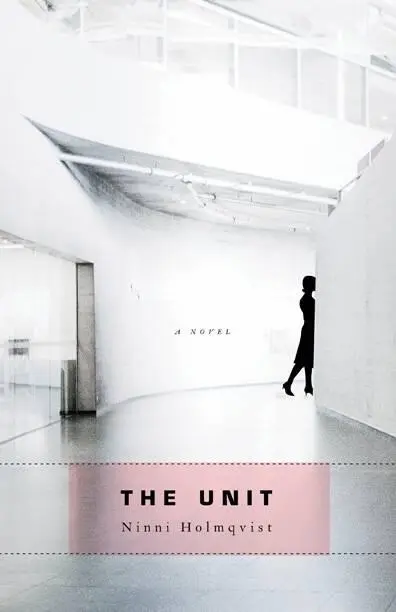
- Название:The Unit
- Автор:
- Жанр:
- Год:неизвестен
- ISBN:нет данных
- Рейтинг книги:3 / 5. Голосов: 1
-
Избранное:Добавить в избранное
- Отзывы:
-
Ваша оценка:
The Unit: краткое содержание, описание и аннотация
Предлагаем к чтению аннотацию, описание, краткое содержание или предисловие (зависит от того, что написал сам автор книги «The Unit»). Если вы не нашли необходимую информацию о книге — напишите в комментариях, мы постараемся отыскать её.
The Unit uncannily echoes its organ-donation-dystopia predecessor, Kazuo Ishiguro’s Never Let Me Go (2005); both imagine societies of extreme utilitarianism that plunder their margins for body parts, and both raise the prospect of art for art’s sake, and love for love’s, as weapons against such thinking. The Unit’s heroine, Dorrit, has chosen not to have children and thus “spill over like rising bread dough”; at the book’s opening, Dorrit’s independence has just earned her incarceration in the Unit, a death camp puzzlingly replete with art galleries and gourmet restaurants where her individualism seems to lapse into passivity.
Through flashbacks, we learn of all Dorrit has lost-her career as a novelist, her beloved dog, the small house she owned herself, the opportunities to save herself by becoming “useful” to society. These snippets of memory are interspersed with descriptions of the eponymous unit and its dying inhabitants, descriptions so matter-of-fact they lull. The novel grips toward the end when Dorrit finds love-and with it a potential escape-and makes a startling choice.
Dorrit’s play-by-play narration can be clunky in translation, but the spare, cumulative prose effectively reveals a character whose story can barely ward off the disintegration of the self it relates. Holmqvist cleverly makes that very self unreliable; The Unit is the latest in a trend of anti-heroic dystopias such as Never Let Me Go and P.D. James’s The Children of Men. In these novels of bad futures, the trustworthy memories of protagonists such as Nineteen Eighty-Four’s Winston Smith (“Airstrip One… had been called England or Britain, though London, [Winston] felt fairly certain, had always been called London”) are replaced by the self-delusions of narrators who mislead the reader and themselves lose control of the stories they are telling. In these novels, rebellion must be expressed obliquely. Like Kathy, the complacent carer of Never Let Me Go, who survives her childhood friends, nursing them as they donate all their organs, Dorrit displaces her anger onto a clearer-eyed friend who calls the Unit what it is, a “luxury slaughterhouse.”
While Holmqvist builds a powerfully imaginative scenario around the concept of killing off the childless, her message on gender roles is clumsy and unconvincing. In Dorrit’s world, flirting and other “typically male” behavior has been criminalized, and retrograde domestic fantasies have to be played out in secret, making the missionary position an act of transgression. We have come a long way from the rage of Margaret Atwood’s 1985 A Handmaid’s Tale, with its neo-Biblical America in which all women are forced either to bear children or to raise them. In today’s climate of threatened reproductive rights, a critique of compulsory motherhood would be welcome, but The Unit displays the same innate conservatism that is the pitfall of Never Let Me Go-a disturbing willingness to locate tragedy not in the horror of forced organ donation and premature death, but in Kathy and Dorrit’s lost opportunities to become mothers.
Copyright 2010 Fran Bigman
The Unit — читать онлайн бесплатно полную книгу (весь текст) целиком
Ниже представлен текст книги, разбитый по страницам. Система сохранения места последней прочитанной страницы, позволяет с удобством читать онлайн бесплатно книгу «The Unit», без необходимости каждый раз заново искать на чём Вы остановились. Поставьте закладку, и сможете в любой момент перейти на страницу, на которой закончили чтение.
Интервал:
Закладка:
“Yes, but of course it wouldn’t have gone to somebody like that! Then again, why not? Everyone has the right to live. Even stuck-up bitches.”
“Oh yes?” said Elsa. “That’s what you think, is it? How noble!”
“Absolutely. Just call me Saint Alice.” She pressed her palms together as if she were praying, while at the same time crossing her eyes, her expression deeply serious and saintly, and from the depths of her lungs she intoned in her baritone voice:
“Aaamen…!”
It was impossible not to laugh, and that wasn’t such a good thing because it hurt to laugh, and Elsa and I clutched our scars from the operation.
Then we started comparing our scars. There was no one else in the sauna just then, except the surveillance cameras and the invisible microphones, of course. Alice ’s scar was bigger than mine, but mine was uglier, bumpier, and in shades of blue, green and pink. Elsa’s was the biggest and extremely bumpy, almost like a lump, and the area all around it was inflamed and purple, but then it was also the most recent. When we’d finished discussing our scars, Elsa said:
“Dorrit, I have something to tell you. I’ve been trying to find the right time, but… Anyway, this is as good a moment as any. It’s about your sister.”
“My sister?”
“Yes. Her name was Siv, wasn’t it?”
I nodded.
“She was here,” said Elsa. “She lived in B4.”
I remembered the wall hanging down in lab 2; I’d been right, then-it was Siv who had made it. I wasn’t surprised. I felt completely calm.
“How did you find out?” I asked Elsa.
“When I was in for my operation, I met a nurse. Clara Gransjö.”
“Gransjö? Is she related to Göran Gransjö?”
“She’s his daughter. Göran Gransjö was the principal of our school,” she explained to Alice before she went on. “Clara recognized my name, and I recognized hers, so we got talking about people at home in the village and checked to see whether we had any mutual acquaintances, and I was just about to mention you when she exclaimed: ‘Siv Weger! Did you know her?’ ‘No, but I know her sister,’ I said. ‘She’s in H3. We see each other every day.’ You don’t mind my saying that?”
She looked down at me anxiously.
“Of course not,” I said, climbing up to the top bench in between her and Alice, so that we were on the same level. “But tell me what you know about Siv.”
“Well,” Elsa began, “she came here when she was fifty, like most of us, and she was evidently involved in lots of medical and other experiments; she also went through three organ donations and a number of egg and bone marrow donations. The quality of her eggs was apparently as good as those of a twenty-five-year-old, and she was regarded as a real superwoman. And then she found love here, just like you. She met a woman called Elin or Ellen, Clara couldn’t remember which, and they were together until it was Elin or Ellen’s turn to donate her heart.”
I felt a stab of pain in the region around my own heart, and had to gasp for breath in the humid air of the sauna. I was thinking about Johannes, who was so much older than me and who had been in the unit for so much longer. I closed my eyes, thought “not today, not tomorrow,” and at the same time felt Elsa’s hand clutching mine.
“Are you okay?” she said. “Do you need to go out for some air? To cool down? Water?”
“No, no, I’m fine.” I said. I opened my eyes, met her gaze and nodded to her to carry on.
She pulled her hand away and leaned back cautiously against the hot wooden wall. Her whole body was shiny with sweat, mine too, and Alice ’s. Alice was sitting in silence with her knees drawn up and her arms around her legs, listening earnestly to Elsa’s story.
“After she had lost her Ellen-Elin, she applied to make her final donation.”
“Can you do that?” said Alice.
“Didn’t you know?” Elsa replied. “Well, anyway, now you do. Her application was approved-I think they always are-and just a week or so later there was someone with Siv’s blood type who needed both a heart and lungs. And… That was four years ago.”
By this time I was no longer calm, by this time I was seething, and it had nothing to do with the heat of the sauna. As I said, I wasn’t surprised. As I’ve already mentioned I hadn’t thought it very likely that Siv would still be alive. I would have been surprised if she had been, if I had bumped into her here, for example during a walk in the winter garden, large as life, just older than when I last saw her. Nor was I upset, not primarily at least. I was angry. The fact is that I had worked up a real rage, little by little, while Elsa was telling us what she had found out. And the knowledge that Siv’s heart and lungs lived on inside someone who needed them more than she did-someone who perhaps had five splendid kids to provide for-didn’t make me less angry in the slightest.
“But what about me?” I burst out, slamming my hand against the wall. “Perhaps I needed my sister, why doesn’t anybody care about things like that? That brothers and sisters might need each other? I needed my big sister, I still need her, she was my family, my closest relative, why doesn’t anybody care about that?”
I punched the wall, over and over again, the sweat pouring, almost gushing out of me, splashing as I banged and punched, until Alice and Elsa moved in close to me from their respective corners, grabbed my arms and held me, stopping me from punching and flailing. They enveloped me, they rocked and soothed me as if I were a little child, and our warm, damp bodies slipped and stuck together.
“You know that relationships between siblings don’t count,” said Alice after a while. “It’s only new constellations they approve of. People who make a new home and produce new people. You know that, Dorrit; you know that everything has to move forward.”
14
Sometimes at night I dreamed of Jock. We were usually on the beach or on our way home from there, tired and hungry, me with cold red cheeks, Jock with his breath steaming, and we went into the house, I put some wood in the stove and lit it, gave Jock some food and cooked something for myself. The seasons in the dream varied, but mostly it was autumn or winter. We were on the beach, I would throw a stick, and Jock would dash off barking with joy to fetch it, place it at my feet whereupon I would praise him, pick up the stick and throw it again. It was like a film, a loop, and I was very contented in those dreams, it was as if everything important was contained in that everlasting loop, as if everything else was unimportant, small, worthless. Sometimes I would wake up with the word “cycle” going around in my head, and I would stretch, then creep close to the still-sleeping Johannes and caress him or simply press myself against him until, half asleep and grunting slightly, he would begin to feel for my body with his hands, and before he was even fully awake he would part my legs and push inside me.
The night after Elsa told me about what happened to Siv, I dreamed the beach dream. This time it was unusually intense, the colors and contrasts unusually clear and sharp, almost like a film in Technicolor, and the sound of the waves, the wind, the gulls, the terns, the herons and Jock were clearly distinguishable. I could even smell the sea and the seaweed.
I was happy in the dream, but when I woke up it was with a feeling that I was falling apart, that I was cracking up from the inside and slowly falling to pieces. My heart was jumping and grating like a cold engine that doesn’t want to start, my skin was crawling and I couldn’t manage a single clear thought, it was as if all my thoughts were crushed to bits just as they began to take shape.
Читать дальшеИнтервал:
Закладка:
Похожие книги на «The Unit»
Представляем Вашему вниманию похожие книги на «The Unit» списком для выбора. Мы отобрали схожую по названию и смыслу литературу в надежде предоставить читателям больше вариантов отыскать новые, интересные, ещё непрочитанные произведения.





Обсуждение, отзывы о книге «The Unit» и просто собственные мнения читателей. Оставьте ваши комментарии, напишите, что Вы думаете о произведении, его смысле или главных героях. Укажите что конкретно понравилось, а что нет, и почему Вы так считаете.