Ninni Holmqvist - The Unit
Здесь есть возможность читать онлайн «Ninni Holmqvist - The Unit» весь текст электронной книги совершенно бесплатно (целиком полную версию без сокращений). В некоторых случаях можно слушать аудио, скачать через торрент в формате fb2 и присутствует краткое содержание. Жанр: Современная проза, на английском языке. Описание произведения, (предисловие) а так же отзывы посетителей доступны на портале библиотеки ЛибКат.
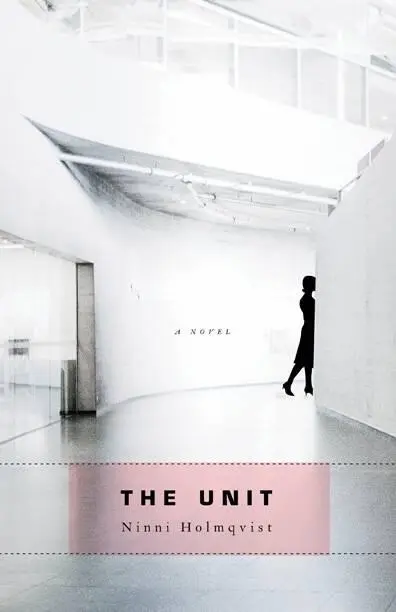
- Название:The Unit
- Автор:
- Жанр:
- Год:неизвестен
- ISBN:нет данных
- Рейтинг книги:3 / 5. Голосов: 1
-
Избранное:Добавить в избранное
- Отзывы:
-
Ваша оценка:
The Unit: краткое содержание, описание и аннотация
Предлагаем к чтению аннотацию, описание, краткое содержание или предисловие (зависит от того, что написал сам автор книги «The Unit»). Если вы не нашли необходимую информацию о книге — напишите в комментариях, мы постараемся отыскать её.
The Unit uncannily echoes its organ-donation-dystopia predecessor, Kazuo Ishiguro’s Never Let Me Go (2005); both imagine societies of extreme utilitarianism that plunder their margins for body parts, and both raise the prospect of art for art’s sake, and love for love’s, as weapons against such thinking. The Unit’s heroine, Dorrit, has chosen not to have children and thus “spill over like rising bread dough”; at the book’s opening, Dorrit’s independence has just earned her incarceration in the Unit, a death camp puzzlingly replete with art galleries and gourmet restaurants where her individualism seems to lapse into passivity.
Through flashbacks, we learn of all Dorrit has lost-her career as a novelist, her beloved dog, the small house she owned herself, the opportunities to save herself by becoming “useful” to society. These snippets of memory are interspersed with descriptions of the eponymous unit and its dying inhabitants, descriptions so matter-of-fact they lull. The novel grips toward the end when Dorrit finds love-and with it a potential escape-and makes a startling choice.
Dorrit’s play-by-play narration can be clunky in translation, but the spare, cumulative prose effectively reveals a character whose story can barely ward off the disintegration of the self it relates. Holmqvist cleverly makes that very self unreliable; The Unit is the latest in a trend of anti-heroic dystopias such as Never Let Me Go and P.D. James’s The Children of Men. In these novels of bad futures, the trustworthy memories of protagonists such as Nineteen Eighty-Four’s Winston Smith (“Airstrip One… had been called England or Britain, though London, [Winston] felt fairly certain, had always been called London”) are replaced by the self-delusions of narrators who mislead the reader and themselves lose control of the stories they are telling. In these novels, rebellion must be expressed obliquely. Like Kathy, the complacent carer of Never Let Me Go, who survives her childhood friends, nursing them as they donate all their organs, Dorrit displaces her anger onto a clearer-eyed friend who calls the Unit what it is, a “luxury slaughterhouse.”
While Holmqvist builds a powerfully imaginative scenario around the concept of killing off the childless, her message on gender roles is clumsy and unconvincing. In Dorrit’s world, flirting and other “typically male” behavior has been criminalized, and retrograde domestic fantasies have to be played out in secret, making the missionary position an act of transgression. We have come a long way from the rage of Margaret Atwood’s 1985 A Handmaid’s Tale, with its neo-Biblical America in which all women are forced either to bear children or to raise them. In today’s climate of threatened reproductive rights, a critique of compulsory motherhood would be welcome, but The Unit displays the same innate conservatism that is the pitfall of Never Let Me Go-a disturbing willingness to locate tragedy not in the horror of forced organ donation and premature death, but in Kathy and Dorrit’s lost opportunities to become mothers.
Copyright 2010 Fran Bigman
The Unit — читать онлайн бесплатно полную книгу (весь текст) целиком
Ниже представлен текст книги, разбитый по страницам. Система сохранения места последней прочитанной страницы, позволяет с удобством читать онлайн бесплатно книгу «The Unit», без необходимости каждый раз заново искать на чём Вы остановились. Поставьте закладку, и сможете в любой момент перейти на страницу, на которой закончили чтение.
Интервал:
Закладка:
After that I stood just inside the door of my apartment, not knowing where to go next. For the first time I was seriously bothered by the surveillance cameras. Eating, sleeping, reading, writing, watching TV, talking on the telephone, cleaning your teeth, picking your nose or poking about in your ears, taking a shower, having a pee or a shit, changing your tampon: it was fine to do all that with someone watching. But, I asked myself, why should the bastards see this?
This-this was when my legs finally gave way and I sank helplessly to the floor and just sat there, not moving, with my back against the door, and, without being able to stop myself or even keep the noise down, howled like a mortally wounded animal.
6
When my older sister Siv was about to turn fifty I called her to ask if she wanted me to come over, but all I got was an automated message: “There is no subscriber at this number.” When I tried to e-mail instead, the message bounced back; no one with that address existed. Then I got in touch with my other sister and my brothers, but they said they hadn’t heard from Siv for several years and knew nothing. In the end, after having written an ordinary letter to her and gotten it back with her name and address crossed out and RETURN TO SENDER written across it, I got in the car and drove to Malmö, to her apartment on Kornettsgatan. But there was a different name on the door, and when I rang the bell, a young man answered. He said:
“No, there’s no Siv Weger. My boyfriend and I have lived here for over two years.”
He was lying! Or…? I was confused. As far as I could remember, I had seen Siv at home here in this very apartment as recently as a year ago, on her forty-ninth birthday. We would try to meet up at least twice a year, on each other’s birthdays, and sometimes over Christmas and New Year’s as well. It could happen that a birthday get-together might occasionally be postponed or canceled because we didn’t have time to travel to see each other, or because we couldn’t afford it. Therefore I now came to the conclusion, if somewhat reluctantly, that my memory was playing tricks on me, and that I was mixing up the last couple of years-as so often happens when we hit middle age. The order in which things had happened, and the length of time between events in my relatively recent past, tended to be a little unclear in my mind these days. Time, the past, had lost its linear structure to some extent, my memory had started to prioritize as it had never done before, breaking up time and rearranging my experiences and reference points, putting them in an arbitrary and changeable order. I therefore decided it must have been over two years since I was last in Siv’s apartment.
But of course I didn’t just leave it at that; the fact remained that she had gone off somewhere without getting in touch with me, and that wasn’t like her. I therefore reported her disappearance to the police, even though of course I suspected she had been taken to a unit. But I wasn’t sure; it was true that she had no children, but she could easily have become successful in her profession all of a sudden, or managed to find a steady partner who loved her. Or both. We weren’t in the habit of asking about each other’s love lives, and Siv wasn’t the kind to start talking about that sort of thing. So it could have happened without my hearing about it. She could, for example, have met someone from another part of the country and moved there with him or her, and simply forgotten to tell me. Or something terrible could have happened: she might have moved to another part of the country with her partner, intending to tell me, but hadn’t had time because she had been involved in an accident or a violent crime with a fatal outcome. Perhaps she was buried in some forest or bog, or had been dumped in the sea, or perhaps her dismembered body was in someone’s freezer. Or maybe she had decided to go mountain climbing and had fallen without anyone seeing and had landed somewhere where people hardly ever went. Anything could have happened. That was why I reported her disappearance.
However, the police investigation led nowhere. At least that’s what they said whenever I phoned to ask how it was going. “We are doing everything in our power to find out what happened to your sister. But so far our leads have unfortunately been unsuccessful.”
Sometimes when I had to visit Malmö I would bump into one of Siv’s old friends, and I always took the opportunity to ask if they’d heard from her or if they knew anything. I might get an answer like this:
“No, it’s ages since I had any contact with Siv. But you know what she’s like; she’s probably just given notice on the flat, sold everything and taken off on a long trip somewhere. You’ll see, she’ll be sitting in some ashram chanting a mantra, or sailing around Cape Horn on a raft or something like that. I’m sure she’ll pop up like a jack-in-the-box any day now.”
Or they’d say something along these lines:
“Oh, you know, contact between Sivan and me has always been pretty sporadic. I haven’t a clue what she’s up to these days.”
Later, after a year or so, when I had accepted the fact that Siv was gone and wasn’t coming back, I did think that one of her friends must have known what had actually happened to her, but hadn’t said anything. I thought she might have told someone in confidence that she was going to be dispensable, and that this person had promised to say nothing if I or anyone else should ask. I really wanted to believe that this was what had happened. I really wanted to believe that Siv had a friend like that, someone so close to her that she could confide in them. I really wanted to believe that she hadn’t only had “sporadic contacts.”
7
“What’s the meaning of life?” asked Arnold, my psychologist.
For the third time in the week after Majken’s final donation I was sitting in the armchair in his office. The first time had been an emergency. Henrietta had followed me to my apartment, where I had locked myself in and sunk down with my back against the door. She had stood outside listening to me-as if it weren’t enough that someone was sitting in a control tower (or wherever it was that they sat) both watching and listening. This person was evidently in contact with Henrietta via a mobile phone or some other kind of transmitter, because I could hear her talking quietly to someone.
She said “Yes” and “Yes, Dick’s here” and “Ready, yes” and “Just say the word” and shortly afterward she had unlocked the door and opened it carefully. The door opened outward and I fell slowly backward, apathetically. Then Dick had come to help and they had more or less carried me to Arnold, whom I hardly knew. At that point I had seen him only twice, and we hadn’t touched on anything particularly difficult, but had mostly kept to the surface of my emotional life. But now I was deposited in his armchair in a state where I was completely powerless and defenseless. All my suppressed fear, rage and grief had floated up to the surface and was lying there waiting; all he had to do was help himself, or at least that’s how it seemed to me-as if he were lapping up my feelings with his big, rough, psychologist’s tongue. And he had succeeded in getting me to talk about death, about when someone dies or disappears, like Majken, like Siv, like my parents and other people I had known who no longer existed.
Afterward I had actually felt better, it didn’t feel as if he had taken something away from me at all; on the contrary, it felt as if he was there for me. I wasn’t completely sure that this was actually true, for real, but the main thing was that it felt that way.
And so this time, a week to the day after Majken’s final donation, he thought we should talk about life.
Читать дальшеИнтервал:
Закладка:
Похожие книги на «The Unit»
Представляем Вашему вниманию похожие книги на «The Unit» списком для выбора. Мы отобрали схожую по названию и смыслу литературу в надежде предоставить читателям больше вариантов отыскать новые, интересные, ещё непрочитанные произведения.








Обсуждение, отзывы о книге «The Unit» и просто собственные мнения читателей. Оставьте ваши комментарии, напишите, что Вы думаете о произведении, его смысле или главных героях. Укажите что конкретно понравилось, а что нет, и почему Вы так считаете.