Ninni Holmqvist - The Unit
Здесь есть возможность читать онлайн «Ninni Holmqvist - The Unit» весь текст электронной книги совершенно бесплатно (целиком полную версию без сокращений). В некоторых случаях можно слушать аудио, скачать через торрент в формате fb2 и присутствует краткое содержание. Жанр: Современная проза, на английском языке. Описание произведения, (предисловие) а так же отзывы посетителей доступны на портале библиотеки ЛибКат.
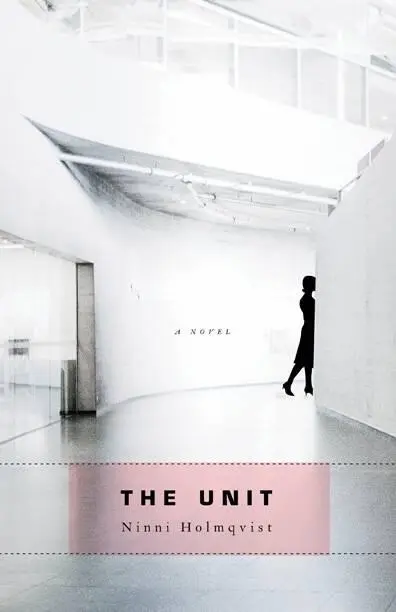
- Название:The Unit
- Автор:
- Жанр:
- Год:неизвестен
- ISBN:нет данных
- Рейтинг книги:3 / 5. Голосов: 1
-
Избранное:Добавить в избранное
- Отзывы:
-
Ваша оценка:
The Unit: краткое содержание, описание и аннотация
Предлагаем к чтению аннотацию, описание, краткое содержание или предисловие (зависит от того, что написал сам автор книги «The Unit»). Если вы не нашли необходимую информацию о книге — напишите в комментариях, мы постараемся отыскать её.
The Unit uncannily echoes its organ-donation-dystopia predecessor, Kazuo Ishiguro’s Never Let Me Go (2005); both imagine societies of extreme utilitarianism that plunder their margins for body parts, and both raise the prospect of art for art’s sake, and love for love’s, as weapons against such thinking. The Unit’s heroine, Dorrit, has chosen not to have children and thus “spill over like rising bread dough”; at the book’s opening, Dorrit’s independence has just earned her incarceration in the Unit, a death camp puzzlingly replete with art galleries and gourmet restaurants where her individualism seems to lapse into passivity.
Through flashbacks, we learn of all Dorrit has lost-her career as a novelist, her beloved dog, the small house she owned herself, the opportunities to save herself by becoming “useful” to society. These snippets of memory are interspersed with descriptions of the eponymous unit and its dying inhabitants, descriptions so matter-of-fact they lull. The novel grips toward the end when Dorrit finds love-and with it a potential escape-and makes a startling choice.
Dorrit’s play-by-play narration can be clunky in translation, but the spare, cumulative prose effectively reveals a character whose story can barely ward off the disintegration of the self it relates. Holmqvist cleverly makes that very self unreliable; The Unit is the latest in a trend of anti-heroic dystopias such as Never Let Me Go and P.D. James’s The Children of Men. In these novels of bad futures, the trustworthy memories of protagonists such as Nineteen Eighty-Four’s Winston Smith (“Airstrip One… had been called England or Britain, though London, [Winston] felt fairly certain, had always been called London”) are replaced by the self-delusions of narrators who mislead the reader and themselves lose control of the stories they are telling. In these novels, rebellion must be expressed obliquely. Like Kathy, the complacent carer of Never Let Me Go, who survives her childhood friends, nursing them as they donate all their organs, Dorrit displaces her anger onto a clearer-eyed friend who calls the Unit what it is, a “luxury slaughterhouse.”
While Holmqvist builds a powerfully imaginative scenario around the concept of killing off the childless, her message on gender roles is clumsy and unconvincing. In Dorrit’s world, flirting and other “typically male” behavior has been criminalized, and retrograde domestic fantasies have to be played out in secret, making the missionary position an act of transgression. We have come a long way from the rage of Margaret Atwood’s 1985 A Handmaid’s Tale, with its neo-Biblical America in which all women are forced either to bear children or to raise them. In today’s climate of threatened reproductive rights, a critique of compulsory motherhood would be welcome, but The Unit displays the same innate conservatism that is the pitfall of Never Let Me Go-a disturbing willingness to locate tragedy not in the horror of forced organ donation and premature death, but in Kathy and Dorrit’s lost opportunities to become mothers.
Copyright 2010 Fran Bigman
The Unit — читать онлайн бесплатно полную книгу (весь текст) целиком
Ниже представлен текст книги, разбитый по страницам. Система сохранения места последней прочитанной страницы, позволяет с удобством читать онлайн бесплатно книгу «The Unit», без необходимости каждый раз заново искать на чём Вы остановились. Поставьте закладку, и сможете в любой момент перейти на страницу, на которой закончили чтение.
Интервал:
Закладка:
9
It was another new month, April this time. It was Saturday morning, and nine new dispensable individuals were expected. One of them was to have Majken’s room, I had heard. I was sitting in my pajamas and robe on the sofa in the lounge, drinking my morning coffee and reading a book when she arrived, accompanied by Dick and Henrietta.
She was very tall and fine-limbed, strikingly feminine in her stance and her movements; she had the palest skin, black, shiny, shoulder-length hair, almost unbelievably red lips and big, watchful eyes. Henrietta was carrying her two suitcases, Dick her thick, bulky winter coat. I thought it must either be unusually cold for April out there, or she felt the cold a great deal. Or perhaps the coat meant something special to her. Because here in the unit there is no need for winter clothes, and she must have known that; it’s one of the positive things they highlight in the information packet. My own peacoat and the heavy winter boots I had been wearing when I arrived two months ago were still in the top part of my closet, and I hadn’t given them a thought until now.
When Dick caught sight of me he introduced us. Her name was Vivi. I got up, tightened the belt of my robe and went over to shake hands. Her hand felt cold and slightly clammy. I looked up at her face and saw her terrified expression. I said:
“If there’s anything you’re not sure about, or if you just need to talk to someone, or if you simply don’t want to be alone, then I’m here on the sofa or in my apartment for the next few hours. It says Dorrit Weger on the door. Don’t hesitate, you mustn’t think you’ll be disturbing me, because you won’t.”
“Okay,” she muttered, then she and Dick and Henrietta carried on through the lounge, past the laundry and the kitchen, and disappeared out of sight into the hallway.
The same evening, during dinner at the welcome party, I sat with Vivi, Erik, and Alice, which wasn’t exactly the best combination in the world: Vivi, tense, introverted and terrified, Alice with one cloudy unseeing eye, stubble, a deep voice and her Adam’s apple bobbing up and down when she came out with her loud laugh, and as if that weren’t enough: Erik, who was so deeply depressed after the loss of Vanja that he could barely speak or eat. He sat there, alternately stammering or completely silent, poking at the food on his plate. Fortunately Alice was in a good mood as usual, exuding warmth and confidence, and gradually Vivi seemed to relax a little.
When dinner and the entertainment were over I took her to the bar, where we tried out different colorful drinks with umbrellas in them, tasting of fruit and sweets. The bartender was new; he had arrived the previous month, and he was now showing what he could do. I ordered a banana and lime drink that was served in a cocktail glass. It was called a Green Banana and was a cold, yellowish green in color; the umbrella had green and yellow stripes and there was a slice of lime perched on the side of the glass. The drink was cloyingly sweet and sharply fresh at the same time; the sharpness balanced the sweetness and vice versa. It was delicious. Vivi chose Raspberry Rock, which consisted of freshly squeezed orange juice mixed with raspberry juice, with frozen raspberries in it. The umbrella was red, blue and orange, and there was a frosting of blue sugar around the rim of the glass.
“Food coloring?” I guessed, but Vivi tasted the frosting with the tip of her tongue and shook her head.
“Blueberries,” she said.
She didn’t say any more after that, she just sipped slowly, in silence. A raspberry kept bumping against her top lip. I didn’t know what to say, so I just gave her a little smile and smoothed down an invisible crease in my dress, which I had put on for the first time since arriving at the unit. It made me feel elegant and sexy, but a bit unsure of myself at the same time. So we were standing there, Vivi shy or scared or both, me unsure about my outfit and about my self-appointed role as supporter, when Elsa turned up, cheerful and sweaty from dancing, and exclaimed:
“Oh, what fantastic drinks! If there’s alcohol in them the evening will be perfect!”
“Unfortunately not,” replied Vivi, looking amused-for the first time I saw her smile.
I introduced her to Elsa, they shook hands and immediately started chatting. They seemed to like each other straightaway. I felt relieved. Elsa ordered a Black Night, and it really was black. It was served in a tall, narrow glass with a black-and-red-striped straw, and something red, perhaps a candy, at the bottom. She bent over the glass, and as she placed the straw between her lips and took the first careful little drink, Vivi and I stood on either side watching her reaction. She let go of the straw, swallowed, looked thoughtful.
“Not bad,” she said. “Strange, but delicious. Recommended.”
Vivi put her half-finished orange and raspberry drink to one side and ordered a Black Night. And I probably would have done the same if Johannes hadn’t just elbowed his way through the crowd to us. After a friendly but brief nod to Elsa and Vivi, he turned to me, took my hand, and said:
“Dorrit, you look lovely tonight,” at which point he bent forward and kissed my hand.
“May I have the pleasure of a dance?” he asked.
I accepted, and without a word we sailed out onto the dance floor.
It was a rock ballad. The singer in the band had a hoarse voice. Johannes led; I followed, the hem of my dress brushing my calves. He was holding me around the waist, I had one hand on his shoulder, the other in his hand. Our joined hands formed a point, the prow of a ship; he was port, I was starboard. When I closed my eyes he was Nils.
10
We left the party together and walked slowly through the winter garden. I liked to take this diversion late in the evening or at night, when everything was still and quiet, the artificial dew glistening on the greenery, the air full of different fragrances. I liked to remember Majken here in this stillness and among these scents.
Johannes had his arm around my shoulders, and when we reached the patio with the fountain and the marble benches, he said:
“Shall we sit for a little while?”
We sat down on the cool, slightly damp marble and peered up past the branches of the palms and through the glass dome to the night sky. It was full of stars.
“There’s Ursa Minor and the North Star,” said Johannes.
“Where?” I had never been particularly good at constellations. I could just about make out the Dipper.
Johannes pointed, describing Ursa Minor as a smaller version of the Dipper, and then I saw it in the angle between two palm leaves.
“And the North Star is the big one there right at the front, the one that’s shining so brightly. It’s always in the north,” he went on, and showed me the easiest way to find it: it’s along the line between the two stars right at the back of the Dipper.
“But how can that be?” I asked. “How can it always be in the same direction? We’re spinning around, after all.”
“Yes…” Johannes sounded uncertain, a little hesitant to start with. “… but we’re spinning around our own axis. And whatever is in the north is always in the north. Although the important thing in this case is not how it gets to be that way, but how it actually is. If you can just identify the North Star you need never get lost on a starry night.”
I didn’t laugh. Normally I would have, because the likelihood of any of us running the risk of getting lost at any point during the rest of our lives was, as far as I could determine, negligible. But Johannes’s tone was so totally sincere that it felt as if the information he was giving me was extremely useful and worth remembering, and instead of laughing I nodded thoughtfully. Then we sat there in silence among the palm trees in the darkness. It was like a mild, still summer night. I felt young. My thoughts wandered here and there: from this feeling of youthfulness to the North Star to Majken to Siv to my family-and from my family to the novel I was working on, which was about a family not unlike the one I grew up in, and from there to something I’d been wondering about recently. And now I broke the silence to ask Johannes:
Читать дальшеИнтервал:
Закладка:
Похожие книги на «The Unit»
Представляем Вашему вниманию похожие книги на «The Unit» списком для выбора. Мы отобрали схожую по названию и смыслу литературу в надежде предоставить читателям больше вариантов отыскать новые, интересные, ещё непрочитанные произведения.










Обсуждение, отзывы о книге «The Unit» и просто собственные мнения читателей. Оставьте ваши комментарии, напишите, что Вы думаете о произведении, его смысле или главных героях. Укажите что конкретно понравилось, а что нет, и почему Вы так считаете.