Ninni Holmqvist - The Unit
Здесь есть возможность читать онлайн «Ninni Holmqvist - The Unit» весь текст электронной книги совершенно бесплатно (целиком полную версию без сокращений). В некоторых случаях можно слушать аудио, скачать через торрент в формате fb2 и присутствует краткое содержание. Жанр: Современная проза, на английском языке. Описание произведения, (предисловие) а так же отзывы посетителей доступны на портале библиотеки ЛибКат.
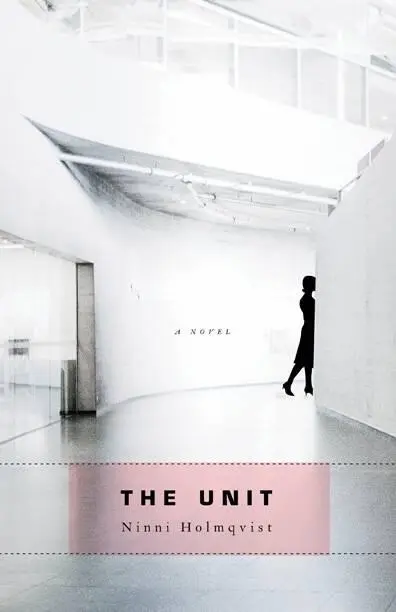
- Название:The Unit
- Автор:
- Жанр:
- Год:неизвестен
- ISBN:нет данных
- Рейтинг книги:3 / 5. Голосов: 1
-
Избранное:Добавить в избранное
- Отзывы:
-
Ваша оценка:
The Unit: краткое содержание, описание и аннотация
Предлагаем к чтению аннотацию, описание, краткое содержание или предисловие (зависит от того, что написал сам автор книги «The Unit»). Если вы не нашли необходимую информацию о книге — напишите в комментариях, мы постараемся отыскать её.
The Unit uncannily echoes its organ-donation-dystopia predecessor, Kazuo Ishiguro’s Never Let Me Go (2005); both imagine societies of extreme utilitarianism that plunder their margins for body parts, and both raise the prospect of art for art’s sake, and love for love’s, as weapons against such thinking. The Unit’s heroine, Dorrit, has chosen not to have children and thus “spill over like rising bread dough”; at the book’s opening, Dorrit’s independence has just earned her incarceration in the Unit, a death camp puzzlingly replete with art galleries and gourmet restaurants where her individualism seems to lapse into passivity.
Through flashbacks, we learn of all Dorrit has lost-her career as a novelist, her beloved dog, the small house she owned herself, the opportunities to save herself by becoming “useful” to society. These snippets of memory are interspersed with descriptions of the eponymous unit and its dying inhabitants, descriptions so matter-of-fact they lull. The novel grips toward the end when Dorrit finds love-and with it a potential escape-and makes a startling choice.
Dorrit’s play-by-play narration can be clunky in translation, but the spare, cumulative prose effectively reveals a character whose story can barely ward off the disintegration of the self it relates. Holmqvist cleverly makes that very self unreliable; The Unit is the latest in a trend of anti-heroic dystopias such as Never Let Me Go and P.D. James’s The Children of Men. In these novels of bad futures, the trustworthy memories of protagonists such as Nineteen Eighty-Four’s Winston Smith (“Airstrip One… had been called England or Britain, though London, [Winston] felt fairly certain, had always been called London”) are replaced by the self-delusions of narrators who mislead the reader and themselves lose control of the stories they are telling. In these novels, rebellion must be expressed obliquely. Like Kathy, the complacent carer of Never Let Me Go, who survives her childhood friends, nursing them as they donate all their organs, Dorrit displaces her anger onto a clearer-eyed friend who calls the Unit what it is, a “luxury slaughterhouse.”
While Holmqvist builds a powerfully imaginative scenario around the concept of killing off the childless, her message on gender roles is clumsy and unconvincing. In Dorrit’s world, flirting and other “typically male” behavior has been criminalized, and retrograde domestic fantasies have to be played out in secret, making the missionary position an act of transgression. We have come a long way from the rage of Margaret Atwood’s 1985 A Handmaid’s Tale, with its neo-Biblical America in which all women are forced either to bear children or to raise them. In today’s climate of threatened reproductive rights, a critique of compulsory motherhood would be welcome, but The Unit displays the same innate conservatism that is the pitfall of Never Let Me Go-a disturbing willingness to locate tragedy not in the horror of forced organ donation and premature death, but in Kathy and Dorrit’s lost opportunities to become mothers.
Copyright 2010 Fran Bigman
The Unit — читать онлайн бесплатно полную книгу (весь текст) целиком
Ниже представлен текст книги, разбитый по страницам. Система сохранения места последней прочитанной страницы, позволяет с удобством читать онлайн бесплатно книгу «The Unit», без необходимости каждый раз заново искать на чём Вы остановились. Поставьте закладку, и сможете в любой момент перейти на страницу, на которой закончили чтение.
Интервал:
Закладка:
I said nothing. Just looked at the picture. The eldest child, the six-year-old, was wearing glasses and smiling at the camera. It was a big, innocent, open-mouthed smile; there were gaps where milk teeth had fallen out. The twins looked a little more serious; they were sitting on either side of the six-year-old, but were leaning their heads toward each other as if there were an invisible magnet between them. The smallest child was on its mother’s knee, waving a chubby hand in the air-perhaps he or she was waving at the camera-but was looking up at the mother’s face. Its expression was steady, secure. Full of trust. The woman was smiling wearily at the camera, her head tilted slightly to one side.
I looked at the photograph for a long time. There was something about the eldest child in particular that got me; something about her-I thought it was a girl-her open smile, something in her eyes behind the glasses, a kind of self-confidence, the sense that everything would be okay, the kind of spiritual strength that we only have at that time, when we are five, six, perhaps seven, or which is at its peak then at least; from then on it is destroyed, bit by bit, until it remains only in the form of shards and fragments.
Arnold cleared his throat. “What do you think about when you look at that picture?”
“Is it a girl, the eldest child?”
He looked at me, then picked up the folder, opened it, flicked through the papers, read, looked up:
“Yes,” he said. “It is.” Then he was silent for a moment; he seemed to hesitate, but added:
“Why do you ask?”
“I would have liked a girl,” I replied, and my voice was-involuntarily-so quiet that I wasn’t sure if Arnold had heard what I said.
He didn’t comment, nor did he ask me to repeat it.
My hour was over. I took a last look at the six-year-old, then handed the photograph back to Arnold, got up and went toward the door. With my hand resting on the handle, I turned back and asked:
“Did Majken get to see that picture?”
“Yes, of course.”
“Does she-the recipient, the woman-know anything about Majken?”
“No.”
“Why not?”
Arnold spread his hands. “That’s the way things are done. It would be unethical.”
I nodded. “Of course,” I said. Then I said good-bye and thanked him, pressed down the door handle, opened the door and left.
8
As long as Majken’s exhibition was still up I visited the gallery every day, standing for a long time in front of the paintings; I often went along the dark corridor and into the sacred, cavelike room with the dripping water hollowing out the stone. It became something of a ritual, it became like visiting a gravestone, honoring Majken’s memory.
When the exhibition eventually came to an end and everything was taken down, I went to see the director of the gallery to ask if I could possibly have the small picture of the deformed fetus. That was fine, he said, just some formalities to be dealt with first, some papers to be signed by him and Petra Runhede and me, but a few days later I was able to collect the picture from the office inside the gallery. I took it home and hung it on the wall above my desk, where the fetus grinned scornfully at me, its eyes unseeing, or writhed in agony-or both. “To be or not to be…”
Then I took the handwritten pages out of the plastic folder where they had been lying upside down since the day Majken made her final donation. I switched on the computer, and there in my new and definitely very expensive desk chair, with support for my lower back, my shoulders and my arms, I finished the short story about the woman who gave birth to a deformed child. It ended with the death of the child three days after it was born, whereupon life went back to normal; no questions remained, no “if,” apart from the fact that the woman had about five years left to become needed.
In the middle of March, six new dispensable individuals arrived in the unit. There was another welcome party with dinner, entertainment and dancing. I made some new friends, both among those who had just arrived and among the older residents, and my relationship with those who were already my friends deepened. I hadn’t had so many friends, such a wide social circle, since I was in my twenties.
I spent most of my time with Elsa; we talked about childhood memories, and gossiped endlessly about what became of this or that old school friend, some former teacher, or others who lived in the little community where we grew up.
I also grew very close to Alice. She was easygoing and funny, without being superficial. She was beginning to look and sound more and more like a man, a short man with small hands, a broad bottom and ample breasts, but the planes of her face were becoming more angular, she had graying stubble (when she couldn’t be bothered to shave), and a dark, booming laugh. She seemed to be taking it all very cheerfully. “Better to be both sexes at once than dead!” she would say if anyone felt sorry for her or sympathetically asked how she was feeling. And I think she meant it. I think she really did prefer to be living as both a man and a woman than not to be living at all.
I wrote intensively for five hours every morning. Then I had lunch in the Terrace restaurant, after which I relaxed for an hour or two, either by going swimming or for a sauna with Elsa or Alice or both or someone else, or I took a walk in the winter garden or lay on the lawn gazing at the sky and the clouds, or sat down on a bench to read or just enjoy the greenery, the scents, the birdsong and the warmth. Once a week I went to see Arnold or the masseur. From time to time I treated myself to a pedicure, massage and manicure, and I regularly visited the hair salon to have my hair trimmed and colored. I got myself some new clothes: expensive silk shirts, linen pants, jackets in different colors and styles. Expensive Italian shoes. Jewelry.
Every afternoon at two o’clock I took part in the scientific fitness and strength training tests. It was completely safe, apart from the fact that I ended up with periostitis and suffered from a lack of vitamins and minerals (this was one of the things they were measuring), felt dizzy and overexercised, with aching muscles and extreme fatigue, and had to be careful to eat and sleep a lot in order to cope. But I wasn’t complaining, quite the opposite, as long as I was participating in this particular test I was safe from operations and donations, I didn’t even have to give blood or plasma-thanks to my fatigue. I came to love this exhaustion, as if it were a loyal friend or even a guardian angel. During my first two months in the unit most of the people I knew donated at least part of some organ or tissue: Erik, the animator, donated a section of his liver, Alice the cornea from one eye, plus eggs for the production of stem cells (paradoxically, her ovaries were still functioning), Elsa also donated eggs as well as skin, Lena a kidney, Johannes a little bit of the small intestine-this was something new that had hardly ever been tried before. And Vanja, who was with Erik, went in to donate her heart and lungs, and of course didn’t come back. Erik was devastated.
Our everyday life in the reserve bank unit really revolved around scientific humane experiments. That was what we were mainly used for, in reality. They tried to keep us alive as long as possible, in fact, and some individuals who were very fit had lived in the unit for six or seven years before they were taken in for their final donation. Those who are dispensable constitute a reserve, and those who are needed and are seriously ill are first of all given organs produced from their own stem cells, and if that doesn’t work, they go on a waiting list for organs from younger people who are pronounced brain-dead after an accident. They don’t use the dispensable until it is obvious that no other method and no other material is available for a particular patient with a serious illness, or in those cases where it is extremely urgent. This whole thing-“this whole free-range pig farm” as Elsa angrily called it-is in other words significantly more humane than I could have imagined at first.
Читать дальшеИнтервал:
Закладка:
Похожие книги на «The Unit»
Представляем Вашему вниманию похожие книги на «The Unit» списком для выбора. Мы отобрали схожую по названию и смыслу литературу в надежде предоставить читателям больше вариантов отыскать новые, интересные, ещё непрочитанные произведения.








Обсуждение, отзывы о книге «The Unit» и просто собственные мнения читателей. Оставьте ваши комментарии, напишите, что Вы думаете о произведении, его смысле или главных героях. Укажите что конкретно понравилось, а что нет, и почему Вы так считаете.