Ninni Holmqvist - The Unit
Здесь есть возможность читать онлайн «Ninni Holmqvist - The Unit» весь текст электронной книги совершенно бесплатно (целиком полную версию без сокращений). В некоторых случаях можно слушать аудио, скачать через торрент в формате fb2 и присутствует краткое содержание. Жанр: Современная проза, на английском языке. Описание произведения, (предисловие) а так же отзывы посетителей доступны на портале библиотеки ЛибКат.
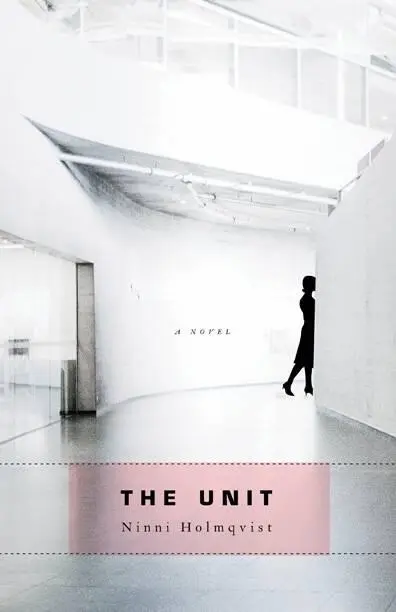
- Название:The Unit
- Автор:
- Жанр:
- Год:неизвестен
- ISBN:нет данных
- Рейтинг книги:3 / 5. Голосов: 1
-
Избранное:Добавить в избранное
- Отзывы:
-
Ваша оценка:
The Unit: краткое содержание, описание и аннотация
Предлагаем к чтению аннотацию, описание, краткое содержание или предисловие (зависит от того, что написал сам автор книги «The Unit»). Если вы не нашли необходимую информацию о книге — напишите в комментариях, мы постараемся отыскать её.
The Unit uncannily echoes its organ-donation-dystopia predecessor, Kazuo Ishiguro’s Never Let Me Go (2005); both imagine societies of extreme utilitarianism that plunder their margins for body parts, and both raise the prospect of art for art’s sake, and love for love’s, as weapons against such thinking. The Unit’s heroine, Dorrit, has chosen not to have children and thus “spill over like rising bread dough”; at the book’s opening, Dorrit’s independence has just earned her incarceration in the Unit, a death camp puzzlingly replete with art galleries and gourmet restaurants where her individualism seems to lapse into passivity.
Through flashbacks, we learn of all Dorrit has lost-her career as a novelist, her beloved dog, the small house she owned herself, the opportunities to save herself by becoming “useful” to society. These snippets of memory are interspersed with descriptions of the eponymous unit and its dying inhabitants, descriptions so matter-of-fact they lull. The novel grips toward the end when Dorrit finds love-and with it a potential escape-and makes a startling choice.
Dorrit’s play-by-play narration can be clunky in translation, but the spare, cumulative prose effectively reveals a character whose story can barely ward off the disintegration of the self it relates. Holmqvist cleverly makes that very self unreliable; The Unit is the latest in a trend of anti-heroic dystopias such as Never Let Me Go and P.D. James’s The Children of Men. In these novels of bad futures, the trustworthy memories of protagonists such as Nineteen Eighty-Four’s Winston Smith (“Airstrip One… had been called England or Britain, though London, [Winston] felt fairly certain, had always been called London”) are replaced by the self-delusions of narrators who mislead the reader and themselves lose control of the stories they are telling. In these novels, rebellion must be expressed obliquely. Like Kathy, the complacent carer of Never Let Me Go, who survives her childhood friends, nursing them as they donate all their organs, Dorrit displaces her anger onto a clearer-eyed friend who calls the Unit what it is, a “luxury slaughterhouse.”
While Holmqvist builds a powerfully imaginative scenario around the concept of killing off the childless, her message on gender roles is clumsy and unconvincing. In Dorrit’s world, flirting and other “typically male” behavior has been criminalized, and retrograde domestic fantasies have to be played out in secret, making the missionary position an act of transgression. We have come a long way from the rage of Margaret Atwood’s 1985 A Handmaid’s Tale, with its neo-Biblical America in which all women are forced either to bear children or to raise them. In today’s climate of threatened reproductive rights, a critique of compulsory motherhood would be welcome, but The Unit displays the same innate conservatism that is the pitfall of Never Let Me Go-a disturbing willingness to locate tragedy not in the horror of forced organ donation and premature death, but in Kathy and Dorrit’s lost opportunities to become mothers.
Copyright 2010 Fran Bigman
The Unit — читать онлайн бесплатно полную книгу (весь текст) целиком
Ниже представлен текст книги, разбитый по страницам. Система сохранения места последней прочитанной страницы, позволяет с удобством читать онлайн бесплатно книгу «The Unit», без необходимости каждый раз заново искать на чём Вы остановились. Поставьте закладку, и сможете в любой момент перейти на страницу, на которой закончили чтение.
Интервал:
Закладка:
I was woken by a shot, sat up in bed with a start and gazed around, half awake. It was still almost dark, not quite morning yet. It was Monday. A couple of weeks had passed since the exhibition.
A shot? Was that possible? Perhaps it was a dream. Or someone, one of my closest neighbors, slamming a door. But why should anyone be slamming doors in the middle of the night? Could the noise have come from outside? When it came down to it, I didn’t really know exactly where I was. I didn’t know what was outside the walls of the unit. Was it a village or a city? Was it just a forest? Or an industrial neighborhood? Nor did I know whether any of the walls of my apartment faced outward, if any were outside walls. The noise I had heard-the shot, the crash, the bang-could have been a bomb, an explosion, a truck carrying flammable goods crashing into another vehicle, springing a gas leak and blowing up. Perhaps there was a fire out there like the fires of hell, with thick black smoke. Poisonous. Was I in danger? Were we in danger? Probably not. In the end I decided it must have been a dream; I lay down and tried to get back to sleep. But it was impossible; I was wide-awake. So I got up, made some coffee and took a cup back to bed. Then I sat there under the duvet as the day slowly dawned, the light that was so very much like the real thing filtering in through the slats in the walls, and drank my morning coffee.
It almost felt like home. That’s the way my days used to begin. Well, they actually used to begin with me pulling on a pair of thermal pants and a padded jacket over my pajamas, ramming a hat with ear flaps firmly on my head, and going for a sleepy walk with Jock. But after that I would drink my coffee in bed as the day dawned. With my notepad close by.
I turned on the light, pulled out the drawer in the bedside table and lifted up the envelope containing the pictures of Nils, Jock, my house and my family, and took out my pad and my favorite pen. Then I put back the envelope, pushing away the thought of the photographs-I hadn’t looked at them since I arrived, and doubted that I ever would-and closed the drawer.
Then I began to write, but not my novel. I started a short story about a single woman around age forty-five who gives birth to a deformed child, not unlike the fetus in Majken’s painting, although the child in my story was not a fetus, but a fully developed child. Fully developed and born, but seriously deformed. Large parts of the brain were missing, as if they had been erased; it was only the centers for hunger and thirst and for certain other bodily functions such as swallowing and emptying the bladder and bowels that worked. It was uncertain whether the child would survive for weeks, days, hours. And if, against all the odds, it survived the first highly critical period, it would in all probability be completely helpless, unable to see, hear, smell, taste or feel, without the ability to recognize or make a connection with other people. An exhausting burden that would need looking after twenty-four hours a day throughout its entire life; the mother would never be able to manage its care without an enormous amount of support from society. The question was: Is this mother to be regarded as a parent in the practical, concrete meaning of the word? Is she to be regarded as needed? The question was: Is a person needed if she gives birth to a child that will never be able to bond with her, and will never be able to make any kind of contribution?
At about half past eleven I had to stop so that I could get dressed and eat a proper lunch to be able to cope with my afternoon session in the physical exercise experiment. In five hours I had filled three and a half pages; not bad. I tore them off the pad and placed them upside down in a plastic folder on the desk next to the computer. My intention was to type them up and continue the story the next morning.
I went to the Terrace. They usually had tasty, substantial salads. I chose one with tuna, eggs, peas, rice, iceberg lettuce and tomatoes, got myself a large glass of freshly squeezed fruit juice, and sat down in my favorite spot where you could see all the way to the lily pond in Monet’s garden.
At this time of day there was hardly anyone here; it wasn’t until about half past twelve that it started to get noisy and crowded. I had thought I might see Majken, since she usually ate lunch early as well. But she wasn’t here, nor did she turn up.
When I had eaten I went down into the winter garden, lay down on the lawn and looked up at the sky through the glass dome, then when it was time for me to take the elevator down to my exercise session I stopped off at level 2 to see if Majken was in her studio. I wanted to tell her that her picture of the deformed fetus had inspired me to start writing again. I thought she ought to know that, I felt it was important. Her studio was between the room where they edited films and a studio that was shared by two animators, Erik and Peder.
Majken’s door was ajar. I knocked but got no answer, so I pushed it open, and a heavy aroma of linseed oil, turpentine and charcoal dust struck me.
“Majken?” I called, but still there was no reply. Half finished and completed sketches and paintings were stacked along the walls. On an easel in the center of the room stood a painting that had just been started, while tubes of paint, jars containing clean brushes, other jars with the lids screwed on (presumably containing oil or turpentine), two palettes, and multicolored pieces of rag were crowded together on a small table beside the easel. There was a side room with a little kitchen and a sink where you could clean brushes and palettes. I went in, but that was empty too. It felt a little bit as if I was snooping, as if I was invading Majken’s private domain, which I was in fact, so after I had established that she wasn’t there, I hurried out.
On the way to the elevators I passed the animators’ studio, and knocked on their door.
“Yes?” I heard from inside.
I opened the door and stepped in. On a threadbare sofa crammed in between a drawing board and a computer desk, and surrounded by a mess of sketchpads, pens and pieces of chalk thrown down anywhere on the furniture and the floor, sat Erik along with Vanja. They were drinking coffee. Erik had his arm around Vanja’s shoulders. There was no sign of Peder.
“Have you seen Majken?” I asked.
“Not for a while,” replied Erik. “Maybe she’s gone to give blood. Shall I give her a message if she turns up?”
I said there was no need, I was bound to bump into her in H3 tonight. Then I left them and carried on to the elevators, went down to my exercise session and didn’t give Majken another thought until the day’s work-four hours on a rowing machine-was over, and I went home to section H3, exhausted and with trembling upper arms, and saw that Majken’s door was ajar, just as her studio door had been. The only difference was that through this door I could hear voices, two of them, neither belonging to Majken.
My legs started trembling now as well, and on these trembling legs, which were threatening to give way, I went over to the door and pushed it wide open.
Dick and Henrietta were in there. They were chatting away quite normally as they wandered around among Majken’s things, Henrietta with a black garbage bag, Dick with a big metal box on wheels-it reminded me of the kind of gurneylike contraption they use in hospitals to transport patients who’ve died, although this box was shorter and deeper.
Dick was the first to notice me, as I stood in the doorway.
“Oh dear!” he said, looking at me but speaking to Henrietta. “Looks like we forgot to lock the door.”
“Oh dear!” echoed Henrietta; she put down the bag, came over to me and took hold of my arms, tilted her head to one side and was presumably about to say something sympathetic, something comforting. But I didn’t want to hear it, so I tore myself free, turned on my heel, rushed into my room, slammed the door-hard-and turned the key. (This was a symbolic gesture more than anything, since all staff members had their own master key that opened all the residents’ rooms.)
Читать дальшеИнтервал:
Закладка:
Похожие книги на «The Unit»
Представляем Вашему вниманию похожие книги на «The Unit» списком для выбора. Мы отобрали схожую по названию и смыслу литературу в надежде предоставить читателям больше вариантов отыскать новые, интересные, ещё непрочитанные произведения.










Обсуждение, отзывы о книге «The Unit» и просто собственные мнения читателей. Оставьте ваши комментарии, напишите, что Вы думаете о произведении, его смысле или главных героях. Укажите что конкретно понравилось, а что нет, и почему Вы так считаете.