Ninni Holmqvist - The Unit
Здесь есть возможность читать онлайн «Ninni Holmqvist - The Unit» весь текст электронной книги совершенно бесплатно (целиком полную версию без сокращений). В некоторых случаях можно слушать аудио, скачать через торрент в формате fb2 и присутствует краткое содержание. Жанр: Современная проза, на английском языке. Описание произведения, (предисловие) а так же отзывы посетителей доступны на портале библиотеки ЛибКат.
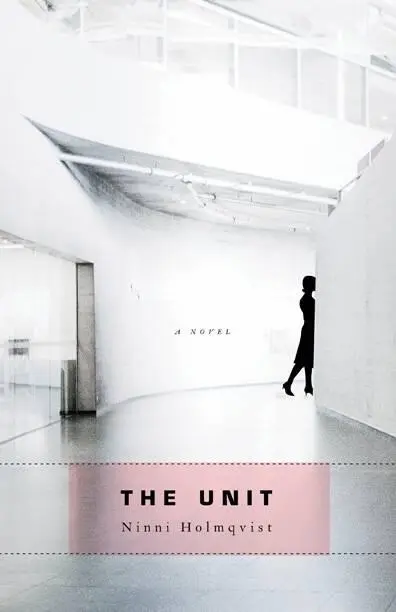
- Название:The Unit
- Автор:
- Жанр:
- Год:неизвестен
- ISBN:нет данных
- Рейтинг книги:3 / 5. Голосов: 1
-
Избранное:Добавить в избранное
- Отзывы:
-
Ваша оценка:
The Unit: краткое содержание, описание и аннотация
Предлагаем к чтению аннотацию, описание, краткое содержание или предисловие (зависит от того, что написал сам автор книги «The Unit»). Если вы не нашли необходимую информацию о книге — напишите в комментариях, мы постараемся отыскать её.
The Unit uncannily echoes its organ-donation-dystopia predecessor, Kazuo Ishiguro’s Never Let Me Go (2005); both imagine societies of extreme utilitarianism that plunder their margins for body parts, and both raise the prospect of art for art’s sake, and love for love’s, as weapons against such thinking. The Unit’s heroine, Dorrit, has chosen not to have children and thus “spill over like rising bread dough”; at the book’s opening, Dorrit’s independence has just earned her incarceration in the Unit, a death camp puzzlingly replete with art galleries and gourmet restaurants where her individualism seems to lapse into passivity.
Through flashbacks, we learn of all Dorrit has lost-her career as a novelist, her beloved dog, the small house she owned herself, the opportunities to save herself by becoming “useful” to society. These snippets of memory are interspersed with descriptions of the eponymous unit and its dying inhabitants, descriptions so matter-of-fact they lull. The novel grips toward the end when Dorrit finds love-and with it a potential escape-and makes a startling choice.
Dorrit’s play-by-play narration can be clunky in translation, but the spare, cumulative prose effectively reveals a character whose story can barely ward off the disintegration of the self it relates. Holmqvist cleverly makes that very self unreliable; The Unit is the latest in a trend of anti-heroic dystopias such as Never Let Me Go and P.D. James’s The Children of Men. In these novels of bad futures, the trustworthy memories of protagonists such as Nineteen Eighty-Four’s Winston Smith (“Airstrip One… had been called England or Britain, though London, [Winston] felt fairly certain, had always been called London”) are replaced by the self-delusions of narrators who mislead the reader and themselves lose control of the stories they are telling. In these novels, rebellion must be expressed obliquely. Like Kathy, the complacent carer of Never Let Me Go, who survives her childhood friends, nursing them as they donate all their organs, Dorrit displaces her anger onto a clearer-eyed friend who calls the Unit what it is, a “luxury slaughterhouse.”
While Holmqvist builds a powerfully imaginative scenario around the concept of killing off the childless, her message on gender roles is clumsy and unconvincing. In Dorrit’s world, flirting and other “typically male” behavior has been criminalized, and retrograde domestic fantasies have to be played out in secret, making the missionary position an act of transgression. We have come a long way from the rage of Margaret Atwood’s 1985 A Handmaid’s Tale, with its neo-Biblical America in which all women are forced either to bear children or to raise them. In today’s climate of threatened reproductive rights, a critique of compulsory motherhood would be welcome, but The Unit displays the same innate conservatism that is the pitfall of Never Let Me Go-a disturbing willingness to locate tragedy not in the horror of forced organ donation and premature death, but in Kathy and Dorrit’s lost opportunities to become mothers.
Copyright 2010 Fran Bigman
The Unit — читать онлайн бесплатно полную книгу (весь текст) целиком
Ниже представлен текст книги, разбитый по страницам. Система сохранения места последней прочитанной страницы, позволяет с удобством читать онлайн бесплатно книгу «The Unit», без необходимости каждый раз заново искать на чём Вы остановились. Поставьте закладку, и сможете в любой момент перейти на страницу, на которой закончили чтение.
Интервал:
Закладка:
Beneath a cedar tree a small group of people were sitting on a blanket having a picnic. A little way off a man on his own was lying on his stomach, also on a blanket, reading a book. I lay down on my back on the slightly damp grass which smelled of earth. I lay there with one leg draped over the other, gazing up at the sky through the leaded glass dome. It was striped, the dome, with running water. It was raining up there, out there, raining on the glass. Through the stripes I could see gray, sodden banks of cloud scudding across the sky. It wasn’t only raining, it was blowing too. Hard. It looked as if it was almost storm force. I would have guessed it was blowing at maybe thirty-five miles per hour. But in here, down here where I was, everything was still. There was no wind to speak of here, and no rain of course, just a faintly humming air-conditioning system, but you could hardly hear it at this time of day when the air was filled with different sounds: people moving about, people chatting, bees, birds. Watering took place at night, automatically and in accordance with a carefully planned schedule.
It was pleasantly warm, very easy to relax. I was lying there half asleep when I felt a movement in the grass just behind my head: light, running steps, and in some strange, dreamlike way I was in my garden back at home, while at the same time I was here in the unit’s winter garden; I was lying on the grass resting and it was summer, and the steps behind my head moved away, then came back, came closer, and closer still, and I heard the faint panting, felt the nose nudge my hair, the warm breath against my scalp, and I smiled and turned, but there was no one there. No dog. No person. No bird. Not even a mouse or a beetle. Nothing. I felt a sharp stabbing pain in my chest. But I steeled myself and managed to quell the impulse to sit up. I didn’t even press my hand against my chest, but forced myself to lie still and focus my attention on the weather and the wind up there on the other side.
It was still raining. The racing clouds were darker now, shading from gray into blue-black. I realized it was twilight. The air quickly grew cooler and damper-an artificial dew came down-and when I eventually sat up it had grown dark around me. The picnic group was packing their things away. They were shadowy figures, silhouettes, until the lampposts around the lawn flickered into life and spread a yellowish muted glow over them. Then I saw that Alice was among the group. I hadn’t seen her since the party almost a week ago.
Just as I got up and shouted to her and she turned and peered in my direction, I suddenly thought, “What if she doesn’t recognize me, what if she doesn’t remember me!”
This had happened before, it had happened quite often, out in the community; I would say hi to people who didn’t recognize me, despite the fact that they’d been sitting opposite me at a party or some other event just a few days ago. But as soon as Alice caught sight of me her face brightened, and she waved and shouted “Hi Dorrit!” and came over.
“If I’d known you were here earlier,” she said, “we could have invited you to share Ellen’s delicious raspberry pie. But it’s all gone, unfortunately.”
“I’ve only just seen you,” I said. “Besides, I needed to be on my own for a while. It was that big health check today.”
“Oh right, how did it go?” said Alice.
I told her about the exercise experiment.
“Wow! Congratulations!” Alice raised her hand and we gave each other a high five. “Does it feel good?”
“It feels absolutely fine,” I replied.
“ Alice!” shouted one of her companions, who had gathered up the blankets and baskets and was ready to leave. “You won’t forget your injections?”
“No, I’m coming now!” Alice called back, then she turned to me: “I’m involved in some test with male hormones. Don’t ask me what it’s all about, because it’s so complicated that I’ve forgotten, but I presume I’ll soon end up with a beard and a hairy chest.”
Just as she said that I realized her voice was slightly deeper than it had been on Saturday at the party.
“See you around!” she said, starting to move away, but then she stopped herself. “But I’ll see you at the opening of the exhibition the day after tomorrow, won’t I?” she said. “Majken’s exhibition. You are coming?”
“Of course,” I said. “Good luck with the jabs.”
She gave me the thumbs-up sign in reply, turned and walked away.
I also set off across the lawn, but in the opposite direction. The man with the book had fallen asleep. He was still lying on his stomach. I stopped, hesitated. Should I wake him up, or leave him alone? He’d get cold, lying there. But maybe he wanted to be left in peace? I set off again. But he was lying so very still. What if he was ill? It was probably best to check after all.
When I got right up to the man I could see it was Johannes. He was lying with his cheek resting on the right-hand page of the book. I knelt down beside him, and a glance at the left page told me it was a play he was reading; I caught sight of a line roughly halfway down the page: “People who stand at a stove all day get tired when night comes. And sleep is something to be respected…”
I could have taken that as a message, an indication that I shouldn’t disturb him. But Johannes was lying so strangely still and-it seemed to me-not breathing, and for a moment I was afraid that… well, I feared the worst, as they say, and I spontaneously put my hand on his shoulder and shook him gently.
“Johannes?”
“Mm… what is it, Wilma?” he mumbled from somewhere inside a dream.
“It’s not Wilma,” I said. “It’s Dorrit. Are you okay?”
“Dorrit…?” He stirred, raised his head, opened his eyes, first one, then the other. “Oh, Dorrit, my dancing queen. Hi there.”
He winked with one eye, either flirting or still half asleep-I couldn’t decide which, but went for the latter. Then he rolled over onto his back and sat up. He was supple, I noticed: how supple his body was, not stiff at all after lying there sleeping on the damp grass. But his thin white hair was standing on end and his face looked worn-slightly more so than the previous evening, when Elsa and I had met him while we were having dinner in the restaurant.
“How’s it going?” I asked.
“Oh, I’m just really tired. Hey, it’s gotten dark. Time passes, Dorrit.”
“Yes,” I said. “It does.”
He got to his feet, closed his book, shook and folded his blanket, then we walked together through the garden toward one of the exits. He told me about the psychological experiment he was participating in.
“It’s just a series of tiring exercises in cooperation, loyalty and trust. I don’t know what they think they’re going to get out of conducting this kind of experiment here. I mean, none of us here understand the business of trust. Do you?”
I laughed. “No, to be honest I don’t suppose I do. I’ve never understood why it’s regarded as such a good thing, being able to rely on other people. To me it just sounds naive.”
“Exactly,” said Johannes. “And loyalty? What do you think about that? Isn’t it just a kind of blindness, in actual fact?”
“Or another name for dependence,” I said. “And being at a disadvantage. An expression for obsequious respect. Perhaps even fear.”
Johannes sighed. “You should see us trying to solve a problem together. Or attempting to reach a common standpoint on some issue. You can’t imagine how much babbling it takes! It makes my ears hurt. That’s why I get so tired. Do you know what I mean?”
I knew.
“But I shouldn’t complain,” said Johannes. “At least there’s no physical danger, no chemicals and no scalpels involved. But how are things with you, Dorrit? What’s happening with you?”
Читать дальшеИнтервал:
Закладка:
Похожие книги на «The Unit»
Представляем Вашему вниманию похожие книги на «The Unit» списком для выбора. Мы отобрали схожую по названию и смыслу литературу в надежде предоставить читателям больше вариантов отыскать новые, интересные, ещё непрочитанные произведения.









Обсуждение, отзывы о книге «The Unit» и просто собственные мнения читателей. Оставьте ваши комментарии, напишите, что Вы думаете о произведении, его смысле или главных героях. Укажите что конкретно понравилось, а что нет, и почему Вы так считаете.