Ninni Holmqvist - The Unit
Здесь есть возможность читать онлайн «Ninni Holmqvist - The Unit» весь текст электронной книги совершенно бесплатно (целиком полную версию без сокращений). В некоторых случаях можно слушать аудио, скачать через торрент в формате fb2 и присутствует краткое содержание. Жанр: Современная проза, на английском языке. Описание произведения, (предисловие) а так же отзывы посетителей доступны на портале библиотеки ЛибКат.
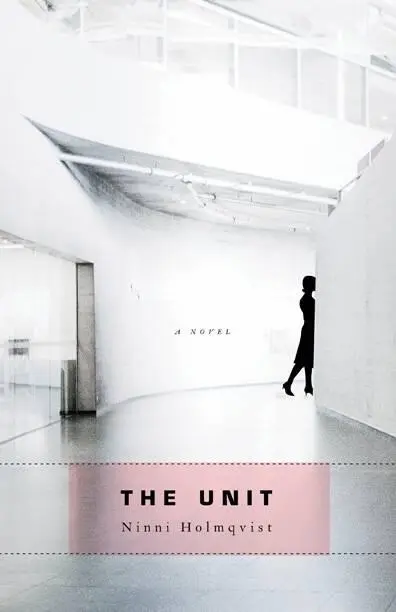
- Название:The Unit
- Автор:
- Жанр:
- Год:неизвестен
- ISBN:нет данных
- Рейтинг книги:3 / 5. Голосов: 1
-
Избранное:Добавить в избранное
- Отзывы:
-
Ваша оценка:
The Unit: краткое содержание, описание и аннотация
Предлагаем к чтению аннотацию, описание, краткое содержание или предисловие (зависит от того, что написал сам автор книги «The Unit»). Если вы не нашли необходимую информацию о книге — напишите в комментариях, мы постараемся отыскать её.
The Unit uncannily echoes its organ-donation-dystopia predecessor, Kazuo Ishiguro’s Never Let Me Go (2005); both imagine societies of extreme utilitarianism that plunder their margins for body parts, and both raise the prospect of art for art’s sake, and love for love’s, as weapons against such thinking. The Unit’s heroine, Dorrit, has chosen not to have children and thus “spill over like rising bread dough”; at the book’s opening, Dorrit’s independence has just earned her incarceration in the Unit, a death camp puzzlingly replete with art galleries and gourmet restaurants where her individualism seems to lapse into passivity.
Through flashbacks, we learn of all Dorrit has lost-her career as a novelist, her beloved dog, the small house she owned herself, the opportunities to save herself by becoming “useful” to society. These snippets of memory are interspersed with descriptions of the eponymous unit and its dying inhabitants, descriptions so matter-of-fact they lull. The novel grips toward the end when Dorrit finds love-and with it a potential escape-and makes a startling choice.
Dorrit’s play-by-play narration can be clunky in translation, but the spare, cumulative prose effectively reveals a character whose story can barely ward off the disintegration of the self it relates. Holmqvist cleverly makes that very self unreliable; The Unit is the latest in a trend of anti-heroic dystopias such as Never Let Me Go and P.D. James’s The Children of Men. In these novels of bad futures, the trustworthy memories of protagonists such as Nineteen Eighty-Four’s Winston Smith (“Airstrip One… had been called England or Britain, though London, [Winston] felt fairly certain, had always been called London”) are replaced by the self-delusions of narrators who mislead the reader and themselves lose control of the stories they are telling. In these novels, rebellion must be expressed obliquely. Like Kathy, the complacent carer of Never Let Me Go, who survives her childhood friends, nursing them as they donate all their organs, Dorrit displaces her anger onto a clearer-eyed friend who calls the Unit what it is, a “luxury slaughterhouse.”
While Holmqvist builds a powerfully imaginative scenario around the concept of killing off the childless, her message on gender roles is clumsy and unconvincing. In Dorrit’s world, flirting and other “typically male” behavior has been criminalized, and retrograde domestic fantasies have to be played out in secret, making the missionary position an act of transgression. We have come a long way from the rage of Margaret Atwood’s 1985 A Handmaid’s Tale, with its neo-Biblical America in which all women are forced either to bear children or to raise them. In today’s climate of threatened reproductive rights, a critique of compulsory motherhood would be welcome, but The Unit displays the same innate conservatism that is the pitfall of Never Let Me Go-a disturbing willingness to locate tragedy not in the horror of forced organ donation and premature death, but in Kathy and Dorrit’s lost opportunities to become mothers.
Copyright 2010 Fran Bigman
The Unit — читать онлайн бесплатно полную книгу (весь текст) целиком
Ниже представлен текст книги, разбитый по страницам. Система сохранения места последней прочитанной страницы, позволяет с удобством читать онлайн бесплатно книгу «The Unit», без необходимости каждый раз заново искать на чём Вы остановились. Поставьте закладку, и сможете в любой момент перейти на страницу, на которой закончили чтение.
Интервал:
Закладка:
I was judged somatically healthy, even though my iron levels were a fraction low, but not below normal; I was just above average for the dispensable when it came to strength, and well above when it came to fitness.
But during a short conversation with Nurse Lis-we all had a brief chat with one of the nurses at the end of the day-I was assigned to a psychologist. And as if that weren’t bad enough, I was already booked for a session with him the following day after lunch. This was because on the questionnaire I had ticked to say that I felt quite anxious and depressed. We had to choose one of these alternatives: I feel: 1) not at all anxious, 2) anxious sometimes, 3) slightly anxious, 4) quite anxious, 5) extremely anxious, 6) unbearably anxious, and the same for the extent to which we felt depressed, stressed and tired.
“If you’ve ticked number four, five or six for at least two of the statements, an interview with a psychologist is automatically arranged,” explained Nurse Lis.
“But,” I said, “isn’t everybody here more or less anxious and depressed? I mean, wouldn’t you say that was normal?”
Nurse Lis tilted her head to one side, her dreadlocks dangling. She smiled with her mouth open. She had dimples and small white teeth. She looked like a child when she smiled.
“You’re right, Dorrit,” she said. “Most people here get depressed now and again. And that’s why we’ve got a dozen or so psychologists attached to the unit. We want you all to feel as good as possible. In body and soul. They go together, as you know. Isn’t that right?”
“Yes,” I said.
I got ready to get up and leave. The sweat had dried on my clothes, and I felt smelly and cold and wanted to have a hot shower and put on something clean. But Nurse Lis had something more to say, so I stayed put.
“We have a suggestion for you,” she said. “A group of researchers are working on an experiment here; they need more people with physical stamina, and we think you’d be suitable.”
“Right,” I said. “And that would involve…?”
“In purely practical terms,” replied Nurse Lis, “it would involve devoting yourself to physical exercise every afternoon for a comparatively long period of time-we’re talking about roughly two months. Pretty intensive exercise, from what I understand, because the point is that you become virtually exhausted, and then the level of various minerals and hormones in the body is measured. In other words, it’s not that different from what you’ve been doing here today. The researchers want to investigate which nutrients and hormones are lacking and which the body produces itself or releases during intensive exercise. And how this lack or production works out over a period of time, and in relation to the subject’s weight, sex and basic fitness. What do we gain and what do we lose from regular intensive physical activity, to put it simply.”
I was surprised. This offer sounded too good to be true.
“And where’s the catch?” I said.
Lis laughed, delighted, as if I’d asked the very question she wanted to answer most of all.
“There is no catch,” she said. “It’s difficult to get hold of volunteers for these studies out in the community, even for something as safe and comparatively pleasant as this. People are just too busy. It’s partly because it does take up quite a bit of time: four hours a day, five days a week for a couple of months. And partly because you’re going to get tired, and presumably will need to sleep and eat more than usual. And what person who is needed has time for that? Young people might volunteer if there was some kind of compensation, and top sportsmen of course, but they’re not the groups the researchers are interested in for this study; they want middle-aged people who are comparatively fit.”
She paused briefly. Then she asked:
“Well then, Dorrit. What do you think?”
I realized of course that this project would keep me off the operating table for a couple of months. It also sounded like a dream-exercising, eating and sleeping a lot. So my answer didn’t need too much consideration. But I didn’t want to sound too grateful or enthusiastic, so I drew it out a little bit.
“Well…,” I said. “I suppose I could give it a go.”
“Fantastic!” said Lis. “In that case, you start tomorrow afternoon at two o’clock. That will be immediately after you’ve seen Arnold.”
“ Arnold?”
“Your psychologist. Arnold Backhaus. The research group works in lab 8. If you come here after you’ve seen Arnold, I’ll take you over there. I’m actually”-and she said this in the tone of voice you use when you’re passing on something that you expect will be an enormous and wonderful surprise to the listener-“starting as an assistant on this particular experiment tomorrow!”
She smiled her dimpled smile. Her eyes sparkled. I couldn’t make any sense of her at all.
When I passed the waiting room on my way out, I stopped and looked at the appliqué landscape with the flocks of birds forming a face. The face seemed familiar to me, but I couldn’t work out who it resembled. On the other hand, I was almost completely certain that the picture had been created by Siv.
3
I took a shower. It was the first time I’d done that alone, and in my own bathroom. Up to now I’d showered at the pool or in the sports complex, surrounded by other naked women the whole time. Now, with no one to talk to, I became very aware of the surveillance cameras, and in my mind’s eye I could see someone sitting in a control tower somewhere in front of a bank of monitors, closely observing the particular monitor that showed me showering in my bathroom. It was as if I were showering for someone else, doing some kind of number, putting on a live show. It wasn’t exactly unpleasant, but it gave me a feeling of unreality, as if I were playing the role of a person showering rather than actually showering.
By this stage I had already managed to get used to going to the toilet without bothering about the surveillance; I simply took it for granted that whenever a resident did something as intimate as carrying out their bodily functions, any observer would look away discreetly and turn their attention to another monitor.
After drying myself and putting on clean clothes, I realized I was hungry and thirsty. My first impulse was to go to the restaurant and eat a meal that someone else had cooked, but halfway out the door I stopped myself.
If I’ve managed to take a shower alone, I thought, I might as well try to eat on my own as well. So I closed the door, walked resolutely through the living room to the kitchenette, took a packet of crackers out of the cabinet and butter, cheese and orange juice out of the refrigerator. Poured myself a big glass. Drank it standing by the sink. Then I spread butter on a cracker, sliced some Port Salut and placed it on top. Ate-still standing, but leaning against the counter facing the room. Chewed. The hard cracker crunching between my teeth. When I’d finished I made another one the same. Then I remembered that I had some tomatoes, so I got one out, cut it into four thick slices, and placed two of them on top of the cheese. Ate. Poured another glass of juice. Just as I raised the glass to my lips, I happened to catch sight of one of the small camera lenses up in the corner of the ceiling. It was pointing straight at me.
I took the glass away from my mouth, raised it in the air, said “Cheers!” and drank. Then I made another cracker sandwich with cheese and the remaining two slices of tomato, turned my back to the camera, and ate. I was full after that, and I didn’t know what to do next, so I put the butter, cheese and juice back in the refrigerator and went out anyway.
I took the elevator up to the Atrium Walkway, went through one of the airlocks into the winter garden. Ambled-I made a real effort to walk slowly, strolling rather than behaving like someone consciously chasing the body’s endorphins-along the gravel paths through arbors and shrubbery and past little fountains and marble benches where people were sitting chatting or reading; they would look up and nod or say hi as I wandered past and on into other darker, bushy areas. I stopped by a hibiscus with enormous flowers, pointing their stamens at me in a challenging way. A bumblebee, buzzing heavily, found its way right inside one of the flowers, where it fell silent for a moment before tumbling out, buzzing once again, and flew away. I moved on, nodding, smiling or saying hi to the people I met. I knew some of them already. I recognized most of them. There were a few I hadn’t seen before. One or two I was seeing for the last time. I passed the olive grove, then spent a long time walking slowly among the extravagant flowerbeds. The whole time I was inhaling different scents: cypress, rose, jasmine, lavender, eucalyptus. I walked through the citrus grove and finally reached the big lawn.
Читать дальшеИнтервал:
Закладка:
Похожие книги на «The Unit»
Представляем Вашему вниманию похожие книги на «The Unit» списком для выбора. Мы отобрали схожую по названию и смыслу литературу в надежде предоставить читателям больше вариантов отыскать новые, интересные, ещё непрочитанные произведения.










Обсуждение, отзывы о книге «The Unit» и просто собственные мнения читателей. Оставьте ваши комментарии, напишите, что Вы думаете о произведении, его смысле или главных героях. Укажите что конкретно понравилось, а что нет, и почему Вы так считаете.