Ninni Holmqvist - The Unit
Здесь есть возможность читать онлайн «Ninni Holmqvist - The Unit» весь текст электронной книги совершенно бесплатно (целиком полную версию без сокращений). В некоторых случаях можно слушать аудио, скачать через торрент в формате fb2 и присутствует краткое содержание. Жанр: Современная проза, на английском языке. Описание произведения, (предисловие) а так же отзывы посетителей доступны на портале библиотеки ЛибКат.
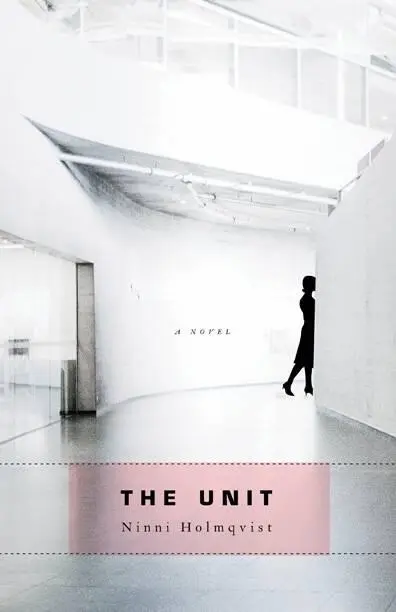
- Название:The Unit
- Автор:
- Жанр:
- Год:неизвестен
- ISBN:нет данных
- Рейтинг книги:3 / 5. Голосов: 1
-
Избранное:Добавить в избранное
- Отзывы:
-
Ваша оценка:
The Unit: краткое содержание, описание и аннотация
Предлагаем к чтению аннотацию, описание, краткое содержание или предисловие (зависит от того, что написал сам автор книги «The Unit»). Если вы не нашли необходимую информацию о книге — напишите в комментариях, мы постараемся отыскать её.
The Unit uncannily echoes its organ-donation-dystopia predecessor, Kazuo Ishiguro’s Never Let Me Go (2005); both imagine societies of extreme utilitarianism that plunder their margins for body parts, and both raise the prospect of art for art’s sake, and love for love’s, as weapons against such thinking. The Unit’s heroine, Dorrit, has chosen not to have children and thus “spill over like rising bread dough”; at the book’s opening, Dorrit’s independence has just earned her incarceration in the Unit, a death camp puzzlingly replete with art galleries and gourmet restaurants where her individualism seems to lapse into passivity.
Through flashbacks, we learn of all Dorrit has lost-her career as a novelist, her beloved dog, the small house she owned herself, the opportunities to save herself by becoming “useful” to society. These snippets of memory are interspersed with descriptions of the eponymous unit and its dying inhabitants, descriptions so matter-of-fact they lull. The novel grips toward the end when Dorrit finds love-and with it a potential escape-and makes a startling choice.
Dorrit’s play-by-play narration can be clunky in translation, but the spare, cumulative prose effectively reveals a character whose story can barely ward off the disintegration of the self it relates. Holmqvist cleverly makes that very self unreliable; The Unit is the latest in a trend of anti-heroic dystopias such as Never Let Me Go and P.D. James’s The Children of Men. In these novels of bad futures, the trustworthy memories of protagonists such as Nineteen Eighty-Four’s Winston Smith (“Airstrip One… had been called England or Britain, though London, [Winston] felt fairly certain, had always been called London”) are replaced by the self-delusions of narrators who mislead the reader and themselves lose control of the stories they are telling. In these novels, rebellion must be expressed obliquely. Like Kathy, the complacent carer of Never Let Me Go, who survives her childhood friends, nursing them as they donate all their organs, Dorrit displaces her anger onto a clearer-eyed friend who calls the Unit what it is, a “luxury slaughterhouse.”
While Holmqvist builds a powerfully imaginative scenario around the concept of killing off the childless, her message on gender roles is clumsy and unconvincing. In Dorrit’s world, flirting and other “typically male” behavior has been criminalized, and retrograde domestic fantasies have to be played out in secret, making the missionary position an act of transgression. We have come a long way from the rage of Margaret Atwood’s 1985 A Handmaid’s Tale, with its neo-Biblical America in which all women are forced either to bear children or to raise them. In today’s climate of threatened reproductive rights, a critique of compulsory motherhood would be welcome, but The Unit displays the same innate conservatism that is the pitfall of Never Let Me Go-a disturbing willingness to locate tragedy not in the horror of forced organ donation and premature death, but in Kathy and Dorrit’s lost opportunities to become mothers.
Copyright 2010 Fran Bigman
The Unit — читать онлайн бесплатно полную книгу (весь текст) целиком
Ниже представлен текст книги, разбитый по страницам. Система сохранения места последней прочитанной страницы, позволяет с удобством читать онлайн бесплатно книгу «The Unit», без необходимости каждый раз заново искать на чём Вы остановились. Поставьте закладку, и сможете в любой момент перейти на страницу, на которой закончили чтение.
Интервал:
Закладка:
And as we left the Atrium Walkway via one of the warm air locks, I told him about the exercise experiment and was congratulated once again, only this time with a hug instead of a high five, a hard, warm hug that smelled of a man, and I became… what did I become? Not sexually aroused, but not far from it, something along those lines at any rate. My head was buzzing, it was like being dizzy, and a quiver ran through my body-a hormone specialist would presumably say I was reacting to Johannes’s pheromones-and I suddenly felt embarrassed. When he let go of me I didn’t quite know where to look.
To cover my embarrassment I asked him if he was going to Majken’s exhibition on Saturday.
“Are you going?” he asked me.
I told him I was.
“In that case I’ll come,” he replied, winking at me, and this time it couldn’t be because he was half asleep, so I said as firmly as I could:
“Are you flirting with me, Johannes?”
He smiled. Tilted his head to one side and said:
“What do you think?”
Out in the community I could have reported a man behaving like this for sexism or mild harassment-in fact I would virtually have been forced to do so. For the first time I was glad-yes, glad-that I wasn’t out in the community, because I have always felt secretly flattered when men flirt with me; it makes me feel happy and sort of soft all over my body-soft in the same way as when I put on my black dress, nylon stockings and high-heeled shoes.
But despite my pleasure, despite the fact that I was flattered, I attempted to maintain an indignant facade, and looked sternly at Johannes.
But he just laughed at me and I blushed and looked away and felt completely foolish. To my shame, however, I liked it-which made me feel even more foolish; I felt like one of those silly women in old films, capable of nothing but giggling and fainting and busying themselves in the house and being seduced. And suddenly I thought of the cameras and microphones which, even if no one happened to be watching us right now, registered everything. I was worried that my body language would have consequences for me.
As if Johannes had read my mind, he said:
“Nobody minds, Dorrit. Haven’t you realized that yet? Not here.” And in a teasing, almost mocking tone of voice he added:
“You can be yourself here, totally yourself.”
I considered whether to pretend that I didn’t understand what he meant, to say that he had misinterpreted me and was presuming things about me that were untrue. But instead I just mumbled: “Okay…”
And so we separated. He went toward elevator F. I watched him go. He turned, winked. I couldn’t help smiling in response.
I was just on my way to elevator H to head home when I remembered that I had no idea how Elsa’s conversation with the nurse had gone, so I went to look for her instead.
She wasn’t in her room in section A1, so I knocked on other doors until I found someone who had seen her. She had gone off with a small bag in one hand and a bathing towel around her shoulders.
I found her in the sauna by the swimming pool along with Lena, a cheerful woman with white, short, unruly hair and eyes as bright as a squirrel’s, and Vanja, whose appearance was the exact opposite of Lena ’s: a serious expression and iron gray hair caught up in a long braid.
“Hi Dorrit!” said Elsa when she spotted me in the doorway. “Come on in and sit down!”
I grabbed a towel, got undressed, took a shower, stepped into the dry heat and sat down on one of the top wooden benches.
We chatted for a while about this and that. Eventually Vanja left, then Lena, and Elsa and I were left on our own. I was sweating like mad, and kept wiping my forehead so that the sweat wouldn’t run into my eyes; I enjoyed the feeling of little rivulets of sweat trickling down my spine and between my breasts.
“How did things go for you today, Elsa?” I asked. “The chat with the nurse, I mean.”
“Oh, I think I got lucky,” she said. “I’m joining an experiment that’s already under way, where they want more so-called ordinary people, people who’ve been in employment and are used to colleagues and compromises and fixed working hours, that sort of thing. It’s to do with testing people’s ability to work together, and with mutual trust and loyalty. Working in a group to allocate and delegate tasks in order to solve a problem together. It sounds really interesting, actually.”
“That must be the one Johannes is involved in,” I said.
“Oh yes? How does he find it?”
“Too much time spent talking rubbish, according to him. But completely safe, of course. It’s just that he gets very tired.”
I told her about finding him lying on his stomach on the grass, fast asleep, and Elsa laughed.
“I’ve got nothing against getting tired,” she said.
“Me neither,” I said.
4
“Who’s Wilma?” I asked.
Johannes turned quickly to face me; his expression was surprised, but there was something else, something strained, like anger or suspicion, and I immediately regretted asking.
We were standing in front of one of Majken’s paintings, each of us with a sparkling fruit drink in our hand. The picture showed a skinny old woman in a hospital bed. She was lying on her side in the fetal position, her arms and legs locked in contractures-the picture was actually called Contractures . The woman was wearing green incontinence pants; apart from that she was naked. Above her, in the air, a shoal of white, long-tailed sperm was circulating.
“What do you know about Wilma?” asked Johannes.
“Nothing. When I woke you up on the lawn the other day, you said: ‘What is it, Wilma?’”
“Oh!” His expression softened, his eyes became calm again, less watchful.
“Wilma is my niece,” he said.
“Right,” I said. I wanted to ask questions-How old is she? Did you see her often? Did you get on well? Did you look after her sometimes? The questions stuck in my throat. I wanted to know what it was like to be close to a child, to be part of its social network, to look after a little relative, to be woken up by a niece or nephew who wanted to play with you or wanted help with something.
I had hardly ever seen my own nieces and nephews, let alone looked after them. After our parents died-with less than a year between them, first my father, then my mother-the gaps between telephone calls, letters, e-mails and visits grew longer and longer. It became clear that our parents had been the link that held us together, and when they were gone there was no longer anything for us to gather around or stick together for. Ole, Ida and Jens had been living in Brussels, London and Helsinki respectively with their families for a long time, and were very busy with their careers, which had vague titles like management consultant and marketing operator. I had never been to visit any of them, and couldn’t even imagine one of their children waking me up by gently shaking my shoulder and saying: “Dorrit? Auntie Dorrit?” The concept was just as unreal as the idea of a child shaking me and saying “Mom!”
At any rate, I just couldn’t bring myself to ask Johannes any more questions about Wilma.
After a little while we moved on to the next picture. It showed another woman, significantly younger; she was dressed in a long white dress and a tulle veil, and was swimming underwater with a net, chasing another shoal of sperm, but this time they were trying to escape from her. The sperm with their wriggling tails were swimming away from the woman and her net. This one was titled Fertile .
The next painting was small, around twelve inches square, and showed a bluish fetus in its fetal sac, against a warm, blood-red background with blue veins. The fetus was shown in profile, but was twisted in an unnatural shape: the narrow, still transparent arms and legs were bent into the fetal position, while the upper body and head were turned to the front, facing the observer. The head was also bent slightly backward, and the slanting, very dark oval eyes were squinting unseeing, it seemed to me, in different directions. The nose was a still-undeveloped bump without nostrils in the middle of the pale blue face, with its thin, downy skin. And the mouth was the most striking part-unnaturally wide with full red lips, locked in a twisted, gaping expression, perhaps a tortured grimace, perhaps a scornful grin, it was hard to decide. It was also difficult to decide whether the fetus was dead or dying, or capable of life but severely deformed. I leaned forward to read the title: To be or not to be-that is the question.
Читать дальшеИнтервал:
Закладка:
Похожие книги на «The Unit»
Представляем Вашему вниманию похожие книги на «The Unit» списком для выбора. Мы отобрали схожую по названию и смыслу литературу в надежде предоставить читателям больше вариантов отыскать новые, интересные, ещё непрочитанные произведения.










Обсуждение, отзывы о книге «The Unit» и просто собственные мнения читателей. Оставьте ваши комментарии, напишите, что Вы думаете о произведении, его смысле или главных героях. Укажите что конкретно понравилось, а что нет, и почему Вы так считаете.