Ninni Holmqvist - The Unit
Здесь есть возможность читать онлайн «Ninni Holmqvist - The Unit» весь текст электронной книги совершенно бесплатно (целиком полную версию без сокращений). В некоторых случаях можно слушать аудио, скачать через торрент в формате fb2 и присутствует краткое содержание. Жанр: Современная проза, на английском языке. Описание произведения, (предисловие) а так же отзывы посетителей доступны на портале библиотеки ЛибКат.
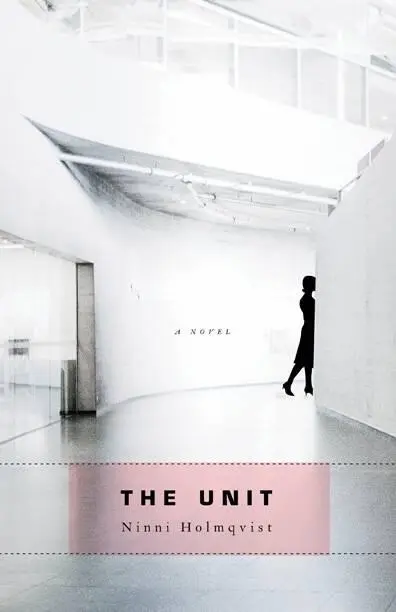
- Название:The Unit
- Автор:
- Жанр:
- Год:неизвестен
- ISBN:нет данных
- Рейтинг книги:3 / 5. Голосов: 1
-
Избранное:Добавить в избранное
- Отзывы:
-
Ваша оценка:
The Unit: краткое содержание, описание и аннотация
Предлагаем к чтению аннотацию, описание, краткое содержание или предисловие (зависит от того, что написал сам автор книги «The Unit»). Если вы не нашли необходимую информацию о книге — напишите в комментариях, мы постараемся отыскать её.
The Unit uncannily echoes its organ-donation-dystopia predecessor, Kazuo Ishiguro’s Never Let Me Go (2005); both imagine societies of extreme utilitarianism that plunder their margins for body parts, and both raise the prospect of art for art’s sake, and love for love’s, as weapons against such thinking. The Unit’s heroine, Dorrit, has chosen not to have children and thus “spill over like rising bread dough”; at the book’s opening, Dorrit’s independence has just earned her incarceration in the Unit, a death camp puzzlingly replete with art galleries and gourmet restaurants where her individualism seems to lapse into passivity.
Through flashbacks, we learn of all Dorrit has lost-her career as a novelist, her beloved dog, the small house she owned herself, the opportunities to save herself by becoming “useful” to society. These snippets of memory are interspersed with descriptions of the eponymous unit and its dying inhabitants, descriptions so matter-of-fact they lull. The novel grips toward the end when Dorrit finds love-and with it a potential escape-and makes a startling choice.
Dorrit’s play-by-play narration can be clunky in translation, but the spare, cumulative prose effectively reveals a character whose story can barely ward off the disintegration of the self it relates. Holmqvist cleverly makes that very self unreliable; The Unit is the latest in a trend of anti-heroic dystopias such as Never Let Me Go and P.D. James’s The Children of Men. In these novels of bad futures, the trustworthy memories of protagonists such as Nineteen Eighty-Four’s Winston Smith (“Airstrip One… had been called England or Britain, though London, [Winston] felt fairly certain, had always been called London”) are replaced by the self-delusions of narrators who mislead the reader and themselves lose control of the stories they are telling. In these novels, rebellion must be expressed obliquely. Like Kathy, the complacent carer of Never Let Me Go, who survives her childhood friends, nursing them as they donate all their organs, Dorrit displaces her anger onto a clearer-eyed friend who calls the Unit what it is, a “luxury slaughterhouse.”
While Holmqvist builds a powerfully imaginative scenario around the concept of killing off the childless, her message on gender roles is clumsy and unconvincing. In Dorrit’s world, flirting and other “typically male” behavior has been criminalized, and retrograde domestic fantasies have to be played out in secret, making the missionary position an act of transgression. We have come a long way from the rage of Margaret Atwood’s 1985 A Handmaid’s Tale, with its neo-Biblical America in which all women are forced either to bear children or to raise them. In today’s climate of threatened reproductive rights, a critique of compulsory motherhood would be welcome, but The Unit displays the same innate conservatism that is the pitfall of Never Let Me Go-a disturbing willingness to locate tragedy not in the horror of forced organ donation and premature death, but in Kathy and Dorrit’s lost opportunities to become mothers.
Copyright 2010 Fran Bigman
The Unit — читать онлайн бесплатно полную книгу (весь текст) целиком
Ниже представлен текст книги, разбитый по страницам. Система сохранения места последней прочитанной страницы, позволяет с удобством читать онлайн бесплатно книгу «The Unit», без необходимости каждый раз заново искать на чём Вы остановились. Поставьте закладку, и сможете в любой момент перейти на страницу, на которой закончили чтение.
Интервал:
Закладка:
Elsa, who didn’t seem to have noticed either the man’s skin or the strength of his legs, sighed and carried on her argument.
“We’re like free-range pigs or hens. The only difference is that the pigs and hens are-hopefully-happily ignorant of anything but the present.”
Suddenly a long-forgotten memory surfaced; I laughed and said:
“You know what, Elsa-you haven’t changed at all.”
“What do you mean?”
“Do you remember our class trip to the zoo in fourth grade?”
“Er… vaguely. Why?”
“The sight of all the animals wandering back and forth behind bars made you absolutely furious. Particularly the beasts of prey and the elephants. And the big birds that didn’t have room to fly properly. You were probably the only one of us who realized that their restless wandering wasn’t natural behavior. Do you remember? Do you remember what you did?”
“Let them out? No, I don’t remember at all.”
“Every time you caught sight of one of the keepers or anyone else employed by the zoo,” I said, “you crept up behind them, and when you got there, right behind them, you yelled out: ‘Gestapo!’ Do you remember?”
She giggled and said:
“Now you come to mention it, yes I do. But do you remember when you and that Lotta…”-and we were off, chatting about childhood memories as we carried on out of the gym and into the echoing foyer of the swimming pool, with its smell of chlorine. This sort of talk was calming, soothing. It was as if we were wrapped in a kind of cotton wool, insulating us from everything around us.
We hadn’t brought swimsuits, but Elsa had heard that there was a small selection of used but clean ones that could be borrowed, so we went over to the nearest attendant, dressed in white, and made inquiries. He showed us to a closet containing trunks, bikinis, and one-pieces neatly sorted according to size. Next to it was another closet containing hand towels and bathing towels.
“Just help yourselves,” said the attendant. “When you’ve finished, put them in the laundry bags in the changing room. Towels and swimming gear in separate bags. Simple and practical, isn’t it?”
He smiled. We thanked him, took what we needed and went to the ladies’ changing room, where we each found a locker, got undressed and tramped along to the showers barefoot and topless, each with our bathing towel wound around our hips.
There weren’t many people in there, which was fortunate, because the few naked bodies we did see made the insulating cotton wool of our old childhood memories loosen and fall away. In front of us were six naked women. Three of them had the same kind of outbreak on their bodies and faces as the man on the leg-curl machine. They all had one or more scars from surgery, most on their bellies. Two of the women had distorted, swollen joints, their movements slow and jerky, as if their whole body ached. Another was clearly finding it difficult to breathe. She was also moving very slowly, and was always within reach of something that she could use for support-a wall, a faucet, a friend-when she had to stop and gasp, gasp, gasp for air, before tottering unsteadily on.
Elsa and I had stopped dead on the tiled floor, just inside the doorway of this wet, steaming room, with our borrowed swimsuits in our hands and the bathing towels wrapped around our hips and thighs. We just stood there. The women turned toward us where they were, under the showers or beside the rows of faucets where a couple of them were rinsing out their swimsuits. They all gave us a friendly smile and said hi-except the one who was having difficulty breathing; she just nodded wearily as she stood there with one hand pressed against the tiles on the wall.
Elsa was the first to start moving again. Resolutely she pulled off the bathing towel, stepped forward and hung it on a hook, then carried on into one of the showers and turned on the water. Mechanically I followed her example, and when we had put on our swimsuits we went out into the pool area. There were two big pools, a deep one 75 feet long, with a trampoline and diving boards, and a shallow one 150 feet long. There were also two Jacuzzis. No children’s pool.
Without a word Elsa marched straight over to the diving boards and began to climb. There were four different levels, each with a board extending out over the pool. I assumed she was going to walk out onto one of the two lower ones, get ready, then jump feetfirst into the water, but she didn’t. She kept on climbing, past the third level, all the way up to the top-from where I was standing it looked as if she were only a few feet from the ceiling.
With relaxed, confident steps she walked out onto the board, which bounced slightly under her weight; she positioned herself right at the end, with her toes just over the edge. Extended her arms out in front of her, stood completely still, staring straight ahead until the movement of the board stopped altogether. Up above her I could just make out the blurred shape of the soles of a pair of shoes through the thick glass ceiling, as someone walked across the square on the floor above. At the same time I became aware of a dragging feeling of dizziness in the soles of my own feet as I waited there watching Elsa by the side of the pool down below. I’ve always had a tendency to feel dizzy easily.
Then she began to bend her knees, once, twice, so that the board began to bounce, and the third time she pulled back her arms and seemed to collect her body, somehow. And when she straightened her knees and pushed off, her arms shot up in a straight line above her head, and the whole of her body formed a single straight line from the tips of her toes to the tips of her fingers. She was like a spear as she took off from the board-or perhaps it was the board that fired her into the air, like a spring. She flew upward at an angle, toward the ceiling. And when she had gone a short distance up in the air she bent her upper body forward, downward, toward her legs, then straightened her body once more by extending her legs backward and upward, once again forming that same straight spear, but this time hurtling downward. The next moment she cut through the surface of the water with a sound that was most reminiscent of a whiplash, then she was underwater without the slightest splash. At least that’s the way I remember it, the way I see it in my mind now as I try to describe it: as if she went through the surface of the water with a whistling, cracking noise, without even a drop of water splashing up around her. The only trace I remember her leaving behind was a series of gently undulating rings spreading across the surface of the pool from her point of entry.
She swam underwater, the contours of her body rippling beneath the rings on the surface; she came up at the far end, climbed up the metal ladder, pushed her wet hair back from her face and shook the water out of her ears.
“Oh, I can’t tell you how good that feels!” she said when I had made my way around the pool to join her.
I was amazed, admiring, and asked stupidly:
“Where did you learn to do that?”
“Oh,” she said, laughing, “I used to dive when I was young. I’d already started a little bit in middle school, in fifth grade if I remember correctly. Then after a few years I started competing.”
“You must have been good,” I said. “I mean, you are good.”
“Thanks. Yes, I was pretty good, actually. Won a few prizes, that sort of thing. It was fun. I mean, diving was fun. But I wasn’t competitive enough to carry on at the top level. I only did it because it felt so liberating, so beautiful somehow. It was the experience of beauty and the slight sense of danger I wanted, not a load of trophies and medals and fuss.”
I gazed at her, lost for words.
“I know what you’re thinking,” she said. “You’re thinking that if I’d gone in for competing at the top, I might not have ended up here.”
Читать дальшеИнтервал:
Закладка:
Похожие книги на «The Unit»
Представляем Вашему вниманию похожие книги на «The Unit» списком для выбора. Мы отобрали схожую по названию и смыслу литературу в надежде предоставить читателям больше вариантов отыскать новые, интересные, ещё непрочитанные произведения.










Обсуждение, отзывы о книге «The Unit» и просто собственные мнения читателей. Оставьте ваши комментарии, напишите, что Вы думаете о произведении, его смысле или главных героях. Укажите что конкретно понравилось, а что нет, и почему Вы так считаете.