Ninni Holmqvist - The Unit
Здесь есть возможность читать онлайн «Ninni Holmqvist - The Unit» весь текст электронной книги совершенно бесплатно (целиком полную версию без сокращений). В некоторых случаях можно слушать аудио, скачать через торрент в формате fb2 и присутствует краткое содержание. Жанр: Современная проза, на английском языке. Описание произведения, (предисловие) а так же отзывы посетителей доступны на портале библиотеки ЛибКат.
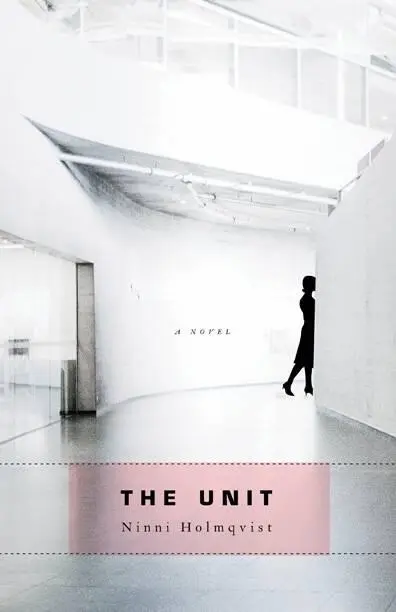
- Название:The Unit
- Автор:
- Жанр:
- Год:неизвестен
- ISBN:нет данных
- Рейтинг книги:3 / 5. Голосов: 1
-
Избранное:Добавить в избранное
- Отзывы:
-
Ваша оценка:
The Unit: краткое содержание, описание и аннотация
Предлагаем к чтению аннотацию, описание, краткое содержание или предисловие (зависит от того, что написал сам автор книги «The Unit»). Если вы не нашли необходимую информацию о книге — напишите в комментариях, мы постараемся отыскать её.
The Unit uncannily echoes its organ-donation-dystopia predecessor, Kazuo Ishiguro’s Never Let Me Go (2005); both imagine societies of extreme utilitarianism that plunder their margins for body parts, and both raise the prospect of art for art’s sake, and love for love’s, as weapons against such thinking. The Unit’s heroine, Dorrit, has chosen not to have children and thus “spill over like rising bread dough”; at the book’s opening, Dorrit’s independence has just earned her incarceration in the Unit, a death camp puzzlingly replete with art galleries and gourmet restaurants where her individualism seems to lapse into passivity.
Through flashbacks, we learn of all Dorrit has lost-her career as a novelist, her beloved dog, the small house she owned herself, the opportunities to save herself by becoming “useful” to society. These snippets of memory are interspersed with descriptions of the eponymous unit and its dying inhabitants, descriptions so matter-of-fact they lull. The novel grips toward the end when Dorrit finds love-and with it a potential escape-and makes a startling choice.
Dorrit’s play-by-play narration can be clunky in translation, but the spare, cumulative prose effectively reveals a character whose story can barely ward off the disintegration of the self it relates. Holmqvist cleverly makes that very self unreliable; The Unit is the latest in a trend of anti-heroic dystopias such as Never Let Me Go and P.D. James’s The Children of Men. In these novels of bad futures, the trustworthy memories of protagonists such as Nineteen Eighty-Four’s Winston Smith (“Airstrip One… had been called England or Britain, though London, [Winston] felt fairly certain, had always been called London”) are replaced by the self-delusions of narrators who mislead the reader and themselves lose control of the stories they are telling. In these novels, rebellion must be expressed obliquely. Like Kathy, the complacent carer of Never Let Me Go, who survives her childhood friends, nursing them as they donate all their organs, Dorrit displaces her anger onto a clearer-eyed friend who calls the Unit what it is, a “luxury slaughterhouse.”
While Holmqvist builds a powerfully imaginative scenario around the concept of killing off the childless, her message on gender roles is clumsy and unconvincing. In Dorrit’s world, flirting and other “typically male” behavior has been criminalized, and retrograde domestic fantasies have to be played out in secret, making the missionary position an act of transgression. We have come a long way from the rage of Margaret Atwood’s 1985 A Handmaid’s Tale, with its neo-Biblical America in which all women are forced either to bear children or to raise them. In today’s climate of threatened reproductive rights, a critique of compulsory motherhood would be welcome, but The Unit displays the same innate conservatism that is the pitfall of Never Let Me Go-a disturbing willingness to locate tragedy not in the horror of forced organ donation and premature death, but in Kathy and Dorrit’s lost opportunities to become mothers.
Copyright 2010 Fran Bigman
The Unit — читать онлайн бесплатно полную книгу (весь текст) целиком
Ниже представлен текст книги, разбитый по страницам. Система сохранения места последней прочитанной страницы, позволяет с удобством читать онлайн бесплатно книгу «The Unit», без необходимости каждый раз заново искать на чём Вы остановились. Поставьте закладку, и сможете в любой момент перейти на страницу, на которой закончили чтение.
Интервал:
Закладка:
“Something like that, yes,” I admitted. “For example, if you’d won an Olympic medal…”
“I know,” she said. “Then I would have become a great, positive role model for many young women, and would have been protected for the rest of my life. But I have to tell you, Dorrit, that I don’t regret getting out of that particular rat race for one single second. It’s not my thing, I’ve never understood the point of winning just for the sake of winning. What’s the point in putting all your energy into being better than other people at just one thing, which is in fact completely irrelevant? Why do it? Do you understand it?”
“No,” I replied truthfully. “I don’t, actually.”
“No,” she said, “I can see you don’t. If you did, you probably wouldn’t have ended up here either. Shall we have a swim now? We’d better go for the other pool so we don’t risk somebody like me landing on our heads.”
We swam twenty lengths, back and forth. After the first three or four warm-up lengths I speeded up. I was swimming breaststroke, I’ve never managed to learn anything else, but I had strong arms and legs and could swim pretty fast when I was in the mood, which I was at the moment. It felt as if I were literally splitting the water in half as I pushed it aside with huge, rapid strokes and kicked it away with my legs.
When I had swum my laps and came up I was as heavy as a whale; I heaved myself out onto the side of the pool with a particularly unattractive splash and waited for Elsa, who had taken things a little more slowly and still had a couple of lengths to go. I was out of breath, my heart pounding rapidly, steadily, rhythmically. I really did feel alive.
PART 2
1
I didn’t think about Nils. I didn’t think about my house. I didn’t think about Jock, but it didn’t help. Not thinking about Jock didn’t help, because the way I missed him was different. It was in my body. It was in my heart. And it was painful.
For anyone who has never experienced or set any store by being close to an animal, it is perhaps difficult to understand that you can miss a dog so that it literally hurts. But the relationship with an animal is so much more physical than a relationship with another person. You don’t get to know a dog by asking how he’s feeling or what he’s thinking, but by observing him and getting to know his body language. And all the important things you want to say to him you have to show through actions, attitude, gestures and sounds.
People, on the other hand, can always be reached through talking. A bridge of words grows easily between people, a bridge of information, explanations and assurances. For example, one person can say to another: “It’s my birthday on August twenty-sixth,” which is a piece of information, or: “I’m late because I couldn’t get the car started,” which is an explanation, or: “I will love you until death do us part,” which is an assurance. But words between people also act as a kind of shock absorber; those in close relationships often choose to talk about something other than the matter that is weighing them down, worrying them or annoying them. Just like when Elsa and I were sharing our childhood memories. Or when an established couple immerse themselves in a discussion about the fact that the children need new shoes, or start enthusiastically planning a house extension, instead of talking about why they’re always mad at each other these days.
Between Jock and me there was no bridge, no shock absorber. The contact between us was what it was, with no shortcuts, diversions or beltways. We couldn’t talk to each other about our relationship, couldn’t sort out misunderstandings or explain how much we meant to each other. We lived completely separately, because of the conditions imposed by our respective species. But we also lived side by side, body to body, without promises, lies or small talk. And irrespective of whether I thought about him or not, during my early days in the unit I could feel his coarse coat beneath the palm of my hand, the rapid beating of his heart under the coarseness, his cold nose, his warm tongue against my cheek, the smell of his breath and his fur. I could hear and see him: his brief bark when he caught sight of me and came bounding toward me, his legs wide apart, but his head held elegantly high; his excited snuffles and constantly wagging tail; his panting breath as he ran alongside me, his paws rhythmically rasping against the ground. And in bed at night I could feel his weight on my leg, and when I woke up in the morning I would sit up straightaway, and for a fraction of a second I would imagine I could see his expectant expression meeting my eyes from the foot of the bed. Each one of these sensory perceptions, these phantom emotions surrounding Jock’s presence was immediately followed by the realization that it bore no relation whatsoever to reality. This realization was always equally brutal, like being struck hard by a fist or stabbed with a knife, and then it turned to a constant, nagging ache.
The only thing that could alleviate this kind of pain was physical activity. As long as I was on the go, the body was producing endorphins, and as long as the body was producing endorphins, life was bearable. Elsa seemed to be thinking along the same lines, because without ever discussing it or even commenting on the reasons, we were more or less constantly on the move during those first free days. We went for long, brisk walks around the Atrium Walkway and in the winter garden, swam, went to Friskis & Svettis, did strength-building exercises, joined in with various dance groups-salsa, hip-hop, jazz, step, belly dancing-and tried to keep up as best we could. In the evenings we had dinner at the restaurant on the indoor square on level 4, chatting about old school friends or talking for a while with whoever happened to be dining in the restaurant. This was something completely new for me, this idea of whiling away the time just chatting and socializing with other people. I had never looked at time or at people that way before. I had always valued my time and I had always regarded people as individuals, I had never reduced them to “just anybody” who might keep me company. Never before had I valued company for its own sake. I had never valued small talk. Now I noticed that small talk had a soothing effect; it was like a cold compress placed on a twisted ankle, counteracting swelling and bruising. And when the night came and Elsa and I left each other to go to our own apartments, I was so exhausted from all the physical activity, all the chatting, all this intense time killing, that I literally collapsed into bed and slipped into a black, dreamless sleep. Eight hours later I woke feeling rested, and with each new morning my perceptions of Jock were slightly less overwhelming.
2
“What if they find something wrong with me?” I said.
“Like what?” said Majken.
“Well, I don’t know,” I said. “But what if I’m not good enough, if it turns out that I’m…”-I was searching for the right word-“… that I’m unusable. What will happen to me then? What will they do with me?”
We were standing in the elevator. It was morning. It was Thursday. We were on our way down. She was going to her studio on level 2 to finish things off before her exhibition, which was due to open on Saturday. I was heading for lab 2 on level 1 for the obligatory health check for new arrivals. The elevator stopped on level 2 and the doors slid open, but instead of stepping out Majken put her arms around me and stroked my back.
She was warm. She was calming. She didn’t speak, she simply stood there holding me and stroking my back, while the elevator doors closed and it set off downward. We started to laugh, and she had to come down to level 1. I got out, turned to her and raised a hand to say good-bye. She waved back, the door closed, and the elevator took her back up again with a humming noise.
Читать дальшеИнтервал:
Закладка:
Похожие книги на «The Unit»
Представляем Вашему вниманию похожие книги на «The Unit» списком для выбора. Мы отобрали схожую по названию и смыслу литературу в надежде предоставить читателям больше вариантов отыскать новые, интересные, ещё непрочитанные произведения.










Обсуждение, отзывы о книге «The Unit» и просто собственные мнения читателей. Оставьте ваши комментарии, напишите, что Вы думаете о произведении, его смысле или главных героях. Укажите что конкретно понравилось, а что нет, и почему Вы так считаете.