Ninni Holmqvist - The Unit
Здесь есть возможность читать онлайн «Ninni Holmqvist - The Unit» весь текст электронной книги совершенно бесплатно (целиком полную версию без сокращений). В некоторых случаях можно слушать аудио, скачать через торрент в формате fb2 и присутствует краткое содержание. Жанр: Современная проза, на английском языке. Описание произведения, (предисловие) а так же отзывы посетителей доступны на портале библиотеки ЛибКат.
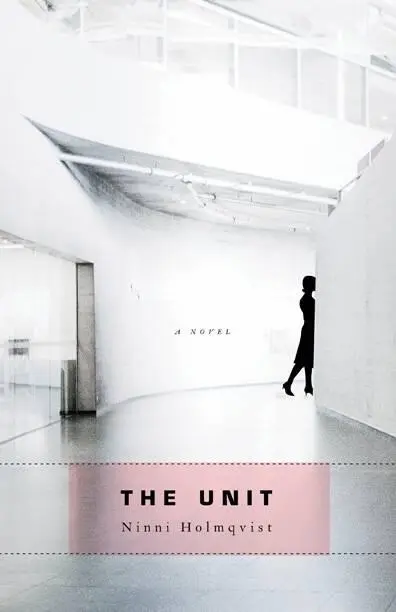
- Название:The Unit
- Автор:
- Жанр:
- Год:неизвестен
- ISBN:нет данных
- Рейтинг книги:3 / 5. Голосов: 1
-
Избранное:Добавить в избранное
- Отзывы:
-
Ваша оценка:
The Unit: краткое содержание, описание и аннотация
Предлагаем к чтению аннотацию, описание, краткое содержание или предисловие (зависит от того, что написал сам автор книги «The Unit»). Если вы не нашли необходимую информацию о книге — напишите в комментариях, мы постараемся отыскать её.
The Unit uncannily echoes its organ-donation-dystopia predecessor, Kazuo Ishiguro’s Never Let Me Go (2005); both imagine societies of extreme utilitarianism that plunder their margins for body parts, and both raise the prospect of art for art’s sake, and love for love’s, as weapons against such thinking. The Unit’s heroine, Dorrit, has chosen not to have children and thus “spill over like rising bread dough”; at the book’s opening, Dorrit’s independence has just earned her incarceration in the Unit, a death camp puzzlingly replete with art galleries and gourmet restaurants where her individualism seems to lapse into passivity.
Through flashbacks, we learn of all Dorrit has lost-her career as a novelist, her beloved dog, the small house she owned herself, the opportunities to save herself by becoming “useful” to society. These snippets of memory are interspersed with descriptions of the eponymous unit and its dying inhabitants, descriptions so matter-of-fact they lull. The novel grips toward the end when Dorrit finds love-and with it a potential escape-and makes a startling choice.
Dorrit’s play-by-play narration can be clunky in translation, but the spare, cumulative prose effectively reveals a character whose story can barely ward off the disintegration of the self it relates. Holmqvist cleverly makes that very self unreliable; The Unit is the latest in a trend of anti-heroic dystopias such as Never Let Me Go and P.D. James’s The Children of Men. In these novels of bad futures, the trustworthy memories of protagonists such as Nineteen Eighty-Four’s Winston Smith (“Airstrip One… had been called England or Britain, though London, [Winston] felt fairly certain, had always been called London”) are replaced by the self-delusions of narrators who mislead the reader and themselves lose control of the stories they are telling. In these novels, rebellion must be expressed obliquely. Like Kathy, the complacent carer of Never Let Me Go, who survives her childhood friends, nursing them as they donate all their organs, Dorrit displaces her anger onto a clearer-eyed friend who calls the Unit what it is, a “luxury slaughterhouse.”
While Holmqvist builds a powerfully imaginative scenario around the concept of killing off the childless, her message on gender roles is clumsy and unconvincing. In Dorrit’s world, flirting and other “typically male” behavior has been criminalized, and retrograde domestic fantasies have to be played out in secret, making the missionary position an act of transgression. We have come a long way from the rage of Margaret Atwood’s 1985 A Handmaid’s Tale, with its neo-Biblical America in which all women are forced either to bear children or to raise them. In today’s climate of threatened reproductive rights, a critique of compulsory motherhood would be welcome, but The Unit displays the same innate conservatism that is the pitfall of Never Let Me Go-a disturbing willingness to locate tragedy not in the horror of forced organ donation and premature death, but in Kathy and Dorrit’s lost opportunities to become mothers.
Copyright 2010 Fran Bigman
The Unit — читать онлайн бесплатно полную книгу (весь текст) целиком
Ниже представлен текст книги, разбитый по страницам. Система сохранения места последней прочитанной страницы, позволяет с удобством читать онлайн бесплатно книгу «The Unit», без необходимости каждый раз заново искать на чём Вы остановились. Поставьте закладку, и сможете в любой момент перейти на страницу, на которой закончили чтение.
Интервал:
Закладка:
We did that. And we sorted out our library cards as well. Then we sat down in the armchairs in the corner and flipped through the daily newspapers and magazines. A man was fast asleep in one of the other armchairs. The newspaper he had been reading was lying on the floor in front of him. He was breathing audibly-not exactly snoring, but it sounded as if there was something wrong with his airway. He was making a grating, whistling noise.
Perhaps he has a cold, we whispered to each other, and neither Elsa nor I wanted to catch anything, so we got up and left.
During those early days at the unit I would come across several people who just fell asleep anywhere, and who breathed in the same way, almost snoring. It would soon be explained to me that this was a side effect of one of a series of tranquilizing drugs being tested here. The people involved in this particular experiment found their ability to absorb oxygen was seriously impaired, and at the same time the yawn reflex was canceled out. A consequence of these two side effects was that they found it very easy to fall asleep. A few were also affected by minor but permanent brain damage, presumably as a result of the lack of oxygen, and in the worst cases had difficulty walking, talking, and knowing where they were or what day it was.
In other words, the man sleeping in the corner probably didn’t have a cold, and there was no need for us to worry about our health.
We didn’t borrow anything from the library that first day, but left empty-handed apart from our readers. As we were passing the issue desk on the way out, we nodded to Kjell.
“Thanks for popping in,” he said gloomily. “Come again any time.”
We emerged into a large indoor square, surrounded by a department store, lots of smaller shops, a cinema, a theater, an art gallery and a restaurant with tables outside. In the middle of the square, which was paved with mottled gray polished slabs of the kind you often find in churchyards, in the form of gravestones, was a rectangle of thick glass, with several stone benches surrounding a bronze sculpture representing a fishing boat. Through the glass we could see shifting, constantly moving shades of blue and turquoise. We realized the swimming pool must be directly beneath us.
Among the small shops around the square were two boutiques, one offering new clothes and one secondhand, a music store with guitars, wind instruments, electric organs and drum kits in the window, a craft shop with goods made by artists in the unit, a hardware store and a shop with hobby items as well as office and art supplies. The words “shop” and “store” are perhaps misleading, and I must stress that no money changed hands. Or to put it more clearly, it wasn’t really a question of shopping at all. You just went in and picked up what you needed, apart from certain items that had to be signed out. Sometimes you also had to order things that were temporarily out of stock, or fill out a request for some specific product or a specific brand to be stocked in the future.
The cinema had two screens. At the moment they were showing The Double-Headed Crane , a psychological drama about a family in crisis that had received very good reviews, and an action comedy, The Maniac 3 .
The art gallery was closed while a new exhibition was being mounted, and it would open the following Saturday. It was Majken who was exhibiting. She had told us during dinner at the party: “My first solo exhibition!”
The theater was also closed. But a poster informed us that Chekhov’s The Seagull would shortly be having its premiere, and later in the spring they would be putting on Shakespeare’s The Merchant of Venice .
“What a shame,” I said. “Now that we can actually afford to go to the theater, they’re only doing the same old classics.”
“It doesn’t really matter, though, does it?” said Elsa. “A play is a play. The whole thing about going to the theater is actually going to the theater, isn’t it?”
I laughed; there was certainly some truth to what she said.
“Okay, let’s go for a swim!” she said, grabbing my arm and dragging me with a certain amount of gentle force in the direction of the elevators at the opposite end of the square.
10
I have always loved exercise, and in the unit’s sports complex there was everything I could have wished for, and more: a small sports ground with a running track-as if the Atrium Walkway weren’t enough-and equipment for all kinds of athletics, a big hall for various ball and racquet sports, a bowling alley, a classic gymnasium with wall bars all the way around, and a storeroom next door with a vaulting horse, a vaulting box, baseball bats, hockey sticks, and nets containing balls of various sizes. And on two floors there were smaller rooms for aerobics, Friskis & Svettis gym training, spinning, dance, yoga, fencing and so on, as well as a weight room. And the swimming pool was right in the center of everything.
My mouth was almost watering as Elsa and I wandered around. We saw people practicing the high jump, long jump and discus, playing badminton, tennis, hockey and volleyball. And as we cautiously pushed open the door of each of the smaller rooms in turn and peeped in, we saw two women playing squash, a group in cotton outfits learning judo, another group doing something that sounded and looked like African dance, a man on his own practicing tai chi, plus a group exercising around a Friskis & Svettis instructor to some music with a powerful beat. When she saw us in the doorway she waved to us to come and join in, but we smiled and waved our refusal, pointing at our clothes and shoes by way of explanation. Elsa was wearing loafers and I was in sandals. The instructor nodded and we closed the door and went into the gym next door.
It was small but well equipped, the air fresh without feeling chilly, the music pulsating energetically but with the volume relatively low. Five or six people were exercising at the moment. None of them took any notice of us; they carried on lifting, walking on the treadmill, pulling and pushing as they puffed, grimaced and concentrated as hard as they could on one muscle group at a time, one repetition at a time.
“I don’t get it,” muttered Elsa as we made our way between rows of well-oiled, perfectly functioning machines.
“Don’t get what?” I said.
“All this luxury! How much is all this costing the taxpayer?”
“That’s true,” I agreed, although I was actually more excited than upset. “We seem to be expensive to run.”
“Exactly. And for what purpose?”
I didn’t reply. Not because I had nothing to say, but because at that moment I caught sight of something that took my attention away from the topic of luxury. On the leg-curl machine was a man in a T-shirt and shorts, exhaling audibly each time he pulled the weight down toward himself with the back of his legs, keeping an even rhythm. On his face, arms and legs he had some kind of outbreak: blue-black and reddish brown spots and blotches, the smallest the size of the nail on your little finger, the biggest about as large as a medium-size birch leaf. Some of the larger blotches had burst and were suppurating. They looked revolting. It looked like a disease, and it made me think of Kaposi’s sarcoma, which I had seen an AIDS patient suffering from when I was young and working in health services and home care. This outbreak reminded me of Kaposi’s, and the lumps were swelling and shrinking according to the movement of the man’s muscles. As we passed him I glanced curiously and as discreetly as I could at the weights on the machine, and saw that he was lifting four hundred pounds with the back of his thighs. Not bad for a man between sixty and sixty-five. Whatever he was suffering from, at least it wasn’t AIDS.
Читать дальшеИнтервал:
Закладка:
Похожие книги на «The Unit»
Представляем Вашему вниманию похожие книги на «The Unit» списком для выбора. Мы отобрали схожую по названию и смыслу литературу в надежде предоставить читателям больше вариантов отыскать новые, интересные, ещё непрочитанные произведения.










Обсуждение, отзывы о книге «The Unit» и просто собственные мнения читателей. Оставьте ваши комментарии, напишите, что Вы думаете о произведении, его смысле или главных героях. Укажите что конкретно понравилось, а что нет, и почему Вы так считаете.