Ninni Holmqvist - The Unit
Здесь есть возможность читать онлайн «Ninni Holmqvist - The Unit» весь текст электронной книги совершенно бесплатно (целиком полную версию без сокращений). В некоторых случаях можно слушать аудио, скачать через торрент в формате fb2 и присутствует краткое содержание. Жанр: Современная проза, на английском языке. Описание произведения, (предисловие) а так же отзывы посетителей доступны на портале библиотеки ЛибКат.
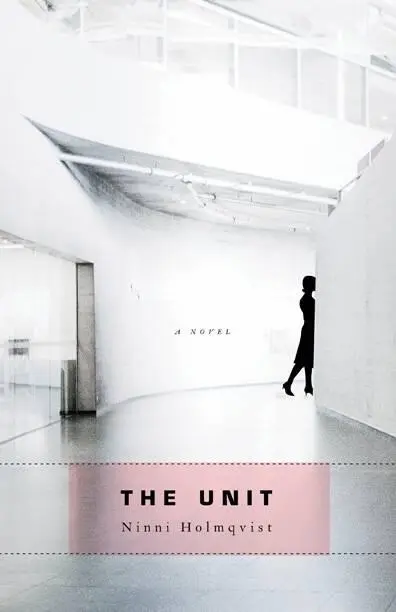
- Название:The Unit
- Автор:
- Жанр:
- Год:неизвестен
- ISBN:нет данных
- Рейтинг книги:3 / 5. Голосов: 1
-
Избранное:Добавить в избранное
- Отзывы:
-
Ваша оценка:
The Unit: краткое содержание, описание и аннотация
Предлагаем к чтению аннотацию, описание, краткое содержание или предисловие (зависит от того, что написал сам автор книги «The Unit»). Если вы не нашли необходимую информацию о книге — напишите в комментариях, мы постараемся отыскать её.
The Unit uncannily echoes its organ-donation-dystopia predecessor, Kazuo Ishiguro’s Never Let Me Go (2005); both imagine societies of extreme utilitarianism that plunder their margins for body parts, and both raise the prospect of art for art’s sake, and love for love’s, as weapons against such thinking. The Unit’s heroine, Dorrit, has chosen not to have children and thus “spill over like rising bread dough”; at the book’s opening, Dorrit’s independence has just earned her incarceration in the Unit, a death camp puzzlingly replete with art galleries and gourmet restaurants where her individualism seems to lapse into passivity.
Through flashbacks, we learn of all Dorrit has lost-her career as a novelist, her beloved dog, the small house she owned herself, the opportunities to save herself by becoming “useful” to society. These snippets of memory are interspersed with descriptions of the eponymous unit and its dying inhabitants, descriptions so matter-of-fact they lull. The novel grips toward the end when Dorrit finds love-and with it a potential escape-and makes a startling choice.
Dorrit’s play-by-play narration can be clunky in translation, but the spare, cumulative prose effectively reveals a character whose story can barely ward off the disintegration of the self it relates. Holmqvist cleverly makes that very self unreliable; The Unit is the latest in a trend of anti-heroic dystopias such as Never Let Me Go and P.D. James’s The Children of Men. In these novels of bad futures, the trustworthy memories of protagonists such as Nineteen Eighty-Four’s Winston Smith (“Airstrip One… had been called England or Britain, though London, [Winston] felt fairly certain, had always been called London”) are replaced by the self-delusions of narrators who mislead the reader and themselves lose control of the stories they are telling. In these novels, rebellion must be expressed obliquely. Like Kathy, the complacent carer of Never Let Me Go, who survives her childhood friends, nursing them as they donate all their organs, Dorrit displaces her anger onto a clearer-eyed friend who calls the Unit what it is, a “luxury slaughterhouse.”
While Holmqvist builds a powerfully imaginative scenario around the concept of killing off the childless, her message on gender roles is clumsy and unconvincing. In Dorrit’s world, flirting and other “typically male” behavior has been criminalized, and retrograde domestic fantasies have to be played out in secret, making the missionary position an act of transgression. We have come a long way from the rage of Margaret Atwood’s 1985 A Handmaid’s Tale, with its neo-Biblical America in which all women are forced either to bear children or to raise them. In today’s climate of threatened reproductive rights, a critique of compulsory motherhood would be welcome, but The Unit displays the same innate conservatism that is the pitfall of Never Let Me Go-a disturbing willingness to locate tragedy not in the horror of forced organ donation and premature death, but in Kathy and Dorrit’s lost opportunities to become mothers.
Copyright 2010 Fran Bigman
The Unit — читать онлайн бесплатно полную книгу (весь текст) целиком
Ниже представлен текст книги, разбитый по страницам. Система сохранения места последней прочитанной страницы, позволяет с удобством читать онлайн бесплатно книгу «The Unit», без необходимости каждый раз заново искать на чём Вы остановились. Поставьте закладку, и сможете в любой момент перейти на страницу, на которой закончили чтение.
Интервал:
Закладка:
“The meaning of life?” I said. “That’s a difficult question. I don’t think I can answer it.”
“Try,” said Arnold.
“Do you mean my life, what’s the meaning of my life? Or do you mean life in general?”
“You’re free to interpret the question as you wish.”
Normally, if I’d been out in the community, that would have put me on the defensive. Experience told me that whenever a doctor or a psychologist or a boss or a teacher or a policeman or a journalist says you are free to interpret a question as you wish, that usually means you are being tested in some way. If you interpret the question like this and respond like that, then you are seen as belonging to a particular category, and if instead you interpret it like that and respond like this, then you belong to a different category.
But here in the unit, I thought, it didn’t really matter how you interpreted questions. There was only one category here after all, and however I might choose to respond, that was the category I belonged to. I didn’t need to try to work out how I ought to respond, but could relax and answer however I wanted. I could allow myself to babble and ramble and feel my way, roughly the way I did when I wrote.
“I suppose I used to believe that my life belonged to me,” I rambled. “Something that was entirely at my disposal, something no one else had any claim on, or the right to have an opinion on. But I’ve changed my mind. I don’t own my life at all, it’s other people who own it.”
“Who?” asked Arnold.
I shrugged my shoulders. “Those who have the power, I suppose.”
“And who are they?”
“Our rulers, of course.”
“And who are our rulers?”
“Well,” I said. “We don’t really know. The state or industry or capitalism. Or the mass media. Or all four. Or are industry and capitalism the same thing? Anyway: those who safeguard growth and democracy and welfare, they’re the ones who own my life. They own everyone’s life. And life is capital. A capital that is to be divided fairly among the people in a way that promotes reproduction and growth, welfare and democracy. I am only a steward, taking care of my vital organs.”
“But is that your own opinion, Dorrit?”
“Certainly. Or-maybe not entirely. But I’m working on it.”
“Why?”
“To get through this, of course. I live for the capital, that’s a fact, isn’t it? And the best I can do with this fact is to like the situation. To believe it’s meaningful. Otherwise I can’t believe it’s meaningful to die for it.”
“Is it important to you to feel it’s meaningful to die for what you call ‘the capital’?”
“Yes.”
“Why?”
“Because otherwise I would feel powerless, which essentially I am, but I can cope with that as long as it doesn’t feel that way too. I’m here now, aren’t I? I live here and I’m going to die here. I live and die so that the gross national product will increase, and if I didn’t regard that as meaningful, then my existence here would be unbearable.”
“And you want to have a bearable existence?”
“Doesn’t everyone?” I asked.
Arnold didn’t reply. His lack of response provoked me, and I said acrimoniously:
“Perhaps that’s the meaning of life. Perhaps that’s the answer to your question: the meaning of life is that it should be bearable. Are you satisfied with that answer?”
“You’re angry,” he said-I couldn’t work out whether it was a question or a statement.
“Of course I’m bloody angry!” I said. “Wouldn’t you be?”
“Yes,” he said, “I probably would be.”
He didn’t say any more about it. And he didn’t ask any more questions about the meaning of life, so I didn’t say anything either, and we sat there without speaking for quite a long time, almost a whole minute I think, and all the time I was very angry, so angry that tears came to my eyes. But I didn’t cry, even if there was something in my throat that had tied itself in a knot and was stuck there throbbing and burning. I was what I used to call “politically angry,” and above all I was feeling boundlessly sorry for myself.
In the end Arnold said:
“Do you know who received Majken’s pancreas?”
I had to clear my throat before I was able to reply: “No. Or rather yes: a nurse with four children.”
Arnold leaned over to one side, picked up a folder from the little table next to his armchair, opened the folder and took out a photograph. He was just about to pass it over to me when he stopped himself:
“Of course it isn’t only this person who’s got their life back thanks to Majken. Her heart has probably gone to someone, her lungs to someone else, her kidney-I assume she only had one left-to someone else again, and her liver too. And a great deal of other material will have been removed and stored in our organ and tissue banks. A single brain-dead body can save the lives of up to eight people. The removal and transplantation of these other organs and tissues is a bonus, you could say, when a specific organ, in this case the pancreas, from a specific donor with the right blood type and other criteria goes to a specific recipient in a planned and carefully prepared transplant. And this”-he leaned forward again and passed me the photograph-“is the specific recipient of Majken’s pancreas.”
He leaned back in his chair.
The photo in my hand showed a woman with four children of preschool age, two of whom were twins. The woman looked old and tired, her face unhealthily bloated and worn.
“She’s on her own with the children,” Arnold explained. “Her partner-the children’s father-died in an accident two years ago. She has no brothers or sisters, and her elderly mother has some kind of dementia and needs constant care. The picture is comparatively recent; the oldest child will soon be six, the twins have just turned four, and the little one wasn’t even born when the father was killed. The woman has type 1 diabetes, so it isn’t something self-inflicted, and-I don’t know all the medical details, but the pancreas has two functions. It produces normal insulin, as you perhaps know, and it also produces another fluid that helps to break down food. The production of insulin has never worked normally for this patient, and some time ago the secondary function of the pancreas also stopped working. Therefore the digestive process does not work properly either. She can neither eat nor drink normally, but lives on a nutritional drip. Since you don’t have children you perhaps can’t imagine what it must be like to look after four children on your own, while worrying about a senile parent and at the same time dragging round an IV stand, giving yourself injections and taking medication, under constant medical supervision.”
I could actually imagine all that very clearly, and I would have loved to be in her shoes. I would have gladly swapped places with this sick, worn down, fairly ugly woman, old before her time. I missed my mother; it wouldn’t have mattered how confused and helpless she got, just as long as she had been around to grow old, just as long as she’d lived. And I would have happily lived, sick and exhausted and constantly worried with four small children and an IV stand. Because that was at least a life, even if it was sure to be hell. I would have liked a hell, just as long as it was a life.
But then Arnold said:
“And the most important point: without the transplant she wouldn’t have had long to live. It would have been a matter of months, a year at best. Now, however, she has a very good chance of seeing her children grow up. She might not live long enough to have grandchildren, but she will probably have time to fulfill her role as a parent. And that is thanks to the pancreas from a person who had no one to live for.”
Читать дальшеИнтервал:
Закладка:
Похожие книги на «The Unit»
Представляем Вашему вниманию похожие книги на «The Unit» списком для выбора. Мы отобрали схожую по названию и смыслу литературу в надежде предоставить читателям больше вариантов отыскать новые, интересные, ещё непрочитанные произведения.










Обсуждение, отзывы о книге «The Unit» и просто собственные мнения читателей. Оставьте ваши комментарии, напишите, что Вы думаете о произведении, его смысле или главных героях. Укажите что конкретно понравилось, а что нет, и почему Вы так считаете.