Ghita Schwarz - Displaced Persons
Здесь есть возможность читать онлайн «Ghita Schwarz - Displaced Persons» весь текст электронной книги совершенно бесплатно (целиком полную версию без сокращений). В некоторых случаях можно слушать аудио, скачать через торрент в формате fb2 и присутствует краткое содержание. Жанр: Современная проза, на английском языке. Описание произведения, (предисловие) а так же отзывы посетителей доступны на портале библиотеки ЛибКат.
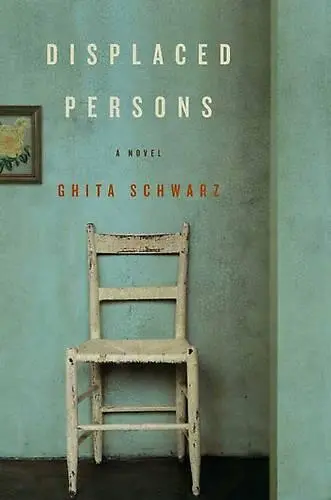
- Название:Displaced Persons
- Автор:
- Жанр:
- Год:неизвестен
- ISBN:нет данных
- Рейтинг книги:5 / 5. Голосов: 1
-
Избранное:Добавить в избранное
- Отзывы:
-
Ваша оценка:
Displaced Persons: краткое содержание, описание и аннотация
Предлагаем к чтению аннотацию, описание, краткое содержание или предисловие (зависит от того, что написал сам автор книги «Displaced Persons»). Если вы не нашли необходимую информацию о книге — напишите в комментариях, мы постараемся отыскать её.
In May 1945, Pavel Mandl, a Polish Jew recently liberated from a concentration camp, lands near a displaced persons camp in the British occupation zone of newly defeated Germany. Alone, possessing nothing but a map, a few tins of food, a toothbrush, and his identity papers, he must scrape together a new life in a chaotic community of refugees, civilians, and soldiers.
Gifted with a talent for black-market trading, Pavel soon procures clothing, false documents, and a modest house, where he installs himself and a pair of fellow refugees – Fela, a young widow who fled Poland for Russia at the outset of the war, and Chaim, a resourceful teenage boy whose smuggling skills have brought him to the Western zones. The trio soon form a makeshift family, searching for surviving relatives, railing against their circumscribed existence, and dreaming of visas to America.
Fifteen years later, haunted by decisions they made as "DPs," Pavel and Fela are married and living in Queens with their young son and daughter, and Chaim has recently emigrated from Israel with his wife, Sima. Pavel opens a small tailoring shop with his scheming brother-in-law while Fela struggles to establish peace in a loosely traditional household; Chaim and Sima adapt cheerfully to American life and its promise of freedom from a brutal past. Their lives are no longer dominated by the need to endure, fight, hide, or escape. Instead, they grapple with past trauma in everyday moments: taking the children to the municipal pool, shopping for liquor, arguing with landlords.
For decades, Pavel, Fela, and Chaim battle over memory and identity on the sly, within private groups of survivors. But as the Iron Curtain falls in the 1990s, American society starts to embrace the tragedy as a cultural commodity, and survivor politics go public. Clever and stubborn, tyrannical and generous, Pavel, Fela, and Chaim articulate the self-conscious strivings of an immigrant community determined to write its own history, on its own terms.
In Displaced Persons, Ghita Schwarz reveals the interior despairs and joys of immigrants shaped by war – ordinary men and women who have lived through cataclysmic times – and illuminates changing cultural understandings of trauma and remembrance.
Displaced Persons — читать онлайн бесплатно полную книгу (весь текст) целиком
Ниже представлен текст книги, разбитый по страницам. Система сохранения места последней прочитанной страницы, позволяет с удобством читать онлайн бесплатно книгу «Displaced Persons», без необходимости каждый раз заново искать на чём Вы остановились. Поставьте закладку, и сможете в любой момент перейти на страницу, на которой закончили чтение.
Интервал:
Закладка:
Sima’s breath was steady in her chest. How long ago?
Oh, long before he died. Maybe 1975 or so? We met from time to time. But his wife and mine were not so friendly. She was a quiet one, his wife, had to be to keep up with him-very sociable. You bring back things, Mrs. Traum. Moshe Lev! I had not thought of him for years.
SIMA LET HERSELF INTO the agency car, parked on the street outside Baruch’s building. She was dressed too heavily for the day and pulled off her scarf.
Now Sima too had a secret. There was nothing she could say to Fela. The story would be the same, whether Moshe Lev had survived and reappeared, or whether he had died, victim to hunger or a bullet. Another life to which no one could return or even imagine without pain. How could Sima have flirted with such a story?
She turned her face toward the row of small terraces on the west wall of the building, searched for the one belonging to Baruch. But he wasn’t looking out. In the February warmth he had opened a window, and his blue cotton curtain beat softly at the glass.
The Lecture
P AVEL STRAIGHTENED HIS PROGRAM on his lap. Perhaps a dozen people waited in the chairs of the auditorium, watching the student arrange the microphones on the podium. Others would come. Pavel liked to arrive with plenty of time to spare. He had a seat on the aisle to stretch out his leg, and he placed a scarf on the seat next to him for Fela. The four of them would all be together.
He tapped at the name tag on his lapel and looked over at the white sticker on Chaim’s jacket, the solid blue letters. Chaim took after him in attitude, intelligent and quiet. Still with a full head of hair, even if it was pure silver, cut close to his head. He was very distinguished, with his bright eyes and straight posture. Pavel liked to be sitting next to him, this boy he had cared for as a brother. Their wives powdered their noses and chatted outside.
It is good we are early, Pavel nodded to Chaim.
Very early, said Chaim.
I don’t like to go when people are fighting for seats. It can be a terrible chaos, sometimes. The ceremony-you used to have to arrive at least an hour and a half in advance. But it is better now. Since they moved it out from the synagogue-when was it?-five years ago, now we have space. That theater-you know, at Madison Square Garden. But no, you didn’t go this year.
Chaim smiled. You know I did not go.
Pavel put Chaim on all the mailing lists that he himself was on. Still, after so many years of suggestion-not pressure, not pressure, for Chaim was almost as stubborn about these matters as Hinda, she never came to anything like this either, not even the events with senators, with luminaries-Chaim had finally given in for this. Why this one-Art and Culture in the Warsaw Ghetto? Pavel did not know. But it was not for him to question. He was glad to have the company, and sophisticated company too, someone with whom he could do a little criticizing, perhaps hear something a little different from what he heard from his friends and his cousin. Chaim was younger than everyone, and he had an energy that the others did not have. It was good to sit with him. Chaim remembered Pavel when he was strong and fit, when he could watch over a household and feed any number of guests and travelers. Chaim remembered.
CHAIM READ THE LYRICS to “The Song of the Partisans” at the bottom of his flyer.
Never say that there is only death for you
Though leaden skies may be concealing days of blue!
The words looked alien and awkward in English. Strange. He had not remembered the song sounding in Yiddish, so stiff, almost-he felt ashamed even to think the thought-almost silly. He tried to retranslate it. Never say that you travel on your last journey. Not good, not elegant, but at least not so blunt as the English. And “days of blue!” It was out of a Broadway musical. Americans needed a rhyme. Chaim had noticed a piano on the stage. Would the audience have to sing? That was the new thing: an interactive lecture. It wasn’t just the English translation of the song that was printed alongside the Yiddish letters, it was also the phonetic English. Yes, it was very possible there would be singing.
Chaim breathed. It would not be so terrible. Theme song or no, a professor would introduce, and another professor would speak. The hall would fill, he would see people he did not always see. A good reason to come. And it made Pavel happy for him to be here.
Tell me, Chaim, you know this man?
Who?
The professor who wrote the book.
No, of course not. How would I know him? I was just interested in the topic.
I don’t say no, I just thought-you know, since you don’t go to the commemoration-
I can’t go to the commemoration, Pavel. I feel like a pretender. So I don’t like to go.
What pretender? said Pavel. What have I to do with the Warsaw Ghetto? Nothing. Less than you! You think the Brooklyn borough president has something to do with the Warsaw Ghetto? It’s a big event, so he comes.
I went with you to a film two years ago, no, before. The documentary.
A film! It’s not the same. It was a long time ago-and anyway, I left in the middle! But you know, I think I knew this one, the professor’s father, very slightly, not well, of course, he’s from Romania, but-
Chaim looked at the flyer again. Why had he agreed to come?
Fela had asked him to, that was why. He always felt a pull in his abdomen when he refused Pavel, but it was a discomfort he could overcome. Fela’s requests were a different story.
She had caught him on the phone a week before. There was a lecture at the New School, a new book, she thought it would be very interesting for Chaim and Sima, they would be in their element, since it would be full with professors-
I’m not a professor, Chaim had said. I’m an adjunct. And it’s technical, not intellectual. Radio engineering. You know, Fela, I-
Chaim, she interrupted. I know you don’t go to these things. I know you don’t. I don’t like it so much myself. I go because-I go, I don’t know why I go.
Fela, with the songs and the speeches, it is something I can’t-
This is not one with speeches. I made sure.
I will ask Sima, he tried.
I already spoke to Sima. She said to speak to you.
Ah.
Fela’s voice became quiet. Chaim. I want from you a favor. I need you to talk to him. He does not listen to me. Maybe he listens to you.
Could he not have talked to Pavel at another time? But no, Fela had wanted it to be casual, she had not wanted Pavel to know that she had called and pleaded with Chaim to reason with Pavel about the business, to reason with him about Kuba.
Pavel tapped at his shoulder, held out a half-finished packet of mints in his palm.
Do you want?
Chaim shook his head. He felt like a fraud simply sitting here, deciphering lyrics to a resistance song, even though he himself had once taught them to the younger children in the DP camp classes, long after the resistance fighters had been crushed. He had never heard the song during the war, the few months his family had been crammed into the ghetto housing, shipped from their small town to the North. There had been a time he had claimed otherwise. If asked, he would say he was from Warsaw originally, he would date his flight through the sewers of the ghetto as happening after the battle, not a full year before, he would add a few exploits to the short time in the forest with the gentile partisans, he would ascribe his ignorance about weapons to the ancient technology accessible to the forest fighters. Sometimes when speaking he had not been sure what was true and what was not, for the stories he told came out in pieces, not in order of time or place.
Читать дальшеИнтервал:
Закладка:
Похожие книги на «Displaced Persons»
Представляем Вашему вниманию похожие книги на «Displaced Persons» списком для выбора. Мы отобрали схожую по названию и смыслу литературу в надежде предоставить читателям больше вариантов отыскать новые, интересные, ещё непрочитанные произведения.









Обсуждение, отзывы о книге «Displaced Persons» и просто собственные мнения читателей. Оставьте ваши комментарии, напишите, что Вы думаете о произведении, его смысле или главных героях. Укажите что конкретно понравилось, а что нет, и почему Вы так считаете.