Ghita Schwarz - Displaced Persons
Здесь есть возможность читать онлайн «Ghita Schwarz - Displaced Persons» весь текст электронной книги совершенно бесплатно (целиком полную версию без сокращений). В некоторых случаях можно слушать аудио, скачать через торрент в формате fb2 и присутствует краткое содержание. Жанр: Современная проза, на английском языке. Описание произведения, (предисловие) а так же отзывы посетителей доступны на портале библиотеки ЛибКат.
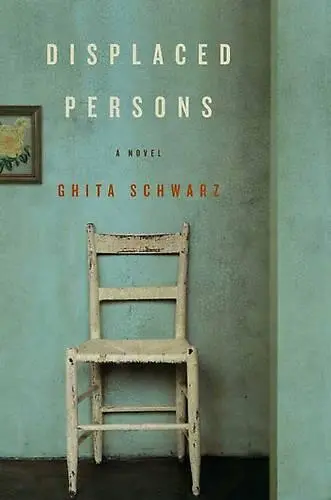
- Название:Displaced Persons
- Автор:
- Жанр:
- Год:неизвестен
- ISBN:нет данных
- Рейтинг книги:5 / 5. Голосов: 1
-
Избранное:Добавить в избранное
- Отзывы:
-
Ваша оценка:
Displaced Persons: краткое содержание, описание и аннотация
Предлагаем к чтению аннотацию, описание, краткое содержание или предисловие (зависит от того, что написал сам автор книги «Displaced Persons»). Если вы не нашли необходимую информацию о книге — напишите в комментариях, мы постараемся отыскать её.
In May 1945, Pavel Mandl, a Polish Jew recently liberated from a concentration camp, lands near a displaced persons camp in the British occupation zone of newly defeated Germany. Alone, possessing nothing but a map, a few tins of food, a toothbrush, and his identity papers, he must scrape together a new life in a chaotic community of refugees, civilians, and soldiers.
Gifted with a talent for black-market trading, Pavel soon procures clothing, false documents, and a modest house, where he installs himself and a pair of fellow refugees – Fela, a young widow who fled Poland for Russia at the outset of the war, and Chaim, a resourceful teenage boy whose smuggling skills have brought him to the Western zones. The trio soon form a makeshift family, searching for surviving relatives, railing against their circumscribed existence, and dreaming of visas to America.
Fifteen years later, haunted by decisions they made as "DPs," Pavel and Fela are married and living in Queens with their young son and daughter, and Chaim has recently emigrated from Israel with his wife, Sima. Pavel opens a small tailoring shop with his scheming brother-in-law while Fela struggles to establish peace in a loosely traditional household; Chaim and Sima adapt cheerfully to American life and its promise of freedom from a brutal past. Their lives are no longer dominated by the need to endure, fight, hide, or escape. Instead, they grapple with past trauma in everyday moments: taking the children to the municipal pool, shopping for liquor, arguing with landlords.
For decades, Pavel, Fela, and Chaim battle over memory and identity on the sly, within private groups of survivors. But as the Iron Curtain falls in the 1990s, American society starts to embrace the tragedy as a cultural commodity, and survivor politics go public. Clever and stubborn, tyrannical and generous, Pavel, Fela, and Chaim articulate the self-conscious strivings of an immigrant community determined to write its own history, on its own terms.
In Displaced Persons, Ghita Schwarz reveals the interior despairs and joys of immigrants shaped by war – ordinary men and women who have lived through cataclysmic times – and illuminates changing cultural understandings of trauma and remembrance.
Displaced Persons — читать онлайн бесплатно полную книгу (весь текст) целиком
Ниже представлен текст книги, разбитый по страницам. Система сохранения места последней прочитанной страницы, позволяет с удобством читать онлайн бесплатно книгу «Displaced Persons», без необходимости каждый раз заново искать на чём Вы остановились. Поставьте закладку, и сможете в любой момент перейти на страницу, на которой закончили чтение.
Интервал:
Закладка:
No one knows, said Fela. Pavel knows about him, my first husband-but not about the baby, the pregnancy. My children know nothing.
Will you tell them?
Never. Never, as long as I live. She looked suddenly at Sima. And you shouldn’t either!
Fela! cried Sima. Your secret is mine.
But Fela felt tears trailing down her white cheeks. I’m sorry, she said. I’m sorry, I’m sorry. It’s only-I feel afraid to speak his name. I never say it.
You didn’t say it now.
Moshe Lev, said Fela. Moshe. Our town was Mlawa. Did you hear of it?
No, said Sima.
Small, said Fela. Small. Almost every person in our town died; now no one in the world says his name. No one to say his name, no one to say Kaddish. Just I do, once a year, in the night, when nobody hears. Really a man is supposed to do it, a son. What I do is close to nothing, and when I go, it will be nothing at all.
You are not going, said Sima. Where would you be going?
No, no, said Fela, impatient, shaking the tears off her face. I meant only, in the future, not now. Don’t be so serious. She took the paper napkin, refolded it so the clean part was on the outside, then moved it carefully under her eyes. There! It was better.
Sima said, Did you ever hear how-
No, said Fela. No, no. In Russia you just heard it happened. No explaining. It made it hard for me to believe it. In fact-Fela hesitated. Perhaps she was pouring out too many secrets. But this wasn’t facts, it was thoughts; it was all right to unburden. Sima wasn’t upset by it.
In fact, after I came back, after I met Pavel, in Germany, I thought I saw him, Moshe, walking down the street.
Where?
Once in the DP camp, once in another town. Here, there. There was one time I was so sure-I saw the man, he saw me, and we both kept walking. After I crossed the street I understood it couldn’t be him. But it happened many times, sometimes alone, sometimes with Pavel, once when I was walking with Larry, just a baby-each time I would see him and pass him, ignore him. Afraid. Each time I would think my heart would fly out of me. And each time I would realize it just was not him. But still, I would think-isn’t it possible? What would happen if I said hello? And the man I would look at, sometimes I would see the same thought in his mind.
Sima said, If it had been him, Feluchna, you would have stopped.
Yes, said Fela. I think so.
WAS CHAIM HER FIRST love? Sima was more than fifty years old and had never put the question to herself in that way. She had been infatuated, crazy, before him, with a colonel above her in the army, and with a native Israeli boy who played soccer in the fields near the high school she had attended one year. But first love-yes, Chaim was her first love. Even silent, spoken only in her head, the phrase pained her. First love was clean, excited, empty of fear, spilling over with self-satisfaction. None of these things remained between her and her husband any longer. Something spilled between them, but not smugness, not pride or triumph. Relief, resignation.
At one time Sima had fantasized about divorce. They had had terrible problems after her father had died, at a time when all of Lola’s schoolfriends seemed to be traveling from one parent’s home to the other during the week. She had suspected him of having an affair but never confronted him. Instead she swiveled wildly between hatred and love, finding him irritating one minute, then wishing him near her the next; she had lied to him about stupid things, the cost of Lola’s clothing or a discussion with a teacher, then felt anger at him for not divining the reality. More than a decade had passed, but a period still active in her memory-easy to go back to, revisiting each scene. Sima had gone so far as to call a lawyer, one whose number she had memorized from a late-night television commercial, but then she had not appeared for the appointment, and the lawyer’s secretary hadn’t even called to ask what had happened.
At home during the day she had paced the apartment, looking for changes to make. In the evening, ordinarily, Sima and Chaim would have read or played cards together while Lola did her homework. Sima’s desire to talk to him pulled at her after dinner was done, the dishes washed and dried. But when she articulated this wish to herself Sima would suddenly feel a rush of fury and strength rising in her. She was a small woman, light-boned, but there were evenings she could easily picture herself pulling the sink out from the bathroom wall, tearing it away from its thick steel pipes. She could imagine the water gushing from under the ceramic, flowing into the bedroom she shared with her husband, drowning the bed. She imagined Lola screaming, afraid. It’s all right, my neshumeleh , nechmada , Sima would say, it’s all right. We’re washing it clean. She imagined a call to the plumber, a pale, lanky man in a big, gray sweater, a man whose face was innocent and blank but whose body was Chaim’s. She imagined the plumber in a bent position, kneeling down at the sink to fix it.
At the new bath store on Broadway she had purchased a cheap wooden cabinet, do-it-yourself. She built a box around the pipes, screwed hinges on the miniature doors, painted it white, glued on two knobs. Lola wanted to paint the knobs red; Sima let her, and the clumps of paint, dried unevenly on the white cabinet, gave her a pained satisfaction when Chaim first saw them, so out of place among the pastel tiles. You see? she had wanted to say. You see what we have become? Her bathroom might be ridiculous, but her daughter’s room would be beautiful. She bought expensive shades, pale green shades that kept out the glare but not the light for Lola’s books.
Chaim did not say no to anything she wanted. It made her sure that he had betrayed her, as if he was agreeing with every whim out of guilt. A conversation she had overheard in the building lobby between two neighbors, one of them in the middle of a divorce, stuck with her for weeks afterward. Think of this as Jewish Christmas, she had heard the woman say to her friend, as they’d waited for the elevator, you’re not celebrating, but you might as well take advantage of the paid vacation; it won’t last long. The words had echoed in her mind, sickening her. That’s right, buy, buy, buy, she thought. Before her father became ill Sima had worked in the museum shop, become a manager. But now such a job seemed offensive, stupid, hateful, selling reproduction Greek sculpture paperweights and Impressionist-print scarves. Sima needed real protection. She could help people, make her life something meaningful and important. She studied for her high school equivalency and enrolled in summer classes for her bachelor’s degree in social work at Hunter.
Going to school changed things. She talked about her program with Lola, and Chaim asked her questions, which she answered politely, then with more interest. She thought about asking him to see a marriage counselor with her but instead took a course in marriage counseling, the tenets of which seemed helpful, important, but then suddenly useless. She no longer wanted to force Chaim to talk; if she was right about what she suspected, she did not want to be told. She dropped the class after two weeks, substituting a course in geriatric care at the last minute, and found to her surprise that she loved it. She took an advanced course in art therapy for the elderly; she took an internship with a group that specialized in postwar refugees. When it was done she was offered a part-time job, before she had built up even half the credits she needed to graduate.
The less dependent she became on Chaim, the more he seemed to stick to their home. She continued her classes at night, and he would cook dinner for Lola and wait for Sima in the kitchen until she came home. He would talk to her about the class or her work, or occasionally his, and then they would go to bed. They did not touch each other, and perhaps three years, maybe four, passed this way. Funny, she now did not remember what had made things thaw. Her graduation from the program? He had bought her a huge vase of white lilacs. No, it was later than that, when Lola began to go out at night in high school, and they were alone in the apartment early on a Saturday night, worrying together in front of the television.
Читать дальшеИнтервал:
Закладка:
Похожие книги на «Displaced Persons»
Представляем Вашему вниманию похожие книги на «Displaced Persons» списком для выбора. Мы отобрали схожую по названию и смыслу литературу в надежде предоставить читателям больше вариантов отыскать новые, интересные, ещё непрочитанные произведения.








Обсуждение, отзывы о книге «Displaced Persons» и просто собственные мнения читателей. Оставьте ваши комментарии, напишите, что Вы думаете о произведении, его смысле или главных героях. Укажите что конкретно понравилось, а что нет, и почему Вы так считаете.