Ghita Schwarz - Displaced Persons
Здесь есть возможность читать онлайн «Ghita Schwarz - Displaced Persons» весь текст электронной книги совершенно бесплатно (целиком полную версию без сокращений). В некоторых случаях можно слушать аудио, скачать через торрент в формате fb2 и присутствует краткое содержание. Жанр: Современная проза, на английском языке. Описание произведения, (предисловие) а так же отзывы посетителей доступны на портале библиотеки ЛибКат.
- Название:Displaced Persons
- Автор:
- Жанр:
- Год:неизвестен
- ISBN:нет данных
- Рейтинг книги:5 / 5. Голосов: 1
-
Избранное:Добавить в избранное
- Отзывы:
-
Ваша оценка:
Displaced Persons: краткое содержание, описание и аннотация
Предлагаем к чтению аннотацию, описание, краткое содержание или предисловие (зависит от того, что написал сам автор книги «Displaced Persons»). Если вы не нашли необходимую информацию о книге — напишите в комментариях, мы постараемся отыскать её.
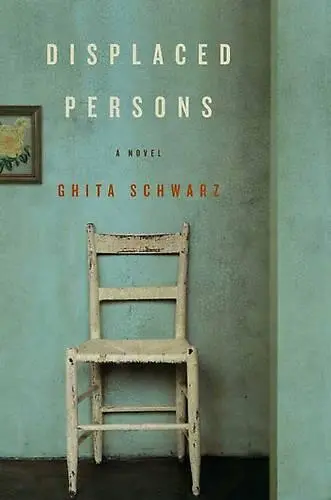
In May 1945, Pavel Mandl, a Polish Jew recently liberated from a concentration camp, lands near a displaced persons camp in the British occupation zone of newly defeated Germany. Alone, possessing nothing but a map, a few tins of food, a toothbrush, and his identity papers, he must scrape together a new life in a chaotic community of refugees, civilians, and soldiers.
Gifted with a talent for black-market trading, Pavel soon procures clothing, false documents, and a modest house, where he installs himself and a pair of fellow refugees – Fela, a young widow who fled Poland for Russia at the outset of the war, and Chaim, a resourceful teenage boy whose smuggling skills have brought him to the Western zones. The trio soon form a makeshift family, searching for surviving relatives, railing against their circumscribed existence, and dreaming of visas to America.
Fifteen years later, haunted by decisions they made as "DPs," Pavel and Fela are married and living in Queens with their young son and daughter, and Chaim has recently emigrated from Israel with his wife, Sima. Pavel opens a small tailoring shop with his scheming brother-in-law while Fela struggles to establish peace in a loosely traditional household; Chaim and Sima adapt cheerfully to American life and its promise of freedom from a brutal past. Their lives are no longer dominated by the need to endure, fight, hide, or escape. Instead, they grapple with past trauma in everyday moments: taking the children to the municipal pool, shopping for liquor, arguing with landlords.
For decades, Pavel, Fela, and Chaim battle over memory and identity on the sly, within private groups of survivors. But as the Iron Curtain falls in the 1990s, American society starts to embrace the tragedy as a cultural commodity, and survivor politics go public. Clever and stubborn, tyrannical and generous, Pavel, Fela, and Chaim articulate the self-conscious strivings of an immigrant community determined to write its own history, on its own terms.
In Displaced Persons, Ghita Schwarz reveals the interior despairs and joys of immigrants shaped by war – ordinary men and women who have lived through cataclysmic times – and illuminates changing cultural understandings of trauma and remembrance.
Displaced Persons — читать онлайн бесплатно полную книгу (весь текст) целиком
Ниже представлен текст книги, разбитый по страницам. Система сохранения места последней прочитанной страницы, позволяет с удобством читать онлайн бесплатно книгу «Displaced Persons», без необходимости каждый раз заново искать на чём Вы остановились. Поставьте закладку, и сможете в любой момент перейти на страницу, на которой закончили чтение.
Интервал:
Закладка:
LOLA HAD A RECORD that told the story of Mozart’s life, interrupting the narrative with music. A child who played his first chord at age three, who, under the tutelage of his father, had written his first compositions for piano at age seven, his first symphony at thirteen or fourteen-out of his body and hands had come these pieces that now flowed through the mouth and body of a singer, a pianist.
They gave their daughter piano lessons, though she struggled with them and would cut short her required half hour of practicing a day. She wasn’t a musical child, not a performer. She preferred stories, records, lying around listening to her mother tell tales of Siberia, tugging at Pavel’s arm for some story of escape, begging Chaim to describe what his mother had looked like. She did not understand what she was asking. When Berel was last in New York, after the first surgery, he had gone into a rage at Lola one night when she refused to finish what was on her plate. He had snapped at her in the middle of his own meal, and then, confronted with the child’s stunned face, shouted at Sima and at Chaim. Then he had gotten up and gone to the room he shared with Lola and closed the door.
It makes him suffer, unfinished food. Sima, tears in her eyes, had tried to soothe their daughter. And now his medication, it bothers him. He is sorry, Laiush, he is sorry.
Lola was forgiving.
ON SUNDAY CHAIM SAT on a park bench watching Lola roller-skate around the little median in Riverside Park.
After a few rounds she came and sat down. Next to him on the bench was his radio, turned off, and a magazine, unopened.
“Daddy,” she said.
He felt a little sweat come out on his forehead. Sima had spoken maybe twenty words to him in the last four days, and he had a sudden thought that Sima had told Lola that she was asking Chaim to move out, that Sima had told their daughter before telling him. Irrational, crazy, but the images of what might happen hurtled through his mind like a movie, Lola would ask him where he was going, when he was coming back, what could she do to make him and Sima live again in one bed-all things he knew from his workmates that children asked when their parents separated. What did one say? Everything would be all right, it was not Lola’s fault, whatever her mother told her she should listen.
“Yes, Laiusha.”
“Don’t worry so much.”
“Do I worry?”
“I don’t know.”
“Your mother and I are-we-” But he stopped. Perhaps Lola did not notice anything amiss. Sometimes when the air-conditioning in their bedroom broke down, Sima slept in their daughter’s bed too.
“Uh-huh.”
“So, everything will be-” He stopped again. His words sounded unfeeling, almost false but not quite. He did not feel the remorse or pain Sima thought he should feel-what, should he not live, after all he had lost, should he not live?-no, he felt instead the slightly sick feeling of having taken a risk that had failed, that twinge of fear right after being caught but before the punishment and suffering to come.
“Dad, okay. Don’t worry about me.”
He looked at her face, pink from exertion, her rough hair in a tight ponytail, only a few strands falling out. Dad. Had she used that word before? She must have. But he was used to Daddy. Come Daddy me a little, he would say when she was younger, even sometimes recently. I love it when you Daddy me.
“I don’t worry, Laiush.”
“Dad,” she said. “You are an orphan, and now Ma”-he saw her eyes water-“Ma is an orphan. I’m not an orphan.”
“Of course not.”
She stood up and teetered forward, motioned for his shoulder, then grabbed the back of the bench instead. “I’m going around another time.”
She wheeled off. He watched her waving her arms for balance, elbows straight, hands relaxed. “Lola!” he called.
“What?” Her voice pushed through a small breeze. And the cares that hung around me through the week .
You are my life, he wanted to say. “Be careful,” he called.
She kept skating, as if she had not heard him, her arms out at her sides for balance. Seem to vanish like a gambler’s lucky streak.
He called out again. “Lola, do you hear me?”
She turned and waved, then skated farther away.
“Be careful,” Chaim shouted. “Be careful.”
Stones
The Curtain
F ELA DID NOT LIKE it, but she let her husband go. It was easier, now that the Iron Curtain was down, for him to visit Poland, and he had two projects: to visit his mother’s grave, and to visit his mother’s youngest sister, still living, at eighty.
Fela had sworn not to set foot in Poland again. And Pavel’s aunt, even if she was the baby of the family, had survived Russia by working as a professional Communist. That Pavel could choose to ignore this was a mystery. The Communist youth of her childhood were hard ones, impulsive, though frequently intelligent. They had been smart to hate Poland as it was. But to come back after the war! She had gotten a job, this aunt, she and her Communist husband, good jobs in the new Polish government, jobs they had lost in the purges of Jews in the 1960s. When it came to Poland, a Jew was still a Jew, Communist or no. Well, she was an aunt. A remnant. It was important for Pavel to see her and the husband and the son, a professor who, with his Catholic wife, had come to New York once. Pavel had sent money for years; now, at the age of seventy-three, he and his cousin Mayer should go.
Three weeks, he said. Three weeks to do everything.
Why now? Why don’t you wait until you finish with selling the business?
I don’t know when I finish. How long can it take, with Kuba deciding this way and that? Better I go now, and when I return, then I feel relaxed to do it. Then I feel unafraid.
But November, she had tried. Why a winter in Poland? Why not wait until spring?
November is when Larry can take his vacation, said Pavel. And Larry wants to go.
Larry did want to go; it surprised Fela, but she kept it inside. Good for the men of the family to share something, she supposed. Though she didn’t know how their son would get along there, with no Polish, the Yiddish he knew useless, the German he had spoken in childhood almost completely forgotten. Larry couldn’t stand to depend on his father. He’d bought a phrase book and tried out his accent on her: Black coffee, please, he would say. No sugar. No milk. Toothpaste. Eardrops. Shoe shine. Gauze. Where is the bookstore? The bathroom? The phone? She hoped he would not come back speaking Polish. It wasn’t a language she wanted her children to speak.
FELA COULD APPRECIATE THE time by herself. She liked once in a while to be alone in her home, to organize, to wash and rehang the curtains so the home looked clean from the outside in. The outside came first; then one could do work on the inside. She had cloth Pavel had brought from the shop, and she planned to sew a new bedspread; she had evenings free to bake a few things to freeze for Pavel and Larry to take to work upon their return. Helen didn’t like to eat too many sweets. Fattening, she said, though she was always quite thin. Too thin, even now. Fela took Helen’s refusals to take home the cookies and cakes and raspberry strudels like a door in the face. Who didn’t eat food prepared by one’s mother?
Fela’s friends planned to invite her over, for coffee, for tea, for lunch, for dinner. No one believed a wife could survive without a man, though from what Fela had seen, it was the man who had troubles when he tried to do without the wife. It seemed the phone was ringing constantly. Pavel and Larry called very often; Helen called very often; her friends called all the time. Who knew she was so popular? she joked to Vladka Budnik. Pavel would have to be on guard for her admirers when he returned.
Читать дальшеИнтервал:
Закладка:
Похожие книги на «Displaced Persons»
Представляем Вашему вниманию похожие книги на «Displaced Persons» списком для выбора. Мы отобрали схожую по названию и смыслу литературу в надежде предоставить читателям больше вариантов отыскать новые, интересные, ещё непрочитанные произведения.








Обсуждение, отзывы о книге «Displaced Persons» и просто собственные мнения читателей. Оставьте ваши комментарии, напишите, что Вы думаете о произведении, его смысле или главных героях. Укажите что конкретно понравилось, а что нет, и почему Вы так считаете.