Ghita Schwarz - Displaced Persons
Здесь есть возможность читать онлайн «Ghita Schwarz - Displaced Persons» весь текст электронной книги совершенно бесплатно (целиком полную версию без сокращений). В некоторых случаях можно слушать аудио, скачать через торрент в формате fb2 и присутствует краткое содержание. Жанр: Современная проза, на английском языке. Описание произведения, (предисловие) а так же отзывы посетителей доступны на портале библиотеки ЛибКат.
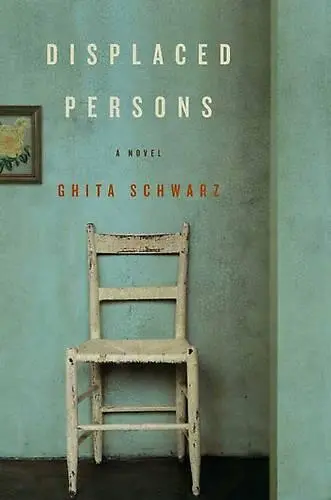
- Название:Displaced Persons
- Автор:
- Жанр:
- Год:неизвестен
- ISBN:нет данных
- Рейтинг книги:5 / 5. Голосов: 1
-
Избранное:Добавить в избранное
- Отзывы:
-
Ваша оценка:
Displaced Persons: краткое содержание, описание и аннотация
Предлагаем к чтению аннотацию, описание, краткое содержание или предисловие (зависит от того, что написал сам автор книги «Displaced Persons»). Если вы не нашли необходимую информацию о книге — напишите в комментариях, мы постараемся отыскать её.
In May 1945, Pavel Mandl, a Polish Jew recently liberated from a concentration camp, lands near a displaced persons camp in the British occupation zone of newly defeated Germany. Alone, possessing nothing but a map, a few tins of food, a toothbrush, and his identity papers, he must scrape together a new life in a chaotic community of refugees, civilians, and soldiers.
Gifted with a talent for black-market trading, Pavel soon procures clothing, false documents, and a modest house, where he installs himself and a pair of fellow refugees – Fela, a young widow who fled Poland for Russia at the outset of the war, and Chaim, a resourceful teenage boy whose smuggling skills have brought him to the Western zones. The trio soon form a makeshift family, searching for surviving relatives, railing against their circumscribed existence, and dreaming of visas to America.
Fifteen years later, haunted by decisions they made as "DPs," Pavel and Fela are married and living in Queens with their young son and daughter, and Chaim has recently emigrated from Israel with his wife, Sima. Pavel opens a small tailoring shop with his scheming brother-in-law while Fela struggles to establish peace in a loosely traditional household; Chaim and Sima adapt cheerfully to American life and its promise of freedom from a brutal past. Their lives are no longer dominated by the need to endure, fight, hide, or escape. Instead, they grapple with past trauma in everyday moments: taking the children to the municipal pool, shopping for liquor, arguing with landlords.
For decades, Pavel, Fela, and Chaim battle over memory and identity on the sly, within private groups of survivors. But as the Iron Curtain falls in the 1990s, American society starts to embrace the tragedy as a cultural commodity, and survivor politics go public. Clever and stubborn, tyrannical and generous, Pavel, Fela, and Chaim articulate the self-conscious strivings of an immigrant community determined to write its own history, on its own terms.
In Displaced Persons, Ghita Schwarz reveals the interior despairs and joys of immigrants shaped by war – ordinary men and women who have lived through cataclysmic times – and illuminates changing cultural understandings of trauma and remembrance.
Displaced Persons — читать онлайн бесплатно полную книгу (весь текст) целиком
Ниже представлен текст книги, разбитый по страницам. Система сохранения места последней прочитанной страницы, позволяет с удобством читать онлайн бесплатно книгу «Displaced Persons», без необходимости каждый раз заново искать на чём Вы остановились. Поставьте закладку, и сможете в любой момент перейти на страницу, на которой закончили чтение.
Интервал:
Закладка:
He told Bob he would take a walk before going home, but instead waited in the receiving room adjacent to the recital hall. She entered from a door Chaim had not noticed until she walked through it, her pianist at her side. Even at a distance he could see a silver swath of makeup extending from her eyelids, reflecting against her white skin and rouged cheekbones.
Chaim waited until the number of concertgoers flanking her had dwindled to four. He thought he saw her looking at him with some concentration as he approached. As he came near he put on a slight smile, then murmured, “I was with you when you attended your first concert, more than twenty-five years ago.”
She took in a breath, let it out in a laugh. Of course she remembered him, her fellow refugee, along with every detail of the concert hall, what their teachers wore, the exact music played. That night was one of the most beautiful nights of her life. The others around her moved away.
Do you like my dress? she said, in Yiddish. It was floor length, the color of lilac, entirely sequined. The neck scooped down, leaving the plump white skin around her collarbones bare.
Yes, said Chaim.
You’ll never believe how I got it. One of my first recitals here, I sang in a church. Through the music school. I had nothing! I wore something I thought was very elegant, borrowed from a teacher who had worn it years before. A man came to see me afterward, backstage.
Chaim shifted.
An elderly man. He said-Basia moved into English, “Miss Lara, you sing beautifully, you dress terribly. I want to buy you a gown.” Basia laughed.
Chaim said, He was Jewish.
Of course! But I couldn’t understand. And when he wrote me the check-it seemed a shameful thing to do. I said, No, no. Finally he started to speak in German, and I answered. My German, perhaps you remember my German-but it has improved with the schooling. I can sing it, if not speak it. So! He was here tonight, I wore the dress he helped me buy, one dozen years ago. Let me tell you, it was hard to get in it. I hope I get out.
Chaim laughed a little, stole a glance at the waistline of the dress. It did seem a bit tight. It turned out he knew the man too, an acquaintance of an acquaintance, a professor who had come from Germany in the 1930s, before the war.
I am so glad we saw each other, Chaim. It was fate, wasn’t it, to meet again at a concert?
Maybe fate, said Chaim. Maybe luck.
I perform again tomorrow, and I go out of town in a few weeks. Why don’t we have lunch before I go?
Wonderful, said Chaim. He took down her number.
I MET SOMEONE FROM Germany tonight, said Chaim, his hands calm on the kitchen table.
Yes? said Sima, half-smiling.
Basia Lehrman-a classmate from Belsen. She was the soloist-
Basia. Basia Lara? I know her.
You know her? How? The words came out louder, more shocked than he anticipated.
Not from camp. She’s much older than me, you know.
What, a year, two?
Maybe four. Sima’s lips went straight. Maybe five. She lies about her age, of course. I was in the army with her. She’d subtracted some years to postpone service. No birth certificate, no documents, impossible to prove. But still, hard to do, given that figure. She was developed like a thirty-year-old when she was eighteen, at least, when she said she was eighteen. Men always after her.
She was singing.
Ah, you heard her. She was in the acting troupe of the army. I heard her a few times. Beautiful voice.
Yes, Chaim agreed. She had a pretty voice.
Sima’s careful hands were cutting a pear; the juice spilled onto her polished pink fingernails. It was night. Lola was asleep. Chaim felt his hand push itself across the round table to cover his wife’s. She didn’t stop cutting.
Do you want a piece? she said. It’s so good.
No, said Chaim, withdrawing his hand. No.
Sima had started for Lola one collection after another, the most extravagant and least successful being an intricate dollhouse. Lola was not delicate; she broke things, and miniatures made her nervous. She was quite tall for her age, lithe and loud. The dollhouse was kept in Lola’s room, but Lola rarely touched it. Sima dusted the insides, bought tiny furniture, small rugs, even little dishes. Sima had not had a girlhood, Chaim thought. She had not had a girlhood and so still was a girl. She had been poor and deprived but sheltered in youth, protected and watched. Now, suddenly learning to be without parents, she was learning what it was not to be young.
Basia was old.
SIMA GOT UP AND washed her plate. Chaim stayed in the kitchen, then went to the living room, turned on the hi-fi. He put on Rachmaninoff’s Third, a new Lazar Berman recording he had brought home from the station. He played it low and sat on the sofa, waiting for Sima to come out from the bedroom and ask him to join her.
They had lied to Lola until Sima had come back. He had lied, because Sima had wanted him to. She wanted to tell her daughter about Berel’s death in person. He would sit in the living room with the record player on, waiting for the telephone to ring while Fela made dinner for him and his daughter in the kitchen, Lola convincing her to put chocolate in her apple cake, Pavel smiling wider than Chaim remembered ever seeing, Lola looking happy and ignorant.
Every night the same thing. Chaim would tell a funny story about Lola. But Sima’s laughs would come out unnatural and short, barked over the international phone lines.
Chaim, she said. How will I tell her?
I can tell her, he offered again.
I want to. Please, let it wait.
But it made him nervous to wait, to watch his daughter’s mouth opening like a bird’s: “How is Sabah? What does he say? When is he coming out of the hospital?”
He would turn away and say, “Not good, not good.” Then, as if to make himself feel more truthful: “Very bad.”
He thought their daughter was stronger than Sima believed. Lola was healthy and exuberant, more trouble than her school could handle: good trouble, the trouble of a strong child. She was mischievous. She laughed uncontrollably at jokes made by schoolmates, whispered during emergency drills when the rule was silence. Chaim went to the meetings with Sima, nodded solemnly over their daughter’s failings, flirted gently with the teachers. Lola would burst into tears afterward and quickly recover. She knew that people died; if he told her the truth she would not collapse. Grief was grief, it did not matter who bore the message or in what form the message was given. It was not good to give their daughter the luxury of believing that when death came, it came gently, accompanied by a mother’s comfort.
HE COULD NOT REMEMBER what he had felt when he had learned of his father’s death, when he had seen his brother-and even if he could remember he preferred to blot it out. Chaim remembered only flashes of shock and horror-the sadness had come later, when the world he once knew seemed a forgotten story, something in films, grief forming in a fog, surrounding him, but refusing to fill him the way he saw that his wife was filled.
Upon her return Sima had become silent and inward, even with Lola. He wanted to talk to her, to tell her that he too wept for her father, the man who had given him a new family, but he felt that crying in front of her would seem intrusive, presumptuous. Berel had mocked him at their first meeting. That was how Chaim remembered it-Sima’s father’s sarcasm at his painfully new Hebrew surname: Halom. Chaim had changed it, cleverly, he had thought, to the translation of his own name, his father’s name, Traum, dream. He wanted to feel new in his new country, new and native, his names rolling off the Hebrew tongue with thoughtless ease. He fooled almost no one, of course: his accent, though mild compared with that of the other Europeans, and perhaps more his face, its telltale fatigue and suspicion, gave him away as a boy from the diaspora, a meek goat who had escaped the slaughterhouse by accident, by intervention from forces stronger than himself. But the change of name signified at least a willingness to adapt and to fight. He would use the word for dream as it occurred in the Bible, not as it had been handed down to him in a murderous Europe.
Читать дальшеИнтервал:
Закладка:
Похожие книги на «Displaced Persons»
Представляем Вашему вниманию похожие книги на «Displaced Persons» списком для выбора. Мы отобрали схожую по названию и смыслу литературу в надежде предоставить читателям больше вариантов отыскать новые, интересные, ещё непрочитанные произведения.








Обсуждение, отзывы о книге «Displaced Persons» и просто собственные мнения читателей. Оставьте ваши комментарии, напишите, что Вы думаете о произведении, его смысле или главных героях. Укажите что конкретно понравилось, а что нет, и почему Вы так считаете.