Ghita Schwarz - Displaced Persons
Здесь есть возможность читать онлайн «Ghita Schwarz - Displaced Persons» весь текст электронной книги совершенно бесплатно (целиком полную версию без сокращений). В некоторых случаях можно слушать аудио, скачать через торрент в формате fb2 и присутствует краткое содержание. Жанр: Современная проза, на английском языке. Описание произведения, (предисловие) а так же отзывы посетителей доступны на портале библиотеки ЛибКат.
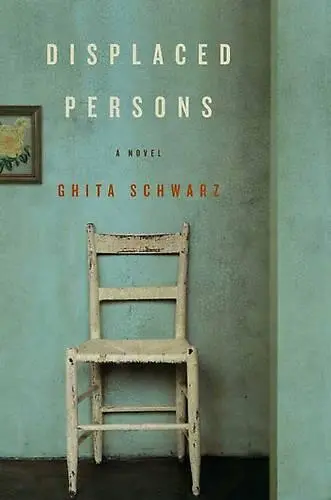
- Название:Displaced Persons
- Автор:
- Жанр:
- Год:неизвестен
- ISBN:нет данных
- Рейтинг книги:5 / 5. Голосов: 1
-
Избранное:Добавить в избранное
- Отзывы:
-
Ваша оценка:
Displaced Persons: краткое содержание, описание и аннотация
Предлагаем к чтению аннотацию, описание, краткое содержание или предисловие (зависит от того, что написал сам автор книги «Displaced Persons»). Если вы не нашли необходимую информацию о книге — напишите в комментариях, мы постараемся отыскать её.
In May 1945, Pavel Mandl, a Polish Jew recently liberated from a concentration camp, lands near a displaced persons camp in the British occupation zone of newly defeated Germany. Alone, possessing nothing but a map, a few tins of food, a toothbrush, and his identity papers, he must scrape together a new life in a chaotic community of refugees, civilians, and soldiers.
Gifted with a talent for black-market trading, Pavel soon procures clothing, false documents, and a modest house, where he installs himself and a pair of fellow refugees – Fela, a young widow who fled Poland for Russia at the outset of the war, and Chaim, a resourceful teenage boy whose smuggling skills have brought him to the Western zones. The trio soon form a makeshift family, searching for surviving relatives, railing against their circumscribed existence, and dreaming of visas to America.
Fifteen years later, haunted by decisions they made as "DPs," Pavel and Fela are married and living in Queens with their young son and daughter, and Chaim has recently emigrated from Israel with his wife, Sima. Pavel opens a small tailoring shop with his scheming brother-in-law while Fela struggles to establish peace in a loosely traditional household; Chaim and Sima adapt cheerfully to American life and its promise of freedom from a brutal past. Their lives are no longer dominated by the need to endure, fight, hide, or escape. Instead, they grapple with past trauma in everyday moments: taking the children to the municipal pool, shopping for liquor, arguing with landlords.
For decades, Pavel, Fela, and Chaim battle over memory and identity on the sly, within private groups of survivors. But as the Iron Curtain falls in the 1990s, American society starts to embrace the tragedy as a cultural commodity, and survivor politics go public. Clever and stubborn, tyrannical and generous, Pavel, Fela, and Chaim articulate the self-conscious strivings of an immigrant community determined to write its own history, on its own terms.
In Displaced Persons, Ghita Schwarz reveals the interior despairs and joys of immigrants shaped by war – ordinary men and women who have lived through cataclysmic times – and illuminates changing cultural understandings of trauma and remembrance.
Displaced Persons — читать онлайн бесплатно полную книгу (весь текст) целиком
Ниже представлен текст книги, разбитый по страницам. Система сохранения места последней прочитанной страницы, позволяет с удобством читать онлайн бесплатно книгу «Displaced Persons», без необходимости каждый раз заново искать на чём Вы остановились. Поставьте закладку, и сможете в любой момент перейти на страницу, на которой закончили чтение.
Интервал:
Закладка:
Where had they been after Osh? She wanted to ask, suddenly-why did she not know where she had been?
No, she could not ask.
But she felt her lips moving, the words slipping out of her mouth. Tatteh , where were we after Osh?
He looked at her, a little satisfied smile. She knew what he was thinking-at last, she’s admitting it, with a deathbed question.
Hmph, he said, eyes small and alert.
Oh, don’t answer it, if you can’t remember either.
Of course I remember. Osh was the last place before Uzbekistan, and then from there we went back.
How did we hear to go back to Germany?
We didn’t hear anything. We were told to register to get on a train, and we did it. It was the rumors on the train, so many rumors that we knew it was true.
I don’t remember the train out of there, she said. Only the train to Russia.
It didn’t feel like a train, he said, it didn’t feel like a train because it was so slow. They had to keep stopping and hooking and unhooking the cars. And the tracks! Destroyed. It must have taken us more than a month to get to Germany.
I wish I remembered it better.
No you don’t, said her father. Her father leaned back into his pillow. His eyes glittered, triumphant.
Forget about it, said Sima.
No, no, I am delighted you ask.
She leaned toward his ear and continued. There is no reason for you to be angry with me. No reason!
He did not answer.
She continued. What is it with you? Acting like a little child who did not get his way. What do you want, to prove to me you can die?
I wish it were a little easier to prove.
Terrible! You have a nerve!
Oh, I see, I have a nerve. I do. His voice came out in a whisper. What a daughter I have!
She stopped, sat in the large chair near the head of the bed, looked away from him. How ridiculous he was. Always so dramatic. He wanted to make her burst into tears! Well, she would not. It was a bad habit she had gotten into with him in the last few years, matching his moods, shout for shout. She never would have dared with her mother. No, her mother had been a mother, scolding her, hitting her-even when she was twenty already, smacking her with a towel when Sima did not come home one night, she was out with a boy from the army again-a real mother, who had died when Sima had only just become a mother herself. But her father-her father had lived long enough to become her friend.
THE PASSENGERS APPLAUDED AS the plane rolled down the runway. The national anthem began playing through the speakers. Lola would be waking up, struggling with her father, begging him in her raspy sleep voice to let her have five more minutes, just five more minutes, then dressing lightly, stealing one of Fela’s cookies from the upper cabinet before Chaim saw, ignoring Chaim’s shout to go get her galoshes, now, right now, forgetting to grab her wool hat. She smiled at the thought of it, relieved at being here at last, of arriving on time, in time. Her neighbor in the aisle seat smiled back at her. Sima had new photographs to show her father, in a little envelope in her purse, and she touched them as she stood up to exit.
ABOVE THE CUSTOMS HALL she could see the second floor of the terminal, families peering through the glass walls for the arriving passengers below. She looked up absently, out of habit, from when her father used to come and wait for her and Lola to arrive, then shook her head. She saw a face that looked like her aunt Zosia’s. Her heart began to pound. Why would Zosia be here? She had told her not to pick her up. But Zosia had not listened to her, of course she had not listened to her, she had not wanted Sima to come alone to the hospital, she was worried that Sima would be tired after her flight, her aunt was like a mother to her. Sima had told her not to, but of course Zosia had come to the airport to pick her up. She looked up again and squinted. Yes, that was Ze’ev with her, no doubt reluctant to let Zosia drive alone. Sima’s hands began to sweat. Are you all right? said the customs agent.
Of course, said Sima.
But the agent eyed her carefully and again ran through the list of questions she had just answered, just to make sure. Time was wasting, but Sima answered politely, calm. It was only noon. Nothing could have happened yet. Not even a day had passed. She walked out of the baggage check and looked for her aunt and uncle. There they were, her aunt in a blue cotton shirt and gray skirt, sunglasses on her head, her face straight, expressionless, her unshaven husband grasping her hand, her eyes-that look, thought Sima in a panicked flash, that look, something terrible has-
What has happened? said Sima. What has happened? My God, what has happened?
Your father-her aunt began.
But Sima could not let her finish. “ Oy, Gott,” she cried, again and again. God, Oy Gott , her words and grief were pulsing from her bones, through her skin, in all the languages she knew.
HE HAD BEEN ALONE. She had come here to be his companion, and he had died in his narrow bed alone.
You were with him, said Chaim. It is a blessing.
Her husband’s voice, clear, strangely near despite the telephone, was breaking; he was crying. She could hear Fela’s voice, faint garbles of concern in the background, and she felt a wave of hate for her husband. Here she was, all alone, abandoning her daughter to her husband’s secondhand telling. She was alone here, her daughter was alone there, or almost alone, and her father had died alone, alone, alone.
Sima’s shame was great. Yes, she lied, dry-voiced. Yes. I was with him, and he fought it. He fought with me near him. He was not alone.
A blessing, wept Chaim. A blessing. He got his wish.
The Performance
S OMEONE AT WORK HAD tickets to a concert. A commentator whose companion was sick. Would Chaim like to come instead?
Yes, he thought. He would. Normally the reporters and announcers did not mix with the technical people-it was a nice gesture, he should not refuse it lightly.
He called Sima at home. She answered on the second ring, her voice compressed, more flat than sad, as if she was lying down.
Go, she said. Go. Don’t worry about me.
HE DECIDED TO STAY a bit late at his desk, grab a bite with the commentator. Bob. They sat at a coffee shop two blocks from Avery Fisher Hall, Chaim nibbling on unbuttered toast, Bob swallowing a hamburger.
It was a concert at a small orchestra society, with a soloist whose face, when he opened the program, he thought familiar. And the name-Basia Lara-Basia. He read her biography in the program twice. Yes, it must be her.
Basia Lehrman, now called Lara, Basia Lara. She too had gone from Germany after the war to Israel, but he had not seen her since-since when, perhaps since Europe, when a teacher in the DP camp had taken the musically gifted children to a concert in Hamburg. How old had he been, that concert? No more than fourteen, still living in the house in Celle with Pavel and Fela. He had not seen her since, but he believed he had heard something of her, a picture some years ago in a Tel Aviv newspaper, accounts of a large international prize she had won, the first for an Israeli, let alone a refugee.
Basia had become professional, successful. She lived in Baltimore with her conductor-husband, who taught at the conservatory. But that was all he read of her before she appeared, large and dark haired, skin pale against a gleaming dress, on the stage. She began to sing, love songs in German and Italian, to the accompaniment of a piano. Lieder from Schubert, music he had not heard before and did not melt into, then an aria in Italian that flowed into him, her voice falling in minor notes like dripping water, slow but detached. Mio ben ricordati , it began, please remember, remember, my beloved, the awkward English translation almost unnecessary, the small vocabulary he had absorbed in youth budding up inside him, words he could recognize once he heard them but not call up before they came out of her mouth. Mio ben ricordati , how my heart loved you, and if ashes can love, from the grave I still will love you. When the song ended, there was a long pause. Chaim saw the singer’s face register surprise at the silence, then a broad smile as the clapping began.
Читать дальшеИнтервал:
Закладка:
Похожие книги на «Displaced Persons»
Представляем Вашему вниманию похожие книги на «Displaced Persons» списком для выбора. Мы отобрали схожую по названию и смыслу литературу в надежде предоставить читателям больше вариантов отыскать новые, интересные, ещё непрочитанные произведения.







Обсуждение, отзывы о книге «Displaced Persons» и просто собственные мнения читателей. Оставьте ваши комментарии, напишите, что Вы думаете о произведении, его смысле или главных героях. Укажите что конкретно понравилось, а что нет, и почему Вы так считаете.