Ghita Schwarz - Displaced Persons
Здесь есть возможность читать онлайн «Ghita Schwarz - Displaced Persons» весь текст электронной книги совершенно бесплатно (целиком полную версию без сокращений). В некоторых случаях можно слушать аудио, скачать через торрент в формате fb2 и присутствует краткое содержание. Жанр: Современная проза, на английском языке. Описание произведения, (предисловие) а так же отзывы посетителей доступны на портале библиотеки ЛибКат.
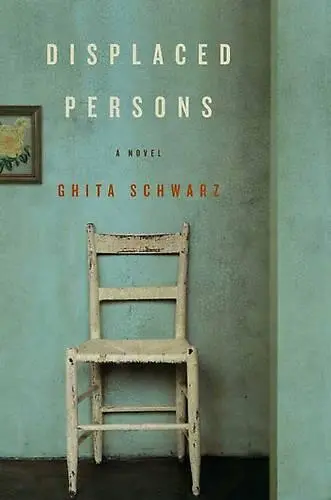
- Название:Displaced Persons
- Автор:
- Жанр:
- Год:неизвестен
- ISBN:нет данных
- Рейтинг книги:5 / 5. Голосов: 1
-
Избранное:Добавить в избранное
- Отзывы:
-
Ваша оценка:
Displaced Persons: краткое содержание, описание и аннотация
Предлагаем к чтению аннотацию, описание, краткое содержание или предисловие (зависит от того, что написал сам автор книги «Displaced Persons»). Если вы не нашли необходимую информацию о книге — напишите в комментариях, мы постараемся отыскать её.
In May 1945, Pavel Mandl, a Polish Jew recently liberated from a concentration camp, lands near a displaced persons camp in the British occupation zone of newly defeated Germany. Alone, possessing nothing but a map, a few tins of food, a toothbrush, and his identity papers, he must scrape together a new life in a chaotic community of refugees, civilians, and soldiers.
Gifted with a talent for black-market trading, Pavel soon procures clothing, false documents, and a modest house, where he installs himself and a pair of fellow refugees – Fela, a young widow who fled Poland for Russia at the outset of the war, and Chaim, a resourceful teenage boy whose smuggling skills have brought him to the Western zones. The trio soon form a makeshift family, searching for surviving relatives, railing against their circumscribed existence, and dreaming of visas to America.
Fifteen years later, haunted by decisions they made as "DPs," Pavel and Fela are married and living in Queens with their young son and daughter, and Chaim has recently emigrated from Israel with his wife, Sima. Pavel opens a small tailoring shop with his scheming brother-in-law while Fela struggles to establish peace in a loosely traditional household; Chaim and Sima adapt cheerfully to American life and its promise of freedom from a brutal past. Their lives are no longer dominated by the need to endure, fight, hide, or escape. Instead, they grapple with past trauma in everyday moments: taking the children to the municipal pool, shopping for liquor, arguing with landlords.
For decades, Pavel, Fela, and Chaim battle over memory and identity on the sly, within private groups of survivors. But as the Iron Curtain falls in the 1990s, American society starts to embrace the tragedy as a cultural commodity, and survivor politics go public. Clever and stubborn, tyrannical and generous, Pavel, Fela, and Chaim articulate the self-conscious strivings of an immigrant community determined to write its own history, on its own terms.
In Displaced Persons, Ghita Schwarz reveals the interior despairs and joys of immigrants shaped by war – ordinary men and women who have lived through cataclysmic times – and illuminates changing cultural understandings of trauma and remembrance.
Displaced Persons — читать онлайн бесплатно полную книгу (весь текст) целиком
Ниже представлен текст книги, разбитый по страницам. Система сохранения места последней прочитанной страницы, позволяет с удобством читать онлайн бесплатно книгу «Displaced Persons», без необходимости каждый раз заново искать на чём Вы остановились. Поставьте закладку, и сможете в любой момент перейти на страницу, на которой закончили чтение.
Интервал:
Закладка:
Her father had said nothing through the tour until he stepped into the car, newly thin, jittery from not smoking.
If you put me there, he said, we won’t have to wait for the doctors to kill me. I’ll do it myself.
Sima felt ashamed. You won’t go there. It’s only if you wish.
I don’t wish, he had said.
He had become bitter and depressed, angry at his doctors, angry at her. The summer before, after his surgery, she had stayed with him for a month, making him food without salt. He paced around his tiny apartment in his dark robe, not getting dressed, complaining about her cooking. He wanted cholent. He wanted derma. Sima did not know how to make any of these things. They had rarely been able to afford more than the occasional chicken when Sima was growing up. What her mother had taught her to cook, she had mostly forgotten.
Sima’s aunt cooked for him now. Zosia cooked with no salt for her own husband, who suffered from angina. While Zosia bustled around them, serving, clearing, rearranging, the two men would sit sullen at the table, shaking the pepper onto the food to make up for the lost flavor. After, they would play cards. Berel loved cards. When Sima was in the army he could disappear for two days at a time just to play, and when he returned, Sima’s mother would be waiting for him, furious, silent. Zosia was more tolerant. Berel would go over to her house to play with Zosia’s husband. The summer Lola was there, Berel took her with him. When her grandfather lost she would cry in loud, hopeless sobs.
AT LAST SIMA WAS ushered into a private curtained area. No matter how often she had done it, each time Sima passed through the orange curtain, an El Al stewardess already unzipping her black valise, she felt a shudder of anxiety that they would find something dangerous, that someone had managed to slip something in while she wasn’t looking, and that she would be arrested and prevented from getting on the plane. Ridiculous, childish. She should worry more that the stewardess would judge her packing, but of course even in the rushed few hours after the call from her aunt and the purchase of her ticket, she had managed to arrange her clothes neatly.
The white counter on which her suitcase lay open looked to Sima like an operating table. The stewardess wordlessly removed Sima’s bathrobe, blouses, slacks, brassieres, with fingers that were bare of polish but still neat and soft-looking. Sima’s own hands looked terrible, her knuckles chapped, a hangnail at her thumb. She should have gotten a manicure last week but had not had the time, and now this week-well. What a thing to think of. Still she put her hands behind her purse so that the stewardess, a pretty girl, thin as an actress, olive skinned, wouldn’t look at them in passing. She had once tried to be one of those perfect girls, had managed a pale version of that look while in the army, but she had never felt right. She felt more at home in New York than she ever had as a teenager in Israel, trying terribly to fit in.
The stewardess was speaking. “What is the purpose of your trip?”
Sima felt annoyed at the use of English. It was as if people thought she betrayed Jews everywhere by emigrating to the States. She replied in Hebrew: My father is very sick. She turned her wrist to look at her watch, a stupid gesture, automatic, as if a faster inspection would make her arrive in Tel Aviv sooner. The stewardess motioned to her to zip up her suitcase, her face blank.
“Have a safe flight,” she said in English.
“Thank you,” Sima answered, defeated.
SIMA BIT DOWN ON her chewing gum as the plane rose into the night, clutched at the skin of her forearms, a nervous habit. She had a window seat, two rows behind the exits at the wing, close enough to escape quickly, but not so close that she would have to figure out how to open the emergency doors. The seat next to her was empty, and an older woman had the aisle.
When Sima was a child her mother had a little folktale she repeated on the High Holidays-the sky opening, a chance to see the home of God and perhaps to make a wish. One was supposed to see three stars, and then the angels would write the stargazer into the book of life. Sima had thought of a big composition book, her own ugly handwriting, and the scratchy pencils provided by the refugee aid organizations, and could not understand her mother’s pleasure at the idea. Still, looking into God’s house sounded interesting: warm light, meat on the table, enough bread. In Palestine, her mother had said, the oranges are more plentiful than potatoes.
When Lola was smaller Sima had tried to explain the story to her, but she had forgotten its details and had filled in her own. Stars like fruit trees, blazing chariots of angels, all the dead smiling down, covered in silver raiment. Lola thought planes were temporary stars, their green and red lights cutting across the cold night sky without the help of God or a holiday. No, no, Sima had said, but when she called her father to help her fill in the outline of the folktale, he said he did not know what she was talking about.
He had gone along with her mother’s pretty stories for most of his life, but now that he was ill himself he had abandoned the practice. It was eight years since her mother’s death. She was sentimental, she knew, even a little superstitious, but she thought that her mother would watch over, guard her and her father, make sure she arrived in time. She looked at her watch again. 6:15 p.m., New York. She would not adjust her watch until the very last minute. In no time at all she would be there. She looked at the magazine lying unopen on her lap, thought about opening it, decided to wait. She would sleep for the second half of the flight and afterward find her luggage right away. She would go straight to the hospital from the airport, kiss him, comfort him, then take a quick taxi ride to his apartment to pick up fresh clothes for him. She imagined the apartment, his pajamas folded neatly under his pillow, the odor of his sheets and blankets. Her father would come home, and his bed would be undisturbed, just as he had left it. Or perhaps she would do a washing. He might expect her to. She thought of the wallpaper of her parents’ bedroom, the gold flowers skimming green stripes. Her mother had pasted the paper up herself, more than fifteen years ago. Her father kept it just as clean as her mother had. It still looked new.
SHE EXAMINED HER TRAY of hot food. The smell of the meat nauseated her, but she could pick at the roll and the cold margarine that came with it. Chaim would take Lola out for pizza tonight, she thought, and would let her have a soda. Well, once in a while it was not so bad.
I don’t think it will rain when we arrive, she heard. She turned-her neighbor on the aisle seat was speaking, her thin lips moving on a face spotted from the sun. They hoped so, of course-the woman added, nodding to Sima. It has been so long. But I don’t think it will.
Sima smiled, nodded. The woman might be the age her mother would have been. I think you are right, Sima said. Not today.
May I look at your magazine?
Oh! Yes, of course. She handed it to her. I’m not paying attention to it. Keep it.
No, no, I just want a look.
A native Israeli, Sima thought. Not from Europe. Not just the accent but the boldness. Her mother never would have asked a stranger for a magazine. How her mother had sheltered her, protected her. Not that those acts were enough to eliminate the constant fear and hunger, of course-but the stories she told her-lies, even-had kept Sima calm, at least in the moments of the telling. In Russia, when Berel had disappeared, sent away to hard labor, and she and her mother had been alone, her mother had spent night after night quieting her with stories, folktales, small events from her hometown before her marriage, the lives of her sisters, her brothers, the dry goods store the family had owned, the small cousins who tore down a shelf of dishes one awful day. Her mother had a superstition for every event, a little tale for every night. Why couldn’t Sima remember them? That one about stars and the wish bothered her in particular. She could remember conversing about it, her mother’s small round face, but not the tale itself.
Читать дальшеИнтервал:
Закладка:
Похожие книги на «Displaced Persons»
Представляем Вашему вниманию похожие книги на «Displaced Persons» списком для выбора. Мы отобрали схожую по названию и смыслу литературу в надежде предоставить читателям больше вариантов отыскать новые, интересные, ещё непрочитанные произведения.








Обсуждение, отзывы о книге «Displaced Persons» и просто собственные мнения читателей. Оставьте ваши комментарии, напишите, что Вы думаете о произведении, его смысле или главных героях. Укажите что конкретно понравилось, а что нет, и почему Вы так считаете.