Ghita Schwarz - Displaced Persons
Здесь есть возможность читать онлайн «Ghita Schwarz - Displaced Persons» весь текст электронной книги совершенно бесплатно (целиком полную версию без сокращений). В некоторых случаях можно слушать аудио, скачать через торрент в формате fb2 и присутствует краткое содержание. Жанр: Современная проза, на английском языке. Описание произведения, (предисловие) а так же отзывы посетителей доступны на портале библиотеки ЛибКат.
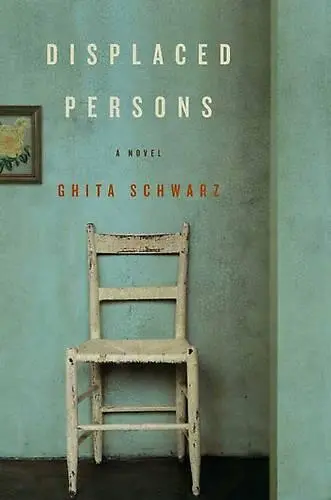
- Название:Displaced Persons
- Автор:
- Жанр:
- Год:неизвестен
- ISBN:нет данных
- Рейтинг книги:5 / 5. Голосов: 1
-
Избранное:Добавить в избранное
- Отзывы:
-
Ваша оценка:
Displaced Persons: краткое содержание, описание и аннотация
Предлагаем к чтению аннотацию, описание, краткое содержание или предисловие (зависит от того, что написал сам автор книги «Displaced Persons»). Если вы не нашли необходимую информацию о книге — напишите в комментариях, мы постараемся отыскать её.
In May 1945, Pavel Mandl, a Polish Jew recently liberated from a concentration camp, lands near a displaced persons camp in the British occupation zone of newly defeated Germany. Alone, possessing nothing but a map, a few tins of food, a toothbrush, and his identity papers, he must scrape together a new life in a chaotic community of refugees, civilians, and soldiers.
Gifted with a talent for black-market trading, Pavel soon procures clothing, false documents, and a modest house, where he installs himself and a pair of fellow refugees – Fela, a young widow who fled Poland for Russia at the outset of the war, and Chaim, a resourceful teenage boy whose smuggling skills have brought him to the Western zones. The trio soon form a makeshift family, searching for surviving relatives, railing against their circumscribed existence, and dreaming of visas to America.
Fifteen years later, haunted by decisions they made as "DPs," Pavel and Fela are married and living in Queens with their young son and daughter, and Chaim has recently emigrated from Israel with his wife, Sima. Pavel opens a small tailoring shop with his scheming brother-in-law while Fela struggles to establish peace in a loosely traditional household; Chaim and Sima adapt cheerfully to American life and its promise of freedom from a brutal past. Their lives are no longer dominated by the need to endure, fight, hide, or escape. Instead, they grapple with past trauma in everyday moments: taking the children to the municipal pool, shopping for liquor, arguing with landlords.
For decades, Pavel, Fela, and Chaim battle over memory and identity on the sly, within private groups of survivors. But as the Iron Curtain falls in the 1990s, American society starts to embrace the tragedy as a cultural commodity, and survivor politics go public. Clever and stubborn, tyrannical and generous, Pavel, Fela, and Chaim articulate the self-conscious strivings of an immigrant community determined to write its own history, on its own terms.
In Displaced Persons, Ghita Schwarz reveals the interior despairs and joys of immigrants shaped by war – ordinary men and women who have lived through cataclysmic times – and illuminates changing cultural understandings of trauma and remembrance.
Displaced Persons — читать онлайн бесплатно полную книгу (весь текст) целиком
Ниже представлен текст книги, разбитый по страницам. Система сохранения места последней прочитанной страницы, позволяет с удобством читать онлайн бесплатно книгу «Displaced Persons», без необходимости каждый раз заново искать на чём Вы остановились. Поставьте закладку, и сможете в любой момент перейти на страницу, на которой закончили чтение.
Интервал:
Закладка:
The bookstore was open; Pavel pulled open the door and marched in, back straight, serious. Everything was as it had been: the beige paint chipping from the bookshelves, the man bent at the register with his hands on a crumbling paperback, the smell of dead cigarettes drifting up from the couch. Pavel stood at the entrance of the store, waiting.
“Hello?” A voice from the register.
Ah, it would start. But what would? Pavel stood still, a little afraid. He was here to confront the owner, but with what? He was here to shout at him, to explain to him-why was he here? Perhaps merely to look at the man in the eye, to let the owner observe in person, for as long as he liked, that Pavel’s war-bruised face had already healed into something else, that Pavel was not just eating and breathing, not just walking and working, but living.
Something had to be said. It was silent in the store while the manager waited for him to speak.
“Yes,” he said to the man, and looked again.
It wasn’t the owner but someone else. A large fellow, a beard, a battered black cap in the style worn by students.
“Yes,” he said again, slowly, confused. How to explain? “Yes, I would like to buy a book.”
The man looked surprised.
Immediately Pavel understood: it was the wrong thing to say, the mark of a stranger. People who came here, the regulars, his daughter, they took care of themselves. It was the kind of store where you spoke with the man at the register, but not for help, just for chat. You looked yourself at the books; conversation developed naturally, informally, like gossip among friends. Have you ever read something by so-and-so? What’s next on the list? How did you like the French history? Customers here did not ask certain questions; they had information already. Pavel, with his crippled leg and pained accent, his tie and dark jacket, his unschooled knowledge of wool and hard damask, was the wrong type of customer.
But the man was answering. “Well,” he said, in a soft tone, a kind tone, “you came to the right place.”
Pavel gazed at the broad face, the scraggle of hair that matted the chin, the too-thick brown mustache that drooped past the lips, the lips upturned in a smile. A polite, youthful, store clerk’s smile.
“What sort of book?” the clerk continued. “Or should I recommend something from our elegant collection?”
He opened his young arms to emphasize the joke; they were covered in a shirt of bone white. It seemed to Pavel that the color spread over the crowded shelves behind the register, sending a brief light onto the wall of the store.
Flight 028
I F THERE WERE NO delays, if the plane left New York at six in the evening, Sima would arrive in Tel Aviv at noon the next day. It was an eleven-hour flight, but because of the time difference, it would feel as if eighteen hours had passed. It was irrational, but the extra seven hours made her even more nervous. There was not much time left. Her aunt Zosia, waking her up with a predawn call, had made that clear. Her father had been hospitalized again, this time with bacterial pneumonia, his immune system weakened from the chemotherapy, his lungs at half capacity from the surgery.
Chaim put the suitcase down between them as they waited to check in, then moved with her to the center of the terminal, with its large signs announcing arrivals and departures. Flight 028 was departing on time. He will wait for you, Chaim said in Yiddish. Then, in English, as if to reassure her more, “You’ll make it. Nothing to be afraid of.”
But Sima was afraid. She hated flying anywhere, much less overseas, and the two hours of waiting alone to have her bags inspected gave her time to imagine every terrible scenario: hijacking, bombs, engine malfunction, her body burned, vaporized, drowned, her father dying alone, her daughter motherless. She could have bought a cheaper flight on another airline, but El Al was the safest, and after the disasters on TWA and Swissair she and Chaim had decided that they didn’t want to use another airline, even if the frequent trips since her father had become sick became more of a financial burden. She worried about leaving her daughter for an unknown period of time, alone with Chaim’s casual views of nutrition, with only the promise of visits from Fela Mandl to keep the household from chaos. She dreaded the nausea she got when the plane began to climb, and she did not want to risk an extra tablet of Dramamine, above and beyond the maximum recommended on the label. She was afraid of her father’s face when she arrived, the tubes and oxygen tank her aunt told her he was attached to, his face masked and ashen. She was scared to see his death and she was scared to miss it.
She did not know which outcome would be worse. When she emigrated from Israel it had not occurred to her that she would not be with her parents when they died. But now she realized it had been a fear of theirs. From the fold-out couch on which she spent her teenage years she could hear her parents whispering in the bedroom, and one night she had heard her mother crying, a rare occurrence, the same words over and over again, I hope they were together. They had heard a report from hometown, most of the village shot in the forest behind it, the rest eventually transported to a small camp in the East, one from which no one came out. Her parents did not know where their own parents lay buried, or even whether they were buried. Still for Sima the idea of visiting a grave of a relative seemed abstract, something she read about in books. Until her mother had actually died, Sima had not been convinced it would happen. It was her mother’s unspoken wish that Sima be there, and she had been, leaving newborn Lola with Chaim. If she had not been there, holding her father’s hand in the hospital, she might not have truly believed it. You’ll be here for me too, her father had said at the rabbi’s office, making the funeral arrangements. When her father had a wish, he spoke it.
“You’ll make it,” Chaim said again as they reached the security gate. He might not go, she wanted to say. It’s pneumonia. Curable. But she remained quiet, embraced her husband, and continued alone to the waiting area.
SHE HAD NEVER BEEN in this terminal by herself. She had gone with both Chaim and Lola for the Christmas school vacation, during her father’s second round of radiation treatments, and with Lola at the start of the summer, for the surgery to remove the cancerous section of his lung. Then she had felt hopeful. It had been a nighttime flight, and Lola had been excited to be awake so late, had talked and laughed about the book she was reading. Now Sima counted the passengers in the waiting area ahead of her, awaiting their individual luggage inspections. Eighteen. Now seventeen.
It seemed impossible to her that she was here, that this had happened, that she should be pulled across the earth, one arm here, one arm thousands of miles away, like a doll made of rubber. She had begged her father to move to New York after he had retired. But he had told her not to consider it. What would he do there, without his sister and brother and cousins, alone among men his age, not knowing the language? To be alone was a terrible thing, he had said during one of their discussions, and she had grimaced in guilt.
He had seen her face and taken advantage. You could move back here.
Chaim’s work, she started, looking the other way.
Ha! her father had answered.
It had not come up again, not even three months before, when she had brought Lola. It had been an unusually warm December, and Berel had been happy to see his granddaughter, even if his own daughter displeased him with every move. On a day Lola was at the beach with some cousins, Sima took her father to a nursing home, a reputable one, with green lawns and air-conditioned rooms. Chaim’s raise would pay for what Israeli state insurance would not.
Читать дальшеИнтервал:
Закладка:
Похожие книги на «Displaced Persons»
Представляем Вашему вниманию похожие книги на «Displaced Persons» списком для выбора. Мы отобрали схожую по названию и смыслу литературу в надежде предоставить читателям больше вариантов отыскать новые, интересные, ещё непрочитанные произведения.








Обсуждение, отзывы о книге «Displaced Persons» и просто собственные мнения читателей. Оставьте ваши комментарии, напишите, что Вы думаете о произведении, его смысле или главных героях. Укажите что конкретно понравилось, а что нет, и почему Вы так считаете.