Ghita Schwarz - Displaced Persons
Здесь есть возможность читать онлайн «Ghita Schwarz - Displaced Persons» весь текст электронной книги совершенно бесплатно (целиком полную версию без сокращений). В некоторых случаях можно слушать аудио, скачать через торрент в формате fb2 и присутствует краткое содержание. Жанр: Современная проза, на английском языке. Описание произведения, (предисловие) а так же отзывы посетителей доступны на портале библиотеки ЛибКат.
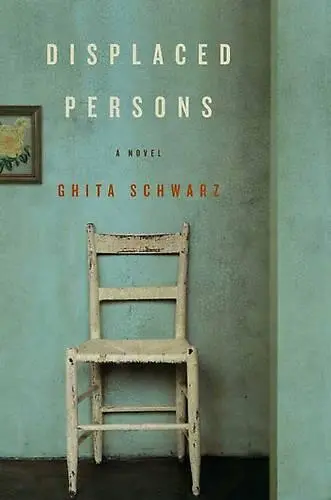
- Название:Displaced Persons
- Автор:
- Жанр:
- Год:неизвестен
- ISBN:нет данных
- Рейтинг книги:5 / 5. Голосов: 1
-
Избранное:Добавить в избранное
- Отзывы:
-
Ваша оценка:
Displaced Persons: краткое содержание, описание и аннотация
Предлагаем к чтению аннотацию, описание, краткое содержание или предисловие (зависит от того, что написал сам автор книги «Displaced Persons»). Если вы не нашли необходимую информацию о книге — напишите в комментариях, мы постараемся отыскать её.
In May 1945, Pavel Mandl, a Polish Jew recently liberated from a concentration camp, lands near a displaced persons camp in the British occupation zone of newly defeated Germany. Alone, possessing nothing but a map, a few tins of food, a toothbrush, and his identity papers, he must scrape together a new life in a chaotic community of refugees, civilians, and soldiers.
Gifted with a talent for black-market trading, Pavel soon procures clothing, false documents, and a modest house, where he installs himself and a pair of fellow refugees – Fela, a young widow who fled Poland for Russia at the outset of the war, and Chaim, a resourceful teenage boy whose smuggling skills have brought him to the Western zones. The trio soon form a makeshift family, searching for surviving relatives, railing against their circumscribed existence, and dreaming of visas to America.
Fifteen years later, haunted by decisions they made as "DPs," Pavel and Fela are married and living in Queens with their young son and daughter, and Chaim has recently emigrated from Israel with his wife, Sima. Pavel opens a small tailoring shop with his scheming brother-in-law while Fela struggles to establish peace in a loosely traditional household; Chaim and Sima adapt cheerfully to American life and its promise of freedom from a brutal past. Their lives are no longer dominated by the need to endure, fight, hide, or escape. Instead, they grapple with past trauma in everyday moments: taking the children to the municipal pool, shopping for liquor, arguing with landlords.
For decades, Pavel, Fela, and Chaim battle over memory and identity on the sly, within private groups of survivors. But as the Iron Curtain falls in the 1990s, American society starts to embrace the tragedy as a cultural commodity, and survivor politics go public. Clever and stubborn, tyrannical and generous, Pavel, Fela, and Chaim articulate the self-conscious strivings of an immigrant community determined to write its own history, on its own terms.
In Displaced Persons, Ghita Schwarz reveals the interior despairs and joys of immigrants shaped by war – ordinary men and women who have lived through cataclysmic times – and illuminates changing cultural understandings of trauma and remembrance.
Displaced Persons — читать онлайн бесплатно полную книгу (весь текст) целиком
Ниже представлен текст книги, разбитый по страницам. Система сохранения места последней прочитанной страницы, позволяет с удобством читать онлайн бесплатно книгу «Displaced Persons», без необходимости каждый раз заново искать на чём Вы остановились. Поставьте закладку, и сможете в любой момент перейти на страницу, на которой закончили чтение.
Интервал:
Закладка:
Pavel didn’t remember such fights with his brothers. He told this to his children: he never fought with his brothers and sisters. Never? Helen asked, genuinely surprised, every time Pavel said it. Larry had learned to guffaw at the comment. But it was true; Pavel had not fought too much with them. He was the eldest, and respected among them, and responsible for so many things in the household and the family business, he did not have the time. His own adolescence he had spent in his grandfather’s house, after his mother’s death, when all the children were scattered among the relatives. Upon Pavel’s return to the home, a year or two after his father remarried, he was already separate, above the rest. He developed a closeness with his two youngest brothers and kept them apart from each other when they became mischievous. He didn’t fight. He made peace.
The light in his daughter’s room was still on. Pavel opened the door.
“Gei schluffen, maidele, go to sleep.”
“Okay.”
“Turn off the light.”
“Okay.”
“Now.” The light went off.
LARRY WAS TELLING A story. His mouth was full of salad as he spoke.
Fela looked attentive, smiling with interest as she cut her baked potato, but Pavel found it difficult to concentrate. There was always some complaint! This one was a teacher Larry didn’t respect, had played a joke on, something or other. How Fela could smile at this, Pavel did not understand. How Pavel himself could keep silent, he did not understand that either.
The story came to a dramatic break, Larry flourishing his fork, a piece of lettuce flying off a tine and down to his plate. Pavel emitted a loud sigh.
Pavel, do you need more mustard? said Fela, in Yiddish.
No, no, he said. No. He took a delicate sip from his glass of slivovitz.
Larry’s story continued. A trail of heat from the liquor crept down Pavel’s chest. He began to catch fragments from the tale. The teacher, something about the teacher had made Larry angry, he and his friend. They had gone to look something up in the library, to prove the man wrong, no, to the bookstore, the used bookstore in Jackson Heights, they had gone to ask the owner something and had come upon a meeting of some kind. Just a few men, but why had they let Larry, and his friend, that boy whose hair was too long and always looked dirty, stay?
“So I brought Hell in the next time, one girl and all these men-don’t worry Ma, she was with me the whole time-and he still remembers every book you got from him, didn’t he, Hell?”
“Helen,” she said.
Something about the story was confusing to Pavel. When could this have taken place? Larry was in Hebrew school in the afternoons, or he played with the sports team, track and field. Would Larry have missed a sports practice for this? No. He would not have. Pavel turned his full attention to this interesting event that had pulled his son out of religious lessons.
Larry said, “Shell shock, you know, that thing after World War One, that’s when they named it, shell shock, where the soldiers would come back and hear bombs going off in their heads.”
Pavel swallowed another few drops of slivovitz. Larry’s voice floated from his mouth. He would ask Larry after dinner, what time this all had occurred, he wouldn’t let the whole thing bother Fela-if it would bother her at all, she took Larry’s side about the Hebrew school-he would wait. He would be calm. He would talk to his son with respect, with care. If he didn’t, Larry would probably try to trick him, to lie, and that would be too painful to witness. After all, had not Pavel performed his share of mischief in his youth? Perhaps, but not with school. Once, when he was already in high school, studying late, forgetting something he was to deliver on credit to a neighbor, his own father had tried to hit him, and he had grabbed his father’s hand and stopped it in midair. He had made his father afraid.
“Daddy,” Helen suddenly said. “You look so sad.”
“I do?” said Pavel, startled out of his thoughts, taken aback. “When?”
“All the time,” she said.
He looked at her. His daughter had the ability to shock with three words, four. Larry had to perform a whole dance, to entertain, but Helen, so quiet, could cut him open.
At last he answered: “But I’m not sad. I’m very happy.” He felt tears coming to his eyes. “I’m happy, happy.”
Then he stopped. What had he done a moment ago, what had he looked like? A child shouldn’t see her parents sad. There was time enough for that. On the other hand, could it be helped? Was it not a normal part of life, of everyone’s life? He thought suddenly of the people around him at work, at the deli counter where he bought a sandwich or soup for lunch. Were they so different from him? Didn’t they look sad on occasion? It never had occurred to him to notice.
“Daddy,” she repeated, her voice sounding distant, a false echo of her real voice. “I didn’t mean it. I thought that’s what he meant. Depressed , he said, not sad. ”
Depressed. Now this new word mixed with the old one and rang through him, breaking in his chest a small glass of bitterness.
“Who said?” he rasped. “Who said?” But he already knew.
The bookstore owner-moderately tall, sandy hair, thin face, those narrowing eyes-that was what was in them. Examination, inspection, curiosity. Depressed. That was what he thought. Depressed, like a sick man. Pavel looked at his plate, at the chicken cutlet he had sliced into neat rectangles.
“How can you be so stupid?” said Larry, in the tone of half-awake superiority he used only for his sister.
Helen blinked.
“Sha!” said Pavel, turning to face his son, bitterness transforming itself into rage, rising in a wave. “Who taught you to use such a word?”
But Larry wasn’t to be quieted. A word from his father sparked his energy, opened his lungs, made him sing. “You did, Dad. You say it all the time.” Larry slapped his forehead, mocking Pavel. “Stupid, stupid. How I could forget something so stupid! How I could be so stupid!” Pavel thought he heard, in the scratch on his son’s voice, a faint imitation of his accent.
“How are you talking to your father!” The familiar growl was burning a hole through Pavel’s rib cage. His jaw was set forward, his teeth clenched, his eyes focused straight at the eyes of his son, who, instead of returning the look, stared off to the side, transfixed. Pavel looked instinctively to his right; his own arm was lifted at an angle, his palm flat, ready to slap.
Fela said, “Pavel.”
Her voice was water, a mother’s sound. It was not a reprimand. It was a call back to the table. Pavel dropped his arm, rose up from his seat.
“Excuse me.” He coughed. And, dragging his bad leg behind him, he moved out of the kitchen toward the hall. He stopped, some meters from the front door, to listen. The family was silent, waiting to hear what he would do. What would he do? He did not know himself.
He would go out. The apartment was hot; he was hot. Still, he should take a jacket. He opened the closet, pulled his raincoat off the hanger with his right hand, the hand he had raised toward his son, and limped out the door.
THE STREETLAMPS WERE ALREADY burning when Pavel stepped off the bus in Jackson Heights, two blocks from the bookstore. Eight o’clock. Would it be open? Perhaps. He kept strange hours, the bookstore owner. Probably it was open; it was like a gathering place. For young people to discuss, to get angry.
It would rain; he could feel it in the lower part of his right knee. But Pavel moved quickly, his legs in a stiff gallop, the right following the left. Thirty-seventh Avenue-a street he had walked alone after dinner or with the children on a Sunday, so many times-looked strange and abandoned, spotted by a pink haze that clouded the signs above the beauty parlor and the eyeglass shop. It wasn’t part of his scenery anymore. He had left it. It had left him too, he was sure.
Читать дальшеИнтервал:
Закладка:
Похожие книги на «Displaced Persons»
Представляем Вашему вниманию похожие книги на «Displaced Persons» списком для выбора. Мы отобрали схожую по названию и смыслу литературу в надежде предоставить читателям больше вариантов отыскать новые, интересные, ещё непрочитанные произведения.







Обсуждение, отзывы о книге «Displaced Persons» и просто собственные мнения читателей. Оставьте ваши комментарии, напишите, что Вы думаете о произведении, его смысле или главных героях. Укажите что конкретно понравилось, а что нет, и почему Вы так считаете.