Ghita Schwarz - Displaced Persons
Здесь есть возможность читать онлайн «Ghita Schwarz - Displaced Persons» весь текст электронной книги совершенно бесплатно (целиком полную версию без сокращений). В некоторых случаях можно слушать аудио, скачать через торрент в формате fb2 и присутствует краткое содержание. Жанр: Современная проза, на английском языке. Описание произведения, (предисловие) а так же отзывы посетителей доступны на портале библиотеки ЛибКат.
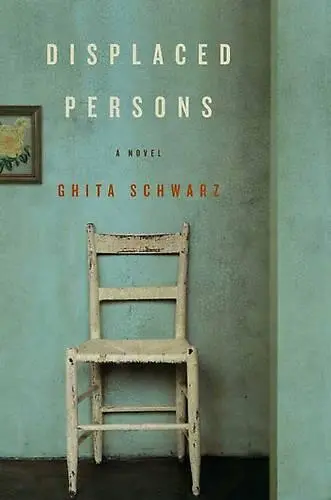
- Название:Displaced Persons
- Автор:
- Жанр:
- Год:неизвестен
- ISBN:нет данных
- Рейтинг книги:5 / 5. Голосов: 1
-
Избранное:Добавить в избранное
- Отзывы:
-
Ваша оценка:
Displaced Persons: краткое содержание, описание и аннотация
Предлагаем к чтению аннотацию, описание, краткое содержание или предисловие (зависит от того, что написал сам автор книги «Displaced Persons»). Если вы не нашли необходимую информацию о книге — напишите в комментариях, мы постараемся отыскать её.
In May 1945, Pavel Mandl, a Polish Jew recently liberated from a concentration camp, lands near a displaced persons camp in the British occupation zone of newly defeated Germany. Alone, possessing nothing but a map, a few tins of food, a toothbrush, and his identity papers, he must scrape together a new life in a chaotic community of refugees, civilians, and soldiers.
Gifted with a talent for black-market trading, Pavel soon procures clothing, false documents, and a modest house, where he installs himself and a pair of fellow refugees – Fela, a young widow who fled Poland for Russia at the outset of the war, and Chaim, a resourceful teenage boy whose smuggling skills have brought him to the Western zones. The trio soon form a makeshift family, searching for surviving relatives, railing against their circumscribed existence, and dreaming of visas to America.
Fifteen years later, haunted by decisions they made as "DPs," Pavel and Fela are married and living in Queens with their young son and daughter, and Chaim has recently emigrated from Israel with his wife, Sima. Pavel opens a small tailoring shop with his scheming brother-in-law while Fela struggles to establish peace in a loosely traditional household; Chaim and Sima adapt cheerfully to American life and its promise of freedom from a brutal past. Their lives are no longer dominated by the need to endure, fight, hide, or escape. Instead, they grapple with past trauma in everyday moments: taking the children to the municipal pool, shopping for liquor, arguing with landlords.
For decades, Pavel, Fela, and Chaim battle over memory and identity on the sly, within private groups of survivors. But as the Iron Curtain falls in the 1990s, American society starts to embrace the tragedy as a cultural commodity, and survivor politics go public. Clever and stubborn, tyrannical and generous, Pavel, Fela, and Chaim articulate the self-conscious strivings of an immigrant community determined to write its own history, on its own terms.
In Displaced Persons, Ghita Schwarz reveals the interior despairs and joys of immigrants shaped by war – ordinary men and women who have lived through cataclysmic times – and illuminates changing cultural understandings of trauma and remembrance.
Displaced Persons — читать онлайн бесплатно полную книгу (весь текст) целиком
Ниже представлен текст книги, разбитый по страницам. Система сохранения места последней прочитанной страницы, позволяет с удобством читать онлайн бесплатно книгу «Displaced Persons», без необходимости каждый раз заново искать на чём Вы остановились. Поставьте закладку, и сможете в любой момент перейти на страницу, на которой закончили чтение.
Интервал:
Закладка:
Sima twisted her lips to the side of her mouth. Her fingers covered an eye: in shame?
He smoothed the lapel to his chest.
The Customer
S LIVOVITZ. SLIVOVITZ. PAVEL HAD to say it twice, three times. He even wrote it out for the liquor store clerk, a young boy, not twenty-five, surely Jewish-how could he not know what Pavel was saying? At last the boy nodded, squinting showily at Pavel’s careful, fine capital letters.
“Oh, the clear stuff. Why do you say it with a ‘sshh’? There’s no h. ”
Pavel maintained his dignity; he refused to answer. He stood at the counter and waited.
The boy pushed brown curls out of his eyes; they bounced back onto his cheeks. “In English the s means ‘ss,’ not ‘sshh.’” The words came out loud, slow but tinged with impatience, as if Pavel couldn’t possibly decipher them. The boy bent down for a key.
“Do you have it?” said Pavel, his voice smooth. “Or shall I take my business elsewhere?”
“I have it,” said the boy.
Pavel had to suppress a smile. I! Who was ‘I’? Only the owner was ‘I’! And if the owner, no doubt the boy’s father, knew how he was speaking! Pavel unbuttoned his raincoat, pushed his hand inside his jacket for the handkerchief, unfolded it, coughed gently, subtly. I!
The boy walked to the back of the store, toward a glass cabinet, and opened it. He took out a bottle and handed it to Pavel.
“What is this?” said Pavel.
“Slivovitz,” said the boy, pronouncing it wrong. “What you asked for.”
“I did not ask for this.” Pavel pointed to the label: made in yugoslavia. “Don’t you have other kinds? A little higher, you know, quality?” He placed extra emphasis on the word quality . Let this child understand! He was a new customer but a real customer, one on whom the store would be able to depend. And, more than a dozen years in this country, not so much of a greenhorn, either.
“Well then, why don’t you take a look yourself?”
A note of challenge in the voice. So! In fact that was exactly what Pavel wanted, a look himself. He moved in front of the cabinet. Dust sparkled on the corners of the bottom two shelves, scattered with flasks. Ah-there was something. He pulled out a large bottle: made in czechoslovakia. “This,” said Pavel, victorious, tapping the picture of dark plums on the label, “this is slivovitz.”
“One hundred and eighty proof,” muttered the boy, ringing him up. “Jesus Christ.”
“Who?” said Pavel.
“Forget it,” said the boy.
ORDINARILY, PAVEL WAS SURE, he would have turned and left, having given a bitter retort, at the first or second sign of the disrespectful behavior of the clerk. There was a phrase Pavel loved, one he learned even before coming to the United States, in English classes organized by the refugee committees in the displaced persons camp: the customer is always right. He had said this to himself often in the shop he owned with his brother-in-law, where he frequently dealt with men who liked their suits only one way and not the other, then changed their minds after a good deal of work had been done. The customer is always right. Even now, when the business was adjusting with the times to include more wholesale, textiles and fabrics to be sold to larger companies, he found the phrase useful. It wasn’t only the individual trying on for a special occasion who liked to be difficult. A buyer, a retailer, these people were controlled by their superiors; they haggled and bargained, but Pavel would be calm and flexible. One had to be cautious, of course, not too foolish, but even business-to-business, the sentence was a useful one to keep in mind. The customer is always right! It helped quiet the anger that sometimes pulsed up inside him when a man used a high tone, a loud voice, a harsh word.
Didn’t the boy know about the customer? And to correct Pavel’s language! Slivovitz was a word as familiar to Pavel as orange juice , or Coca-Cola , was to this boy. When Pavel was a child, his father would ferment the plum brandy at home, storing the bottles on the shelves of the kitchen. When it came time to open and taste, every year, without fail, Father would march around the house in fury. The slivovitz was terrible! It was true. His father really did not know how to make it. The cherry vishniac he made was good-sweet perhaps, a drink that women liked-but good. As for slivovitz, it was Pavel’s mother’s side that knew how to make it. Father couldn’t compete.
No, for certain, ordinarily Pavel would not have stood for the boy’s manner. At the least, he would have promised himself to speak to the owner. But this was a new neighborhood. The houses were each separated by wide lawns, the few apartment complexes, like the one he now lived in, were spread out, low to the ground, not cramped, with several stories piled one on top of the other. It was a good neighborhood, the kind where the liquor stores were not so close together. This one was near the new apartment; it didn’t pay to make enemies too quickly.
It was something else too. Lately, the sight of boys in their twenties, younger, made Pavel quiet. Silent. It had been worrisome at the time, but now Pavel thanked God every day and every night that Fela had had difficulty conceiving and carrying. If Larry had been born even two years earlier, he would be of draft age. It had happened to a friend of Pavel’s from camp, that his son had been sent to the war in Vietnam. So far, one month of unbearable anguish for the parents, and the boy was still in one piece-a miracle, but just that, a miracle. Pavel preferred not to count on miracles.
Better, he preferred not to deal with luck at all, good or bad. People out of danger did not deal with luck. They did not invite it into their lives, not even for a moment. To antagonize a boy in a liquor store over disrespect-this seemed like a way of asking an evil eye to come into the new apartment and gaze hard at Larry. The war would have to end, people said one year, at most two, but what if? The draft age was eighteen. One could avoid it even longer if one went to college, and Larry was smart, very smart, he would be in college and safe if the war did not end.
The rule was, the boys in college could stay in college. And if they changed the rule? But it was America. Laws were difficult to change, even with so much agitation. Pavel knew this with his head, with the mind that read the paper every day, but still he couldn’t get rid of his worry. Pavel’s father had served in the First World War, for the Austrian empire, no less. It was just before Pavel was born, and Father had never spoken about it. Never. No one had ever said so, but they all knew it was a forbidden subject. Father was the only one in the family to fight. The rest, on Pavel’s mother’s side and on his father’s, had managed to hide themselves in the small villages of Poland that thrived on the influx of young Jewish men evading the armies. What failure in the family had made his father a soldier? As far as Pavel had heard, in the emperor’s troops at that time, the Jews weren’t treated so differently from the rest. Officially, everyone’s blood was more or less the same. Still! A needless risk, unimaginable if Father’s family had moved east sooner. In Poland a good family did not let a child go to the military. No question. War or no war, for a Jew it was a death sentence. One saved for years for the bribes.
THE FEELING OF TRIUMPH over his purchase had returned by the time Pavel arrived home. Fela had finished cleaning up from dinner, and his walk had reinvigorated him, as it did every night.
Fela saw the paper bag in Pavel’s hand as he walked into the kitchen, where she sat at the white table, drinking tea.
Читать дальшеИнтервал:
Закладка:
Похожие книги на «Displaced Persons»
Представляем Вашему вниманию похожие книги на «Displaced Persons» списком для выбора. Мы отобрали схожую по названию и смыслу литературу в надежде предоставить читателям больше вариантов отыскать новые, интересные, ещё непрочитанные произведения.










Обсуждение, отзывы о книге «Displaced Persons» и просто собственные мнения читателей. Оставьте ваши комментарии, напишите, что Вы думаете о произведении, его смысле или главных героях. Укажите что конкретно понравилось, а что нет, и почему Вы так считаете.