Ghita Schwarz - Displaced Persons
Здесь есть возможность читать онлайн «Ghita Schwarz - Displaced Persons» весь текст электронной книги совершенно бесплатно (целиком полную версию без сокращений). В некоторых случаях можно слушать аудио, скачать через торрент в формате fb2 и присутствует краткое содержание. Жанр: Современная проза, на английском языке. Описание произведения, (предисловие) а так же отзывы посетителей доступны на портале библиотеки ЛибКат.
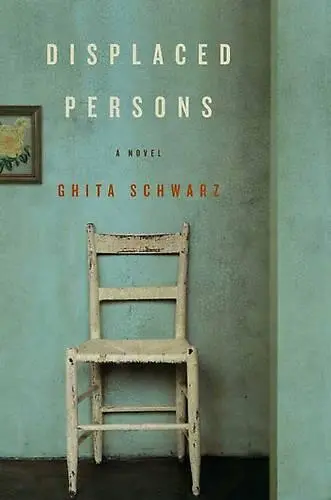
- Название:Displaced Persons
- Автор:
- Жанр:
- Год:неизвестен
- ISBN:нет данных
- Рейтинг книги:5 / 5. Голосов: 1
-
Избранное:Добавить в избранное
- Отзывы:
-
Ваша оценка:
Displaced Persons: краткое содержание, описание и аннотация
Предлагаем к чтению аннотацию, описание, краткое содержание или предисловие (зависит от того, что написал сам автор книги «Displaced Persons»). Если вы не нашли необходимую информацию о книге — напишите в комментариях, мы постараемся отыскать её.
In May 1945, Pavel Mandl, a Polish Jew recently liberated from a concentration camp, lands near a displaced persons camp in the British occupation zone of newly defeated Germany. Alone, possessing nothing but a map, a few tins of food, a toothbrush, and his identity papers, he must scrape together a new life in a chaotic community of refugees, civilians, and soldiers.
Gifted with a talent for black-market trading, Pavel soon procures clothing, false documents, and a modest house, where he installs himself and a pair of fellow refugees – Fela, a young widow who fled Poland for Russia at the outset of the war, and Chaim, a resourceful teenage boy whose smuggling skills have brought him to the Western zones. The trio soon form a makeshift family, searching for surviving relatives, railing against their circumscribed existence, and dreaming of visas to America.
Fifteen years later, haunted by decisions they made as "DPs," Pavel and Fela are married and living in Queens with their young son and daughter, and Chaim has recently emigrated from Israel with his wife, Sima. Pavel opens a small tailoring shop with his scheming brother-in-law while Fela struggles to establish peace in a loosely traditional household; Chaim and Sima adapt cheerfully to American life and its promise of freedom from a brutal past. Their lives are no longer dominated by the need to endure, fight, hide, or escape. Instead, they grapple with past trauma in everyday moments: taking the children to the municipal pool, shopping for liquor, arguing with landlords.
For decades, Pavel, Fela, and Chaim battle over memory and identity on the sly, within private groups of survivors. But as the Iron Curtain falls in the 1990s, American society starts to embrace the tragedy as a cultural commodity, and survivor politics go public. Clever and stubborn, tyrannical and generous, Pavel, Fela, and Chaim articulate the self-conscious strivings of an immigrant community determined to write its own history, on its own terms.
In Displaced Persons, Ghita Schwarz reveals the interior despairs and joys of immigrants shaped by war – ordinary men and women who have lived through cataclysmic times – and illuminates changing cultural understandings of trauma and remembrance.
Displaced Persons — читать онлайн бесплатно полную книгу (весь текст) целиком
Ниже представлен текст книги, разбитый по страницам. Система сохранения места последней прочитанной страницы, позволяет с удобством читать онлайн бесплатно книгу «Displaced Persons», без необходимости каждый раз заново искать на чём Вы остановились. Поставьте закладку, и сможете в любой момент перейти на страницу, на которой закончили чтение.
Интервал:
Закладка:
“Hello,” she said in English. A bad sign. But then changed to Yiddish. Did you get what you went for? she asked him, still unsmiling.
I found slivovitz! said Pavel, pressing his lips down so as not to smile too much. I didn’t think there would be a store in the neighborhood that sold it! But you see, if you try, you can get everything. And a good quality!
“Mazel tov,” said Fela. What about the milk?
She was angry. Pavel slapped his hand to his forehead. Oh. I forgot. Completely forgot.
Fela kept sipping. Why do you ask me what I need if you can’t remember it?
I know, I know.
Nine-thirty. It is too late to get some now. There’s enough for their breakfast, but you won’t have it for your coffee.
Pavel stood at the head of the kitchen table. He had no response.
All right, Pavel. Could you go in to Helen? She won’t sleep. She won’t listen to me. She wants to read. A book you bought her. She should sleep!
It was true, Pavel thought, Helen did not like to sleep. She asked for permission to finish her chapter before shutting out the lights, then cheated and slipped in another one. Fela claimed it was a function of what the child was reading, suspense novels. Crime novels. If Helen read something else, Fela insisted, she would get tired more easily. Of course she couldn’t sleep! Couldn’t Pavel buy her something more appropriate for a young girl? A girl did not have to choose everything on her own.
Pavel loved to buy books for his daughter. But he let her pick. How should he decide what she should read? She was eleven, “going on twelve,” as she liked to say, a phrase Pavel found very funny. There was a paperback exchange in Jackson Heights that she adored, although Pavel felt some embarrassment walking in there and breathing the odor of old paper, smudged ink. He could afford new books for his children! And if they weren’t new, they should be in the library, where it was natural for people to share. Still, the used bookstore had a pleasant atmosphere, with a little couch and pillows in the corners between the bookcases. Pavel and even Fela would sometimes leave Helen there under the supervision of the shopkeeper while they ran a few doors down to the pharmacy or butcher shop. But mostly Pavel would sit on the couch, stretching his leg toward the corner, reading his paper while Helen cocked her head and imitated the adults browsing. Occasionally he would give a little smile to the manager, a lanky man in his thirties, who smiled back without saying anything. He had a certain look in his eyes, something like friendliness, Pavel thought, but not exactly friendliness. He watched Pavel too closely, too-Pavel did not know what it was. It made Pavel uncomfortable. Perhaps the owner was a little strange, he had customers who were not so clean-looking, who got into discussions about politics and stayed late into the evenings, after other stores on the block had closed. Fela had learned the owner’s name, but Pavel had forgotten it, and he felt, after a few visits, that it would be impolite to ask him in person. Each time Pavel left the store with his daughter he promised himself to ask Fela the name-it would make it easier, less awkward, Pavel thought, if he could greet the owner by name, as an equal, when he walked in-but each time he returned home his head was full of other thoughts.
Helen had cried on the day of the move from Jackson Heights to Rego Park. It was terrible. For Larry, five years older, a little change was not a problem. He was looking forward to the move, even, and he knew some of the children in the neighborhood from Hebrew school already. That was Larry, always independent. Helen grew attached to things. She loved the small playground she no longer played in, the fraying, unbalanced swings that made Pavel’s stomach twist in fear when he watched other children; even as he lectured to Fela that she protected too much, he had never allowed Helen to go on them. She loved the bakery that made a special chocolate cake and, when she was smaller, had handed her a sandwich cookie, dyed green, in the shape of a leaf, every time her mother made a holiday purchase. She loved the bookstore owner. A week or so before the final move, when most of the clothes and things in the apartment were already in boxes, she had peeked into the store-its door was open despite the April rain-and shouted something toward the cash register.
Pavel hadn’t quite caught it. “What did you tell him, Helinka?”
“I told him we’d be back, we’d be back,” said Helen, gripping his hand, stumbling after him on the wet street.
“ Rego Park has a bookstore, too, shaifele . It’s a good neighborhood. You don’t have to go back.”
“But I want to!”
“All right, you want to.”
“Oh, Daddy, come on.” Her voice was shaky.
“All right, all right! If we have time.”
“I have time!”
“True,” said Pavel.
“I told him we were going to move, and he said, That’s too bad. That’s too bad, he said, because I’m a very good customer. An excellent customer, in fact.” Helen had dropped her father’s hand, stopped on the sidewalk. “I told him not to worry, he wouldn’t lose our business.”
Pavel laughed, teeth bared; he couldn’t help it. “All right, mammele , all right. I promise.”
“Swear?”
“What?” said Pavel.
“It’s like a real promise.”
“Of course it’s a real promise. I promise. Have I ever broken a promise?”
“I don’t remember,” said Helen.
“Have I ever refused you anything you asked for?”
“I don’t know,” she murmured, looking at her shoes as they scraped along the sidewalk.
“Ah-hah,” Pavel had said.
Now, pushed by Fela’s annoyance, he went to Helen’s little room, opening the door as he knocked. The lamp above Helen’s bed was on at its dimmest, as if she would have longer to read the less electricity she used.
Her hands gripped a yellow-edged paperback. She didn’t look up.
“Helinka,” said Pavel.
It was her turn to promise. “Look,” she said. She flipped the book to face him. “Just two more pages.”
“That’s what you said to your mother a few minutes ago.”
“It was such a short chapter, it wasn’t fair.”
“Just to the end of this chapter, you really have to promise now. Okay, shaifele ? Please?”
He closed the door, then stood outside, hearing the page turning. A minute, he would give her, maybe two. He walked to Larry’s room. With Larry he was afraid to go in without knocking, but he didn’t want to interrupt. Pavel tried to glimpse in through the light in the doorjamb. Just to see. Through the crack Pavel could see the outline of his son bent over his blue desk, doing his homework. Diligent.
Then, from inside: “Hello?” Sarcastic.
Pavel backed away from the door. Then came back. Shouldn’t he be able to say good night to his son? He knocked.
“I know it’s you, Dad. Just come in.”
Pavel opened the door. “Oh, hi,” said Pavel, casual. “You’re doing your work. Good, good. I won’t disturb.”
Larry pushed the strings of black hair out of his eyes. “Why do you do that? Wait outside the door?”
“You want me to knock, so I knock. I didn’t wait, I don’t wait.”
“Fine, Dad. Fine. Sure. Okay.”
“Why do you have to get so upset?” Pavel said. “A father shouldn’t say good night to his son?”
“You’re telling me I’m upset?” Larry’s tone began to rise. Then he pushed it down. “Okay, Dad. Sure. Fine.”
“I’m not telling you anything,” said Pavel. “I’m not telling you anything.” And closed the door. He walked the four feet back to Helen’s doorway. It was good they had separated them. For this reason alone the move out of the small apartment in Jackson Heights was good. A young man needs his own space, Fela said, but also the fighting-it was something Pavel couldn’t tolerate, fights between brother and sister. The screaming, inside the house. He would tell them, tell them again and again, not to fight, but this was perhaps the most difficult instruction for them to follow. Larry, so sharp in school, so well liked by his teachers, why couldn’t he do a small thing asked by his father? He was the elder, to set the example.
Читать дальшеИнтервал:
Закладка:
Похожие книги на «Displaced Persons»
Представляем Вашему вниманию похожие книги на «Displaced Persons» списком для выбора. Мы отобрали схожую по названию и смыслу литературу в надежде предоставить читателям больше вариантов отыскать новые, интересные, ещё непрочитанные произведения.







Обсуждение, отзывы о книге «Displaced Persons» и просто собственные мнения читателей. Оставьте ваши комментарии, напишите, что Вы думаете о произведении, его смысле или главных героях. Укажите что конкретно понравилось, а что нет, и почему Вы так считаете.