Ghita Schwarz - Displaced Persons
Здесь есть возможность читать онлайн «Ghita Schwarz - Displaced Persons» весь текст электронной книги совершенно бесплатно (целиком полную версию без сокращений). В некоторых случаях можно слушать аудио, скачать через торрент в формате fb2 и присутствует краткое содержание. Жанр: Современная проза, на английском языке. Описание произведения, (предисловие) а так же отзывы посетителей доступны на портале библиотеки ЛибКат.
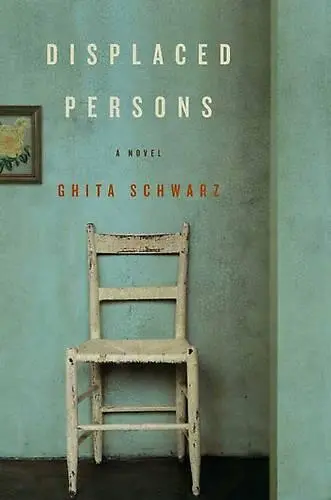
- Название:Displaced Persons
- Автор:
- Жанр:
- Год:неизвестен
- ISBN:нет данных
- Рейтинг книги:5 / 5. Голосов: 1
-
Избранное:Добавить в избранное
- Отзывы:
-
Ваша оценка:
Displaced Persons: краткое содержание, описание и аннотация
Предлагаем к чтению аннотацию, описание, краткое содержание или предисловие (зависит от того, что написал сам автор книги «Displaced Persons»). Если вы не нашли необходимую информацию о книге — напишите в комментариях, мы постараемся отыскать её.
In May 1945, Pavel Mandl, a Polish Jew recently liberated from a concentration camp, lands near a displaced persons camp in the British occupation zone of newly defeated Germany. Alone, possessing nothing but a map, a few tins of food, a toothbrush, and his identity papers, he must scrape together a new life in a chaotic community of refugees, civilians, and soldiers.
Gifted with a talent for black-market trading, Pavel soon procures clothing, false documents, and a modest house, where he installs himself and a pair of fellow refugees – Fela, a young widow who fled Poland for Russia at the outset of the war, and Chaim, a resourceful teenage boy whose smuggling skills have brought him to the Western zones. The trio soon form a makeshift family, searching for surviving relatives, railing against their circumscribed existence, and dreaming of visas to America.
Fifteen years later, haunted by decisions they made as "DPs," Pavel and Fela are married and living in Queens with their young son and daughter, and Chaim has recently emigrated from Israel with his wife, Sima. Pavel opens a small tailoring shop with his scheming brother-in-law while Fela struggles to establish peace in a loosely traditional household; Chaim and Sima adapt cheerfully to American life and its promise of freedom from a brutal past. Their lives are no longer dominated by the need to endure, fight, hide, or escape. Instead, they grapple with past trauma in everyday moments: taking the children to the municipal pool, shopping for liquor, arguing with landlords.
For decades, Pavel, Fela, and Chaim battle over memory and identity on the sly, within private groups of survivors. But as the Iron Curtain falls in the 1990s, American society starts to embrace the tragedy as a cultural commodity, and survivor politics go public. Clever and stubborn, tyrannical and generous, Pavel, Fela, and Chaim articulate the self-conscious strivings of an immigrant community determined to write its own history, on its own terms.
In Displaced Persons, Ghita Schwarz reveals the interior despairs and joys of immigrants shaped by war – ordinary men and women who have lived through cataclysmic times – and illuminates changing cultural understandings of trauma and remembrance.
Displaced Persons — читать онлайн бесплатно полную книгу (весь текст) целиком
Ниже представлен текст книги, разбитый по страницам. Система сохранения места последней прочитанной страницы, позволяет с удобством читать онлайн бесплатно книгу «Displaced Persons», без необходимости каждый раз заново искать на чём Вы остановились. Поставьте закладку, и сможете в любой момент перейти на страницу, на которой закончили чтение.
Интервал:
Закладка:
Your father’s name was not good enough for you? Berel had asked.
Sima’s mother had scolded. Berele! Let the boy eat.
I’m finished eating, Chaim had said. He smiled, keeping his face free of trembling. I feel I kept my father’s name. It is not as if I chose something completely different, like the others: spring or zion or song. I do not reject my father’s name. The meaning is the same.
Ah, said Berel. The meaning.
Sima protested. I had thought about it myself.
So, Simale, why did you not do it? And do not try to convince your boyfriend that it was out of respect for your poor father and mother. We all know-perhaps Chaim knows too-that you always do as you please.
I like our name, said Sima. That is all.
Well, reasoned Chaim, the meaning would not have made a difference in Hebrew-Makow, what, a little town?
A big town! answered Berel. With no Jews now. That is why we keep it. Even if-he shot a sly look out of his eye-even if our daughter is the last to carry our name, until she marries, of course.
Sima flushed. But Chaim was relieved. The old man did not hate him-in fact perhaps liked him a bit. He continued his logic. If you can translate the name into Hebrew, you don’t lose the meaning. If it can’t be translated, it can’t be translated. So, of course, it is different to try to change Makower-he nodded at Sima’s mother-than to change Traum.
Dvora broke in. I was Zambrowska, she said. Before I was anything to do with Makower. And now, look, after I married: no more of the sisters Zambrowska. No brothers Zambrowski. Nothing.
Hmph, said Berel. You see? Are there so many Traumen left in the world that you felt you could make it one less? Berel chuckled a little at his own pun. One misses the sound too, not just the meaning. Some things cannot be translated. Now, where was your family from?
Chaim had let himself be drawn out. A small town, north of Warsaw. Dvora had smiled-she had had family not far from there. But Chaim did not want to dwell on his origins-the facts of his family, scholarly, somewhat secular, poor, he could mention, but the details-the sisters and brothers-he did not want to spill it. He told instead scenes from his life after the ghetto-scenes of escape with the five boys, then the three, then just Tsalek, the last friend he had lost, the traveling from small town to town, the hiding in the forest, trapped in a group of incompetent gentile partisans, then in an abandoned shed in the city. To his surprise he had delighted Berel and Dvora with his tales-they chuckled and laughed, poured him tea, asked him for more. Adventure stories: preferable to the tale of his name.
Yet when he applied for the visas to America he had put himself and his wife down as Traum. What did Halom mean in English? It would mean nothing. And once he moved he did like the sound of his father’s surname, in the open American voice used by his new employers or in the lilting Yiddish of Fela’s kitchen. Pavel, overjoyed to be reunited, had introduced him to friend after friend by his full name, and the sound stirred in him relief, nostalgia, as for a tune he had heard in his childhood but had difficulty singing himself. It was easier to say the word Traum in English than in Hebrew-here the gaze at the Europeans was less accusatory. Here he had less to prove or to show. And for a man his age there was no army requirement in New York, and all the protests the students did over the war in Vietnam did not pain him the way he thought it should. Here he did not face his own death or the deaths of others-people he himself might harm-as he had in Israel, each time he was called for reserve duty, each time he heard of activity on the border. In Europe it had not occurred to him that a life in Palestine would mean the constant fighting and fear of fighting. Before the war even the most idealistic youths-his brothers had been among them, his cousin Rayzele and her brothers too-had thought of Palestine as a place to work and live in a peaceful collective, no neighbors to battle or expel or kill. And after the liberation, what little he had understood of the battles between Arab and Jew had not included the thought that he would join an army to move others out. He had left the house in Celle, Fela crying, Pavel, half-furious, grasping his shoulders again and again, with the idea that he would be on his way to a real home, that the fear he felt every day in Germany would dissipate and his comfort with Rayzele and her friends would grow.
He had been thrown in with the rest, inexperienced European boys near the border with Syria; with his small understanding of rifles and stealth, he had stood out as less nervous, more poised, able to lead a group of five, assisting the lieutenant with his halting Yiddish. He was a new man, he wanted to be a new man, but even as his body looked calm, stiff, in control, his mind shrank from the idea of violence, and the patrols to which he was assigned were a slow torture.
He could wear a strong face with his peers in the three years of straight military service, but once he was married it became terrible, a mask he dreaded putting on. He developed stabbing pains, giant knives in his gut that woke him up in the night, thinking of his future, the prospect of reserve work: his strong years spent dreading the month of patrolling, his old age spent watching his children-would he have children?-it seemed so much to take on, another life-go to battle against their neighbors. But he had found himself unable to confess to the army doctors, for fear of arousing their disdain at his diaspora cowardice. Each time he was called to the reserves he was pulled out of his peaceful life with his wife, her terrible cooking of which he made fun, his work as a technician at one of the radio stations. He did not want to fight. After all his troubles in Europe -once he had time to think, he became afraid, then angry. His life had been struggle enough. Jewish natives of Israel thought him a traitor, even his wife felt reluctance and guilt, but he knew he couldn’t protect himself there. He needed a life without battle.
Here the pain was much less frequent; it did not distract him: that was America. A phone ringing in the evening did not signify a military emergency but simply a request to visit a friend of Pavel and Fela’s, to install the new hi-fi just so. A police car speeding by, siren wailing, was on its way to someone else’s tragedy. An argument with his wife did not result in him doubling over and her giving up on the discussion, horrified by his suffering; he could buy pills over the counter that quieted him down, sometimes for a week. He had his morning ritual of choosing a shirt, he had the coffee shop where he picked up his coffee with milk, no sugar-on doctor’s advice he could drink moderate amounts-he had even the little office disputes, the routine he had devised for organizing his morning tapings, the frenzied afternoon shouts of his supervisor, whose endless ability to misunderstand the new equipment could on occasion seem endearing, sweet, naive. Once Lola arrived, and with her the increased company of Fela and Pavel, substitute grandparents, he had almost no episodes at all; it was as if the intense, almost disturbing love he had for his child had mitigated his ability to feel pain.
Sima felt pain. At times he could gather up envy at his wife’s grief, parents to care for as they died. He envied even the solitude of her burden, the fact that she shared nothing with a brother or sister, that she alone was responsible, full. He was empty.
HE WENT TO BED after the recording ended and fell asleep quickly. But then he awoke in the night, no pain, no dream. Restless. He looked over at Sima, lying in the bed beside him, shoulders hunched, breasts hidden, the grief in her face apparent even in her sleep. A good woman, a good mother. On drives she would paint her lips, blot with a tissue, then draw with the lipstick a face above the lip print to give to Lola in the backseat. He was a lucky man. Lucky. But he wanted to be more than lucky. He did not want his happiness to come in bursts. He wanted the explosions of his life to be over. He wanted to have the sound of happiness moving softly within him, beside him as he walked, following him and guiding him, like an accompanist at the piano.
Читать дальшеИнтервал:
Закладка:
Похожие книги на «Displaced Persons»
Представляем Вашему вниманию похожие книги на «Displaced Persons» списком для выбора. Мы отобрали схожую по названию и смыслу литературу в надежде предоставить читателям больше вариантов отыскать новые, интересные, ещё непрочитанные произведения.








Обсуждение, отзывы о книге «Displaced Persons» и просто собственные мнения читателей. Оставьте ваши комментарии, напишите, что Вы думаете о произведении, его смысле или главных героях. Укажите что конкретно понравилось, а что нет, и почему Вы так считаете.